
 Pevita Pearce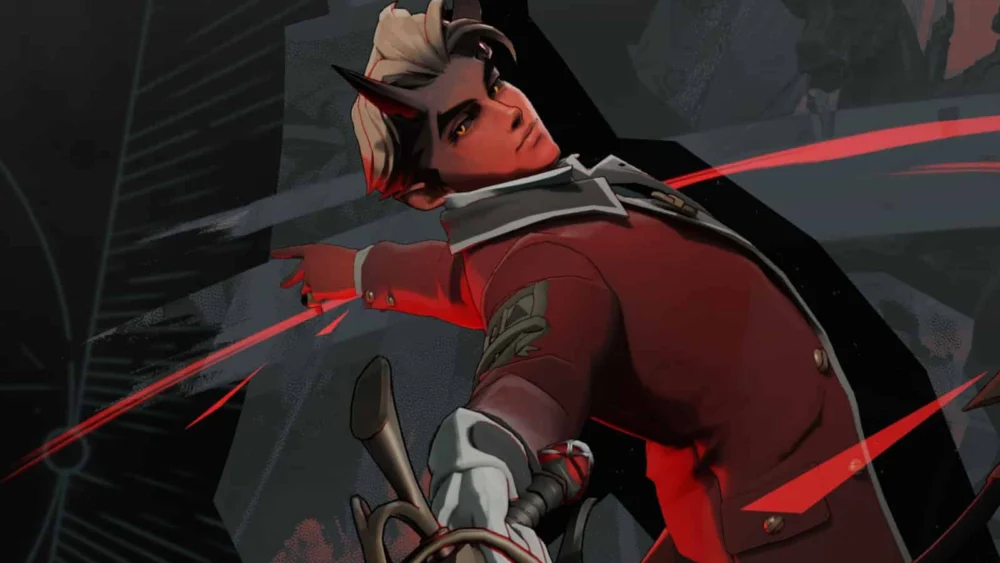
Deadlock, the highly anticipated but still officially unannounced hero shooter from Valve, has encountered its first major controversy regarding competitive integrity. As the game continues its invite-only playtest phase, players have uncovered a tactical exploit involving the mid-game pause mechanic that allows for artificial precision during high-stakes combat encounters. This maneuver, which has quickly gone viral within the community, involves pausing the game to manually line up a difficult shot before resuming to execute the kill with near-perfect accuracy. The discovery has ignited a fierce debate regarding the boundaries of "clever use of mechanics" versus "exploitative behavior," leading to widespread calls for Valve to implement technical restrictions on player input during active pauses.
The controversy began when high-level players and streamers started experimenting with the game’s unique pause system. Unlike most modern tactical shooters like Valorant or Overwatch 2, which generally restrict pausing to organized tournament play or specific disconnect scenarios, Deadlock inherits a more flexible pause system reminiscent of Valve’s other major multiplayer title, Dota 2. This system allows individual players to halt the match for all participants, ostensibly to address technical issues or brief real-world interruptions. However, the discovery that the game’s camera and crosshair remain partially responsive during these pauses has turned a tool for convenience into a potential weapon for competitive advantage.
The Emergence of the Pause Manipulation Meta
The incident that brought this issue to the forefront involved a prominent streamer playing as Vindicta, a long-range hero whose kit emphasizes high-precision sniping. During a live match, the player engaged an enemy while airborne—a situation where aiming is typically difficult due to movement physics and recoil. By triggering the pause command mid-jump, the player effectively froze the world state. While the character model and the enemy remained stationary, the player was able to micro-adjust their crosshair over the opponent’s head. Upon unpausing, the player immediately fired, securing a kill that would have required significantly more mechanical skill under normal real-time conditions.
The footage of the trick quickly circulated on social media platforms and the Deadlock subreddit, eliciting a mixture of amusement and concern. While the streamer in question acknowledged the absurdity of the move, exclaiming that they would never repeat it out of a sense of fairness, the "proof of concept" has raised alarms about how such a mechanic could be abused in a ranked or highly competitive environment. The core of the problem lies in the fact that Deadlock’s engine allows for slight mouse-driven camera adjustments during the pause state, providing a "bullet-time" effect that is unintended by the developers.
Technical Breakdown: The Vindicta Exploit
To understand why this trick is so effective, one must look at the mechanics of the hero used in the demonstration. Vindicta is designed as a "glass cannon" sniper whose ultimate ability, Assassinate, rewards precision with massive damage and bonus gold on kills. In a standard engagement, a Vindicta player must account for their own movement, the enemy’s strafing, and the projectile lead time. By using the pause trick, the player removes the variables of human reaction time and tracking.
The technical loophole exists because the "pause" state in Deadlock stops the simulation of physics and character movement but does not entirely "lock" the player’s client-side camera input. This allows a player to utilize the freeze-frame to analyze the battlefield, identify the exact pixel where an enemy’s hitbox is located, and reposition their mouse accordingly. When the countdown to resume the game concludes, the player’s client sends the updated crosshair coordinates to the server instantly, resulting in a shot that appears instantaneous and perfectly aimed from the perspective of the victim.
Valve’s Legacy of Tactical Pausing: From Dota 2 to Deadlock
The inclusion of a pause button in a fast-paced shooter is a direct carryover from Valve’s philosophy in Dota 2. In the MOBA genre, matches can last upwards of 60 minutes, and the ability to pause for a player who has disconnected is considered essential for competitive fairness. However, the transition of this mechanic to a hero shooter—where encounters are decided in fractions of a second—presents a unique set of challenges.
In Dota 2, pausing is often used tactically (though frowned upon) to give a team time to discuss a strategy during a chaotic team fight. However, because Dota 2 is played from an isometric perspective and relies on click-to-move commands and ability targeting, the "aiming" advantage is less pronounced than it is in a third-person shooter like Deadlock. In a shooter, the player’s primary interaction with the world is through a reticle. Giving a player the ability to stop time and adjust that reticle fundamentally breaks the "skill ceiling" that defines the genre.
Community and Official Reactions
The community reaction has been swift and largely unified. On various community hubs, players have expressed frustration that such a simple oversight could have such a profound impact on gameplay. "They should freeze the mouse," has become the most common suggestion among the player base. The logic is that if the game world is frozen, the player’s ability to input movement or aiming commands should be equally suspended.
Some segments of the community have called for more drastic measures. Suggestions have ranged from removing the pause feature entirely in public matchmaking to implementing severe penalties for those caught using it for combat advantages. "Anyone caught doing this in a ranked game should be IP-banned instantly," one user argued, reflecting the high value the community places on competitive integrity.
While Valve has not yet issued a formal statement regarding this specific exploit, the developer is known for its "silent but observant" approach to game development. During the Deadlock playtest, Valve has been pushing updates at a rapid pace, often addressing bugs and balance issues within hours of them becoming widespread. It is highly likely that a future patch will include a "mouse lock" feature during pauses or a delay on firing immediately after a pause ends.
The Limitations of Current Pause Mechanics
Despite the potential for abuse, there are built-in limitations to the pause system that prevent it from being used constantly. Currently, a single player is limited to one pause per game, and a team is limited to a total of three pauses. These restrictions were designed to prevent griefing and "pause-spamming," which can ruin the flow of a match.
However, critics argue that even a single use of this exploit can change the outcome of a match. In a game like Deadlock, where a single "pick-off" on a high-value target can lead to taking a major objective or winning a final base push, one "guaranteed" sniper shot is one too many. The fact that the exploit is resource-limited does not make it any less of a threat to the game’s competitive health; it merely makes it a "tactical nuke" that a player saves for the most critical moment of the match.
Analysis of Competitive Integrity and "Meta-Gaming"
The "pause trick" raises an interesting philosophical question in game design: where does "meta-gaming" end and "cheating" begin? In many competitive games, players find ways to use mechanics in ways the developers never intended. In the early days of Counter-Strike, "bunny hopping" was an unintended consequence of the physics engine that became a core skill. In Dota 2, "creep pulling" was originally a quirk of AI behavior that transformed into a fundamental strategy.
The pause trick, however, falls into a different category. Because it relies on a meta-mechanical function (pausing the game) rather than an in-game ability or physics interaction, it is viewed by the majority of the community as an exploit. It violates the "social contract" of multiplayer gaming, which assumes that all players are operating under the same flow of time. By breaking that flow, the player using the trick gains an advantage that their opponent cannot counter through skill or strategy, but only by also using the exploit.
Potential Solutions and the Path Forward
For Valve, the solution is likely straightforward from a technical perspective. Most modern engines allow developers to toggle "input listening" on or off based on the game state. By disabling mouse delta inputs (the movement of the mouse) while the game is in a paused state, Valve can ensure that the crosshair remains fixed exactly where it was when the pause was initiated.
Another potential fix involves the "unpause" sequence. Currently, many games implement a three-second countdown before the simulation resumes. Valve could implement a "fade-in" period for inputs, where mouse sensitivity is slowly restored over a second, or simply prevent any offensive actions (firing, casting abilities) for a brief window after the unpause. This would ensure that the game has fully returned to its real-time state before any player can exert an influence on the outcome of a fight.
The Broader Impact on Deadlock’s Development
As Deadlock moves closer to an eventual open beta or full release, incidents like the "pause trick" serve as vital stress tests for the game’s systems. The fact that the game is still in an invite-only phase is specifically intended to catch these types of edge-case exploits before the general public gains access.
The controversy also highlights the challenges Valve faces in blending two very different genres. By combining the tactical, high-consequence pausing of a MOBA with the mechanical, reflex-based combat of a shooter, Valve is entering uncharted territory. The "pause trick" is likely just the first of many hurdles the developers will face as they try to balance the needs of a strategic team game with the requirements of a fair and balanced competitive shooter.
For now, the Deadlock community remains on high alert. While the trick is currently "legal" within the game’s code, the social stigma surrounding its use is growing. Players who value their reputation within the burgeoning competitive scene are largely avoiding the maneuver, while the rest of the player base waits for the inevitable patch notes that will bring an end to the "pause-aim" meta. As Valve continues to refine Deadlock, the resolution of this issue will serve as a key indicator of how the company intends to manage competitive integrity in its next major franchise.




 admin
admin
 Lina Irawan
 Jia Lissa
 Yuyun Lusiyani
 Joko Widodo
 Eva Lovia