
 Jia Lissa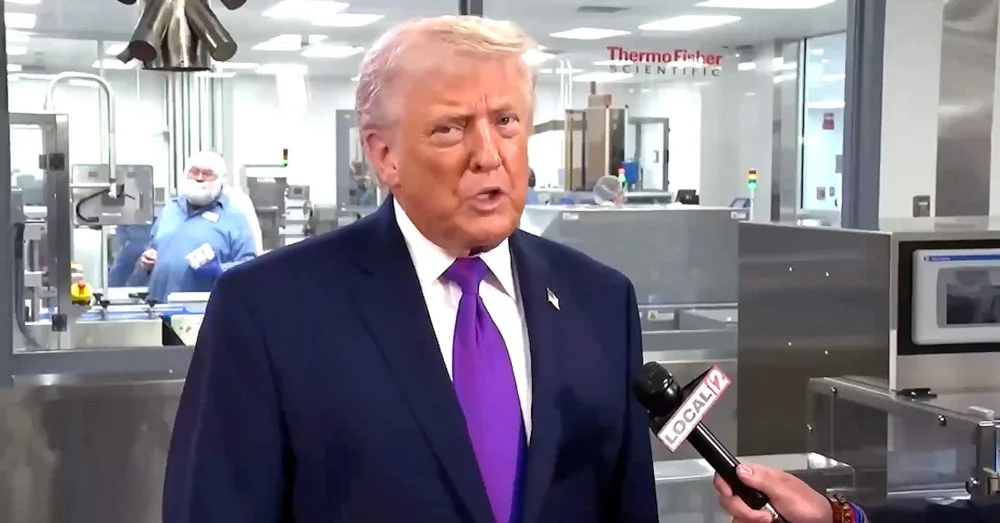
In a notable departure from previous campaign rhetoric characterized by mathematically improbable figures, former President Donald Trump utilized a more conventional, albeit still disputed, statistical framework to describe his efforts to lower prescription drug costs during a recent local media engagement. During an interview with WKRC-TV between appearances in Ohio and Kentucky, Trump claimed that his administration’s policies had resulted in price reductions of 70, 80, and 90 percent for various medications. While these figures represent a shift toward standard percentage-based language, they continue to draw scrutiny from healthcare policy experts and fact-checkers regarding their empirical accuracy and the current state of the American pharmaceutical market.
For several years, the former president has faced criticism for claiming he had reduced drug prices by "many hundreds" or even "1,500 percent." From a mathematical standpoint, a price reduction exceeding 100 percent is impossible, as a 100 percent reduction would render a product free of charge. Anything beyond that threshold would imply that pharmaceutical companies were paying consumers to take their medications. The shift to double-digit percentages during his conversation with reporter Tyler Madden suggests a refinement in messaging as the 2024 campaign intensifies, even as the underlying claims about the United States achieving the "lowest prices in the world" remain at odds with global economic data.
The Context of the WKRC Interview
The interview took place during a pivotal swing through the Midwest, a region where the cost of living and healthcare access remain top-tier concerns for the electorate. When asked to preview his message to the crowd in Northern Kentucky, Trump pivoted quickly to the issue of pharmaceutical costs, a cornerstone of his domestic policy platform since his 2016 campaign.
"The biggest thing is medicines," Trump told WKRC. "We went from the highest price in the entire world… and now we’re gonna pay the lowest price in the entire world. And that’s never happened. We have medicine reduced by 70, 80, 90 percent."
Trump further illustrated his point by contrasting the cost of specific medications in international markets. "We have pills that would sell for $10 in London, selling for $135 in New York. I mean the whole thing was crazy. And we fixed the system, and we got it done," he asserted. He concluded by claiming that previous administrations had either failed or neglected to attempt similar reforms, stating, "I don’t even think they tried. But we got it done and we did a job like nobody else could have done."
Analyzing the 70 to 90 Percent Reduction Claims
The claim that prescription drug prices have been reduced by up to 90 percent requires a nuanced examination of the different segments of the pharmaceutical market. While certain generic medications—those that have lost patent protection and face robust competition—often see significant price drops, brand-name medications continue to see list price increases.
According to data from the Centers for Medicare & Medicaid Services (CMS) and various independent healthcare foundations, the "net prices" of some drugs (the price after rebates and discounts) have stabilized or declined slightly in specific categories. However, the 70 to 90 percent figures cited by Trump do not reflect the broader consumer experience at the pharmacy counter. A 2023 report from the Assistant Secretary for Planning and Evaluation (ASPE) noted that while the rate of price increases slowed during certain periods, the average price for brand-name drugs in the U.S. remains significantly higher than in other high-income nations.
Furthermore, the "Most Favored Nation" (MFN) model, an executive order signed by Trump in 2020 aimed at tying U.S. drug prices to the lowest prices paid by other developed nations, faced significant legal challenges and was eventually rescinded by the subsequent administration before it could be fully implemented. Consequently, the systemic shift to the "lowest prices in the world" described by the former president has not yet materialized in the national data.
A Chronology of Prescription Drug Policy (2017–2024)
To understand the evolution of these claims, it is necessary to trace the timeline of federal actions regarding drug pricing over the last seven years.
- May 2018: The Trump administration released the "American Patients First" blueprint, which aimed to increase competition, improve negotiation, and create incentives to lower list prices.
- 2019–2020: The administration focused on importing drugs from Canada and increasing transparency in the "rebate" system used by Pharmacy Benefit Managers (PBMs).
- September 2020: Trump signed executive orders intended to implement the MFN model and ensure that Medicare pays no more for certain drugs than the lowest price among comparable countries.
- 2021: Following the transition of power, the Biden administration took office. Many of the Trump-era rules were tied up in court due to lawsuits from the pharmaceutical lobby (PhRMA).
- August 2022: President Biden signed the Inflation Reduction Act (IRA), which for the first time allowed Medicare to negotiate the prices of certain high-cost drugs directly with manufacturers.
- 2023–2024: The first ten drugs selected for negotiation under the IRA were announced, including treatments for diabetes and heart disease. Meanwhile, pharmaceutical companies have continued to raise list prices on hundreds of other medications at the start of each calendar year.
International Pricing Disparities: The London vs. New York Comparison
Trump’s example of a $10 pill in London versus a $135 pill in New York highlights a persistent reality in global healthcare economics. A 2021 study by the RAND Corporation found that U.S. drug prices were, on average, 2.56 times higher than those in 32 other OECD nations. For brand-name drugs specifically, U.S. prices were 3.44 times higher.
The disparity exists because the United Kingdom’s National Health Service (NHS) utilizes a centralized bargaining system and a "value-based" assessment through the National Institute for Health and Care Excellence (NICE) to set price caps. In contrast, the U.S. market has traditionally relied on private negotiations between manufacturers and PBMs, with Medicare historically prohibited from negotiating prices until the passage of the IRA in 2022. While Trump’s rhetoric suggests he "fixed" this disparity, current market data suggests the gap remains substantial, with U.S. consumers still bearing the highest per-capita pharmaceutical costs globally.
Industry and Political Reactions
The former president’s claims have elicited a range of responses from industry stakeholders and political analysts. Advocacy groups such as AARP have long pushed for more aggressive price controls, acknowledging that while both the Trump and Biden administrations have taken steps toward reform, the burden on seniors remains high.
"While we have seen historic steps taken to allow Medicare to negotiate prices, many Americans are still struggling to afford their life-saving medications," an AARP spokesperson noted in a recent policy brief. "The rhetoric often outpaces the reality of what people see when they go to fill their prescriptions."
On the other side of the aisle, representatives for the pharmaceutical industry, including the Pharmaceutical Research and Manufacturers of America (PhRMA), have criticized both administrations’ attempts at price setting. They argue that government-mandated price reductions, whether through the MFN model or the IRA, stifle innovation and the development of new treatments. The industry maintains that the "rebate" system is the primary driver of high list prices, an area where Trump did focus significant attention during his term.
Fact-Based Analysis of Implications
The shift in Trump’s mathematical phrasing is significant for several reasons. First, it reflects a move toward a more "fact-adjacent" campaign style that may be more difficult for opponents to dismiss as mere hyperbole. By using 70-90 percent—figures that can occasionally be found in specific generic drug cases—the claim gains a veneer of plausibility that "1,500 percent" lacked.
Second, the focus on prescription drugs underscores the issue’s potency as a "kitchen table" concern. Both major political parties are currently vying for credit for lowering costs. While the Biden administration points to the IRA’s $35 insulin cap for seniors and the upcoming Medicare negotiations, Trump is positioning himself as the original disruptor of the pharmaceutical status quo.
However, the implication that the U.S. currently enjoys the "lowest prices in the entire world" is factually unsupported by every major economic metric. According to NPR and other outlets tracking 2024 price trends, pharmaceutical companies raised prices on more than 700 medications in January alone. While some of these increases are modest, they indicate that the system has not been "fixed" in the definitive sense suggested by the former president.
Conclusion
As the election cycle progresses, the rhetoric surrounding healthcare costs is expected to remain a central theme. Donald Trump’s recent interview in Ohio and Kentucky demonstrates a recalibration of his message, moving away from the mathematically impossible and toward a narrative of extreme, if unverified, success. While his administration did initiate several aggressive policies aimed at the pharmaceutical industry, the U.S. continues to grapple with the highest drug prices in the developed world. Voters will likely be presented with two competing visions for reform: one based on the international price-matching and executive action favored by Trump, and another based on the direct government negotiation and legislative frameworks established under the current administration. For now, the "70, 80, and 90 percent" reductions remain a campaign talking point that stands in contrast to the complex and often expensive reality of the American healthcare landscape.


 Yuyun Lusiyani
 Joko Widodo
 Eva Lovia
 Pevita Pearce
 admin
admin
 Lina Irawan