
 Jia Lissa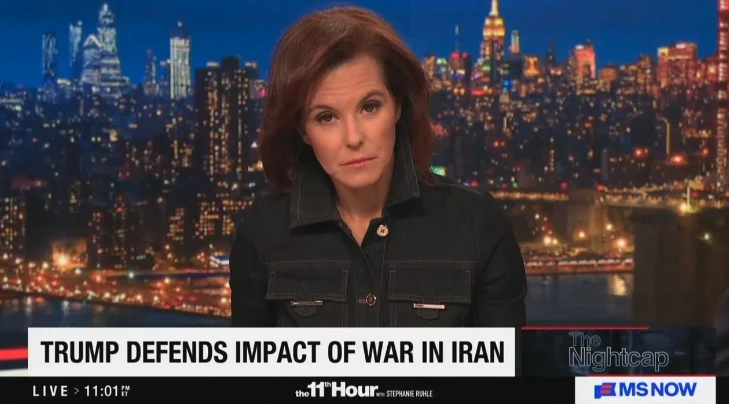
The ongoing military conflict between the United States, Israel, and Iran reached a new rhetorical flashpoint this week as MS NOW host Stephanie Ruhle issued a pointed critique of President Donald Trump’s description of the hostilities. During a broadcast of The 11th Hour, Ruhle challenged the president’s repeated use of the term "excursion" to characterize a conflict that has resulted in significant loss of life, the assassination of high-ranking foreign officials, and a growing global energy crisis. The disagreement highlights a widening gap between the administration’s optimistic framing of the military campaign and the grim humanitarian and economic realities reported from the Persian Gulf and Tehran.
President Trump’s comments, delivered during a series of press briefings and public appearances, suggested that the military engagement—which began with intensive bombing on February 28, 2026—is a temporary and manageable endeavor. "We did a little excursion," the president stated during one exchange. "We had to take this little couple of weeks, a few weeks, excursion. But it’s been incredible. Our military’s unbelievable." When pressed on whether the situation should be classified as a war or an excursion, the president maintained that it was "both," adding that the United States would not withdraw until the "job is finished," which he predicted would happen "very fast."
Ruhle, however, argued that the linguistic choice of "excursion"—defined by the Merriam-Webster dictionary as a brief, often leisurely trip—is fundamentally at odds with the scale of the violence and the strategic stakes involved. Comparing the president’s rhetoric to everyday life, Ruhle noted, "My son’s on a snorkeling trip today. That’s an excursion." She then proceeded to contrast the term with the documented outcomes of the past several weeks of combat.
The Humanitarian and Military Toll of the Conflict
The conflict has produced a casualty count that contradicts the notion of a minor military outing. Since the initiation of joint U.S. and Israeli air strikes on February 28, the death toll in Iran has surpassed 1,000 people. This figure includes not only military personnel but also the highest levels of the Iranian government. The most significant loss reported was that of Supreme Leader Ali Khamenei, along with dozens of top-tier officials within the Islamic Revolutionary Guard Corps (IRGC). The decapitation of the Iranian leadership has created a power vacuum in the region, the consequences of which are still being assessed by intelligence agencies.
Beyond the political leadership, the civilian toll has drawn international condemnation. On March 11, 2026, a missile strike hit an elementary school in southern Iran, resulting in the deaths of at least 175 people, the vast majority of whom were children. While the administration initially remained silent on the specifics of the strike, officials later confirmed to The New York Times that U.S. forces were responsible for the hit. This incident has become a focal point for critics who argue that the "excursion" has strayed far from surgical precision into the realm of a high-intensity, high-casualty war.
American forces have also sustained losses. Iranian retaliatory strikes, which began shortly after the initial February 28 bombings, have claimed the lives of seven American service members. These deaths represent the first direct combat fatalities in a state-on-state conflict between the U.S. and Iran in decades, further complicating the administration’s narrative of a swift and painless operation.
Chronology of Escalation: February 28 to the Present
The current crisis did not emerge in a vacuum but followed months of escalating tensions regarding nuclear proliferation and regional proxy activities.
- February 28, 2026: The United States and Israel launch a coordinated aerial campaign targeting Iranian nuclear facilities, air defense systems, and command-and-control centers. The administration describes the move as a preemptive strike to prevent imminent threats.
- March 2–5, 2026: Iran launches a series of ballistic missile strikes against U.S. installations in Iraq and eastern Syria. While initial reports suggest minimal damage, the intensity of the barrages signals a protracted conflict.
- March 8, 2026: The Department of Defense confirms the first American fatalities resulting from an Iranian drone strike on a logistical hub.
- March 11, 2026: The strike on the elementary school in southern Iran occurs. The international community, including several European allies, calls for an immediate ceasefire and a transparent investigation.
- March 15–18, 2026: The conflict shifts toward the maritime domain. Iran begins targeting commercial shipping in the Strait of Hormuz, a critical artery for global energy supplies.
- Present Day: President Trump continues to describe the operation as an "excursion," even as the International Energy Agency (IEA) takes unprecedented steps to stabilize global markets.
Disruption of Global Trade and Energy Security
One of the most significant aspects of the conflict that Ruhle highlighted was the escalating maritime war in the Persian Gulf. According to Iranian state television and independent tracking data, Iranian forces have launched their most intense attacks to date on commercial shipping interests. In the Strait of Hormuz, three commercial vessels were recently attacked, with Iran claiming responsibility for at least one.
The violence has extended deeper into the Persian Gulf and Iraqi waters. Just hours before Ruhle’s broadcast, two more tankers were struck. Reports from Iraq’s state news agency, corroborated by The New York Times, confirmed that one crew member died and 38 others were rescued following a fire on one of the vessels. These attacks are widely seen as an attempt by Iran to leverage its geographic position to choke off the world’s oil supply in response to the bombing of its mainland.
The strategic impact of these shipping disruptions has been immediate. The International Energy Agency (IEA) has been forced to approve the largest ever release from emergency oil reserves in its history. This move was intended to prevent a total collapse of the global economy as oil prices spiked to record highs following the closure of key trade routes. Analysts suggest that if the "excursion" continues, the release of reserves may only provide a temporary buffer against a deeper energy crisis.
Official Responses and Political Reaction
The White House has remained steadfast in its messaging. Press Secretary statements have mirrored the president’s confidence, asserting that the military objectives are being met ahead of schedule. The administration maintains that the removal of Supreme Leader Khamenei and the destruction of nuclear infrastructure have made the world safer, regardless of the terminology used to describe the process.
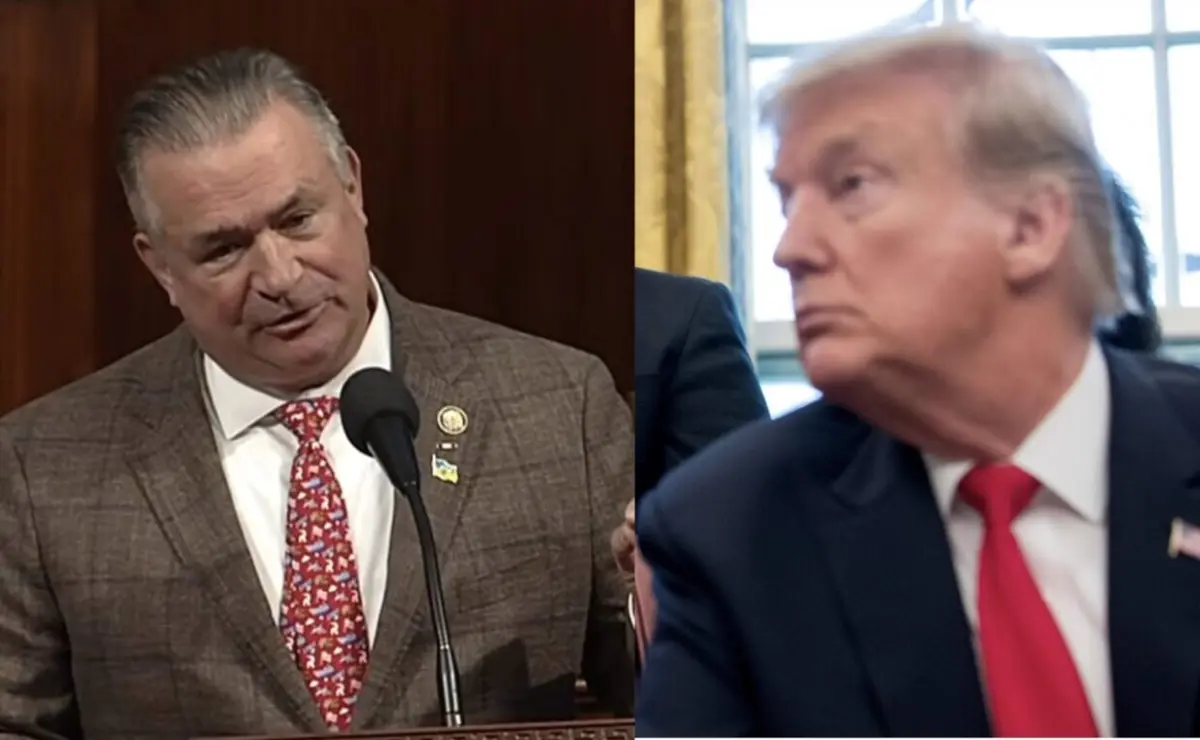
However, the domestic political landscape is increasingly fractured. While some members of Congress have praised the president’s "boldness" and the efficacy of the U.S. military, others have joined Ruhle in criticizing the administration’s rhetoric. Critics argue that calling a war an "excursion" is a deliberate attempt to avoid the legal and political requirements of a formal declaration of war and to minimize public concern over the mounting death toll.
"When you use words like ‘excursion’ to describe the deaths of children and the sinking of oil tankers, you are not just being inaccurate; you are being dangerously dismissive of the gravity of the situation," said one senior member of the Senate Foreign Relations Committee in a statement following Ruhle’s segment. "This is a full-scale regional war with global implications."
Analysis of Implications
The use of the word "excursion" carries significant weight in the context of international law and domestic policy. By framing the conflict as a brief, limited engagement, the administration may be attempting to bypass the War Powers Resolution, which requires the president to consult with Congress and limits the time U.S. forces can be involved in hostilities without legislative authorization.
Furthermore, the "excursion" narrative risks underestimating the long-term requirements of the conflict. History has shown that "fast" military operations in the Middle East often evolve into multi-year occupations or protracted insurgencies. The decapitation of the Iranian leadership, while a tactical success from a military standpoint, leaves the country without a centralized authority to negotiate a peace treaty or a ceasefire. This raises the prospect of a chaotic, fragmented Iran that could become a breeding ground for further instability.
Economically, the largest-ever release of oil reserves is a "break glass in case of emergency" measure. It indicates that the global energy market is under extreme duress. If the "excursion" does not conclude "very fast," as the president predicts, the depletion of these reserves could leave the global economy vulnerable to future shocks without any remaining safety net.
Conclusion
The controversy surrounding President Trump’s rhetoric, as highlighted by Stephanie Ruhle, serves as a microcosm of the broader debate over the Iran conflict. While the administration points to military milestones and the speed of their operations as evidence of a successful "excursion," the rising body count, the destruction of civilian infrastructure, and the destabilization of global energy markets suggest a reality far more complex and enduring. As the conflict enters its next phase, the disconnect between official terminology and the events on the ground will likely remain a central point of contention for journalists, policymakers, and the public alike.


 Yuyun Lusiyani
 Joko Widodo
 Eva Lovia
 Pevita Pearce
 admin
admin