Pevita Pearce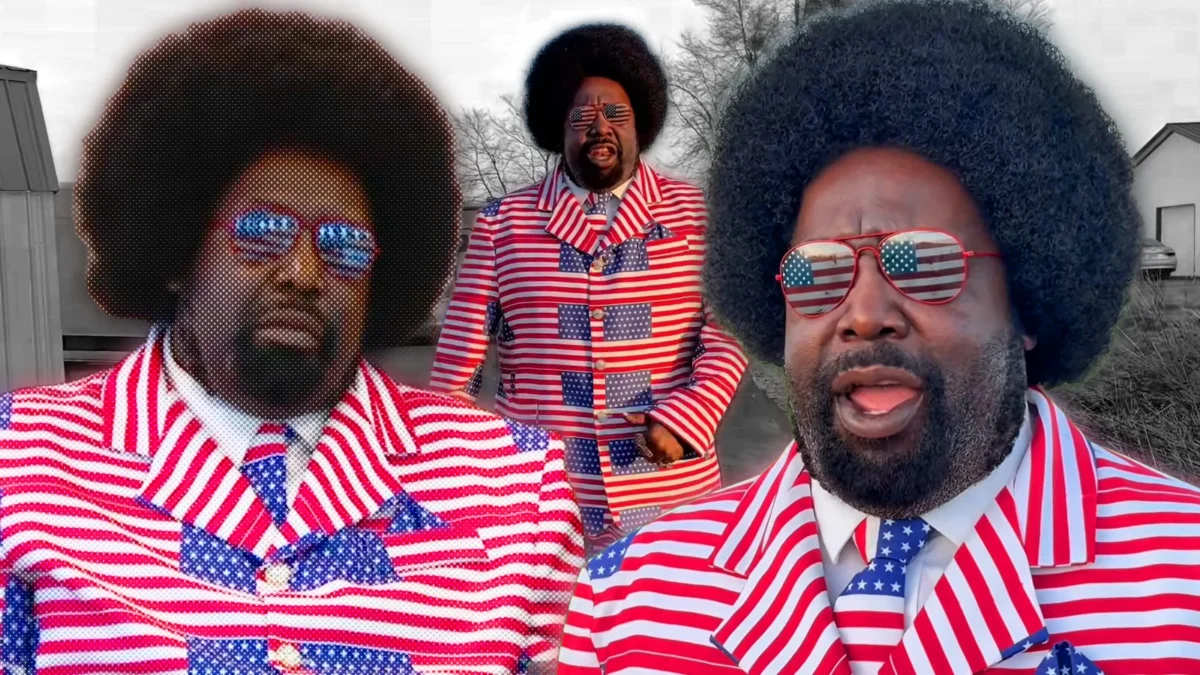
The intersection of celebrity, digital privacy, and law enforcement accountability has taken center stage in an Adams County, Ohio, courtroom as the defamation trial involving Joseph Foreman, known professionally as the rapper Afroman, enters a critical phase. The proceedings, which have garnered national attention, stem from a 2022 police raid on Foreman’s residence that resulted in no criminal charges but sparked a series of viral music videos and a subsequent retaliatory lawsuit from the officers involved. At the heart of the dispute is a fundamental legal question: where does the line lie between protected satirical commentary on public officials and the unlawful defamation of private individuals?
Joseph Foreman, a Grammy-nominated artist best known for his 2000 hit "Because I Got High," finds himself defending his creative output against seven members of the Adams County Sheriff’s Office. The plaintiffs allege that Foreman’s use of their likenesses in music videos and social media posts caused them significant emotional distress and reputational harm. Conversely, Foreman maintains that his actions were a legitimate exercise of his First Amendment rights, intended to document and protest what he describes as an unjust and destructive search of his private property.
The Genesis of the Dispute: The August 2022 Raid
The conflict began on August 21, 2022, when deputies from the Adams County Sheriff’s Office executed a search warrant at Foreman’s home in Winchester, Ohio. The warrant was reportedly based on allegations of drug trafficking and kidnapping. Foreman was not present during the operation, as he was traveling back from a performance in Chicago, but he was able to monitor portions of the raid in real-time through his home’s integrated security camera system.
According to court records and Foreman’s public statements, the raid was highly invasive. Deputies were seen on camera entering the premises with tactical gear and weapons drawn. While the search was thorough, it ultimately proved fruitless. No evidence of kidnapping or large-scale drug trafficking was discovered, and Foreman was never charged with a crime. However, the rapper alleged that the search resulted in approximately $20,000 in property damage, including broken doors and a tampered-with security system.
The most controversial aspect of the raid involved the seizure of cash. Foreman testified that he had a significant amount of money stored in a suit pocket—estimated at $5,000—which he claimed was missing or incorrectly accounted for when his property was eventually returned. An independent investigation by the Ohio Bureau of Criminal Investigation (BCI) later confirmed a discrepancy in the cash count, although the Sheriff’s Office attributed this to a clerical error rather than theft.
Artistic Retaliation and the Viral "Lemon Pound Cake" Phenomenon
In the wake of the raid, Foreman opted for a unique method of protest. Rather than relying solely on traditional legal channels to seek damages, he utilized the security footage captured during the search to produce a series of music videos. These tracks, including "Lemon Pound Cake" and "Will You Help Me Repair My Door," featured actual footage of the deputies moving through his home.
The video for "Lemon Pound Cake" became a viral sensation. It featured a specific clip of a deputy pausing to look at a cake sitting on Foreman’s kitchen counter while holding a tactical rifle. Foreman’s lyrics mocked the officers’ conduct, questioning the necessity of the raid and highlighting the absurdity of the situation. The videos were not only a form of social commentary but also a commercial endeavor; Foreman used the proceeds from the songs and related merchandise to fund the repairs to his home.
The deputies, however, did not view the content as harmless satire. In 2023, seven members of the Sheriff’s Office filed a civil lawsuit against Foreman. They argued that the rapper had misappropriated their names and likenesses for commercial gain and that his public posts had subjected them to ridicule, death threats, and "tremendous pain."
Chronology of the Legal Proceedings
To understand the complexity of the current trial, it is necessary to examine the timeline of events leading up to the 2026 court dates:
- August 21, 2022: The Adams County Sheriff’s Office raids Joseph Foreman’s home in Winchester, Ohio. No charges are filed.
- September – December 2022: Foreman releases "Lemon Pound Cake" and "Will You Help Me Repair My Door," featuring raid footage. The videos accumulate millions of views.
- March 2023: Seven deputies file a lawsuit in the Adams County Common Pleas Court, alleging defamation, invasion of privacy, and intentional infliction of emotional distress.
- Late 2023: Afroman’s legal team, supported by the ACLU of Ohio, files a motion to dismiss, arguing the videos are protected speech.
- 2024: A judge dismisses the "misappropriation of likeness" claims regarding commercial merchandise but allows the defamation and emotional distress claims to proceed to trial.
- March 2026: The trial officially begins, with Foreman and several deputies providing testimony.
Testimony from the Witness Stand: A Clash of Perspectives
During the trial proceedings on March 17, 2026, the courtroom heard contrasting accounts of the impact of the viral videos. One of the plaintiffs, Deputy Randolph L. Walters Jr., testified about the personal toll the videos had taken on his life. Walters pointed to specific lyrics in which Foreman suggested the deputy’s wife might be unfaithful or that the deputy was preoccupied with the rapper’s personal life. Walters described these claims as baseless rumors that caused him "tremendous pain" and damaged his professional standing in the community.
When Joseph Foreman took the stand, his defense remained steadfast. He argued that the entire situation was a direct consequence of the Sheriff’s Office’s decision to raid his home without sufficient cause. "All of this is their fault," Foreman told the court. He testified that as an entertainer, his primary medium of expression is music, and he used that medium to process the trauma of having his home "wrongly raided."
Foreman’s testimony also addressed the financial discrepancies. He recounted the frustration of seeing his hard-earned money seized and then returned short of the original amount. He maintained that his public criticisms were not born out of a desire to harass individuals, but rather a need to hold a public institution accountable for its actions.
Legal Analysis: Satire, Privacy, and the First Amendment
The Afroman case is being closely watched by legal experts because it tests the boundaries of the "Public Concern" doctrine. Generally, public officials—such as police officers—face a higher burden of proof in defamation cases. Under the landmark Supreme Court ruling in New York Times Co. v. Sullivan, a public official must prove "actual malice"—meaning the defendant knew the information was false or acted with reckless disregard for the truth.
The ACLU of Ohio, which has provided legal support to Foreman, argues that the videos constitute a form of "parody and political speech." They contend that because the footage depicts officers performing their official duties in a citizen’s home, the public has a vested interest in seeing and commenting on that behavior.
However, the plaintiffs’ counsel argues that Foreman crossed the line by targeting the deputies’ private lives and families. They assert that while the raid itself may be a matter of public record, the "weaponization" of the officers’ identities for entertainment purposes constitutes an actionable tort. The court’s decision will likely hinge on whether the lyrics and social media captions are viewed as statement of fact or as hyperbolic, protected opinion.
Supporting Data and Institutional Impact
The raid and subsequent lawsuit have had measurable impacts on both parties. For Joseph Foreman, the "Afroman Raid" era marked a significant resurgence in his career visibility. Data from streaming platforms indicated a double-digit percentage increase in his monthly listeners following the release of the "Lemon Pound Cake" video. Conversely, the Adams County Sheriff’s Office has faced a public relations challenge. The viral nature of the footage led to a surge in public records requests and heightened scrutiny of the office’s warrant procedures.
Internal records from the Sheriff’s Office, discussed during discovery, suggested that the morale of the department was affected by the national mockery. The case also prompted a review of how the office handles high-profile searches, particularly concerning the presence of home security systems and the potential for footage to be used in the public domain.
Broader Implications for Digital Accountability
The resolution of this trial will set a significant precedent for the digital age. As home surveillance technology becomes more ubiquitous, the likelihood of police actions being recorded and shared increases. This case asks whether citizens have the right to monetize their own victimization or if the privacy rights of officers override the expressive rights of the homeowner.
Furthermore, the case highlights the power of social media as a tool for oversight. In previous decades, a "wrongful raid" might have resulted in a quiet settlement or a dismissed complaint. In the current era, an artist with a platform can bypass traditional media and legal gatekeepers to present their version of events to a global audience.
As the trial in Adams County Common Pleas Court continues, the jury will be tasked with weighing the emotional grievances of the seven deputies against the constitutional protections afforded to Joseph Foreman. Regardless of the verdict, the case has already underscored a shifting dynamic in the relationship between law enforcement and the communities they serve, where the "court of public opinion" is often just as influential as the court of law.



 Jia Lissa
 Yuyun Lusiyani
 Joko Widodo
 Eva Lovia