
 Lina Irawan
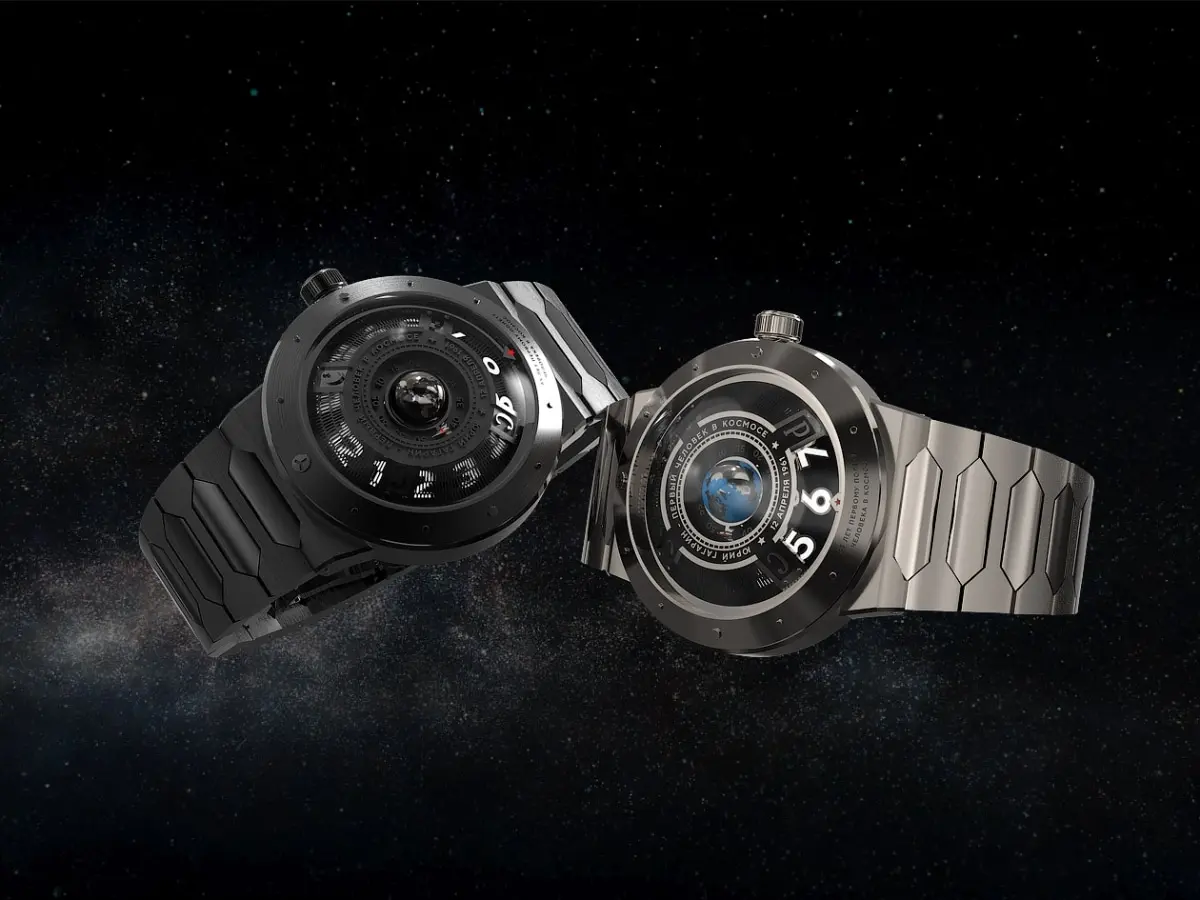
Independent designer Alexey Yakushik has officially unveiled a commemorative timepiece that honors one of the most significant milestones in human history: the first manned orbital flight. Titled the Yuri Gagarin – First in Space, the watch serves as a mechanical tribute to the 12 April 1961 mission, during which cosmonaut Yuri Gagarin transcended the terrestrial atmosphere to become the first human in outer space. This release follows a growing trend of space-themed horology, offering a distinct Russian perspective on the mid-20th-century space race and the engineering triumphs of the Soviet era.
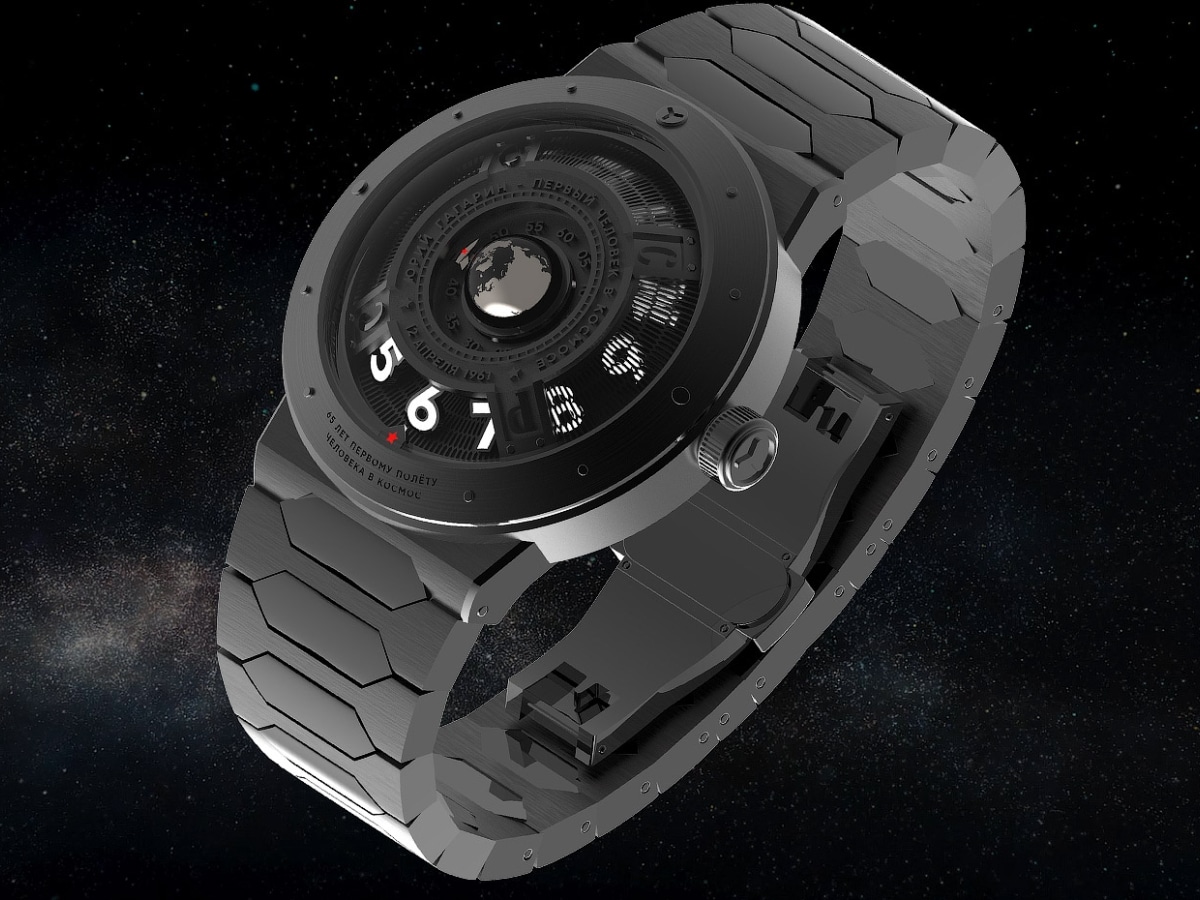
The timepiece distinguishes itself through a theatrical and unconventional approach to timekeeping. At the center of the dial sits a three-dimensional representation of Earth, rendered in a striking blue. Encircling this globe is a miniature spacecraft that functions as the minute hand. While the actual Vostok 1 mission took approximately 108 minutes to complete a full orbit—with the orbital phase lasting roughly 89 minutes—Yakushik’s design prioritizes horological utility, with the rocket completing its circuit once every 60 minutes.
Design Philosophy and Aesthetic Tribute
The aesthetic of the Yuri Gagarin – First in Space is deeply rooted in the visual language of the Soviet space program. The dial features four diagonal plates prominently displaying the letters "СССР" (USSR), the Cyrillic abbreviation for the Union of Soviet Socialist Republics. This design choice serves as a direct nod to the markings found on Gagarin’s iconic white spacesuit and the Vostok 1 capsule.
Unlike traditional watches that utilize central hands for both hours and minutes, Yakushik employs a separate display system for the hours. A red pointer rotates on a lower plane beneath the central globe, picking out the hours on a secondary scale. This layered construction creates a sense of depth, mimicking the perspective of an observer looking down at the planet from a spacecraft window.
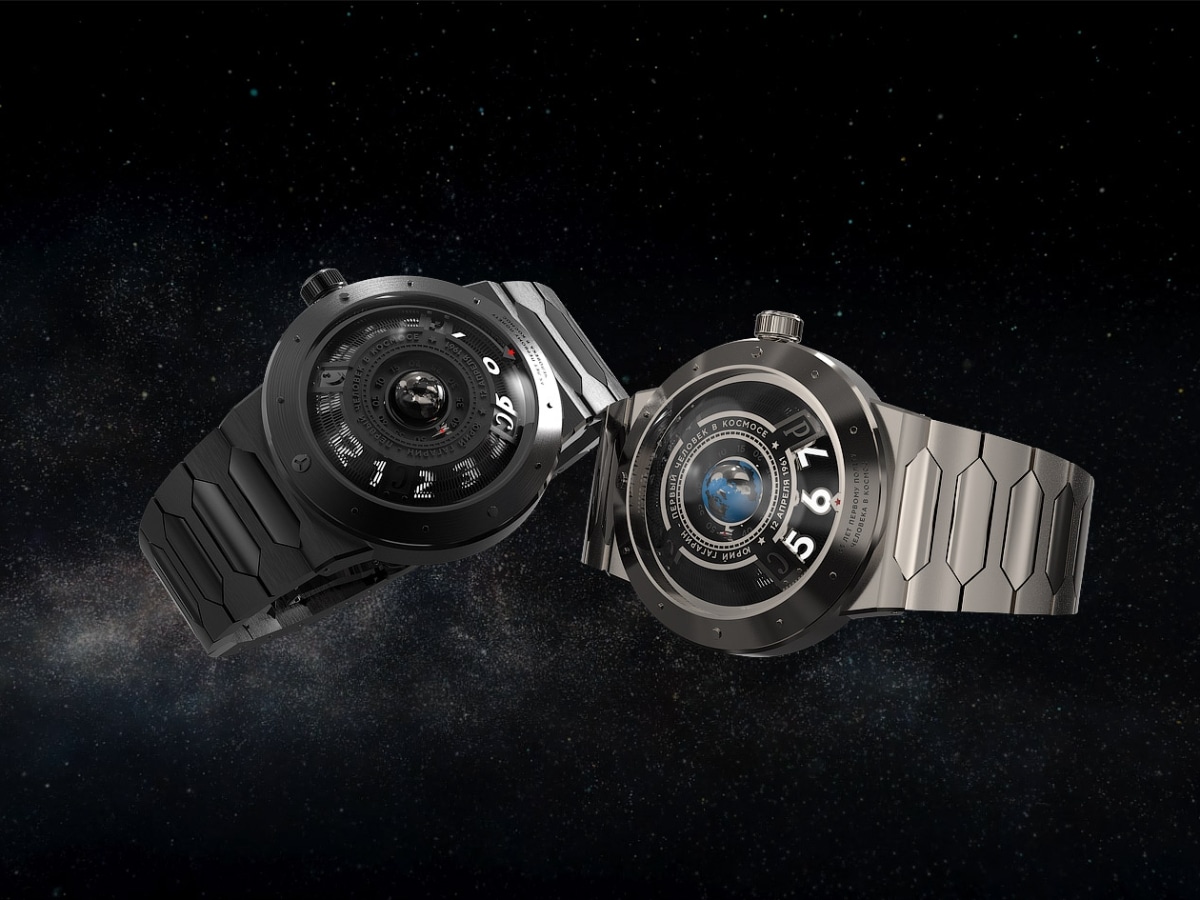
The watch arrives at a time when other luxury brands, such as Bell & Ross with their BR-03 Space Mission, are exploring futuristic or speculative space travel. In contrast, Yakushik’s work is firmly grounded in historical realism, celebrating the specific achievement that occurred eight years before the American Apollo 11 moon landing.
Technical Specifications and Engineering
Constructed to withstand more than just the rigors of daily wear, the timepiece features a substantial 45mm case. Despite its large dimensions, the watch maintains a wearable weight through the use of Grade 5 titanium. This material, an alloy consisting of 6% aluminum and 4% vanadium, is frequently used in the aerospace industry due to its high strength-to-weight ratio and exceptional corrosion resistance. The integrated bracelet is also crafted from the same titanium alloy, ensuring a cohesive and lightweight feel on the wrist.
A defining feature of the watch is the oversized, domed sapphire crystal. This crystal is engineered to resemble the porthole of the Vostok 1 capsule, providing a panoramic view of the "orbital" movement within. To enhance legibility in low-light conditions, the dial incorporates luminous detailing on the celestial elements and indicators.
Internally, the watch is powered by a Japanese-made Miyota 8215 automatic movement. The 8215 is a non-hacking workhorse movement known for its reliability, featuring 21 jewels and a power reserve of approximately 42 hours. However, the standard movement has been significantly modified with Yakushik’s proprietary AYW001.1 module. This custom-engineered component is responsible for driving the unique orbital minute hand and the unconventional hour display, translating the movement’s rotational energy into the specific mechanical choreography required for the space-themed dial.
Historical Context: The Vostok 1 Mission
To understand the significance of the Yuri Gagarin – First in Space watch, one must look at the chronology of the events it commemorates. The Vostok 1 mission was the culmination of years of intense competition between the Soviet Union and the United States.
On 12 April 1961, at 06:07 UTC, the Vostok-K rocket launched from the Baikonur Cosmodrome. Inside the small spherical capsule sat 27-year-old Yuri Gagarin. The flight was entirely automated, as medical experts at the time were unsure how the human body and mind would react to weightlessness; Gagarin was provided with an override code in a sealed envelope only to be used in an emergency.
The mission’s success provided the Soviet Union with a major propaganda victory and solidified Gagarin’s status as a global icon. Interestingly, the landing of Vostok 1 differed significantly from the American Mercury missions. While American astronauts remained inside their capsules for a "splashdown" in the ocean, Gagarin ejected from his capsule at an altitude of approximately 7,000 meters (23,000 feet) and descended via parachute to a field in the Saratov region. Yakushik’s watch, which boasts 100 meters of water resistance, ironically offers protection that Gagarin’s actual mission profile did not require, though it adds a layer of modern durability for the contemporary collector.
Official Endorsements and Industry Recognition
The development of the Yuri Gagarin – First in Space was not a solitary endeavor but a project conducted with significant institutional support. Alexey Yakushik has stated that the project received the full endorsement of the Russian space agency, Roscosmos. Furthermore, the designer worked in consultation with Gagarin’s daughters, Elena and Galina Gagarina, ensuring that the tribute met the family’s standards for honoring their father’s legacy.
The first production model of the watch was presented to the Museum of Cosmonautics in Moscow, one of the largest scientific and technical museums in the world. This placement cements the watch’s status as a cultural artifact as much as a piece of jewelry.
The design community has also recognized the timepiece’s innovation. The Yuri Gagarin – First in Space was recently honored with two European Product Design Awards. These awards specifically highlighted the watch’s ability to blend historical storytelling with complex mechanical modularity, a feat often reserved for much more expensive "haute horlogerie" brands.

Comparative Analysis: The Space Watch Genre
The "space watch" is a storied category in the horological world. For decades, the Omega Speedmaster Professional, famously known as the "Moonwatch," has dominated the narrative as the first watch worn on the lunar surface. Other brands, such as Bulova, Fortis, and Seiko, have also carved out niches based on their associations with various space programs.
However, Russian horology has its own distinct lineage. During the original space flights, cosmonauts wore watches produced by the First Moscow Watch Factory, specifically the Sturmanskie ("Navigator’s") brand. Gagarin himself wore a Sturmanskie during his 108-minute flight.
Yakushik’s creation represents a modern evolution of this tradition. Rather than being a "tool watch" intended for use by active pilots, it is a "conceptual complication." It moves away from the utilitarian aesthetic of the 1960s and toward a more artistic representation of the era’s achievements. By using a Miyota base movement instead of a high-priced Swiss caliber, Yakushik has positioned the watch as an accessible piece of "kinetic art" for enthusiasts who value design and history over movement prestige.
Market Impact and Availability
The watch has been released in two primary versions: a natural titanium finish and a black PVD-coated titanium version. Both models are currently listed on the brand’s official Russian digital storefront. While the watch has generated significant interest among international collectors, specific details regarding Australian pricing and broader global distribution channels remain unconfirmed.
The release of the Yuri Gagarin – First in Space highlights a broader trend in the watch industry where independent designers are leveraging modular engineering to create niche, story-driven products. By focusing on a specific historical moment rather than general luxury appeal, Yakushik has tapped into a market of collectors who prioritize narrative and "desk-diver" aesthetics.
Conclusion and Implications
Alexey Yakushik’s Yuri Gagarin – First in Space is more than a timekeeping device; it is a mechanical retrospective on the dawn of the space age. By combining modern materials like Grade 5 titanium with a custom module that reimagines the passage of time as an orbital path, the watch pays homage to the bravery of the Vostok 1 mission and the engineering prowess of the mid-century Soviet Union.
As the 65th anniversary of Gagarin’s flight approaches, this timepiece serves as a reminder of the human drive to explore the unknown. In a market often saturated with homages to the Moon landing, Yakushik’s focus on the "First in Space" provides a necessary balance to the history of extraterrestrial exploration. For the horological community, it demonstrates that even with a standard automatic movement, creative engineering and a strong narrative can produce a timepiece that stands out in a crowded global market.




 Nila Kartika Wati

 Eva Lovia

 Yuyun Lusiyani

 Ana Megawati

 Joko Widodo
