
 Lina Irawan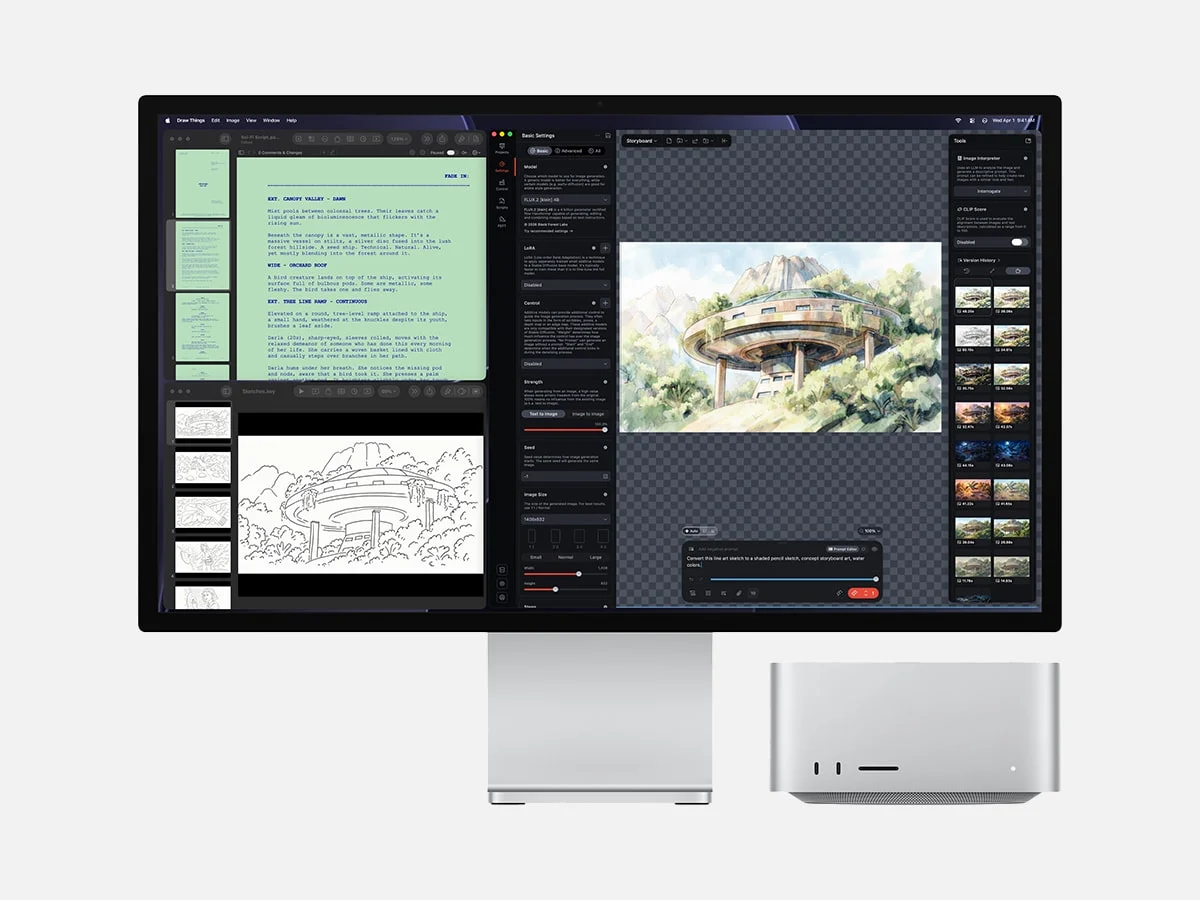
This official refresh comes at a critical juncture for the professional computing market, where a surge in demand for local artificial intelligence (AI) processing has seen secondary market prices for discontinued high-memory models reach unprecedented levels. Previously, second-hand prices for the discontinued 512GB memory Mac Studio M3 Ultra models soared to more than $60,000 on the grey market, nearly double the original retail price. This price inflation was driven by AI developers and researchers seeking to run large language models (LLMs) locally, bypassing the latency and privacy concerns associated with cloud-based inference. The announcement of the M5-powered Mac Studio, which confirms the return of a 512GB unified memory tier in October, provides a significant market correction and a more accessible pathway for high-compute professional workflows.
The Evolution of the Mac Studio and the AI Compute Crisis
The Mac Studio first entered the market as a bridge between the Mac mini and the Mac Pro, offering a compact form factor with unprecedented thermal headroom for Apple’s high-end silicon. Since its inception, the product line has evolved through the M1, M2, and M3 cycles, each iteration narrowing the gap between desktop workstations and enterprise-grade servers. However, the M4 generation notably skipped the Mac Studio and Mac Pro lines, leading to a hardware vacuum that fueled the aforementioned grey market price spikes.
The demand for high-capacity unified memory is a direct result of the architecture of modern LLMs. Unlike traditional PC architectures that separate Video RAM (VRAM) and system RAM, Apple’s unified memory architecture allows the GPU to access the entire pool of memory. For AI developers, this means the ability to load massive models—such as Llama 3 or specialized open-weight models—entirely into memory, which is essential for efficient inference and fine-tuning. The scarcity of 512GB configurations in the previous generation turned the Mac Studio into a niche but essential tool for the silicon valley and global research communities.
M5 Silicon Architecture: A Leap in Local Processing Power
At the heart of the new Mac Studio are the M5 Max and M5 Ultra chips, which represent a significant architectural shift in Apple Silicon. The M5 Max serves as the foundation, featuring an 18-core CPU composed of 6 "super cores" and 12 performance cores. This is paired with a GPU of up to 40 cores, delivering 614GB/s of memory bandwidth.
The flagship M5 Ultra effectively doubles these specifications through Apple’s UltraFusion interconnect technology. The M5 Ultra boasts a 36-core CPU (12 super cores and 24 performance cores) and an 80-core GPU, supported by a massive 1.2TB/s of memory bandwidth. A pivotal update in this generation is the integration of dedicated Neural Accelerators directly into each GPU core. This hardware-level optimization allows the Mac Studio to deliver up to 4.3x faster peak AI performance compared to the M3 Ultra and a staggering 9.8x increase over the original M1 Ultra.

For creative professionals, the M5 Ultra includes an upgraded Media Engine. This specialized hardware allows for the simultaneous playback of up to 33 streams of 8K ProRes 422 video at 30 frames per second. Furthermore, the inclusion of third-generation hardware-accelerated ray tracing enhances the system’s utility for 3D animators and architectural visualizers.
Performance Benchmarks and Real-World Application
The hardware improvements translate into substantial gains across industry-standard software suites. In benchmark testing, LLM prompt processing within the LM Studio environment ran up to 10.7x faster on the M5 Max compared to its M1 Max predecessor. Text-to-image generation tasks saw a 7.4x increase in speed, a vital metric for rapid prototyping in marketing and design.
In the realm of video production, users of Blackmagic Design’s DaVinci Resolve Studio will experience Magic Mask tracking performance up to 5.3x faster on the new hardware. For 3D rendering, Maxon Redshift scene rendering operates 4.7x faster on the M5 Ultra. Perhaps the most dramatic improvement is seen in machine learning training; Foundry Nuke’s CopyCat ML training shows a 15.4x performance leap over the M1 Ultra, significantly reducing the time required to train custom AI nodes for visual effects.

Comprehensive Connectivity and I/O Upgrades
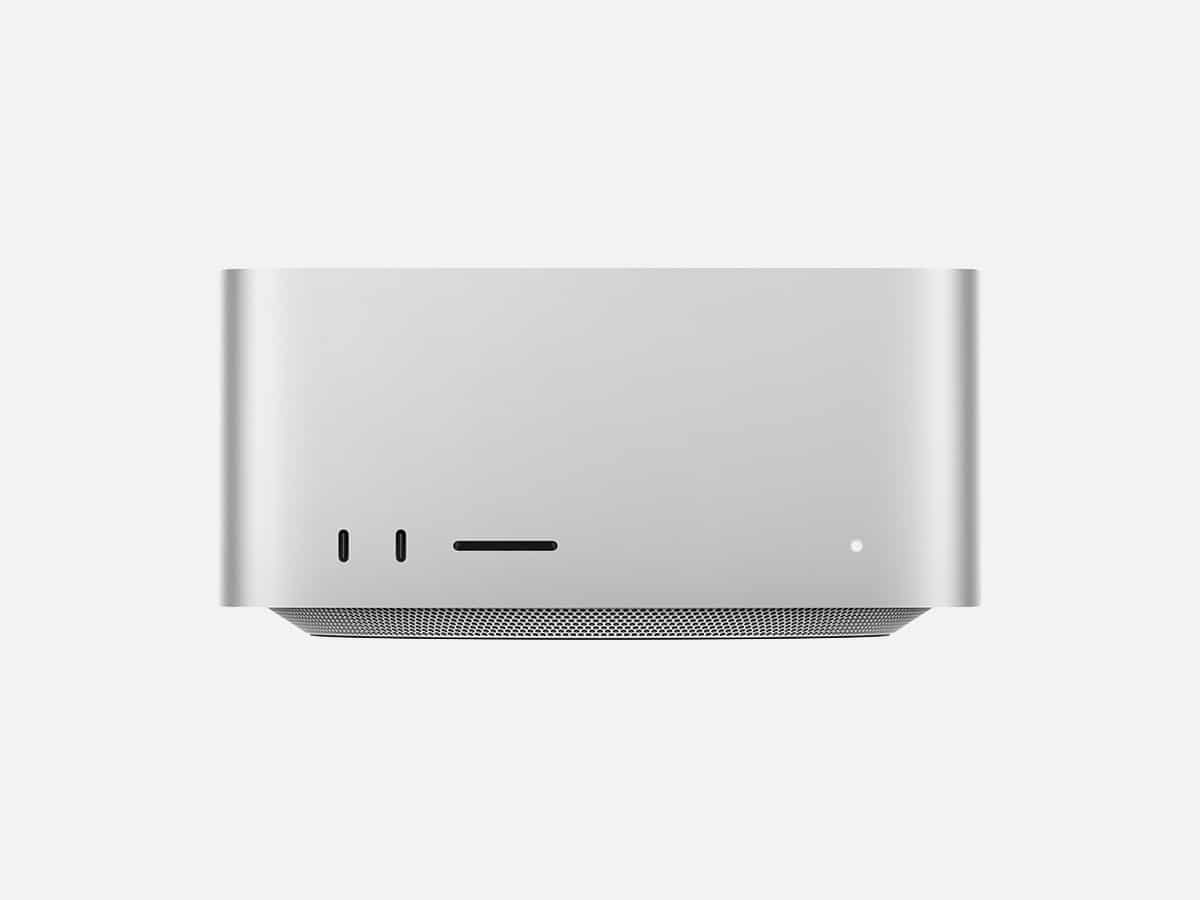
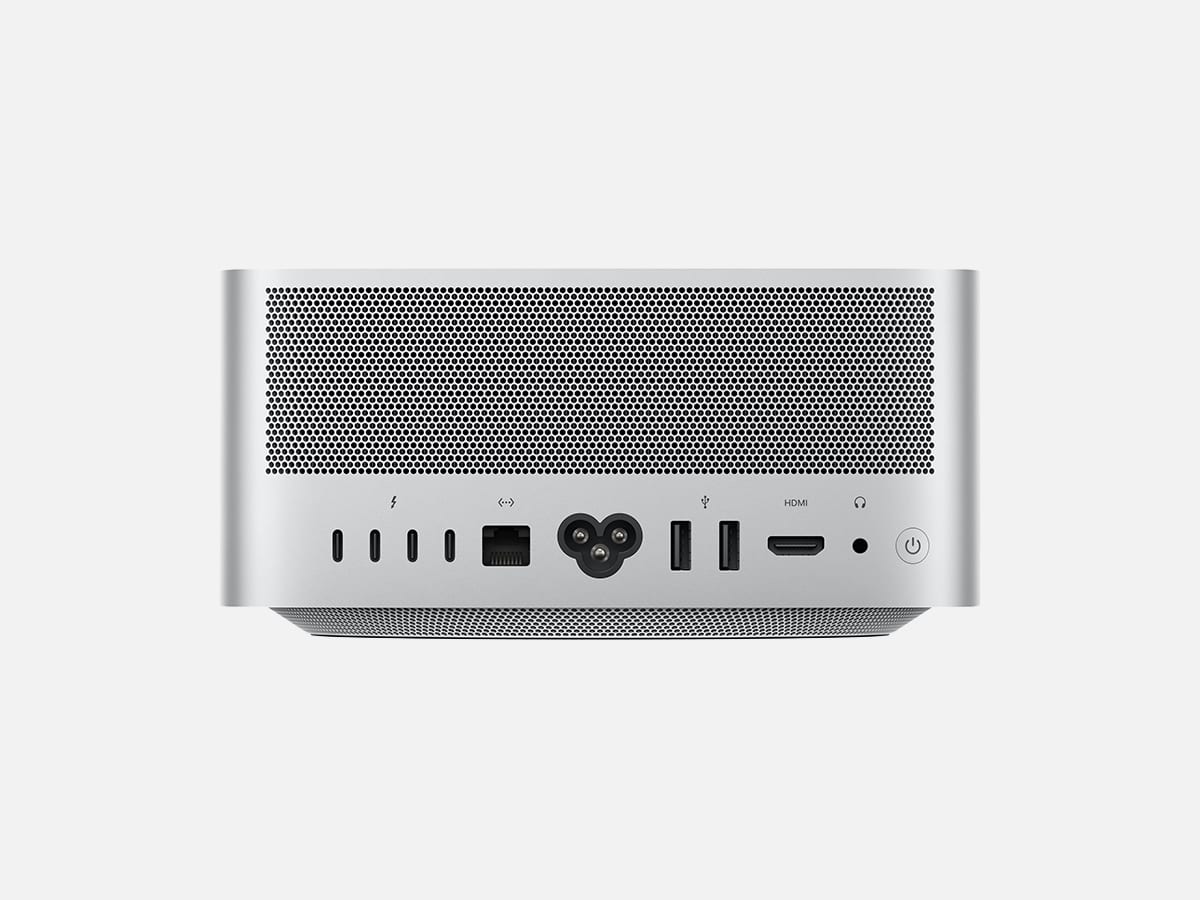
The new Mac Studio addresses the needs of high-end production environments with a comprehensive array of ports and updated wireless standards. The front of the device features two Thunderbolt 5 ports and an SDXC card slot for rapid media ingest. The rear I/O panel is equally robust, housing four additional Thunderbolt 5 ports, two USB-A ports, an HDMI port, 10Gb Ethernet, and a high-impedance 3.5mm headphone jack.
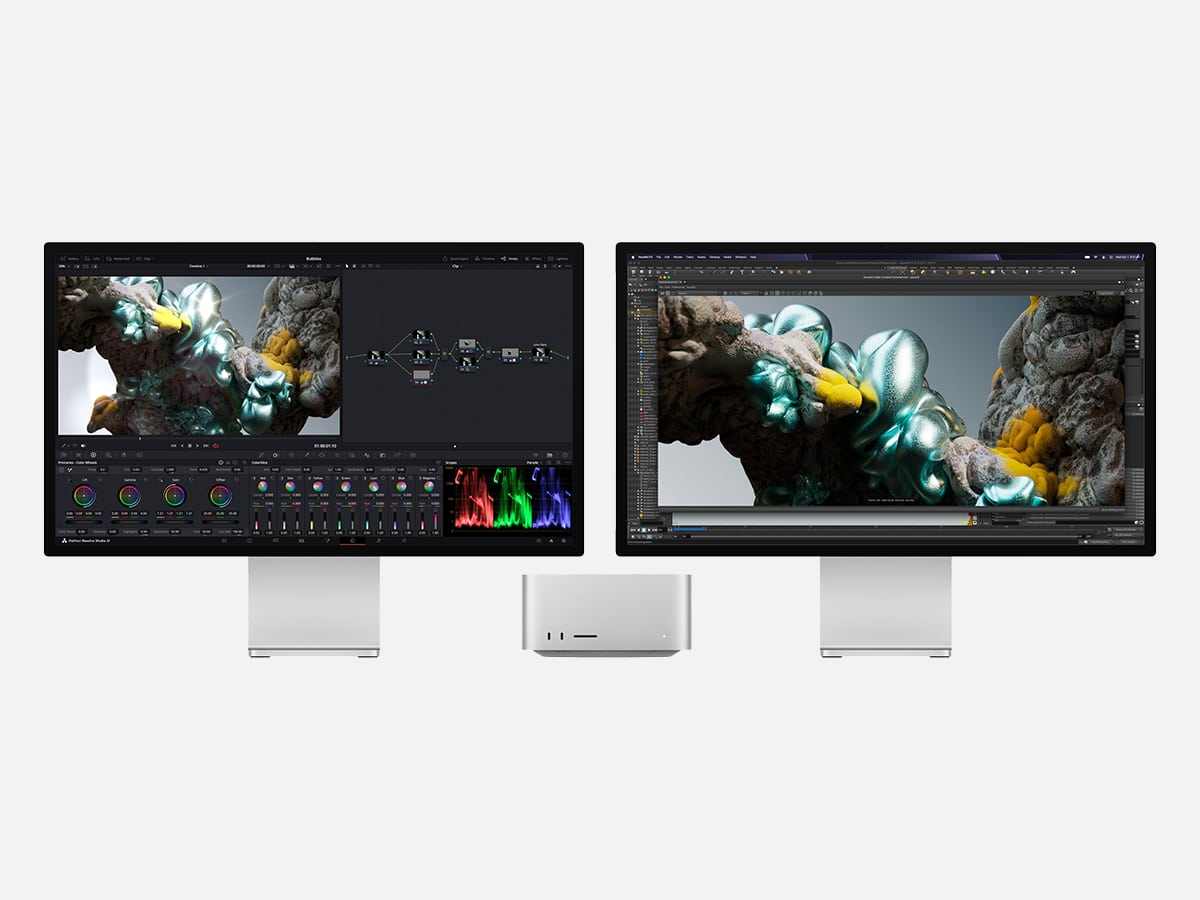
The introduction of Thunderbolt 5 is particularly noteworthy, as it provides the bandwidth necessary for complex multi-monitor setups and high-speed external storage arrays. The Mac Studio now supports up to eight external displays or four Studio Display XDR monitors at 5K resolution with a 120Hz refresh rate. Additionally, the system includes the Apple-designed N1 chip, bringing Wi-Fi 7 and Bluetooth 6 to the desktop for the first time. For professional filmmakers, the inclusion of genlock support over USB-C allows for precise frame synchronization with high-end cameras, including the iPhone 17 Pro.
Historical Pricing Context and Market Positioning
While the pricing for the fully configured Mac Studio is substantial, it remains competitive when viewed through a historical lens. The current top-tier configuration, which includes a 36-core CPU/80-core GPU M5 Ultra, 256GB of unified memory, and a 16TB PCIe Gen 6 SSD, is priced at AUD$28,699. Industry analysts estimate that once the 512GB memory tier is added to the configurator in October, the price will approach AUD$40,000.
To put this in perspective, the 2019 Intel-based Mac Pro reached a peak price of AUD$85,597 when configured with a 28-core Intel Xeon processor and 1.5TB of ECC memory. Adjusting for inflation and the sheer performance-per-watt advantage of Apple Silicon, the M5 Ultra Mac Studio offers significantly more compute power for less than half the price of the previous Intel flagship.
Furthermore, when compared to the 1983 Apple Lisa, which retailed for USD$9,995 (approximately AUD$47,000 in today’s currency), the Mac Studio represents a continuation of Apple’s strategy to place "workstation-class" power in a relatively accessible price bracket for businesses. The current hardware price increases are also reflective of a broader industry trend driven by global memory shortages and supply chain pressures, which have affected the entire Apple lineup, including the 16-inch MacBook Pro.
Software Ecosystem: macOS 27 Golden Gate and MLX
The Mac Studio will ship with macOS 27 Golden Gate, an operating system designed to leverage the new AI-centric hardware. Key features include an overhauled Siri AI with deep Spotlight integration and "Visual Intelligence" shortcuts that provide context-aware actions based on what is on the user’s screen.
For the developer community, Apple has introduced the Core AI framework and continued support for the open-source MLX machine learning framework. These tools allow researchers to cluster up to four Mac Studio units together using Thunderbolt 5 and Remote Direct Memory Access (RDMA). This multi-system clustering creates a shared memory pool, delivering up to 3x faster AI inference for frontier-class open-weight models, effectively creating a local AI "supercomputer" in a desktop form factor.
Sustainability and Manufacturing Standards
Apple has also emphasized the environmental credentials of the new Mac Studio. The chassis is constructed using 35 percent recycled content, featuring 100 percent recycled aluminium in the enclosure. All magnets within the device utilize 100 percent recycled rare earth elements. The manufacturing process is supported by 40 percent renewable energy across the supply chain, and the product is shipped in 100 percent fibre-based packaging, aligning with the company’s "Apple 2030" goal of carbon neutrality across its entire footprint.
Availability and Regional Pricing
Pre-orders for the Mac Studio are currently open across Australia. The base model with the M5 Max chip starts at AUD$4,299, while the base M5 Ultra configuration begins at AUD$9,499. The high-end 16TB SSD upgrade remains the single most expensive component at AUD$11,250.
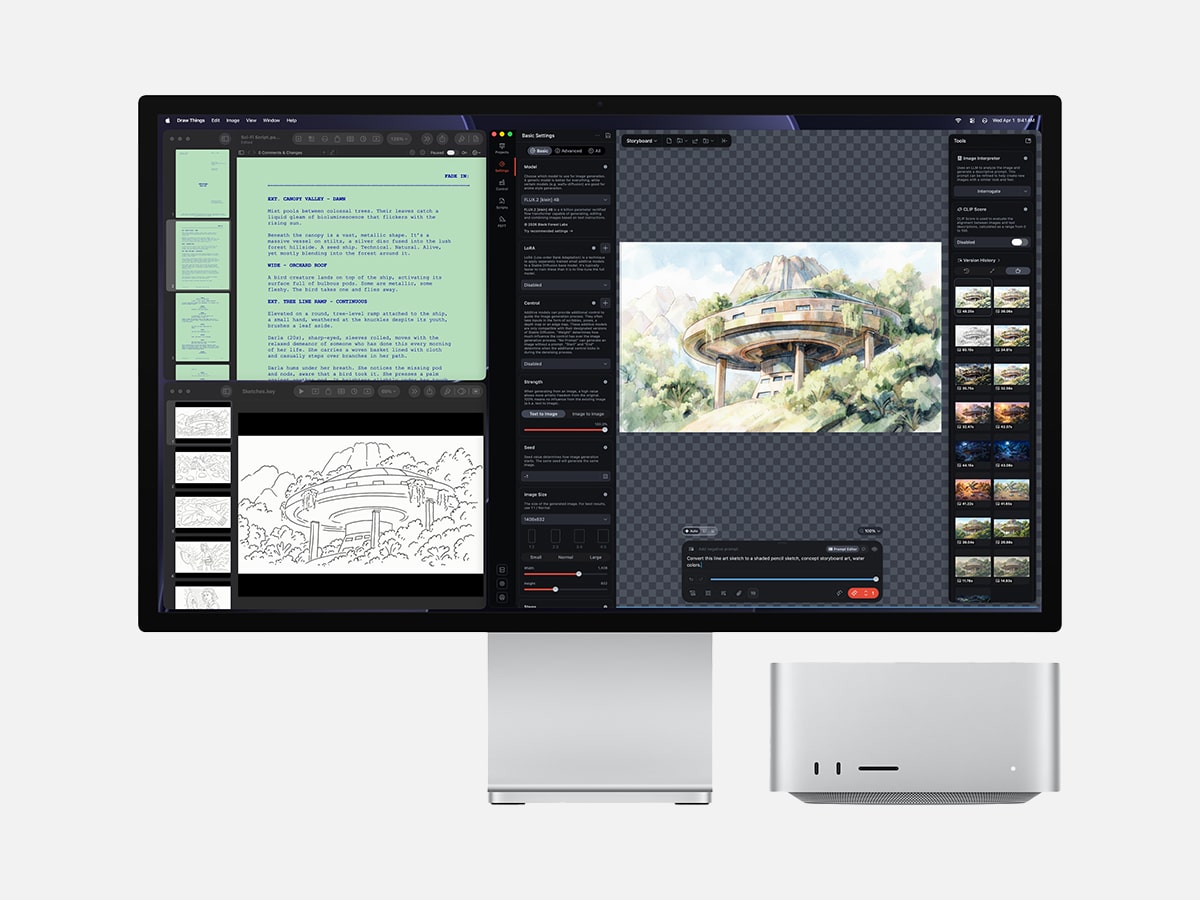
Official store deliveries and retail availability are scheduled to begin on September 22, 2026. Professionals requiring the maximum 512GB memory configuration will have to wait until October for those specific models to appear on the online configurator. Software bundles, including Final Cut Pro (AUD$499.99) and Logic Pro (AUD$299.99), are available as pre-installed options during the checkout process.
The release of the M5 Mac Studio marks a significant moment for the industry, potentially ending the era of hyper-inflated grey market prices for professional Apple hardware while providing the necessary infrastructure for the next wave of local AI development.




 Yuyun Lusiyani
 Joko Widodo
 Jia Lissa
 Pevita Pearce
 admin
admin
