
 Ana Megawati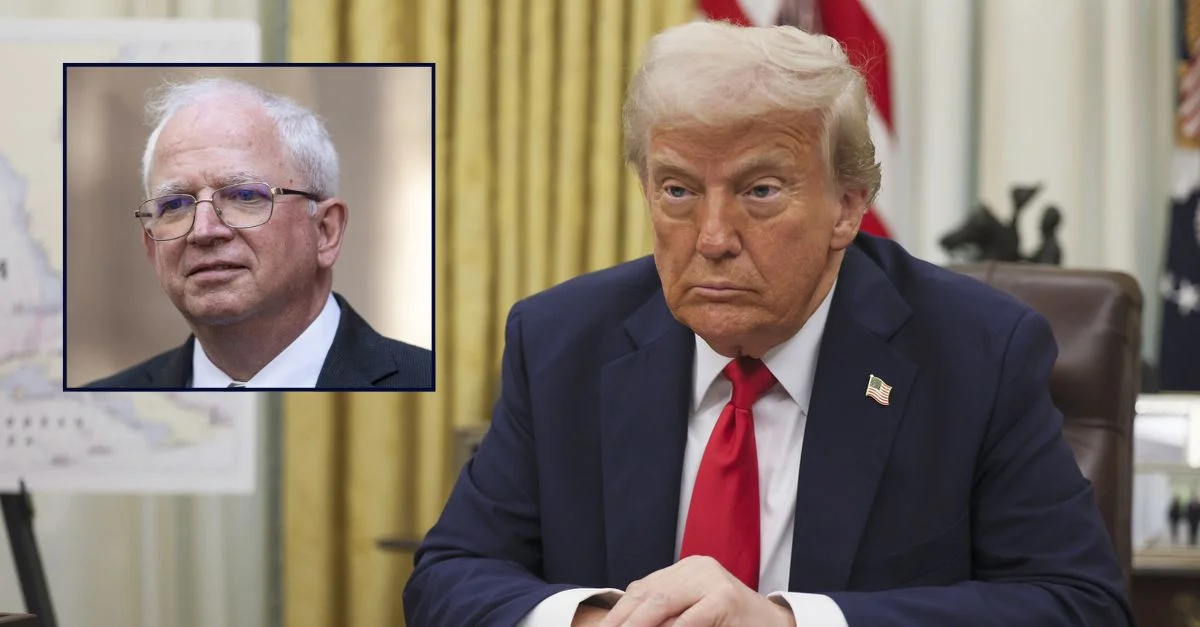
The California Supreme Court has officially disbarred John Eastman, a lawyer and former Chapman University School of Law professor, solidifying a decision that marks a significant legal consequence for his central role in efforts to overturn the 2020 presidential election results. This definitive action by the Golden State’s highest judicial body underscores the gravity with which the legal system views challenges to democratic processes and the professional conduct of attorneys involved in such endeavors. The court’s terse disposition, issued on a Wednesday, denied petitions for review filed by both Eastman and the State Bar of California, effectively endorsing the lower courts’ recommendations for disbarment.
The decision means that Eastman, State Bar Number 193726, is no longer permitted to practice law in California, and his name has been formally stricken from the roll of attorneys. This outcome culminates a protracted disciplinary process that scrutinized Eastman’s actions and legal theories devised to keep former President Donald Trump in power despite his electoral defeat to Joe Biden.
The Architect of Disinformation: John Eastman’s Role in the 2020 Election Challenge
John Eastman emerged as a key figure in the post-2020 election landscape, becoming a prominent legal voice advocating for strategies to challenge and ultimately reverse the certified results. A seasoned constitutional lawyer and academic, Eastman brought an air of intellectual credibility to what many legal scholars and government officials deemed to be unfounded and dangerous theories. His involvement escalated significantly after the November 2020 election, when he began advising President Trump and his campaign on various legal avenues to contest the outcome.
At the heart of the State Bar’s case against Eastman were the notorious "coup memos." These documents, drafted by Eastman, outlined highly controversial and legally dubious scenarios under which Vice President Mike Pence could, or should, reject electoral votes from certain states on January 6, 2021, thereby preventing Joe Biden’s certification as president. The memos proposed an interpretation of the Electoral Count Act of 1887 that would grant the Vice President unilateral authority to determine the validity of electoral slates, or to delay the certification process, sending the decision back to state legislatures. These theories were widely rejected by legal experts across the political spectrum as unconstitutional and a direct assault on the democratic process.
Eastman’s legal strategy, articulated in these memos, envisioned a path where state legislatures could appoint alternate slates of electors, or where Vice President Pence could unilaterally refuse to count legitimate electoral votes from states like Arizona, Georgia, Michigan, Pennsylvania, and Wisconsin, which Biden had won. This would either throw the election to the House of Representatives, where each state delegation would have one vote (favoring Republicans), or simply create enough chaos to prevent Biden’s certification. Critics argued that these proposals were not merely aggressive legal arguments but a blueprint for subverting a legitimate election, relying on false claims of widespread voter fraud that had been repeatedly debunked by courts, election officials, and even Trump’s own Justice Department.
His public and private advocacy for these theories placed him at the center of the controversy surrounding the January 6, 2021, events at the U.S. Capitol, including a speech he delivered at the "Stop the Steal" rally just hours before the insurrection. The State Bar of California’s disciplinary proceedings against Eastman focused not just on the content of his advice, but on whether his actions, particularly in advancing claims he allegedly knew to be false or recklessly disregarded as false, constituted professional misconduct warranting disbarment.
A Detailed Chronology of Legal Proceedings
The path to John Eastman’s disbarment has been long and intricate, spanning multiple years and judicial levels. The timeline below highlights the key milestones in this significant legal battle:
- November 2020 – January 2021: Following the 2020 presidential election, Eastman actively advises President Trump and his campaign, authoring the "coup memos" and publicly advocating for strategies to challenge the election results. He participates in meetings at the White House and speaks at the January 6th rally.
- Late 2021 – Early 2022: The State Bar of California initiates an investigation into Eastman’s conduct, prompted by numerous complaints regarding his role in the 2020 election challenges.
- August 2022: The State Bar of California files formal disciplinary charges against Eastman, alleging multiple violations of professional ethics, including making false and misleading statements about the 2020 election and attempting to obstruct the peaceful transfer of power.
- June 2023: Eastman appears for a hearing in Los Angeles, an event noted in the original article’s caption. This is part of the ongoing State Bar Court proceedings.
- March 2025: The original article mentions President Trump in the Oval Office on this date, indicating the ongoing nature of political discussions around the 2020 election and related legal matters. While not directly part of Eastman’s disbarment timeline, it serves as a contextual marker for the political environment.
- June 2025: The State Bar Court’s Review Department issues its ruling, affirming the Hearing Department’s recommendation for disbarment. This ruling automatically forwards the case to the California Supreme Court for final review.
- Early September 2025: The State Bar of California files its petition for review with the California Supreme Court. Bar authorities ask the justices to affirm the disbarment recommendation but also take issue with the lower courts’ standard of review regarding free speech and their characterization of ultimate findings, specifically concerning "strict scrutiny."
- Late September 2025: Eastman’s defense team files its own petition for review, requesting the California Supreme Court to overturn the disbarment recommendation and halt the proceedings. Eastman had been granted additional time to file this petition.
- November 2025 (or immediately prior): The California Supreme Court issues its disposition, denying both petitions for review. This action finalizes the disbarment order.
Throughout this extensive process, the State Bar Court — which operates with a Hearing Department and a Review Department, akin to a trial court and appellate court within the bar system — meticulously examined evidence and arguments. Both departments consistently found Eastman culpable of serious ethical violations, culminating in the recommendation for disbarment that the California Supreme Court ultimately affirmed.
Legal Arguments and Constitutional Scrutiny
A central point of contention throughout Eastman’s disciplinary proceedings revolved around the legal standard applied to his speech and actions. The lower courts, specifically the State Bar Court’s Hearing and Review Departments, determined that "all of Eastman’s relevant statements were core political speech triggering strict scrutiny."
To understand the significance of this, it’s crucial to briefly explain the concept of constitutional scrutiny in U.S. law. When a government action potentially infringes upon a fundamental right, such as free speech, courts employ different levels of scrutiny to evaluate its constitutionality:
- Rational Basis Review: The lowest level of scrutiny. A government action is upheld if it is rationally related to a legitimate government interest. This standard is typically applied to economic regulations or social welfare laws and usually results in the government winning.
- Intermediate Scrutiny: Applied to government actions that discriminate based on certain classifications (like gender) or infringe on certain rights (like commercial speech). The action must serve an important government interest and be substantially related to achieving that interest. The outcome is less predictable.
- Strict Scrutiny: The highest level of scrutiny. It is applied when a government action infringes upon a fundamental constitutional right (like freedom of speech, religion, or privacy) or involves a suspect classification (like race or national origin). For an action to survive strict scrutiny, the government must prove it serves a compelling government interest and is narrowly tailored to achieve that interest, using the least restrictive means available. This is a very difficult standard for the government to meet.
In Eastman’s case, the State Bar itself is a governmental entity, and its disciplinary actions are considered governmental actions. Therefore, when analyzing the punishment of Eastman’s speech, the lower courts applied strict scrutiny, viewing his statements as "core political speech." However, the State Bar’s counsel argued that this was an incorrect application of constitutional analysis in the context of attorney discipline.
The State Bar contended that applying strict scrutiny to attorney misconduct related to false statements and attempts to subvert legal processes was inappropriate and "stands in stark contrast to extensive jurisprudence to the contrary." They sought to establish Eastman’s case "as future citable authority" for a different standard. The core of their argument was that while attorneys retain First Amendment rights, those rights are not absolute and are circumscribed by their professional obligations and ethical duties, especially when their speech is directly tied to their professional capacity and involves knowingly false or reckless statements that undermine the administration of justice. The State Bar’s position implied that professional regulatory bodies should have more leeway to discipline attorneys for misconduct, even if it involves speech, without having to meet the exceptionally high bar of strict scrutiny.
By denying both petitions for review without further comment, the California Supreme Court effectively chose not to address this specific point of contention directly. While the outcome upholds the disbarment, the court’s silence on the strict scrutiny debate leaves the nuances of that particular legal argument somewhat unresolved at the state level, though the practical effect is that the disbarment stands.
The State Bar’s Stance on Aggravating Harm
Another point of contention that the California Supreme Court declined to address was whether Eastman’s conduct rose to the level of "significant harm in aggravation." Both the trial court and appellate court had gone the opposite way, declining to find that Eastman’s behavior caused harm beyond "the public, the courts, and the legal profession."
However, the bar disciplinary counsel insisted that Eastman’s actions had caused additional, specific harm. They argued that he had harmed elections administrators by "sowing doubt" about the electoral process. This argument highlights a broader concern about the corrosive effect of false claims on public trust in institutions and individuals responsible for upholding democracy. The State Bar’s position suggested that the ripple effects of an attorney’s misconduct can extend far beyond the immediate legal system, impacting the very fabric of civil society. The court’s decision to not explicitly rule on this point means that while the disbarment is confirmed, the specific finding on the extent of "aggravating harm" remains aligned with the lower courts’ narrower interpretation.

Immediate Consequences and Future Steps for Eastman
With the California Supreme Court’s order, John Eastman faces immediate and stringent consequences beyond the loss of his license. Under the relevant rules for disbarred lawyers in California (Rule 9.20 of the California Rules of Court), he must undertake a series of mandatory notifications and financial obligations.
These duties include:
- Client Notification: Eastman must immediately notify any clients he currently represents of his disbarment.
- Co-Counsel and Opposing Parties Notification: Within 30 calendar days, he must alert co-counsel, opposing counsel, or adverse parties in any pending matters where he was involved.
- Refund of Retainers: He must refund any unearned retainers to clients.
- Proof of Compliance: Within 40 calendar days, he must file proof with the State Bar that he has complied with all notification requirements. Failure to do so could jeopardize any future application for reinstatement, should he ever choose to pursue that path.
In addition to these procedural requirements, Eastman is also subject to substantial financial penalties:
- Monetary Sanctions: He must pay monetary sanctions to the State Bar of California Client Security Fund in the amount of $5,000, as stipulated by Business and Professions Code section 6086.13 and rule 5.137 of the Rules of Procedure of the State Bar. These sanctions are enforceable as a money judgment.
- Costs to the State Bar: Costs incurred by the State Bar during the disciplinary proceedings are also awarded against Eastman, enforceable both as provided in Business and Professions Code section 6140.7 and as a money judgment.
These financial obligations underscore the serious nature of the misconduct and the resources expended by the State Bar in pursuing the case. The order states that "any monetary requirements imposed in this matter shall be considered satisfied or waived when authorized by applicable law or orders of any court," leaving a slight opening for future adjustments but affirming the current financial liability.
Reactions from Legal Stakeholders
The disbarment has elicited strong reactions from both sides of the legal battle, reflecting the deeply polarized nature of the underlying political events.
Statement from John Eastman’s Attorneys:
Randall A. Miller, representing John Eastman, voiced his profound disagreement with the California Supreme Court’s decision. "The California Supreme Court has allowed to stand a State Bar Court recommendation that we contend departs from long-standing United States Supreme Court precedent protecting First Amendment rights, especially in the attorney discipline context," Miller told Law&Crime. He continued, "We disagree with that outcome and believe it raises pivotal constitutional concerns regarding the limits of state regulation of attorney speech. We will seek review in the Supreme Court to repudiate this threat to the rule of law and our nation’s adversarial system of justice."
This statement signals Eastman’s intent to appeal the disbarment to the U.S. Supreme Court, framing the issue as a fundamental question of free speech and the First Amendment within the legal profession. His counsel’s argument suggests that the disciplinary action encroaches upon an attorney’s right to express political views, even controversial ones, potentially setting a dangerous precedent for legal professionals engaged in politically charged cases.
Statement from the State Bar of California:
Conversely, the State Bar of California praised the court’s decision as a validation of ethical standards. George Cardona, Chief Trial Counsel for the State Bar of California, stated, "Today’s California Supreme Court order disbarring John Charles Eastman from the practice of law in California affirms the fundamental principle that attorneys must act with honesty and uphold the rule of law, regardless of the client they represent or the context in which that representation occurs."
Cardona further elaborated on the State Bar’s perspective: "After extensive proceedings before the State Bar Court’s Hearing and Review Departments, both of which found Mr. Eastman culpable of serious ethical violations, the Court has imposed the discipline warranted by the clear and convincing evidence that he advanced false claims about the 2020 presidential election to mislead courts, public officials, and the American public. The Court’s order underscores that Mr. Eastman’s misconduct was incompatible with the standards of integrity required of every California attorney."
Cardona’s statement emphasizes the core message the State Bar intends to send: that no attorney, regardless of their client’s stature or the political intensity of a case, is exempt from the ethical obligations of honesty and adherence to the rule of law. The disbarment, from the State Bar’s perspective, is a testament to the integrity of the legal profession and a clear warning against attempts to undermine democratic institutions through legal means built on false pretenses.
Broader Implications for the Legal Profession and Election Integrity
John Eastman’s disbarment carries significant implications that extend beyond his individual career, touching upon attorney ethics, the boundaries of free speech for legal professionals, and the integrity of democratic elections.
Impact on Attorney Ethics and Professional Responsibility:
This case serves as a powerful precedent regarding the ethical responsibilities of attorneys, particularly those operating in high-stakes political environments. It reinforces the idea that an attorney’s duty to zealously advocate for a client does not supersede their fundamental obligations to truthfulness, the rule of law, and the proper administration of justice. The disbarment sends a clear message that promoting demonstrably false claims, especially those designed to subvert constitutional processes, can lead to the severest professional consequences. It underscores that legal advice, even to a president, must remain within the bounds of legitimate legal interpretation and not cross into the realm of promoting unconstitutional or fraudulent schemes.
The First Amendment Debate in Attorney Discipline:
The ongoing debate, highlighted by Eastman’s counsel, about the application of First Amendment rights in attorney discipline is crucial. While attorneys, like all citizens, possess free speech rights, these rights are not absolute within the context of their professional license. The legal profession has historically maintained a higher standard of conduct for its members, recognizing that lawyers are officers of the court and play a unique role in upholding the justice system. The question remains how courts will balance an attorney’s right to political expression against their ethical duty to not engage in dishonesty or bring the profession into disrepute, particularly when their speech is intertwined with their professional capacity and legal advice. Eastman’s potential appeal to the U.S. Supreme Court could force a clearer delineation of these boundaries.
Safeguarding Election Integrity:
The disbarment is a significant development in the broader effort to protect election integrity and democratic processes from politically motivated attacks. It signals that those who use their legal expertise to propagate false claims about elections and seek to overturn legitimate results will face accountability. This could deter other legal professionals from engaging in similar conduct in future elections, reinforcing the principle that election outcomes, once certified through established legal means, must be respected and upheld. It underscores the vital role lawyers play, not just in representing clients, but in defending the constitutional framework of the nation.
In conclusion, the California Supreme Court’s decision to disbar John Eastman is a landmark ruling with far-reaching consequences. It reaffirms the legal profession’s commitment to honesty, integrity, and the rule of law, even when confronted with intense political pressures. As the legal and political communities continue to grapple with the aftermath of the 2020 election and its challenges, this disbarment stands as a stark reminder of the ethical lines that attorneys must not cross in their pursuit of justice and advocacy.



 Yuyun Lusiyani
 Joko Widodo
 Jia Lissa
 Pevita Pearce
 admin
admin
