
 Nila Kartika Wati
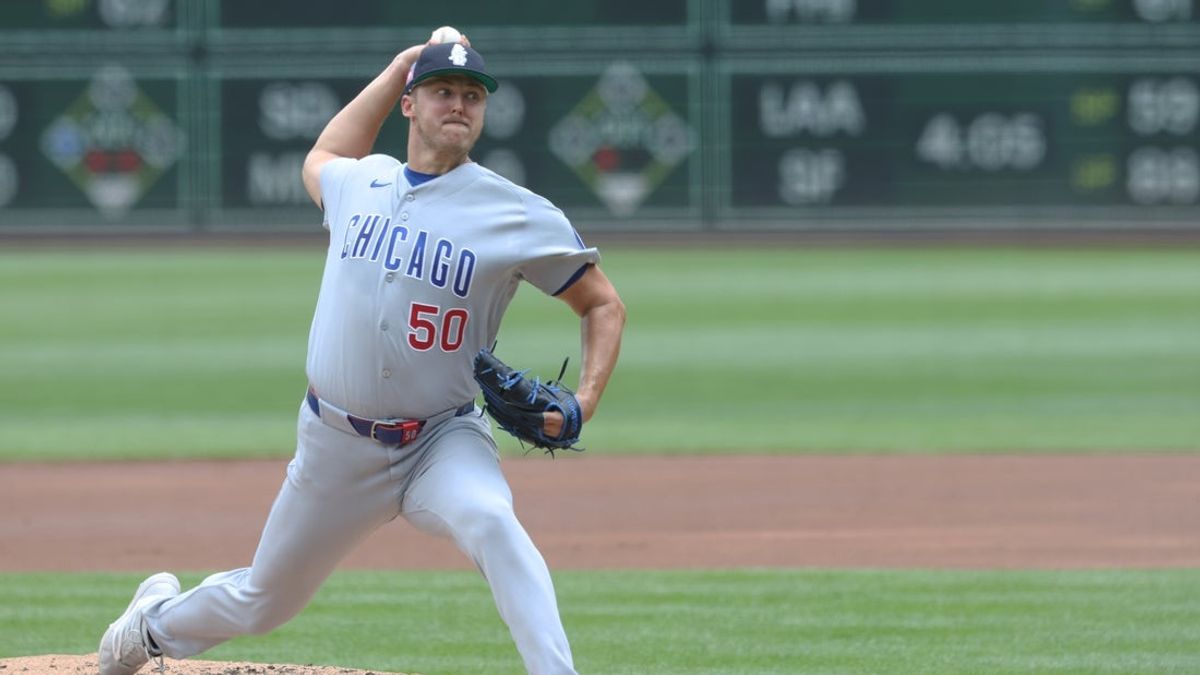
The Chicago Cubs officially designated veteran right-handed starting pitcher Jameson Taillon for assignment on Monday, a move that signals a significant shift in the team’s pitching rotation and signals the end of his tenure with the North Siders. In a corresponding roster adjustment, the Cubs selected the contract of right-hander Andrew Wantz from their Triple-A Iowa affiliate, bolstering their bullpen depth. This decision comes at a critical juncture in the 2026 Major League Baseball season, with the Cubs looking to reconfigure their pitching staff to address performance concerns and pursue their postseason aspirations.
A Difficult Season for Taillon
Jameson Taillon, who will be 34 years old at the end of the calendar year, was in the final season of a substantial four-year, $68 million contract with the Chicago Cubs. For the initial three years of this agreement, Taillon had demonstrated solid performance, establishing himself as a reliable member of the starting rotation. His contributions were particularly notable during the 2025 postseason, where he made a pair of starts for the Cubs. In those crucial outings, he posted an impressive 2.25 earned run average over eight innings, demonstrating his ability to perform under pressure, although he did not factor into any decisions.
However, the 2026 season has presented a starkly different narrative for the veteran right-hander. Through 15 starts, Taillon’s record stands at a disappointing 2-6, accompanied by a career-worst 5.92 earned run average. These statistics paint a clear picture of his struggles. He has emerged as a league leader in several undesirable categories, notably topping the National League with 25 home runs allowed. Furthermore, his walk rate has been a significant concern; he had already issued 27 bases on balls through his first 15 starts, equaling his total from the entire 2025 season. This increase in free passes, coupled with a higher propensity to surrender extra-base hits, has made it difficult for him to navigate opposing lineups effectively.
The immediate catalyst for the Cubs’ decision appears to be Taillon’s most recent outing on Sunday. He took the loss in a hard-fought 8-7 defeat against the Pittsburgh Pirates at PNC Park. In that appearance, Taillon pitched just four innings, allowing seven runs on six hits, including three home runs. This outing extended a troubling trend, as he had not recorded a win since April 29th. More broadly, the Cubs had struggled significantly when Taillon took the mound in recent weeks, compiling a dismal 1-7 record in his last eight starts. This lack of positive outcomes, combined with the mounting run support required from the offense, undoubtedly factored into the team’s decision to seek an alternative.
Career Overview and Transition
Throughout his Major League Baseball career, Jameson Taillon has compiled a respectable 84-66 record with a 3.99 earned run average across 239 games, 238 of which were starts. His career began with the Pittsburgh Pirates (2016-2019), where he established himself as a promising young arm. He then spent two seasons with the New York Yankees (2021-2022) before joining the Chicago Cubs in 2023. While his overall career numbers reflect a pitcher who has demonstrated competence and durability, the recent downturn in performance has unfortunately overshadowed his previous successes.
The move to designate Taillon for assignment opens up a roster spot and a significant financial commitment for the Cubs. As per MLB rules, when a player is designated for assignment, other teams have a 48-hour waiver period to claim them. If unclaimed, the player becomes a free agent, or the team can choose to outright them to the minor leagues, though this is less common for established veterans with significant contracts. Given Taillon’s experience and prior performance, it is plausible that another team could express interest in acquiring him, either through a waiver claim or as a free agent, should he clear waivers.
Andrew Wantz: A New Addition to the Bullpen
In a corresponding roster move, the Chicago Cubs have opted to bring in Andrew Wantz from Triple-A Iowa. Wantz, a 30-year-old right-hander, brings a different skillset and a fresh arm to the Cubs’ pitching staff. He has prior Major League experience, having appeared in 92 games for the Los Angeles Angels (2021-2024) and most recently, the Tampa Bay Rays in 2026.
Wantz’s tenure with the Tampa Bay Rays in 2026 was brief and challenging. He made one relief appearance, during which he surrendered five runs on two hits and two walks in just 1 2/3 innings pitched. Following this performance, he was granted free agency by the Rays on June 3rd. The Cubs moved quickly to sign him three days later, on June 6th, demonstrating their proactive approach to addressing roster needs. His signing suggests that the Cubs are looking to add depth to their bullpen, potentially with a pitcher who can offer a different look or specialized role.
Broader Implications for the Cubs’ Season
The decision to part ways with Jameson Taillon is a significant one for the Chicago Cubs and speaks volumes about the team’s commitment to contention in the 2026 season. By designating him for assignment, the Cubs are signaling that they believe this move is necessary to improve their chances of success, particularly in the latter half of the season and into the postseason.
Performance Metrics and Trends
To further contextualize Taillon’s struggles, examining his advanced metrics and comparing them to league averages and his own career trends can be insightful. His elevated home run rate in 2026 (1.8 HR/9 innings, compared to a career average closer to 1.1 HR/9 innings) indicates a loss of command or a tendency to leave pitches over the plate that hitters can capitalize on. His strikeout rate has also seen a slight dip, suggesting that he is not generating as many swing-and-misses as in previous seasons, making him more susceptible to contact.
Conversely, Andrew Wantz’s minor league statistics and his brief MLB track record will be scrutinized by the Cubs’ coaching staff. His ability to consistently throw strikes, limit hard contact, and perform under pressure will be key factors in determining his role within the team. His history with the Angels and Rays suggests a pitcher who has shown flashes of potential but has struggled with consistency at the Major League level.
Managerial and Front Office Perspectives (Inferred)
While direct quotes from Cubs management were not immediately available, such a decision typically stems from a thorough evaluation of player performance, statistical analysis, and future projections. It is highly probable that the Cubs’ manager and pitching coach, in conjunction with the general manager and the analytics department, had multiple discussions regarding Taillon’s viability in the starting rotation. The desire to secure more consistent outings and a lower earned run average from the starting rotation is paramount for any team with postseason aspirations.
The addition of Andrew Wantz, while perhaps not a marquee acquisition, reflects a strategic move to increase organizational depth. Teams often look to the waiver wire and minor league free agency to find players who can fill specific roles or provide insurance against injuries. Wantz’s signing indicates that the Cubs believe he possesses the tools to contribute, at least in a bullpen capacity, and that his current contract situation or minor league status made him an attractive option.
Impact on the Roster and Future Outlook
The departure of Taillon creates an immediate void in the Cubs’ starting rotation. The team will need to rely on its remaining starters, potentially calling up a prospect from Triple-A Iowa, or utilizing a multi-inning reliever to fill the gap. This situation underscores the importance of a deep and versatile pitching staff. The Cubs’ ability to navigate this transition will be a significant storyline for the remainder of their season.
For Taillon, this marks an uncertain period in his career. While he has enjoyed a successful MLB tenure, his recent performance has raised questions about his future effectiveness. His next opportunity, whether with another MLB team or abroad, will depend on how other organizations assess his capabilities and his willingness to adapt to new roles or strategies.
The Chicago Cubs, meanwhile, will look to solidify their pitching and continue their push towards October baseball. The move with Taillon is a clear indication that the organization is willing to make difficult decisions to optimize its roster and pursue its ultimate goal of winning a championship. The performance of both the remaining starting pitchers and the bullpen, including the newly acquired Andrew Wantz, will be closely watched as the season progresses. The coming weeks will reveal whether this strategic shift proves to be a pivotal moment in the Cubs’ 2026 campaign.


 Yuyun Lusiyani
 Joko Widodo
 Jia Lissa
 Pevita Pearce
 admin
admin
