
 Yuyun Lusiyani
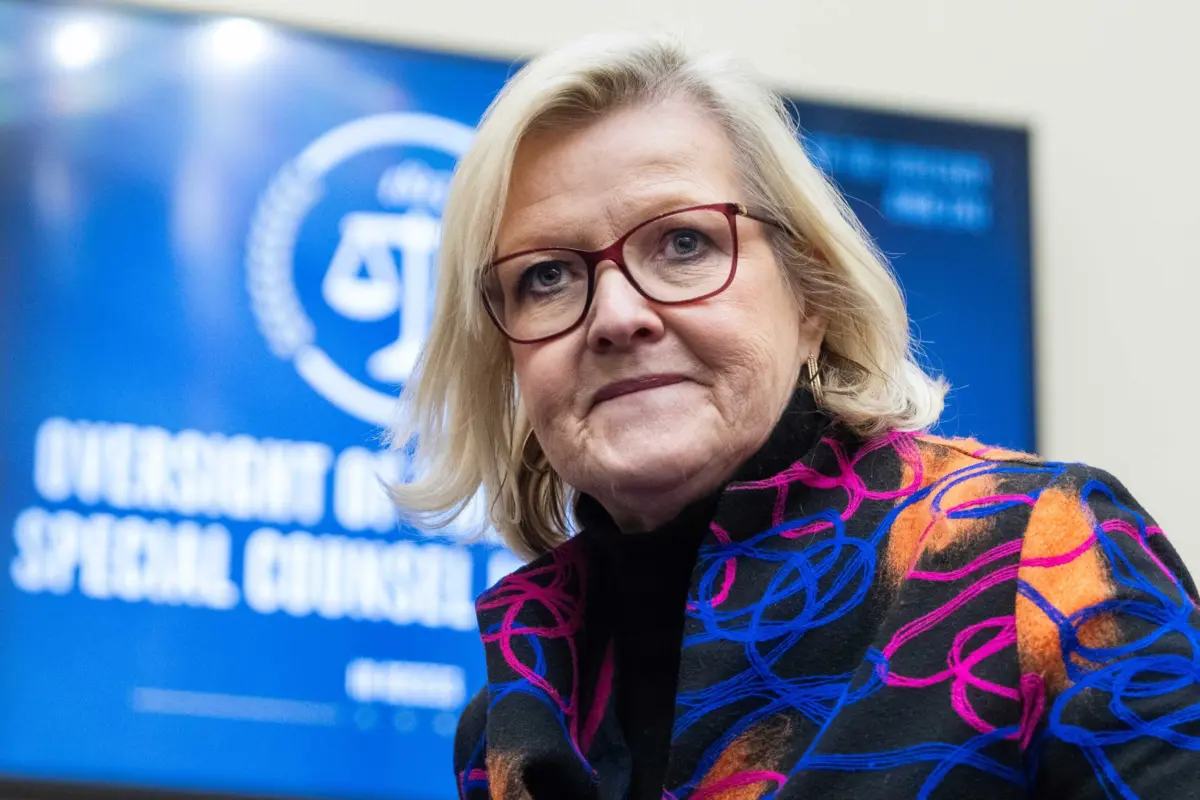
In a striking illustration of enduring influence, Cleta Mitchell, a conservative election lawyer with no formal White House position, has emerged as a pivotal force behind former President Donald Trump’s unprecedented efforts to assert federal control over American voting processes. Her deep entanglement with the Trump administration’s second term agenda was starkly highlighted in July, when she and two dozen associates from her Election Integrity Network (EIN) participated in a private White House briefing ahead of a primetime presidential address that cast doubt on the legitimacy of American elections. The very content of that speech, a compendium of debunked allegations and conspiracy theories, was largely originated or amplified by Mitchell and her formidable network, underscoring her unparalleled access and ideological sway.
A Driving Force Behind Trump’s Agenda
Mitchell’s journey from a key player in Trump’s post-2020 election challenges to the architect of his current “election integrity” blueprint marks a significant transformation in the landscape of American political influence. Following Joe Biden’s inauguration, while many of Trump’s allies distanced themselves from his unsubstantiated claims of widespread fraud, Mitchell doubled down. She founded the Election Integrity Network, a grassroots organization dedicated to enacting more restrictive election laws and rules nationwide. The network’s rapid growth and strategic placement of its members into critical election-related positions in swing states and, notably, within the second Trump administration, cemented her role as an indispensable figure.
Her influence extends far beyond mere advocacy. Mitchell is widely credited by both allies and adversaries with crafting much of the administration’s detailed “election road map.” The White House has consistently turned to her inner circle to execute this plan, appointing associates to lead controversial initiatives such as the hunt for noncitizens on voter rolls and the reinvestigation of alleged irregularities from the 2020 election. Steve Bannon, Trump’s former chief strategist and a close confidant of Mitchell, affirmed her direct access: “She has the president’s ear. A lot of the momentum things we’ve seen over the last six months or so come directly from Cleta’s involvement.” This symbiotic relationship ensures that Mitchell’s strategic vision translates directly into federal policy and executive action, shaping the future of U.S. elections in profound ways.

The Architecture of Influence: The Election Integrity Network (EIN)
The Election Integrity Network, founded by Mitchell, stands as the operational core of her ambitious vision. Launched nationwide in 2022 with a series of rallies in seven swing states, EIN rapidly mobilized a dedicated cadre of conservative activists. At these events, often featuring welcome videos from former President Trump himself, Mitchell exhorted attendees to become masters of election mechanics, to work the polls, and to infiltrate local election boards. Brandishing a 20-page “Citizens Guide,” she framed this engagement as a “Bible” for those engaged in "hand-to-hand combat with the Left."
EIN’s growth has been exponential, expanding from seven initial chapters to at least 26 across the country. It functions through regular video calls for state chapters and specialized national working groups focused on issues like voter roll maintenance and voting machine scrutiny. While Mitchell describes these as “mind-numbing technical discussions,” ProPublica’s review of hundreds of hours of these calls revealed a blend of intricate procedural debates, wild speculation, and hyper-partisan rhetoric. On one such call, John Eastman, the law professor disbarred for his role in the fake electors scheme, urged network leaders to metaphorically “salt over” the land of their opponents, invoking the ancient Roman destruction of Carthage. Mitchell, however, disputes the characterization of EIN as partisan, insisting their focus is on accuracy, transparency, and honesty in elections.
Beyond its grassroots mobilization, Mitchell has cultivated a sophisticated ecosystem of allied researchers, law firms, and policy organizations. An analysis of data from the Campaign Legal Center, a government watchdog, shows that between 2021 and 2025, Mitchell facilitated the flow of over $70 million into this network. At least $11 million originated from nonprofits under her direct oversight, with tens of millions more channeled through influential conservative entities like the Bradley Foundation (where she serves on the board) and the Conservative Partnership Institute (where she is a senior legal fellow). This substantial financial infrastructure has enabled the “election integrity” movement, once a fringe collection of actors, to become a deeply entrenched and well-funded component of mainstream conservatism. According to Brendan Fischer, director of strategic investigations at the Campaign Legal Center, Mitchell’s unique position in connecting donors, activists, and political leaders has been instrumental in “turn[ing] election denial from a fringe position into an organized national movement.”
The network’s tangible achievements include influencing Republican states to withdraw from the Electronic Registration Information Center (ERIC), a bipartisan program designed to cross-check voter rolls for duplicate registrations, which Mitchell claimed aided Democrats. EIN members also successfully lobbied for laws banning "Zuckerbucks"—private donations to underfunded local election offices—which Mitchell alleged were used to boost Democratic turnout. In Georgia, EIN members even pushed through a rule allowing local officials to delay certifying election results, a move experts warned could enable future challenges to election outcomes, though this rule was later struck down by a court.

Policy Pillars: The SAVE America Act and Executive Action
Mitchell’s strategic brilliance lies in her ability to translate grassroots fervor into concrete policy. Her signature legislative achievement, the Safeguard American Voter Eligibility (SAVE) Act, and its successor, the SAVE America Act, are central to her vision for overhauling federal elections. The original SAVE Act, drafted with congressional allies like Senator Mike Lee of Utah and Representative Chip Roy of Texas, proposed a rigorous standard for proving citizenship during voter registration, demanding documents like certified birth certificates or passports that many eligible Americans, particularly women, minorities, and the poor, may not readily possess. It also mandated the use of Department of Homeland Security (DHS) databases to purge noncitizens from voter rolls—a claim of rampant noncitizen voting that numerous audits and studies, including those by Republican groups, have repeatedly debunked as vanishingly rare.
Though the initial SAVE Act failed to pass a Democrat-controlled Senate in 2024, Mitchell viewed it as a strategic triumph. It cemented her leadership within the "election integrity" movement and reignited conservative enthusiasm for voting restrictions. To ensure broad Republican support, she enlisted Stephen Miller, the architect of Trump’s first-term immigration policies, to help draft the bill—a fact confirmed by Representative Roy, though Mitchell denies Miller’s direct involvement in the measure. The "Only Citizens Vote Coalition," a group Mitchell launched to back the bill, united virtually every significant player in the election-integrity sphere. She directed over $6 million to supporting organizations, including $800,000 to The Federalist, a conservative media outlet that subsequently provided glowing coverage of the legislation.
Following Trump’s 2024 presidential victory and Republican majorities in Congress, Mitchell saw a "once-in-a-generation opportunity" to enact an even tougher version, the "SAVE Act on steroids," rebranded as the SAVE America Act. This 2026 measure mandates photo ID nationwide for voting and compels states to turn over their voter rolls to DHS for noncitizen scrutiny. Trump has declared it his "top legislative priority," threatening to block other bills until it passes. Senator Lee credits Mitchell with the updated version, particularly its strict voter ID provisions.
Mitchell’s policy imprint is also evident in the executive branch. Just two months into Trump’s second term, his March 25, 2025, executive order, "Preserving and Protecting the Integrity of American Elections," mirrored the SAVE Act’s core tenets. It mandated citizenship proof for voter registration, expanded the use of all federal government data troves for voter eligibility verification, and directed the Justice Department to prioritize the prosecution of election crimes and noncitizen voting. Mitchell was part of a small group of outside attorneys who provided suggestions for this order, and at least 25 administration appointees with close ties to her now hold key election-related posts. Heather Honey, a Mitchell protégé and former EIN Pennsylvania chapter leader, was appointed Senior Counselor to the Homeland Security Secretary, despite concerns from some federal officials that her “sole qualification was who she worked with: Cleta.” The DHS, however, disputes this, citing her election expertise.

Mitchell has also influenced the administration’s reinvestigation of 2020 fraud allegations, including the FBI’s seizure of election records from Fulton County, Georgia, an effort that drew on material compiled by an EIN-affiliated researcher. When the case faltered, Mitchell was among those who recommended Dan Bishop, a former North Carolina congressman she has supported politically, as a replacement prosecutor. While the Justice Department denies her influence, an administration official familiar with the matter corroborated her role. Bishop’s subsequent attempt to subpoena personal information for thousands of Fulton County poll workers, denounced as politically motivated intimidation, was ultimately quashed by a court.
A Life Defined by Political Combat: Mitchell’s Journey
To fully grasp Cleta Mitchell’s current zeal, one must trace her lifelong pattern of relentless political engagement and a profound willingness to do "whatever it took to win." Born Cleta Deatherage in Oklahoma City, the third of six children, Mitchell grew up in poverty, a circumstance she masked with a “peppy disposition” while excelling academically. Her early fascination with politics was evident, from accompanying her mother to the polls to meticulously studying voter guides to advise her.
Early Ambition and Democratic Roots
Mitchell’s early career was rooted firmly in Democratic politics. At the University of Oklahoma, she was known as a “good girl, sorority girl, untouched by the sexual revolution.” She married Duane Draper, the university’s student body president, and together they pursued power, both having experienced difficult childhoods. She spearheaded voter drives, worked to expand student voting access, and co-founded the Oklahoma chapter of the National Women’s Political Caucus, even serving as a delegate at the 1972 Democratic National Convention.

After law school, she successfully ran for the Oklahoma House of Representatives at just 26, campaigning tirelessly. She quickly rose through the ranks, cultivating wealthy donors and becoming chair of the powerful Appropriations and Budget Committee. During this period, she championed liberal initiatives, from expanding open records laws to creating career centers for divorced women. However, her idealism was tempered by a ruthless pragmatism. Former Oklahoma Governor David Walters recalled his shock when Mitchell publicly supported one position but privately worked against it. Her signature issue during this era was the Equal Rights Amendment (ERA), which she championed passionately, though it ultimately failed to pass in Oklahoma and nationally.
Her political and personal life faced severe trials in the late 1980s. Her marriage to Duane ended after he came out as gay, a “devastating” heartbreak according to friends. Her political fortunes waned as the ERA stalled and her political patron became embroiled in scandal, costing Mitchell her leadership position. She lost a subsequent bid for lieutenant governor, finding herself out of office. Concurrently, her second husband, Dale Mitchell, whom she married in 1984, faced catastrophic financial ruin when his bank collapsed due to falling oil prices. He was later convicted of bank fraud, banned from the banking industry, and ordered to pay $3 million in restitution. Cleta emerged from this period deeply embittered by what she perceived as federal government overreach, defending Dale as “the most honest person I’ve ever known.”
The Conservative Turn and Rise to Prominence
The late 1980s and early 1990s marked a profound shift for Mitchell. Disillusioned with Democratic politics and fueled by her experience with federal prosecution, she gravitated towards the burgeoning conservative movement. She explained this ideological realignment as a return to her personal philosophy of self-sufficiency. Others, like former Oklahoma Senate leader Cal Hobson, were “gobsmacked” by her transformation, suggesting it was a pragmatic route back to power. “No one,” Hobson observed, “has changed more politically in my lifetime than Cleta Deatherage Mitchell.”
Moving to Washington D.C., she helped lead a Republican campaign for congressional term limits, endearing her to the conservative elite. By 1996, she formally switched her party affiliation to Republican. The 2000 Bush v. Gore election, with its intense focus on recounts and election integrity in Florida, further solidified her path. Mitchell became a high-profile media surrogate for the Bush campaign, vociferously arguing against Democratic demands for recounts. This experience galvanized her, leading her to dedicate her legal practice to countering what she viewed as progressive assaults on election integrity. She famously wrote in a Wall Street Journal column that if Republicans failed to master “the art of political war,” the GOP might not survive.

Over the next two decades, Mitchell rose to become a go-to election lawyer for Republican politicians, a partner at a powerful D.C. law firm, and a vocal supporter of hard-right candidates and causes, including the Tea Party. She jokingly called herself the “consigliere to the vast right-wing conspiracy,” a title that many found increasingly apt. While not known for her courtroom prowess, she was a masterful and aggressive backroom negotiator and strategist, earning a reputation for Southern warmth with allies and volcanic wrath with adversaries. In a mentorship speech to conservative women, she advised, “It’s Better to Be Respected Than Liked.”
Her connection to Donald Trump began as early as 2011, when she defended him against an FEC complaint regarding a possible presidential run, resolving the matter to his benefit. Michael Cohen, Trump’s former “fixer,” recalled Mitchell being recommended as the “most aggressive lawyer in the field.” She continued to represent Trump on several occasions, earning his trust. By 2016, despite her long-standing relationship with Marco Rubio, Mitchell threw her full support behind Trump once he secured the Republican nomination. During Trump’s first term, she collaborated with other prominent GOP lawyers to tighten election laws, focusing on mail-in voting and voter ID, and directing millions into initiatives that backed lawsuits aimed at purging voter rolls in Democratic-leaning areas.
The Aftermath of 2020: Fueling the "Big Lie" and Jan. 6
Mitchell’s role in the aftermath of the 2020 election cemented her as a central, and highly controversial, figure in American politics. She was among the first Republican lawyers to advocate for the Trump campaign to prepare plans to dispute election results, focusing on key battleground states. Her actions during this period, extensively chronicled and investigated, reveal her as a key originator of some of the most aggressive tactics employed by Trump and his allies. Marc Harris, senior investigative counsel to the House Jan. 6 Committee, stated, “She had her finger in just about every pie the select committee looked at.”
Mitchell led litigation in Georgia, amassing 1,800 pages of election fraud allegations, which she maintains were never properly evaluated by a judge. These claims formed the basis of the infamous January 2021 phone call where she joined Trump in pressuring Georgia Secretary of State Brad Raffensperger to “find” enough votes to overturn Biden’s victory. During the call, Mitchell fed Trump details of alleged irregularities, demanding investigations. While she insisted to ProPublica that their intent was merely to provide evidence, Trump’s explicit request was unambiguous: “All we have to do, Cleta, is find 11,000-plus votes.”

Beyond the Georgia call, Mitchell played a crucial, though often overlooked, role in initiating the "fake electors" strategy. She recruited her longtime friend, law professor John Eastman, to draft a memo outlining a constitutional framework for Republican legislators in swing states to appoint alternate electors supporting Trump. Mitchell communicated her intent to Eastman two days after the election, writing, “A movement is stirring… But needs constitutional support.” This "Trump-Eastman scheme" ultimately envisioned Vice President Mike Pence certifying these fake electors’ votes, thereby flipping the Electoral College. Pence’s refusal to do so led to the furious mob that stormed the Capitol on January 6, 2021. Despite her denials of any involvement in the Jan. 6 rally or Eastman’s advice to the Vice President, congressional investigators concluded that she “worked closely with John Eastman in developing and seeking to implement dubious legal strategies to overturn the election result” and “encouraged the selection of fake electors.” Eastman was subsequently disbarred for his actions. Mitchell resigned from her law firm following the backlash from the Raffensperger call, attributing her departure to pressure from anti-Trump groups.
Challenges and Criticisms
Despite her profound influence, Mitchell’s path has not been without significant obstacles. Her signature legislation, the SAVE Act and its successor, have faced strong headwinds, blocked by moderate Republicans in the Senate. Executive actions championed by her, such as compelling states to share confidential voter information with the Justice Department, have been impeded by the courts. Even Trump’s mid-July address on elections, which was heavily informed by Mitchell’s network, garnered a lukewarm reception from some conservative media outlets.
Critics, including some within the "election integrity" movement itself, express growing concern that Mitchell’s mounting frustration is pushing her and her allies towards increasingly extreme actions. Ken Blackwell, former Ohio Secretary of State and a long-time leader in the movement, observed that Mitchell’s "her way or the highway" approach sometimes torpedoes practical solutions, making elections less secure. He cited an Ohio bill she preferred, which was ultimately vetoed by the governor because it contained the tougher provisions Mitchell insisted upon, despite warnings. Mitchell, however, dismissed the more moderate alternative as “not nearly as good as it should be.”
Voting advocacy groups have vociferously opposed Mitchell’s initiatives. The SAVE Act, they argue, could disenfranchise millions of eligible voters, particularly women, the poor, and minorities, who are often critical Democratic voting blocs and may lack the specific documentary proof of citizenship required. Organizations like the Campaign Legal Center and Fair Fight warn that her efforts politicize election administration, erode public trust in democratic processes, and expand executive power in ways that undermine core constitutional principles. Max Flugrath, a director at Fair Fight, describes Mitchell as "relentless," noting that "even if she fails, she always finds another point of attack."

Unwavering Resolve: A Glimpse into the Future
As the midterms approach, Mitchell’s urgency has reached a crescendo. At 76, many close to her suggest she views this administration as her last, best chance to realize her goals. This perceived existential timeline fuels her relentless pursuit, characterized by a "Plan A, Plan B, Plan C" mentality. She has become increasingly vocal in media appearances, online, and with her network members, calling for the president to exert unprecedented powers to sway election outcomes. On an October 6 episode of Steve Bannon’s “War Room” podcast, she angrily pounded home that various federal agencies, particularly the Commerce Department, could intervene “today” to address purported vulnerabilities in voting machines, repeating the word "today" seven times like a drumbeat.
Despite the setbacks and criticisms, Cleta Mitchell remains an unwavering force, deeply integrated into the highest echelons of conservative political power. Her ability to consistently overcome internal resistance, cultivate new alliances, and adapt her strategies to advance her vision of "election integrity" speaks to a formidable political will. Her journey illustrates how a single, determined individual can fundamentally reshape political discourse and policy, transforming what was once a fringe concern into a central pillar of a major political party’s agenda, with profound implications for the future of American democracy. "The election integrity movement, c’est moi," as a former network leader paraphrased her driving philosophy, encapsulating the singular, unyielding force that is Cleta Mitchell.




 Nila Kartika Wati

 Eva Lovia

 Lina Irawan

 Ana Megawati

 Joko Widodo
