
 Jia Lissa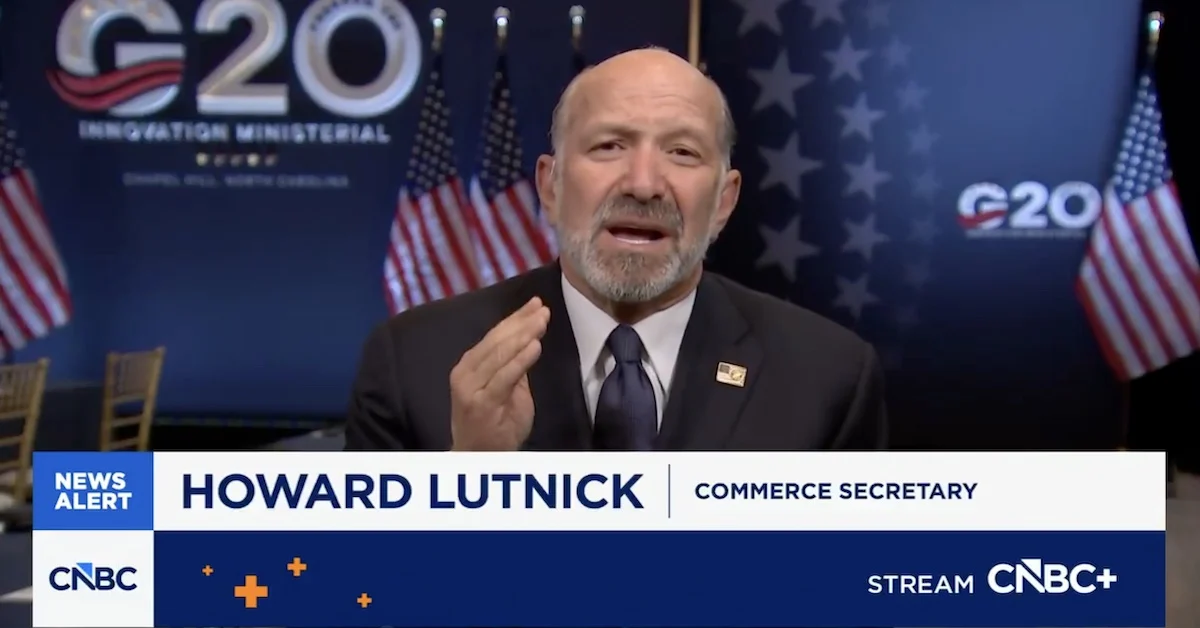
United States Commerce Secretary Howard Lutnick sparked a significant public debate on Wednesday during a televised appearance on CNBC’s "Squawk Box," where he dismissed concerns regarding the immense water consumption of artificial intelligence (AI) data centers as "propaganda." The Secretary’s comments, intended to bolster support for the rapid expansion of domestic technological infrastructure, immediately drew scrutiny due to his own previous assertions regarding the heavy water requirements of the same facilities. As the federal government pushes for a massive build-out of data centers to maintain a competitive edge over global adversaries, the conflicting messaging from the Commerce Department highlights a growing tension between economic ambitions, environmental realities, and public perception.
During the Wednesday morning broadcast, Lutnick was asked about the logistical hurdles and local opposition facing the development of large-scale data centers. In response, he laughed off the suggestion that these facilities pose a threat to local water supplies. "One of my favorite things is when people talk about data centers using water," Lutnick stated. "The number one product in America that uses water is cattle. I mean data centers don’t use water. This is propaganda by our adversaries to try to slow us down. We’ve got the greatest chips in the world, we’ve got the greatest economy in the world."
The Secretary framed the data center boom as a "black and white" issue of economic prosperity, suggesting that communities welcoming these "world-class productions" would see immediate financial benefits. However, the dismissal of water usage stands in stark contrast to the scientific consensus and Lutnick’s own rhetoric from just one year prior.
A Chronology of Contradictory Rhetoric
The swift backlash to Lutnick’s comments was punctuated by the resurfacing of a May 2025 interview he conducted with Fox News host Sean Hannity. In that discussion, Lutnick did not merely acknowledge the water needs of data centers; he used those needs as a centerpiece for his economic argument regarding job creation.
In the 2025 clip, Lutnick described AI infrastructure as a solution to the "human capital" advantage held by nations like China. He argued that while American factories might not employ millions of manual laborers, they would employ high-skilled technicians to manage the complex cooling systems required by AI hardware. "These AI things, they suck water and they need water and so they need a plumber, but not a ‘plumber’ plumber, they need, like, an HVAC specialist that starts at $100,000," Lutnick told Hannity at the time. "These are great jobs."
The shift from characterizing water usage as a source of high-paying jobs to labeling it as "propaganda" suggests a strategic pivot in the administration’s communication style. Analysts suggest this change may be a response to the rising tide of local opposition across the United States, where residents in states like Virginia, Arizona, and Ohio have expressed alarm over the environmental footprint of these massive industrial sites.
The Technical Reality of Data Center Water Consumption
While Secretary Lutnick’s recent comments downplay the issue, the environmental data associated with high-performance computing tells a different story. AI data centers, particularly those housing the latest generation of GPUs (Graphics Processing Units) required for Large Language Models (LLMs), generate immense amounts of heat. To prevent hardware failure and maintain efficiency, these facilities rely on sophisticated cooling systems.
There are two primary methods of cooling: air cooling and liquid cooling. While many older facilities use air, the high density of AI chips often necessitates liquid cooling or evaporative cooling systems. In an evaporative system, water is used to cool the air that circulates through the server racks. As the water evaporates, it carries heat away from the facility. This process can result in the consumption of hundreds of thousands, and in some cases, millions of gallons of water per day.
According to a study by researchers at the University of California, Riverside, training a model like GPT-3 in Microsoft’s state-of-the-art U.S. data centers can directly consume 700,000 liters of clean freshwater. The study further estimated that for every 10 to 50 inferences (simple conversations) with an AI, the system "drinks" roughly a 500ml bottle of water. As AI usage scales to hundreds of millions of users, the cumulative water footprint becomes a significant municipal concern.
Economic Benefits versus Environmental Constraints
The Commerce Secretary’s argument centers on the "huge economics" that data centers provide. A single $20 billion data center project can indeed generate significant tax revenue for a local municipality and create thousands of construction jobs. However, the long-term employment figures are often more modest, typically ranging from 3,000 to 4,000 specialized roles for technicians, security, and maintenance staff.
Lutnick’s assertion that those who "invite" data centers will be "better off" is currently being tested in real-time. In Northern Virginia, known as "Data Center Alley," the concentration of these facilities has led to a surge in tax revenue that has funded schools and parks. Conversely, it has also led to a strain on the electrical grid and prompted emergency measures during droughts.
The Secretary’s comparison to the cattle industry—noting that agriculture is the primary consumer of water in the U.S.—is factually grounded but, according to critics, contextually misleading. While agriculture does account for approximately 80% of consumptive water use in the United States, agricultural water is often sourced from different aquifers or irrigation rights than the treated municipal water required by data centers. Furthermore, data centers are often built in tech hubs or suburban areas where they compete directly with residential and commercial users for a limited supply of potable water.
Public Opposition and the Gallup Findings
The political urgency behind Lutnick’s "propaganda" claim may be linked to a May Gallup poll which revealed a significant hurdle for the administration’s tech goals. The poll found that seven in 10 Americans oppose the construction of data centers in their local areas. The primary drivers of this opposition include noise pollution from cooling fans, the visual impact of massive windowless buildings, and the perceived threat to local resources like power and water.
By labeling these concerns as "propaganda by our adversaries," the Commerce Secretary appears to be attempting to frame domestic infrastructure projects as a matter of national security. The logic follows that any domestic resistance to data center expansion effectively aids competitors like China, who are racing to achieve AI supremacy.
Geopolitical Stakes and the Race for AI Supremacy
The broader context of Lutnick’s statements is the ongoing technological "Cold War" between the United States and China. The Commerce Department has been at the forefront of this struggle, implementing export controls on advanced semiconductors and incentivizing the "reshoring" of tech manufacturing through initiatives like the CHIPS and Science Act.
In his CNBC interview, Lutnick emphasized that America has the "greatest chips" and the "greatest economy." The administration views data centers as the "automated factories of the future." From this perspective, the physical requirements of these factories—land, power, and water—are secondary to the strategic necessity of maintaining a lead in AI development.
However, environmental advocates argue that the administration’s "full-speed ahead" approach lacks a sustainable framework. "Dismissing legitimate resource concerns as ‘propaganda’ does not make the water scarcity issues in the Southwest go away," said one environmental policy analyst. "If the government wants to win the AI race, it must do so by innovating in water-less cooling technology, not by denying that the water is being used in the first place."
Industry Response and Innovation
While the political rhetoric heats up, the technology industry itself has been more transparent than the Commerce Secretary regarding its water needs. Major tech firms including Google, Microsoft, and Meta have all released environmental reports acknowledging their rising water consumption.
In response to public pressure and internal sustainability goals, these companies are investing in "water-positive" initiatives. These include:
- Recycled Water: Using "grey water" or treated sewage water for cooling instead of potable drinking water.
- Closed-Loop Systems: Developing systems that recirculate water more efficiently to minimize evaporation.
- Direct-to-Chip Cooling: Using liquid coolants that do not evaporate, allowing for higher efficiency with lower water waste.
- Geographic Shifting: Building data centers in cooler climates (such as the Nordic regions) where ambient air can be used for cooling most of the year.
These industry efforts suggest that the tech sector views water usage as a critical engineering challenge to be solved rather than a myth to be debunked.
Analysis of Policy Implications
Secretary Lutnick’s comments represent a high-stakes gamble in the arena of public relations. By taking a hardline stance, he risks alienating the 70% of the public that harbors concerns about these projects. Yet, his rhetoric also signals to investors and developers that the federal government is prepared to bypass or steamroll local regulatory hurdles in the name of national interest.
The contradiction between his 2025 "they suck water" comments and his 2026 "propaganda" claims creates a vulnerability for the administration. In an era of instant digital archives, the "flip-flop" is easily documented and shared, potentially undermining the Secretary’s credibility as a neutral arbiter of commerce and industry data.
As the United States continues its transition into an AI-driven economy, the tension between the physical world (natural resources) and the digital world (compute power) will only intensify. The Commerce Department’s ability to manage this transition will depend not only on economic incentives but also on a consistent and fact-based dialogue with the American public.
For now, the Secretary remains adamant: data centers are the engine of the future, and any suggestion that they are "sucking" the country dry is, in his current view, a narrative constructed by those who wish to see America fail. Whether this message will resonate with communities facing water restrictions remains the defining question for the next phase of the American technological build-out.



 admin
admin
 Nila Kartika Wati
 Lina Irawan
 Yuyun Lusiyani