
 Yuyun Lusiyani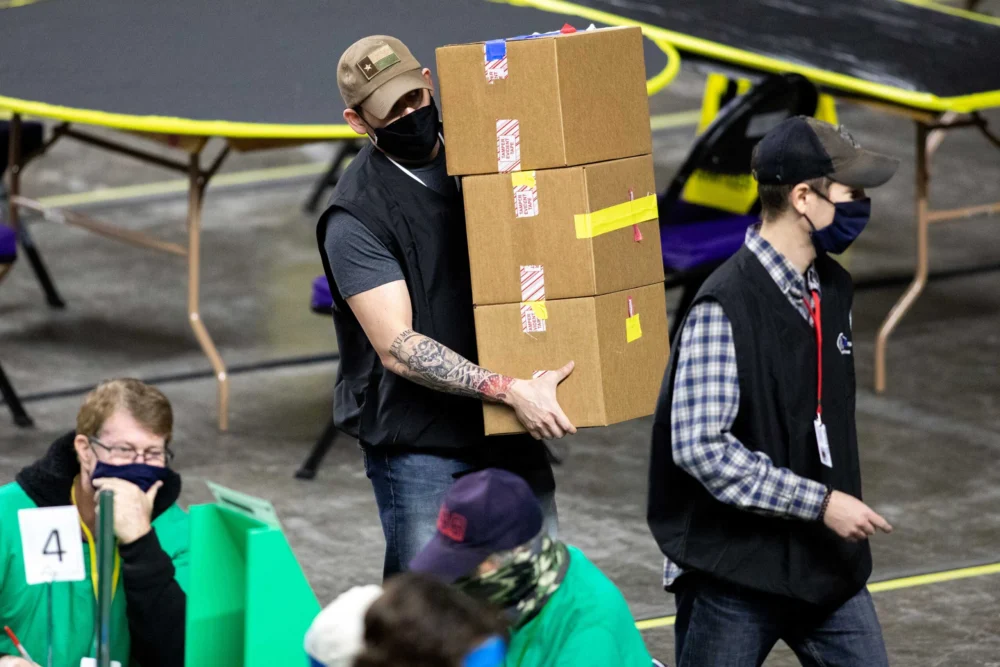
This week, the Federal Bureau of Investigation (FBI) collected 2020 election voting information from Maricopa County, Arizona, an event that, at first glance, might have appeared to mirror the agency’s late January raid for voting records in Fulton County, Georgia. Both Maricopa and Fulton are populous counties in crucial swing states that ultimately voted for President Joe Biden in 2020, and both have been persistent targets of former President Donald Trump’s unsubstantiated claims that the election was stolen from him. However, the nature of the evidence collected from Maricopa County is fundamentally distinct from that obtained in Georgia, a disparity that election experts warn could severely compromise the accuracy and integrity of the federal government’s ongoing investigation into the 2020 election.
A Tale of Two Investigations: Maricopa vs. Fulton
In Fulton County, Georgia, the FBI’s operation involved seizing actual physical ballots cast in the county’s 2020 election. These ballots had been maintained in secure court storage facilities, representing primary, undisputed evidence of voter intent. This direct access to original election materials provides a clear chain of custody and a foundation for forensic analysis.
Conversely, the situation in Maricopa County presents a significantly more complex and contentious scenario. A federal grand jury subpoenaed digital data and related materials pertaining to a partisan audit of the county’s 2020 vote, rather than the original ballots themselves. According to Arizona Senate President Warren Petersen, the recipient of the subpoena, this material – which could include scans and photographs of ballots – was stored by the Arizona Senate, not by Maricopa County election officials. Crucially, Maricopa County had already destroyed the original ballots after two years, in compliance with state law. This critical difference means the FBI is now examining secondary, potentially compromised data derived from a highly controversial review, rather than the original, securely maintained evidence.
The Arizona Senate Audit: A Deep Dive into Controversy
The audit in question was initiated in April 2021 by the Arizona Senate’s Republican leadership. Despite multiple, rigorous confirmations of Maricopa County’s 2020 election results by both county officials and independent firms, the Senate issued subpoenas for scans of all 2.1 million ballots, the county’s voter rolls, and other vital voting system data. This move was widely seen as a response to intense political pressure stemming from President Trump’s "Stop the Steal" campaign and his persistent allegations of widespread fraud.
The Senate contracted a firm named Cyber Ninjas to conduct this unprecedented review. The choice of Cyber Ninjas immediately raised red flags among election integrity advocates and nonpartisan observers. The firm’s leader, Doug Logan, had previously promoted conspiracy theories about the 2020 election, and the audit itself was funded by and took direction from allies of former President Trump. Public records requests later revealed text messages from Logan privately admitting that the ballot recounts performed by his firm were "screwy," casting serious doubt on the reliability of their findings even before the audit concluded.
Methodological Flaws and Partisan Concerns
The Cyber Ninjas audit was plagued by documented methodological flaws and a pervasive lack of transparency from its inception. County leaders, representing both Republican and Democratic parties, along with numerous nonpartisan outside observers, meticulously documented several instances where Logan’s team failed to adhere to standard election procedures designed to prevent tampering and ensure accuracy.
Key concerns and failures included:
- Lack of Bipartisan Oversight: The contractor conducted its review without the continuous presence of county or Senate employees, and initially resisted allowing independent observers. It was only after a court demanded greater transparency that observers from the Arizona Secretary of State’s office were permitted access.
- Compromised Security Protocols: Observers noted the presence of black and blue pens near ballots as workers took photos, raising serious concerns about the potential for accidental or intentional alteration of election materials. Standard audit practices strictly prohibit such items in proximity to ballots.
- Inconsistent Tallying: A report from the Secretary of State’s office found that Cyber Ninjas workers made significant errors in recounting presidential race votes. They often kept three separate tally sheets for each batch of ballots, which frequently reflected different totals, undermining the accuracy of their final counts.
- Data Handling Concerns: The contractor sent data collected from ballot tabulators to a private Montana cabin for analysis, without adequately explaining how – or if – it had protected this sensitive election data from potential hacking or manipulation during transit and storage. This raised alarms about the chain of custody and data security.
- Misinterpretation of Election Processes: Cyber Ninjas sometimes mistook routine aspects of the election process for signs of wrongdoing. For example, the firm erroneously announced that 74,000 more mail-in ballots had been cast in Maricopa County than had been sent out. The simple, legitimate explanation for this discrepancy was that these ballots had been given to voters by hand at early voting locations, a common practice, rather than mailed.
Even with its highly partisan backing and flawed methodology, the Cyber Ninjas’ review ultimately confirmed that Joe Biden won Maricopa County. Despite this confirmation, the audit’s final report was filled with unsubstantiated claims and speculative findings that continued to fuel election conspiracy theories.
Expert Concerns and Official Reactions
The recent FBI subpoena and the collection of Cyber Ninjas data have reignited strong condemnation from election integrity experts and Arizona officials. Several experts, including those who observed the Arizona audit in person in 2021, have unequivocally stated that any investigation relying on the Cyber Ninjas data would be "fatally flawed."
Ryan Macias, a national elections technology consultant who observed the audit on behalf of the Arizona Secretary of State’s office, articulated this concern directly: “Accessing invalid data will only draw inaccurate conclusions and risk further degradation of public confidence.”
Arizona Governor Katie Hobbs, a Democrat who served as Secretary of State during the 2021 audit, expressed profound skepticism in an interview: “I don’t think anyone should have confidence in whatever comes out of whatever was turned over to the FBI.” She also highlighted the significant concern that five years have passed since the records left the county’s secure hands, raising questions about their integrity and chain of custody.
Adrian Fontes, Arizona’s current Secretary of State and a Democrat, echoed these sentiments, stating that the contractor’s sloppy procedures would make it highly unlikely a court would accept the records handed over to the FBI as credible evidence proving irregularities in the 2020 vote. “You can easily poke holes in any of this stuff,” Fontes remarked.
From the federal side, responses have been scant. The Department of Justice and the White House declined to answer questions from ProPublica regarding experts’ concerns about the quality of the data and records produced under the subpoena. A spokesperson for the Arizona U.S. Attorney’s office also declined to comment, citing policy against discussing grand jury subpoenas or proceedings. Arizona Senate President Warren Petersen, a Republican who played a key role in launching the 2021 audit and handed over the records, did not specify under which court’s authority the grand jury subpoena was issued, nor did he respond to questions about its basis. Neither Petersen nor a spokesperson for the Arizona Senate provided details on the exact nature of the materials collected by the FBI, and the Senate has not released the subpoena.
Maricopa County’s Verified Results and Rebuttals
The 2020 election results for Maricopa County have been subjected to an extraordinary level of scrutiny and have been confirmed repeatedly through multiple independent processes. These include:
- Post-election Hand-count Audits: Immediately following the election, Maricopa County conducted extensive hand-count audits to verify machine totals, a standard practice that consistently confirmed the initial counts.
- Independent Firm Audits: The county commissioned multiple audits by reputable, independent firms, all of which concluded that the 2020 votes were counted correctly and accurately reflected the will of the voters.
- Judicial Dismissals: Numerous legal cases filed by lawyers for President Trump, alleging fraud in Maricopa County, were systematically tossed out by courts due to a lack of credible evidence.
Even Ken Bennett, a Republican who served as the Arizona Senate’s liaison to the Cyber Ninjas audit and is a former Arizona Secretary of State, publicly stated in an interview that he believes the county’s original election results were correct. “The only evidence I could find of mistakes made by the county were minor errors that had nothing to do with whether or not they came up with the accurate results,” Bennett confirmed, further undermining the premise of the ongoing federal investigation.
The Broader Context: A Continuing Campaign to Undermine 2020
The Maricopa County subpoena is the latest development in what has become an unprecedented and sustained attempt by the current administration to reinvestigate purported problems in the 2020 presidential election. This campaign is deeply rooted in President Trump’s persistent "Big Lie" narrative, which falsely claims the election was stolen.
This renewed push involves key figures who have been central to efforts to challenge the 2020 results. The White House has tasked Kurt Olsen, a lawyer known for his attempts to assist Trump in overturning his loss, with helping to lead the criminal inquiry into the 2020 election. Olsen was instrumental in initiating the Fulton County case, which is being overseen by Thomas Albus, the U.S. Attorney for the Eastern District of Missouri, according to the supporting affidavit. It remains unclear whether Olsen or Albus are directly involved in the Maricopa County investigation.
Another notable figure is Heather Honey, who was one of the audit managers for Cyber Ninjas and now holds a key post in the Trump administration as the Department of Homeland Security’s Deputy Assistant Secretary for Election Integrity. Her presence in a federal role focused on election integrity, given her past involvement in a widely criticized partisan audit, raises further questions about the objectivity of the administration’s efforts.
A central target of the "Big Lie" narrative has been Dominion Voting Systems. President Trump falsely claimed after the 2020 election that Dominion machines had been hacked to switch votes from him to Biden. Cyber Ninjas did pull data from the Dominion machines used by Maricopa County in 2020, meaning the FBI presumably now possesses this material. Since taking office, the Trump administration has been actively trying to access Dominion machines from other locations across the country. The gravity of these false claims was underscored by the substantial defamation lawsuits filed by Dominion against media outlets that amplified these allegations. Both Fox News and Newsmax settled with Dominion, agreeing to pay millions of dollars to the company after making similar unsubstantiated claims.
Legal and Political Ramifications
The collection of data from the Cyber Ninjas audit by the FBI carries significant legal and political ramifications. Legally, the validity of any evidence derived from such a compromised source is highly questionable. Courts traditionally rely on evidence gathered through rigorous, transparent, and legally sound procedures. The documented procedural errors, partisan nature, and questionable chain of custody surrounding the Cyber Ninjas data will present formidable hurdles for prosecutors attempting to introduce it as credible proof of election irregularities. As Secretary Fontes noted, "You can easily poke holes in any of this stuff," making successful prosecution based on this data improbable.
Politically, this ongoing federal investigation, particularly when led by figures with a history of challenging election results, fuels concerns about the potential weaponization of federal law enforcement agencies for political ends. It risks further eroding public trust in both the electoral process and the impartiality of government institutions. Even if no wrongdoing is ultimately found, the act of a federally-backed inquiry into a thoroughly debunked and partisan audit lends a veneer of legitimacy to conspiracy theories, thereby exacerbating political polarization and distrust in democratic outcomes.
The episode also contributes to a broader chilling effect on election administration. Election officials, already facing unprecedented threats and harassment, may feel increasingly scrutinized and vulnerable to politically motivated investigations, potentially hindering their ability to perform their duties effectively and impartially.
Conclusion
The FBI’s collection of data from the controversial Cyber Ninjas audit in Maricopa County marks a critical juncture in the ongoing efforts to challenge the 2020 election results. While superficially resembling the agency’s actions in Fulton County, the fundamental difference in the nature and provenance of the evidence—compromised audit data versus original ballots—sets the Maricopa investigation apart. Election experts and Arizona officials have voiced serious concerns that any federal inquiry built upon such demonstrably flawed and partisan information risks leading to inaccurate conclusions and further damaging public confidence in the integrity of the electoral process. As the investigation proceeds, the legal community and the public will closely watch how the FBI navigates the profound questions of evidence validity and the broader implications for the future of election oversight in the United States.



 Joko Widodo
 Eva Lovia
 Pevita Pearce
 admin
admin
 Lina Irawan