
 Yuyun Lusiyani
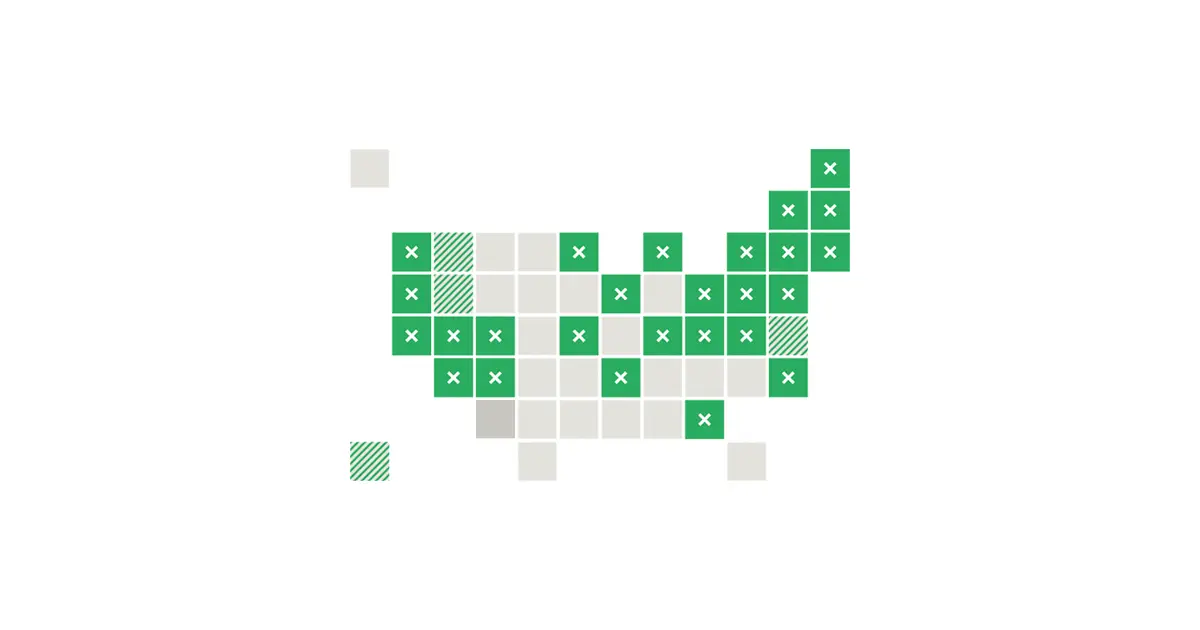
Since September 2025, the Department of Justice’s (DOJ) Civil Rights Division has embarked on an unprecedented legal campaign, suing 30 states and the District of Columbia to compel the surrender of their unredacted voter rolls. This aggressive federal initiative, spearheaded by the administration of President Donald Trump, aims to assert federal control over election administration and to facilitate the prosecution of alleged noncitizen voters, marking a significant departure from historical practices where states have predominantly managed these sensitive records.
The nationwide legal offensive has ignited a fierce debate over states’ rights, voter privacy, and the appropriate scope of federal power in election oversight. To date, the vast majority of these cases have met with stern judicial resistance, with final rulings issued in 26 of the DOJ’s lawsuits. Four cases remain actively contested in the courts, while one state opted to settle, the terms of which have not been publicly detailed. The widespread judicial repudiation of the DOJ’s arguments underscores the contentious nature of this federal push, drawing sharp criticism from judges across the political spectrum.
A Broad Legal Offensive and Its Judicial Reception
The Department of Justice’s concerted effort to obtain comprehensive, unredacted voter data represents a core component of President Trump’s broader agenda concerning "election integrity." Proponents of this initiative argue that access to such detailed information is crucial for identifying and prosecuting instances of voter fraud, particularly concerning noncitizen voting, which they contend poses a significant threat to the fairness and security of elections. However, critics, including numerous federal judges, have characterized the move as an overreach of federal authority, a potential infringement on voter privacy, and an attempt to suppress legitimate voting.
The voter rolls at the heart of these lawsuits contain a wealth of confidential information on millions of American citizens, including names, addresses, dates of birth, and often partial Social Security numbers or driver’s license numbers. Historically, the management and protection of these records have been a sovereign function of individual states, guided by a patchwork of state and federal laws designed to balance electoral transparency with the imperative of safeguarding personal data. The DOJ’s demands seek to centralize this sensitive information, raising alarms among privacy advocates and state election officials alike about the potential for misuse, data breaches, and the weaponization of voter data for political purposes.
The composition of the judiciary handling these cases reveals a diverse panel of judges. Of the 26 cases that have reached a final ruling, the judges randomly assigned to them included eight appointees of President Trump, four appointed by former Republican President George W. Bush, and 14 appointed by Democratic presidents (Biden, Obama, and Clinton). Despite this varied judicial background, the outcomes have been remarkably consistent: a near-unanimous rejection of the Justice Department’s legal arguments, highlighting a rare moment of bipartisan judicial consensus on a highly politicized issue.
Chronology of Legal Tactics and Judicial Rebuke
The DOJ’s litigation strategy unfolded in two distinct phases, each employing different legal justifications that were ultimately dismissed by the courts.
Tactic No. 1: Citing Election Integrity and Federal Election Laws
The initial seven lawsuits filed by the Justice Department adopted a uniform opening, directly referencing President Trump’s March 2025 executive order on election integrity. These complaints asserted that the DOJ required states’ unredacted voter rolls to verify compliance with existing federal election laws. The underlying premise was that federal oversight necessitated direct access to these records to ensure the accuracy and integrity of state-maintained voter lists.
However, federal judges swiftly dismantled this legal argument. They ruled that the government had failed to establish a legal or factual basis for its sweeping demands. While federal election laws do mandate that states maintain accurate, up-to-date computerized voter lists containing confidential information, the statutes grant the federal government only limited enforcement powers. Critically, these powers do not extend to compelling states to surrender their entire unredacted voter rolls without a more specific, legally defined justification.
Judges presiding over these initial cases were not only dismissive of the legal arguments but also deeply critical of the administration’s perceived motives. Maine federal Judge Lance E. Walker, a Trump appointee, issued a particularly pointed critique, stating, “The United States’ championing of its claims under the [election laws], in both its briefing and its presentation at the hearing on this matter, can only be described as halfhearted. And for good reason, since neither statute gives the United States the power to compel Maine to produce its current [unredacted voter list].” This statement underscored the court’s view that the government’s legal arguments were tenuous at best.
Several other judges went further, accusing the administration of using federal election laws as a pretext to suppress voting. California federal Judge David O. Carter, a Bill Clinton appointee, lamented the potential erosion of democratic principles, declaring, “The foundation upon which American democracy has been built is the right to vote. … Now it seems the Executive Branch of the United States government wants to abridge the right of many Americans to cast their ballots. … The Court does not take lightly DOJ’s obfuscation of its true motives.” His words highlighted concerns that the federal government’s true intention was not merely oversight but potentially voter disenfranchisement.
Pennsylvania federal Judge Cathy Bissoon, an Obama appointee, offered an even starker assessment of the DOJ’s intentions, noting that “Public statements from government officials reveal its intentions: to create a nationwide voter-database, for potential weaponization in future elections; as a ‘fishing expedition,’ hoped to advance unsubstantiated claims of non-citizen voting; and as a tool for immigration enforcement.” This interpretation pointed to a broader, more politically charged agenda behind the lawsuits.
In an extraordinary rebuke that resonated across other courts nationwide, the judge overseeing the Oregon case, Mustafa T. Kasubhai, a Joe Biden appointee, penned an opinion expressing profound concern over the federal government’s actions. He articulated that the DOJ’s conduct had undermined the judiciary’s longstanding trust in the department, stating, “The presumption of regularity that has been previously extended to Plaintiff that it could be taken at its word — with little doubt about its intentions and stated purposes — no longer holds.” He characterized the actions as “chilling,” signaling a significant breach of judicial confidence in the executive branch’s good faith.
All seven lawsuits employing this first tactic were decisively dismissed by the courts, marking a complete failure for the Justice Department’s initial legal strategy.
Tactic No. 2: Repurposing the Civil Rights Act of 1960, Title III
Following the comprehensive failure of their initial approach, the Justice Department pivoted, deploying a different strategy in the subsequent 19 lawsuits. These cases notably omitted any mention of President Trump’s executive order and eschewed reliance on federal voting laws. Instead, they invoked Title III of the Civil Rights Act of 1960, a provision originally enacted to mandate the preservation of state and local election records.
Government lawyers contended that Title III granted the Attorney General “sweeping power” to acquire these records, ostensibly to curb noncitizen voting. However, the historical context and legislative intent of Title III stand in stark contrast to this interpretation. The law was originally designed as a crucial tool to protect the right to vote, primarily by enabling federal investigations into discriminatory practices that disenfranchised Black voters in the Jim Crow South. Its purpose was to safeguard access to the ballot box, not to restrict it or to facilitate a federal takeover of voter data for generalized fraud investigations.
Once again, federal judges firmly rejected the government’s arguments. They ruled that Title III’s scope is limited to voter registration documents, not the comprehensive voter rolls generated and managed by states themselves. Furthermore, the judges highlighted the administration’s failure to provide a credible explanation for why it needed these specific records, a requirement explicitly stipulated by the statute.
West Virginia federal Judge Thomas E. Johnston, a George W. Bush appointee, encapsulated the court’s frustration, stating, “Clearly, this demand is devoid of any factual basis.” This sentiment was echoed across the judiciary, with several judges expressing astonishment at the administration’s “audacity” in attempting to weaponize an anti-discrimination law to potentially suppress voting.
D.C. federal Judge Randolph D. Moss, an Obama appointee, eloquently articulated the historical purpose of Title III, writing, “Title III was the Department of Justice’s answer to two years of resistance and obstruction by state election officials who destroyed, failed to retain, or simply refused to disclose the voting records … that would prove that black voters were victims of disparate treatment and had been unlawfully excluded from the rolls based on nothing more than their race.” His explanation underscored the profound ideological chasm between the law’s original intent and the DOJ’s novel application.
Judges also identified a fundamental conflict in the DOJ’s legal posture. They noted that the administration’s claim to be enforcing election laws, which mandate continuous updates to voter lists, directly contradicted Title III’s prohibition against altering voter records. Maryland Judge Stephanie A. Gallagher, a Trump appointee, articulated this absurdity, stating, “The United States’s proposed interpretation of the CRA would therefore criminalize the same conduct that the [voting laws] require. This Court will not read [Title III] to produce such an absurd result.” Pennsylvania Judge Bissoon further lambasted the administration’s interpretation, declaring it “does violence” to the law’s meaning.
To date, all 19 DOJ complaints that relied on the Civil Rights Act claim have also been dismissed, completing a clean sweep of judicial rejections for both of the administration’s legal tactics.
Overall Outcome, Appeals, and Broader Implications
In an extraordinary display of judicial independence, every one of the 26 federal judges who issued written opinions has unequivocally rejected the Justice Department’s arguments and thrown out its lawsuits. This unanimous judicial condemnation, spanning appointees from multiple administrations, signals a strong federal judicial consensus against the executive branch’s expansive interpretation of its powers in election oversight. Four cases remain ongoing, with their outcomes keenly watched, although the pattern of dismissals suggests a similar fate.
Undeterred by these repeated setbacks, the Trump administration has appealed most of its losses to various federal appeals courts and has indicated its willingness to pursue the matter all the way to the Supreme Court. A Justice Department spokesperson, responding to inquiries, issued a statement affirming the department’s position: “Our attorneys are skilled, principled advocates who argue every case honestly and in good faith. Disagreement with the government’s position is not evidence of bad faith. We look forward to making our case on appeal.” This statement reflects the administration’s resolve to continue its legal battle, despite the consistent judicial pushback.
The only appeal decided so far sided with the district judge who dismissed the Michigan case. The Sixth Circuit Court of Appeals opinion delivered a particularly stinging rebuke, highlighting the dramatic shift in the DOJ’s application of Title III: “Back then, the government used this power to ensure that everyone who had the right to vote could freely exercise that right. But today, the government invokes Title III for an inverse purpose — to ensure that some people have not voted.” This appellate ruling further solidifies the judicial branch’s skepticism regarding the administration’s true intentions.
In a recent development on October 9, a U.S. district judge issued a ruling declaring the Justice Department’s national effort to acquire and share state voter rolls an illegal abuse of its authority. A Justice Department spokesperson confirmed the department is “reviewing the ruling,” indicating that this recent decision will likely be added to the growing list of cases the administration intends to appeal.
Implications for Federalism, Voter Privacy, and Democratic Institutions
The sweeping rejection of the DOJ’s lawsuits carries significant implications for several pillars of American democracy.
Firstly, it serves as a powerful affirmation of federalism and state sovereignty in election administration. The consistent judicial rulings underscore the long-standing principle that states retain primary authority over their voter registration processes and the management of voter rolls. The federal courts have acted as a critical check on executive attempts to centralize this authority, reinforcing the decentralized nature of American elections.
Secondly, the cases highlight critical concerns regarding voter privacy. The unredacted voter rolls contain highly sensitive personal information. The prospect of a federal agency collecting and centralizing such data on millions of Americans, particularly for purposes that judges have deemed dubious, raises serious questions about data security, potential for political targeting, and the erosion of individual privacy rights. The courts’ emphasis on the lack of a clear legal basis for such demands reflects a commitment to protecting citizens’ confidential information from unwarranted government intrusion.
Thirdly, these lawsuits have cast a shadow over the reputation and perceived politicization of the Department of Justice’s Civil Rights Division. Originally established to enforce civil rights and protect voting access, the division’s use of historical anti-discrimination statutes for purposes that judges deemed to be voter suppression or an overreach has led to profound judicial distrust. Judge Kasubhai’s observation about the "presumption of regularity" no longer holding for the DOJ is a stark indicator of this erosion of trust, potentially impacting the department’s credibility in future litigation.
Finally, the entire episode underscores the vital role of the independent judiciary in upholding constitutional principles and safeguarding democratic institutions. In a highly polarized political environment, the federal courts, including appointees from both major parties, have consistently stood as a bulwark against executive overreach. Their unanimous dismissal of these cases demonstrates the judiciary’s commitment to interpreting laws according to their original intent and to ensuring that executive power is exercised within legal bounds. The ongoing appeals will further test these principles, but the initial judicial response has sent an unequivocal message about the limits of federal authority in state election matters. The outcome of these cases will undoubtedly shape future debates on election integrity, voter access, and the delicate balance of power in the American federal system.

 Joko Widodo
 Eva Lovia

 Pevita Pearce

 admin

 Lina Irawan
