
 Yuyun Lusiyani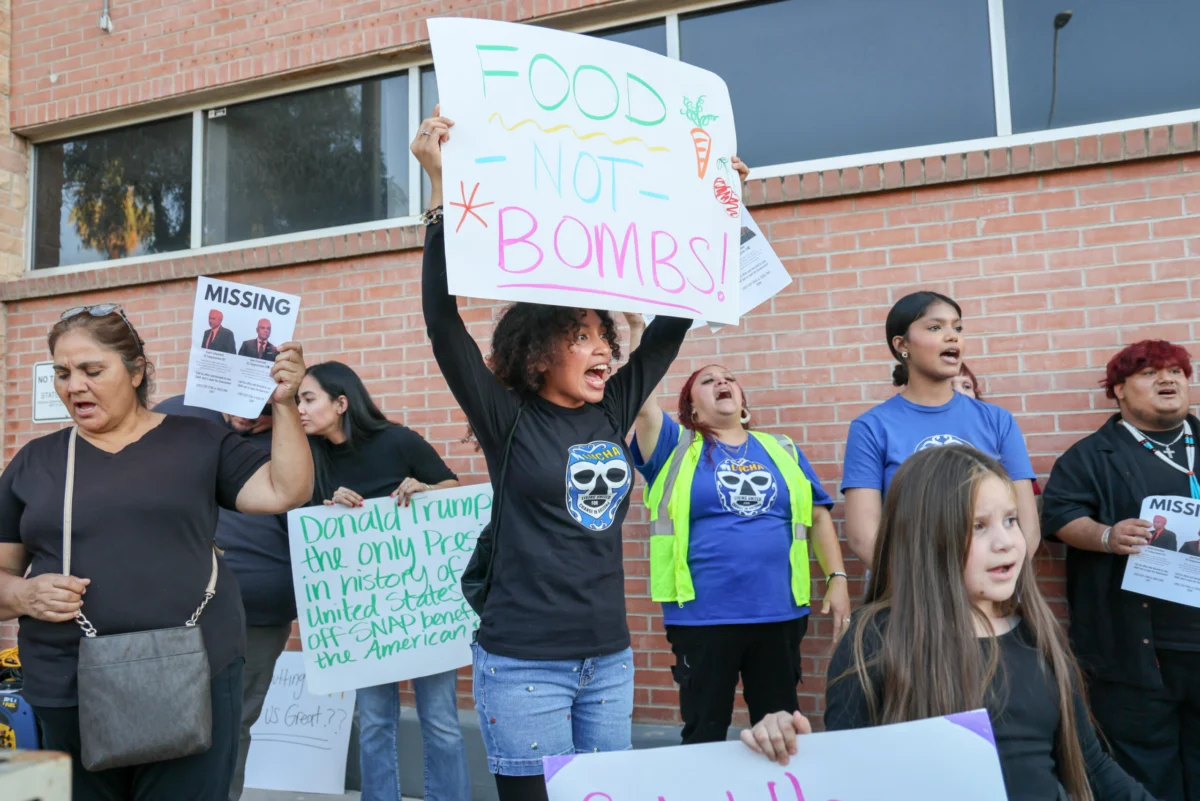
A comprehensive analysis reveals a dramatic reduction in the number of children receiving Supplemental Nutrition Assistance Program (SNAP) benefits, directly contradicting assurances made by Republican lawmakers who championed the federal legislation nearly a year ago. Despite initial claims that the reforms would protect vulnerable populations, including children, data now indicates hundreds of thousands of minors have lost access to crucial food assistance, raising concerns among advocates, economists, and public health experts.
During the legislative debate last year surrounding President Donald Trump’s signature domestic policy bill, Republican proponents consistently asserted that its proposed changes to SNAP, commonly known as food stamps, would not negatively impact the nation’s most vulnerable. Representative Glenn “GT” Thompson, a Pennsylvania Republican and then-chair of the House Agriculture Committee, stated that the SNAP reforms would “restore integrity” to the program and ensure it worked for the “most vulnerable among us, including children.” Similarly, Representative John Rose, a Republican from Tennessee, hailed the bill as a “historic accomplishment” that would guarantee “those in need can continue to receive the assistance they need.” Representative Dusty Johnson, a South Dakota Republican, further emphasized that the bill would focus resources on the “neediest” Americans, explicitly stating, “If you are a pregnant woman, your benefits are unaffected. If you have young children at home, your benefits are unaffected by this bill. If you are disabled, your benefits are unaffected by this bill.” These statements underscored a legislative intent to streamline the program without penalizing those deemed most susceptible to food insecurity.
A Stark Reversal: The Data Unveiled
However, a recent investigation by ProPublica indicates a starkly different outcome. Nearly a year after the measure was signed into law, the number of children receiving food assistance has plummeted by at least 776,000. The analysis, which examined program participation data from at least 12 states that break down beneficiaries by age, found that of the 1,670,011 individuals no longer receiving benefits in those states, a staggering 776,134, or 46%, were children.
This finding is corroborated by independent research from the nonpartisan Center on Budget and Policy Priorities (CBPP), which last month reported approximately 700,000 fewer children receiving food assistance nationwide due to the new federal law. The consistency between these two analyses underscores the significant and widespread impact of the reforms on child beneficiaries.
The decline is not uniform across the nation but shows particularly severe reductions in certain states. Arizona has experienced the nation’s largest percentage decline in SNAP participants, with 205,223 children no longer receiving benefits since July 2025—a precipitous 55% drop. Louisiana followed with the second-largest percentage decline among children, at 22%. While the U.S. Department of Agriculture (USDA), which oversees SNAP, has not released detailed figures on the impact on children, initial national data reveals that compared to February 2025, 4.3 million fewer people received SNAP nationwide in February 2026, leaving 37.8 million participants. This overall reduction suggests that children, despite legislative assurances, are disproportionately affected by the program’s changes.
Mechanisms of Disruption: Administrative Burdens and State Incentives
Experts attribute the unintended consequences for children to several factors embedded within the new legislation. Katie Bergh, a senior policy analyst at the Center on Budget and Policy Priorities, characterizes the affected children as “collateral damage.” She explains that if states are primarily focused on complying with the law’s complex new requirements, their efforts are likely diverted from ensuring the program remains easily accessible to eligible families. Other analysts point to increased paperwork requirements as a significant barrier, pushing eligible individuals and families off the program due to administrative hurdles.
The legislation introduced substantial changes to SNAP administration, creating significant new responsibilities and financial pressures for states. Foremost among these are stricter work requirements for most adult recipients. While the original SNAP program already included work requirements, the new law expanded their scope and tightened exemptions, necessitating more rigorous tracking and enforcement by state agencies.
Furthermore, the law mandates two major cost shifts onto state budgets, which are set to take effect in the coming years. In October of the current year, states will begin covering 75% of the program’s administrative costs, a substantial increase from their previous 50% share. This shift alone represents a considerable financial burden, potentially leading to understaffing or reduced services if state budgets cannot absorb the additional expense.
An even more significant financial implication awaits states in October 2027, when they will be required to pay a larger share of SNAP benefits based on their error rate. Error rates reflect overpayments or underpayments of SNAP benefits. While sometimes misconstrued as fraud, USDA data indicates that such errors are typically the fault of the state agency or the SNAP recipient and are described as “largely unintentional.” Nevertheless, the prospect of increased financial penalties for higher error rates creates a powerful incentive for states to minimize errors, which can inadvertently lead to eligible families being denied or losing benefits.
Bergh highlights that state agencies grappling with staffing shortages and struggling to implement new regulations will find it increasingly difficult to process applications efficiently and ensure low-income families can access benefits. “Families are falling through the cracks,” she warns, painting a picture of a system overwhelmed by its own complexity.
On the Ground: State-Level Challenges and Human Impact
The administrative strain is already evident in various states. In Massachusetts, for example, the Department of Transitional Assistance, which administers SNAP, reported a dramatic increase in the percentage of SNAP applicants who called an assistance line but could not reach a worker. This figure soared from 61% in November to nearly 81% in March, indicating severe bottlenecks in communication and support. The state agency did not respond to requests for comment regarding its backlog or service disruptions.
The human cost of these policy changes is perhaps most starkly illustrated by individual stories. Ana Alvarez, a single mother of five working at a restaurant in Phoenix, Arizona, began relying on St. Mary’s Food Bank after losing her SNAP benefits in September. She reapplied with the Arizona Department of Economic Security in December, but her application remains pending months later. Despite repeated calls to the agency, she is consistently told to “keep waiting.” Alvarez, who clips coupons and has cut out non-essential activities like zoo trips and restaurant visits with her children, faces mounting anxiety as the restaurant’s slow season approaches, compounding her worries about affording rent, car payments, and rising summer electric bills. Her story is a poignant testament to the immediate and severe impact of lost benefits on struggling families.
Milt Liu, CEO of St. Mary’s Food Bank, the largest in Arizona, confirms the growing strain on charitable organizations. The food bank has seen a 15% increase in demand this year, translating to 300,000 more visits from individuals seeking food assistance. “It’s important for everyone to realize that policies have implications for people on the edge, and we’re seeing that in our line every day,” Liu stated, underscoring the ripple effect of federal policy on local communities and the safety net provided by nonprofits.
Official Responses and Disputed Figures
The USDA’s response to questions about the impact on children has been limited. A spokesperson for the department did not directly address inquiries regarding the number of children who have lost access to SNAP, instead offering the general statement: “There is no shortage of resources for the most vulnerable among us, including children.” This generalized reassurance stands in contrast to the specific data emerging from independent analyses.
The three Republican members of the House Agriculture Committee—Representatives Rose, Thompson, and Johnson—who publicly defended the bill before its passage, did not respond to ProPublica’s questions about their previous statements in light of the documented decline in child SNAP beneficiaries. Their silence highlights the growing chasm between legislative intent and real-world outcomes.
The controversy deepened when Representative Jim McGovern, a Massachusetts Democrat, directly challenged Secretary of Agriculture Brooke Rollins regarding her recent comments characterizing the reduction of millions of SNAP recipients as “good news.” McGovern pointed out that if over 700,000 children have been dropped from the program in just 12 reporting states, the national figure would likely be “into the millions.” Secretary Rollins, however, disputed the figures, asserting, “The 700,000 number of children is not correct,” and claiming that most people removed from SNAP were “fraudulent.” She further dismissed the source of the data, stating, “That is not a nonpartisan group that gave you that number.” ProPublica, however, independently verified the figures reported by the Center on Budget and Policy Priorities, confirming their accuracy. McGovern reiterated his personal observations, stating he has spoken with individuals who lost food assistance, emphasizing, “These are people who actually need and rely on this food assistance to provide basic nutrition for their families.”
Broader Implications: A Public Health Crisis in the Making
Beyond the immediate administrative and financial challenges, experts warn of significant long-term consequences. Parke Wilde, a food economist at Tufts University, suggests that the pressure on states to lower error rates inadvertently “creates a temptation for the states to bump off working families.” He notes that families with volatile incomes, common among working-poor households, often require more complex and frequent adjustments to their benefits, making them administratively burdensome for state agencies aiming to reduce error rates. Wilde interprets the lawmakers’ original statements – "preserve SNAP for those with the greatest need" – as an implicit acknowledgment of their desire for a smaller SNAP program overall.
Mariana Chilton, an expert in child hunger at the University of Massachusetts, Amherst, argues that a smaller program will not yield long-term savings but will instead create a “public health crisis.” Extensive research demonstrates that children who receive SNAP benefits exhibit improved health outcomes, better academic performance, reduced hospitalizations, and enhanced mental health in adolescence. Chilton starkly likens early childhood hunger to a “brain injury,” emphasizing its profound and lasting detrimental effects on development and well-being. “When children are not healthy, this affects children today and it affects them throughout their lifetimes,” she cautioned.
The significant drop in child SNAP beneficiaries, coupled with the increased burden on food banks and the evident struggles of families like Ana Alvarez’s, paints a concerning picture of the real-world impact of recent federal reforms. While the stated goal was to restore integrity and focus resources on the truly needy, the current data suggests that the implementation of these policies has inadvertently created new barriers for vulnerable children, potentially undermining their health, education, and future prospects, and shifting the burden onto an already stretched charitable sector. The ongoing debate between legislative intent and documented outcomes underscores the complex challenges inherent in reforming critical social safety net programs.




 Joko Widodo
 Jia Lissa
 Pevita Pearce
 admin
admin