
 Yuyun Lusiyani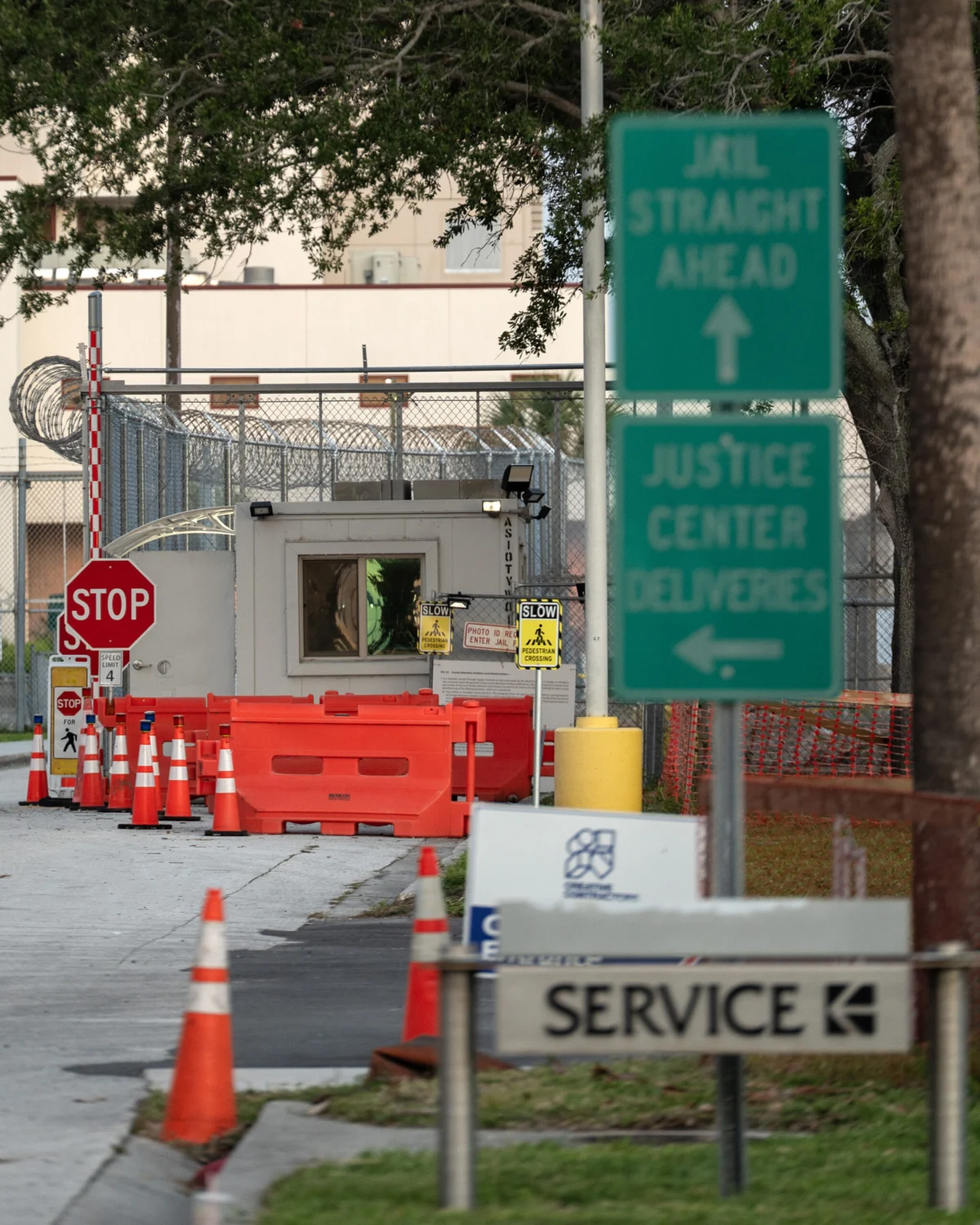
Every third morning, the predawn quiet of Soumia Bensalah’s cell in Florida’s Pinellas County Jail was shattered. Roused from sleep, she was subjected to a dehumanizing ritual: shackled hand and foot, herded onto a bus, and transported across Tampa Bay to a cramped holding room at a U.S. Immigration and Customs Enforcement (ICE) office. There, still bound, she would spend the entire day. As evening fell, the journey reversed – back to the jail, where hours of waiting in a hallway, photographs, a strip-search, questioning, and finally, being led back to her cell awaited. This grueling cycle unfolded five times in December of a recent year, leaving Bensalah, a French Moroccan with a pending green card application, physically exhausted and deeply humiliated.
Bensalah’s experience was not an isolated incident, nor was its precise 72-hour rhythm a coincidence. Legal experts confirm that this pattern of repeat releases and readmissions, known as “rebookings,” is a calculated maneuver designed to circumvent federal regulations. These rules limit the maximum duration county jails, like Pinellas’, can hold immigrants on behalf of ICE. The 72-hour (or sometimes 48-hour) limit exists to prevent individuals detained on civil immigration charges from being held indefinitely in facilities intended for those facing criminal charges. ProPublica’s investigative analysis, based on meticulously gathered data and expert interviews, reveals that such rebookings typically occur in secret, exploiting a loophole that prolongs detention and violates established federal standards.
The Unveiling of a Covert Practice: Data and Deception
The Pinellas County Jail initially refused to release logs documenting Bensalah’s torturous journey, citing federal immigration regulations that purportedly shield such records, which are typically public. However, an unredacted copy of the jail’s booking logs, obtained by ProPublica from an anonymous source fearing workplace reprisal, provided irrefutable evidence. This data was then cross-referenced with anonymized federal immigration data collected by the Deportation Data Project, confirming the systematic nature of these rebookings.
The core reason behind this controversial practice lies in a persistent challenge faced by the federal government: an acute shortage of detention space for the growing number of immigrants apprehended by ICE and its cooperating local authorities. This deficit is particularly pronounced in Florida, where a majority of law enforcement agencies have entered into agreements to collaborate with ICE on immigration enforcement, leading to a surge in detentions without adequate federal infrastructure to accommodate them.
ProPublica’s groundbreaking analysis of data from the Deportation Data Project exposes Pinellas and Orange counties in Florida as national outliers in the volume of repeat rebookings of immigrants held for ICE. From July 2025 to early February 2026, the Orange County Jail in Orlando rebooked 559 individuals two or more times. Less than two hours away, in the Tampa Bay area, Pinellas County rebooked 174 immigrants at least twice from July 2025 until the practice seemingly ceased in July 2026. To put this into perspective, other jails nationwide rebooked no more than 10 immigrants two or more times during the same period, underscoring the unparalleled scale of the practice in these two Florida counties. Crucially, all immigrants counted in this analysis were jailed solely for ICE, meaning they faced no local criminal charges, and their cumulative jail stays exceeded 72 hours.
A Violation of Rights: Legal and Ethical Condemnations
The implications of these rebookings extend far beyond administrative convenience. Emily Ryo, a Duke University law professor specializing in ICE detention, highlights that county jails are often ill-equipped to meet the specific needs of civil detainees. They frequently lack the capacity for comprehensive medical screenings, private spaces for confidential legal consultations, or even access to outdoor recreation – all of which are stipulated in ICE’s own detention standards.
Two former Department of Homeland Security (DHS) officials, speaking to ProPublica, characterized the repeated rebookings as a deliberate attempt to sidestep these very detention standards. Michelle Brané, a former DHS immigration detention ombudsperson, starkly stated, “What it shows is that they were very aware that they were breaking a rule.” This sentiment echoes throughout the legal community, with experts like Jennifer Chacón, a law professor at Stanford University, unequivocally declaring, “There’s no argument that this is a lawful detention.”
Soumia Bensalah’s initial detention illustrates the precarious position many immigrants find themselves in. She landed in jail after calling the police during an alleged assault by her U.S. citizen husband. Both were booked on battery charges in Polk County, which were later dropped. Despite posting bond, Bensalah was not released due due to an ICE detainer – a request from federal authorities to hold an individual for up to 48 hours after they would otherwise be freed, allowing ICE time to initiate deportation proceedings. Instead of transferring Bensalah to a long-term immigration detention facility, ICE moved her to Pinellas, two counties away, where the series of rebookings began.

Florida state law mandates that every jail sign collaboration agreements with ICE. While most jails in the state can hold immigrants for ICE for only up to 48 hours, Pinellas and Orange counties, through June, operated under special contracts, designated as “under 72” facilities in ICE’s database, allowing for a three-day hold. A former senior DHS official, speaking anonymously due to fear of reprisal, emphasized the clear boundary: “At 72 you should have walked him out the door.” The repeated rebookings, therefore, represent a blatant disregard for these established limits, transforming temporary holds into extended, unlawful detentions.
Official Stances and Troubling Justifications
In response to ProPublica’s inquiries about these practices, a DHS spokesperson offered a terse defense: “ICE is NOT breaking any laws by making custody determinations based on bed space and ensuring detainees’ presence for immigration proceedings or removal from the United States.” Regarding Bensalah’s specific case, the department asserted that “she received due process.” The spokesperson concluded with a politically charged statement, “Under President Trump and Secretary [Markwayne] Mullin, if you break the law, you will face the consequences. Criminal illegal aliens are not welcome in the U.S.” This response, however, fails to address the legal and ethical concerns raised by the rebooking practice itself, particularly for individuals with no criminal record beyond immigration violations.
The data reveals the human cost of these policies. Of the 423 immigrants rebooked at least twice in Pinellas and Orange counties through December 2025, a significant 115 – or 27% – had no criminal charges or convictions apart from traffic-related offenses. This aligns with broader trends indicating an increasing percentage of ICE detentions involve individuals with minimal or no criminal history. For example, one Mexican woman endured 10 rebookings in Pinellas, accumulating a total of 26 days in county jail before being transferred to an ICE facility and eventually released on a $2,000 bond. Only 65 of those repeatedly rebooked in these two counties through June 2026 were ultimately released on bond.
The turnaround times in some instances were shockingly brief. In Orange County, between September 2025 and February 2026, 30 immigrants were rebooked in 15 minutes or less, precisely as their 72-hour limit neared expiration. Five individuals were rebooked in as little as one minute, underscoring the administrative absurdity and deliberate nature of the practice.
Beyond rebookings, Pinellas County Jail also exhibited a troubling increase in single, prolonged detentions. Since the start of President Donald Trump’s second term in January 2025, ProPublica’s analysis found that Pinellas held at least 157 immigrants for ICE for longer than three business days in a single booking – a stark contrast to the mere five such instances in the preceding two years. In one notable case, a Brazilian immigrant, held for nine days without criminal charges, was released by ICE only after she challenged her detention in federal court in July. ICE dismissed it as a “procedural error,” while DHS reiterated, “All her claims will be heard by an immigration judge, and she will receive due process. This administration will not ignore the rule of law.”
A Tale of Two Counties: Divergent Paths
The political and social landscapes of Orange and Pinellas counties played a crucial role in their differing responses to the rebooking controversy. In Orange County, a majority-Democratic area, widespread public opposition and activism proved instrumental in forcing change. Religious groups, attorneys, and a coalition of activists galvanized community members, who shared personal stories of immigrants held in the jail at county commission meetings. They also highlighted the financial burden on the county for housing ICE detainees.
County officials, caught between a state mandate to cooperate with ICE, a federal push for mass deportations filling their jails, and a vocal electorate demanding reform, grappled with how to proceed. In August 2025, the Orlando Sentinel first reported on several rebookings in Orange County. Months later, in late January, a defense attorney presented compelling evidence at a county commission hearing, detailing how the rebooking practice persisted and violated due process for her clients.
This pressure culminated in decisive action. A week later, County Mayor Jerry Demings sent a letter to ICE, unequivocally stating that “ICE inmates will be limited to one continuous housing period of up to 72 hours per immigration matter.” ProPublica’s analysis confirms that after this letter, the rebookings in Orange County ceased. The same day Demings sent his letter, Orlando federal judge Paul Byron publicly condemned the practice during a hearing for an immigrant claiming illegal detention. “If the government is pulling a detainee out of jail to artificially reset the clock, that is wildly inappropriate,” Byron admonished Assistant U.S. Attorney Phillip Ragler, demanding an explanation. Ragler, unable to provide one, later resigned from his position, citing significant moral and ethical conflicts in defending ICE’s actions, especially for detainees with no criminal records.
Ultimately, Orange County renegotiated its contract with ICE, limiting immigrant detentions to a maximum of two days. This led to a dramatic reduction in ICE bookings at the jail, plummeting from a high of 692 in January to just two in July.

Pinellas County, however, followed a different trajectory. While rebookings slowed in January, the county then began holding more immigrants for longer than three business days in single stays, with no corresponding dip in overall ICE bookings. Although repeat rebookings appeared to cease by July, at least 12 immigrants that month were held for over three business days, including one Honduran man detained for at least eight days.
Pinellas County, which trended Republican in the last presidential election, has a sheriff, Bob Gualtieri, who has been a vocal proponent of local-federal collaboration on immigration enforcement. Gualtieri helped pioneer contracts that shield local jails from legal liability for holding ICE detainees and agreements allowing jail staff to serve ICE detainers. In a 2017 ICE press release, Gualtieri was quoted saying, “For years, sheriffs have had to choose between releasing criminal illegal aliens from their jails back into the community, or exposing themselves to potential civil liability.” In the August 2025 Orlando Sentinel article, Gualtieri attributed rebookings at his facility to “a capacity issue” at the federal detention center.
Sheriff Gualtieri was part of a group of Florida sheriffs in the summer of 2025 who proposed allowing ICE to utilize unused jail beds statewide, with Florida police transporting detainees. His own jail has seen a historically high number of ICE detentions since Trump took office in January 2025, with over 7,000 immigrants detained for ICE in the first 564 days of Trump’s second term – more than four times the number during the last two years of the Biden administration. The proportion of ICE detainees among total bookings at Pinellas Jail steadily climbed from under 7% at the start of 2025 to 18% in December, hovering around 20% through July 2026.
The Enduring Impact and Legal Recourse
The vast majority of immigrants tracked by ProPublica in Pinellas and nationwide, including Soumia Bensalah, were ultimately deported. After her fifth rebooking, Bensalah was transferred through four different ICE detention centers before being deported to France.
Legal experts, such as Paul Chavez, litigation director for Americans for Immigrant Justice, contend that repeat rebookings constitute clear instances of unconstitutional detention. “If it was that easy to thwart, all we would have to do to thwart the Fourth Amendment was throw somebody in the backseat of a car, drive them to McDonald’s and then drive back,” Chavez argued, questioning whether the drafters of the Fourth Amendment would find solace in such an interpretation.
For immigrants caught in this cycle of rebookings or prolonged detentions, the primary legal recourse is an emergency petition in federal court, known as a habeas corpus claim, seeking relief from illegal detainment. ProPublica determined that at least 29 immigrants held for ICE in Orange or Pinellas counties filed such petitions. The Pinellas County Sheriff’s Office, in response to the Brazilian woman’s habeas petition, claimed she was in federal custody and beyond their power to release. However, federal appeals courts have consistently ruled that jails retain the authority to release ICE detainees once a hold expires and can be held liable for unlawful detentions. A federal jury in November of a prior year ordered Suffolk County, New York, to pay $112 million to over 600 immigrants wrongly held, a decision currently under appeal.
While Corporal Jamie Miller, a spokesperson for the Pinellas County Sheriff’s Office, stated that the facility holds people for ICE for only up to 72 hours before releasing them, the office declined further comment on ProPublica’s findings. The Orange County Jail, in its statement, confirmed it had “eliminated multiple bookings,” referring further questions to ICE.
The contrasting outcomes in Orange and Pinellas counties highlight the critical role of local accountability and political will. Where community activism and judicial scrutiny coalesced, change occurred. In areas where such pressures were less pronounced or where local officials actively championed collaboration with federal immigration enforcement, the practices persisted, albeit sometimes shifting in form from rapid rebookings to extended single stays. The investigation by ProPublica casts a harsh light on a systemic issue within the U.S. immigration detention framework, exposing how administrative expediency can supersede fundamental rights and legal limits, often with devastating consequences for vulnerable individuals caught in the system.
Methodology: Tracing the Shadow System
ProPublica’s investigation relied on a comprehensive analysis of multiple federal and local detention databases to identify immigrants subjected to repeated rebookings. Federal immigration detention data, obtained by the Deportation Data Project, provided unique IDs for each detainee, along with precise booking and release times for each facility. This allowed for calculations of individual stay durations and the intervals between release and re-entry to the same facility. To ensure accuracy and focus on deliberate rebookings, the analysis counted a person as rebooked only if their return to the same facility occurred within 24 hours (with 95% of rebookings happening within 12 hours). The data covered October 1, 2022, through August 6, 2026, focusing on local jails where stricter federal rules apply. Only immigrants rebooked two or more times were counted, as experts suggested this was a stronger indicator of intentional extensions rather than isolated logistical issues. Weekends and holidays were excluded from stay limit calculations per federal regulations, but included in total cumulative stay tallies. Criminal charge data, obtained via FOIA requests to DHS, allowed for the identification of detainees with no criminal record beyond traffic offenses or “other immigration violator” classifications. Finally, an unredacted copy of the Pinellas County Jail’s inmate search database was used to determine the proportion of ICE detainees among total bookings, with veracity verified against public records.




 Joko Widodo
 Jia Lissa
 Pevita Pearce
 admin
admin