
 Lina Irawan
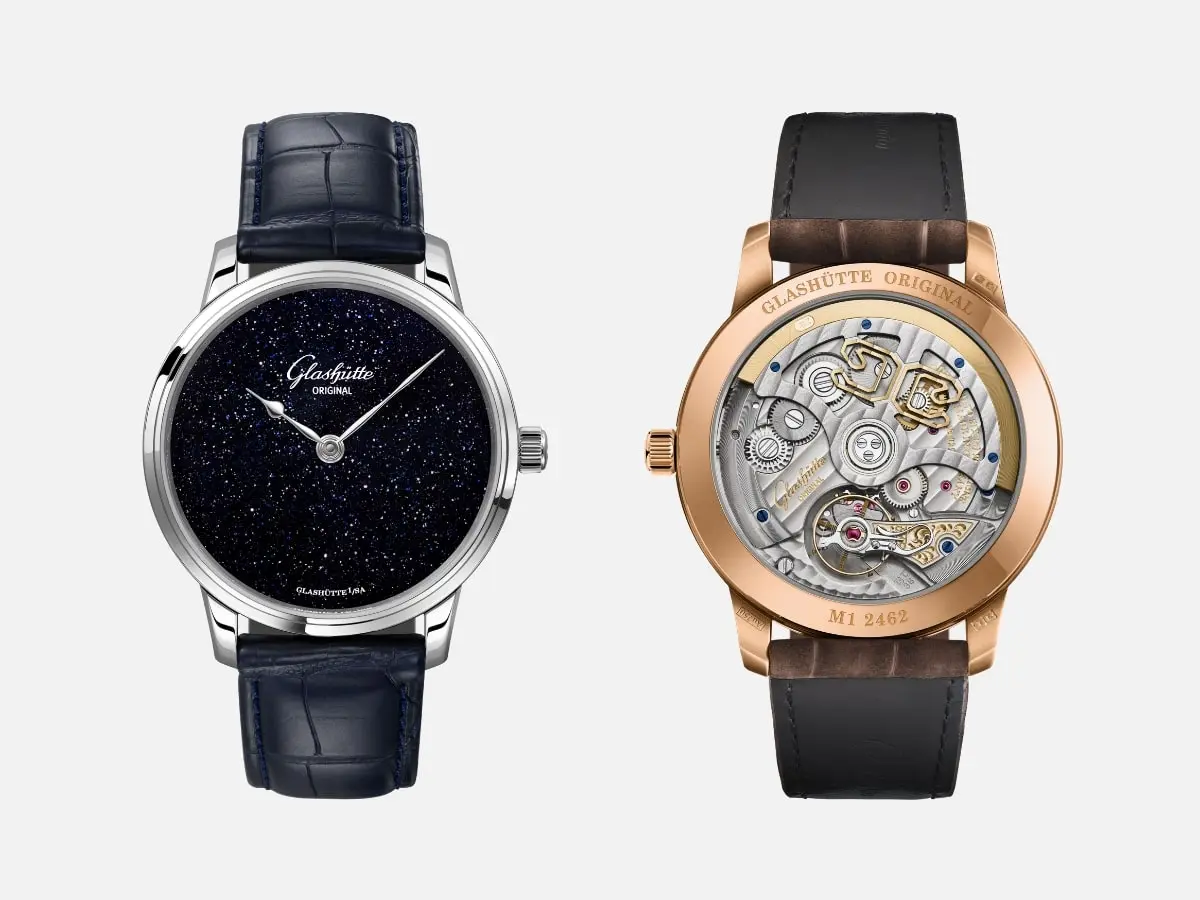
Glashütte Original, the prestigious German watchmaker based in the historic horological hub of Saxony, has officially expanded its Senator collection with the introduction of two new timepieces that prioritize artistic minimalism and high-end material science. The Senator Aventurine series comprises two distinct models: the Art Déco Blue and the Art Nouveau Green. These timepieces are positioned within the brand’s "Atelier" commissions, a designation reserved for watches that undergo a specialized assembly process where a single master watchmaker is responsible for the entire construction and regulation of the piece. Retailing at a price point exceeding $50,000, these models represent a significant investment in traditional craftsmanship and the specific aesthetic movements of the early 20th century.
The collection is defined by its use of aventurine glass, a material that traces its origins to 17th-century Venice. By utilizing this historic glassmaking technique, Glashütte Original has created dials that lack traditional hour markers or date windows, forcing the wearer’s focus onto the shimmering texture of the material itself. The Art Déco Blue model is housed in a 40 mm platinum case, while the Art Nouveau Green variant utilizes 18-carat red gold. Both watches are powered by the manufacture’s Calibre 36-16, an automatic movement renowned for its stability and 100-hour power reserve. This launch underscores the brand’s ongoing strategy to balance its reputation for rigorous German engineering with the more emotive, decorative aspects of haute horlogerie.
The Evolution of Aventurine in High Horology
The use of aventurine in the new Senator models is a nod to a glassmaking accident that occurred on the island of Murano in the 1600s. The term is derived from the Italian phrase "a ventura," meaning "by chance," referring to the moment a glassmaker purportedly dropped copper filings into a vat of molten glass. The resulting material, characterized by its deep internal sparkle, became a staple of Venetian luxury. In the context of the Senator Aventurine collection, the material is not a natural gemstone—which is often confused with aventurine quartz—but rather a sophisticated man-made glass infused with metal oxides.
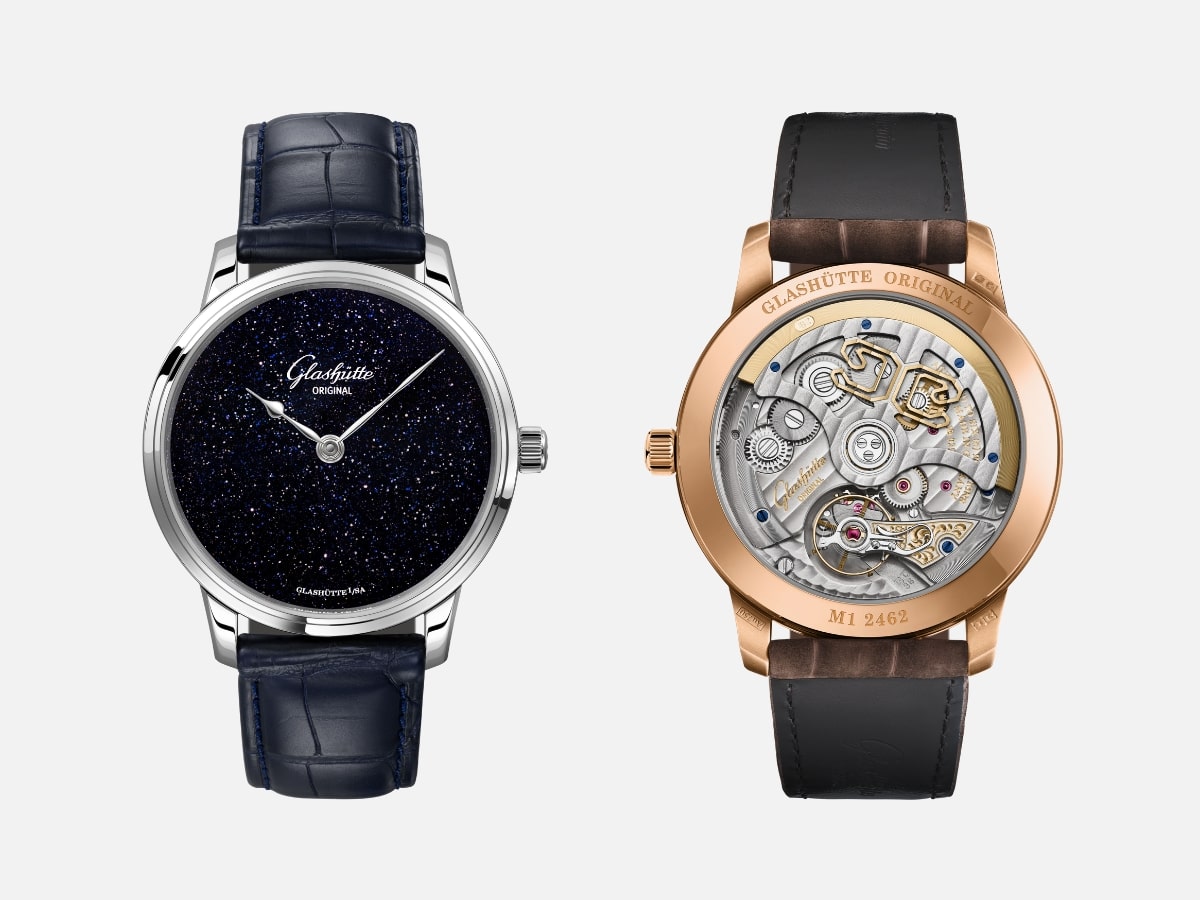
To achieve the specific visual depth required for these dials, Glashütte Original employs a meticulous manufacturing process. Each dial begins as a thin disc of aventurine glass. To enhance the intensity of the color and the brilliance of the metallic inclusions, a layer of black lacquer is applied to the reverse side of the glass. This creates a "mirror effect" that amplifies the light reflecting off the internal particles. Because the distribution of these metallic flecks is entirely random during the cooling process of the glass, no two dials in the collection are identical. This inherent uniqueness is a primary driver of the collection’s value proposition, appealing to collectors who seek "unique piece" characteristics within a serial production framework.
Architectural Inspiration: Art Déco vs. Art Nouveau
The two models are distinguished not only by their materials but by the historical design movements they evoke. The Art Déco Blue is a tribute to the geometric rigor and industrial glamour of the 1920s and 1930s. The choice of platinum for the case provides a cool, monochromatic frame for the deep blue dial, which is intended to mimic a clear night sky. The hands are crafted from white gold and curved to follow the contour of the dial, maintaining a sleek, streamlined profile consistent with the Art Déco philosophy of functional elegance.
In contrast, the Art Nouveau Green looks back to the late 19th and early 20th centuries, a period characterized by organic lines and a deep connection to the natural world. The use of red gold provides a warm, earthy contrast to the deep green aventurine dial. This combination is intended to evoke the play of light through a forest canopy or the shifting hues of moss and foliage. The Art Nouveau movement’s emphasis on craftsmanship and the rejection of mass-produced aesthetics are mirrored in the "one watchmaker, one watch" assembly philosophy of the Glashütte Original Atelier.
Technical Specifications of Calibre 36-16
Beyond the aesthetic allure of the aventurine dials, the technical heart of the collection is the Calibre 36-16. This movement is an evolution of the Calibre 36, which was first introduced by Glashütte Original in 2016 to set new standards for precision and reliability. The "16" designation indicates a specific level of decoration and refinement suited for the Atelier series.
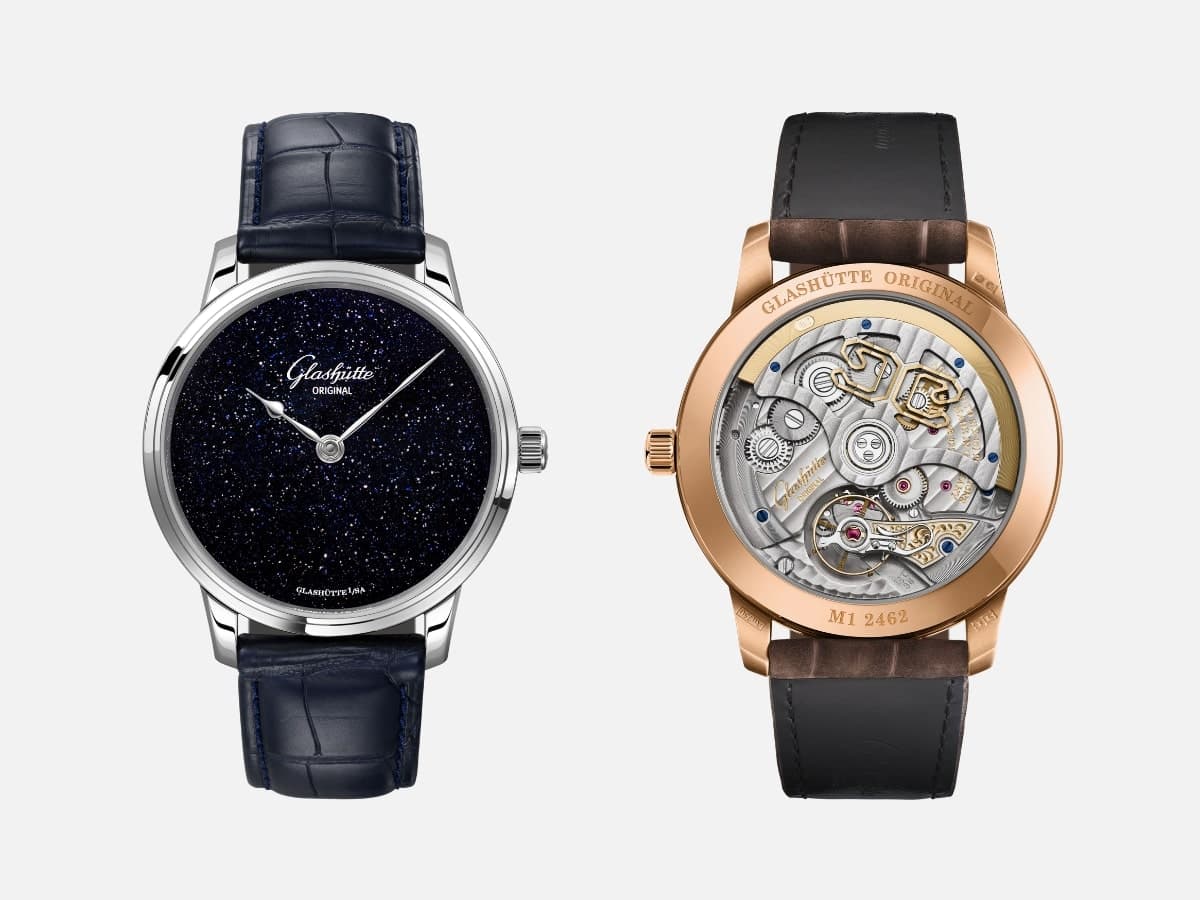
The movement features a silicon balance spring, a material choice that offers significant advantages in modern watchmaking. Silicon is entirely non-magnetic and highly resistant to temperature fluctuations, ensuring that the watch maintains its rate regardless of environmental changes. The movement operates at a frequency of 4 Hz (28,800 vibrations per hour) and offers a substantial 100-hour power reserve, achieved through a single spring barrel optimized for efficiency.
The exhibition caseback reveals the extensive finishing typical of Saxon watchmaking. Key features include:
- The Glashütte Three-Quarter Plate: A traditional German construction that provides superior stability for the gear train.
- Glashütte Stripes: Fine decorative ribbing applied to the plates and bridges.
- Hand-Engraved Balance Cock: Each balance cock is decorated by hand, ensuring that even the internal components possess artistic value.
- 21-Carat Gold Rotor: The skeletonized double-G rotor features a heavy gold weight to ensure efficient winding of the mainspring.
- Blued Screws and Polished Steel Parts: Every component is finished to meet the "Excellence" standards of the manufacture.
The Atelier Commission: A Return to Traditional Benchwork
The production of the Senator Aventurine collection highlights a shift in the luxury watch industry toward hyper-personalized craftsmanship. While modern watchmaking often relies on assembly lines where different specialists handle specific components, the Glashütte Original Atelier operates on a model closer to 18th-century horology. A single watchmaker receives all the finished components of the Calibre 36-16 and the Senator case and is solely responsible for the assembly, lubrication, timing, and final quality control.
This approach is more than just a marketing narrative; it ensures a level of accountability and cohesion in the final product. If a watchmaker spends weeks on a single timepiece, they develop an intimate understanding of its mechanical nuances. This method is particularly important for watches featuring delicate materials like aventurine glass, which can be prone to cracking if handled improperly during the dial-fitting process.

Market Positioning and Industry Implications
The release of the Senator Aventurine collection at a price point above $50,000 places Glashütte Original in direct competition with other high-end manufacturers like Vacheron Constantin and A. Lange & Söhne, particularly in the realm of "Metiers d’Art" (artistic crafts) watches. By removing the date and hour markers, Glashütte Original is leaning into the "slow time" movement, where a watch is viewed more as a piece of kinetic jewelry or wearable art than a precision timing tool.
Market analysts suggest that this move is a strategic attempt to capture the growing segment of the market that values "stealth luxury." The absence of branding on the dial (other than the subtle logo) and the lack of traditional complications appeal to collectors who have moved past recognizable icons and are looking for technical depth and artisanal rarity. Furthermore, the use of platinum and red gold ensures that the watches maintain a high intrinsic value, providing a hedge for the significant retail price.
Chronology of the Senator Line
The Senator line has long been the backbone of Glashütte Original’s catalog, serving as the primary vehicle for the brand’s classic complications, such as the Perpetual Calendar and the Cosmopolite.
- 1990s: The Senator collection is established to showcase traditional German design, featuring Roman numerals and "chemin de fer" minute tracks.
- 2016: The introduction of the Calibre 36 marks a turning point, prioritizing chronometric performance and longer power reserves.
- 2020-2023: The brand begins experimenting with more avant-garde dial materials, including specialized lacquers and textured finishes.
- 2026: The launch of the Senator Aventurine collection marks the most minimalist iteration of the line to date, stripping away all dial furniture to highlight the material science of the aventurine glass.
Conclusion and Future Outlook
The Glashütte Original Senator Aventurine Art Déco Blue and Art Nouveau Green represent a confident statement from the Saxon manufacture. By combining centuries-old glassmaking techniques with a state-of-the-art mechanical movement, the brand has created a product that bridges the gap between history and modernity. The decision to utilize the Atelier assembly model further distinguishes these pieces from the brand’s standard production, justifying the premium pricing through a commitment to individual watchmaker expertise.
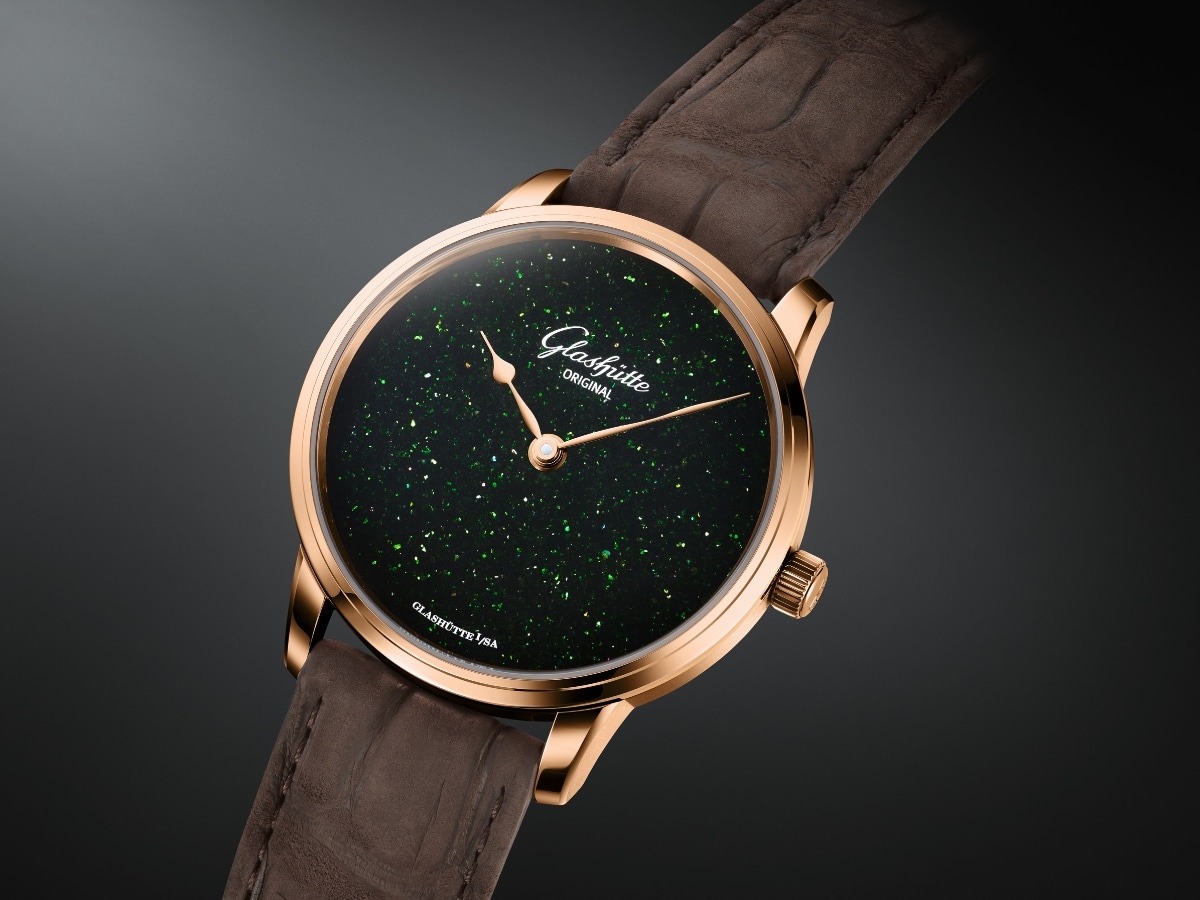
As the luxury watch market continues to evolve, the success of the Senator Aventurine collection will likely serve as a bellwether for the demand for minimalist, craft-focused timepieces. While the $50,000+ price tag remains a barrier for many, for the dedicated collector, the allure of a "miniature star field" or a "flicker of forest green" on the wrist offers a unique form of horological escapism. These watches do not just tell time; they tell the story of a chance discovery in Venice and the enduring legacy of German engineering.




 Nila Kartika Wati

 Eva Lovia

 Yuyun Lusiyani

 Ana Megawati

 Joko Widodo
