
 Pevita Pearce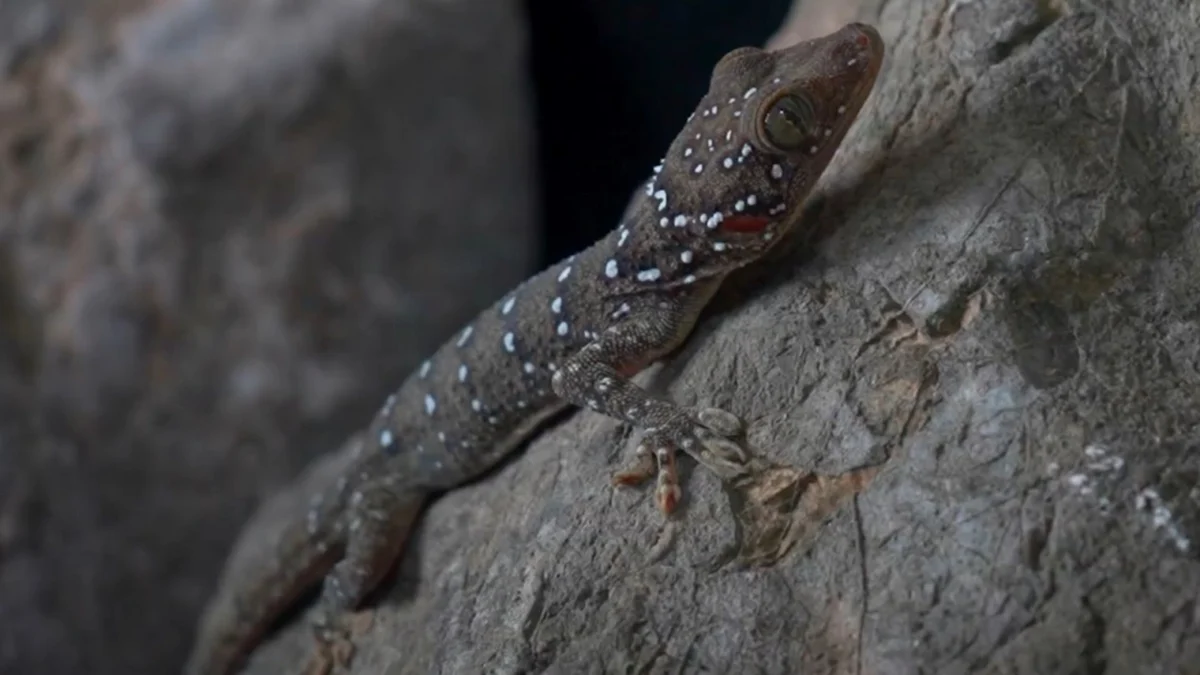
A landmark biological survey conducted deep within the subterranean landscapes of Cambodia has resulted in the identification of seven animal species previously unknown to science. This discovery, the culmination of a rigorous nineteen-month expedition, highlights the critical ecological importance of the nation’s karst—or limestone—ecosystems. Led by the international conservation organization Fauna & Flora in close partnership with Cambodia’s Ministry of Environment, the research underscores the potential for further undiscovered life within the isolated, often inaccessible chambers of the country’s underground networks.
Between December 2023 and July 2025, researchers navigated more than 60 individual caves across the provinces of Battambang and Stung Treng. These regions, characterized by dramatic limestone outcrops and intricate tunnel systems, have long been suspected of harboring endemic wildlife due to their geographic isolation. The findings of the survey, recently detailed in a comprehensive biodiversity report, confirm that these environments serve as "evolutionary islands," where species have developed in near-total darkness over millions of years, independent of the world above.
A Chronology of Discovery: The 19-Month Expedition
The expedition was launched in late 2023 with the primary objective of cataloging the biodiversity of Cambodia’s understudied karst landscapes. These limestone formations are frequently overlooked in favor of the country’s dense tropical forests and the Mekong River basin. However, scientists recognized that the unique chemical and physical properties of caves often drive rapid speciation.
From December 2023 through the early months of 2024, the team focused on the Battambang province, a region famous for its "Bat Caves" and historical significance. The methodology involved a combination of traditional field biology—such as manual searching and specimen collection—and modern technological monitoring. Researchers spent weeks underground, documenting the micro-climates of various cave chambers, measuring humidity levels, and collecting soil and water samples.
By the midpoint of the survey in late 2024, the focus shifted toward Stung Treng. This phase of the project introduced the use of advanced camera traps positioned at cave entrances and within larger subterranean galleries. These devices were intended to capture evidence of larger, more mobile wildlife that utilize caves for shelter or breeding. The survey concluded in July 2025, followed by months of rigorous DNA sequencing and morphological analysis to verify the uniqueness of the collected specimens.
Profiles of the Newly Discovered Species
The seven species confirmed by the research team represent three distinct groups of animals: geckos, micro-snails, and millipedes. Each of these creatures exhibits specialized adaptations to life in low-light or zero-light environments, a phenomenon known as troglomorphism.
The Karst Geckos
Three of the new species are geckos, belonging to a lineage that has adapted specifically to the vertical and often damp surfaces of limestone walls. Unlike their forest-dwelling relatives, these cave geckos often possess elongated limbs and more sensitive visual systems to navigate the twilight zones of cave entrances. Preliminary data suggests these reptiles play a vital role as apex predators within the cave’s insect-based food web.
The Micro-Snails
Two species of micro-snails were identified among the leaf litter and mineral deposits of the cave floors. These snails are remarkably small, often measuring only a few millimeters in length. Scientists believe these mollusks are highly sensitive to the calcium-rich environment of the karst, utilizing the minerals from the limestone to build their intricate shells. Their limited mobility means they are likely endemic to specific cave systems, making them highly vulnerable to localized environmental changes.
The Millipedes and Orthomorpha battambangiensis
Perhaps the most notable discovery is a new species of millipede named Orthomorpha battambangiensis, titled after the province where it was first located. This arthropod is part of a genus known for its striking colors and chemical defenses. The discovery of O. battambangiensis provides valuable data on the decomposition processes within caves, as millipedes are primary detritivores that break down organic matter—such as bat guano and washed-in plant debris—into nutrients that support other cave life.
The Scientific Significance of Karst Environments
The importance of these discoveries extends beyond the simple addition of names to a taxonomic list. American herpetologist Lee Grismer, a leading expert on Southeast Asian biodiversity who contributed his expertise to the project, described these limestone areas as "laboratories of natural selection."
"Each one of these isolated karstic areas acts as its own little laboratory of natural selection and evolution," Grismer explained. "Think of it as their own little vignette of biodiversity, where nature is performing the same experiment over and over independently. They’re not just archaic museums that are retaining ancient species; these are areas where biodiversity is being generated."
The concept of "biodiversity generation" is central to modern conservation science. Because karst hills are often separated by flat plains or water, the species living on or inside one hill cannot easily travel to another. Over thousands of generations, these isolated populations diverge from their ancestors, eventually becoming entirely new species. This makes every limestone hill in Cambodia a potential site for unique biological heritage found nowhere else on the planet.
Beyond the Subterranean: Findings in Larger Wildlife
While the discovery of new invertebrates and reptiles was the primary focus, the survey’s use of camera traps and environmental monitoring also yielded significant data on rare and endangered megafauna. These findings reinforce the idea that caves and their surrounding karst forests are essential corridors for regional wildlife.
The survey confirmed the presence of:
- Sunda Pangolins: Critically endangered and frequently targeted by the illegal wildlife trade, the presence of pangolins in these areas suggests that the rugged terrain of the karst provides a natural sanctuary from poachers.
- Indochinese Silvered Langurs: These primates were observed utilizing the forested fringes of the limestone hills, relying on the caves for thermal regulation during the hottest parts of the year.
- Green Peafowl: An increasingly rare sight in Southeast Asia, these birds were documented in the vicinity of the caves, indicating a healthy and relatively undisturbed ecosystem.
Official Responses and Conservation Challenges
The Cambodian Ministry of Environment has welcomed the findings, signaling a potential shift in how these landscapes are managed. Historically, limestone hills in Southeast Asia have been viewed primarily as resources for the construction industry. Limestone is a key ingredient in cement production, and many karst formations across the region have been destroyed by quarrying.
In a statement following the release of the report, conservationists from Fauna & Flora emphasized that the discovery of seven new species provides the "biological evidence" needed to advocate for stronger legal protections. "These findings are likely just the beginning," a spokesperson noted. "If we can find seven new species in 60 caves, imagine what remains hidden in the hundreds of other cave systems that have yet to be explored."
The Ministry of Environment has indicated it will review the survey data to determine if certain caves in Battambang and Stung Treng should be designated as protected "Natural Heritage Sites." Such a designation would restrict mining and industrial activity, ensuring the survival of the endemic species found during the expedition.
Analysis: Implications for Global Biodiversity in 2026
The success of the Cambodia cave survey arrives during a period of significant biological discovery worldwide. The year 2026 has already proven to be a landmark year for the natural sciences. Earlier this year, researchers celebrated the rediscovery of the flat-headed cat—one of the world’s rarest wild cats with webbed feet—which had not been seen in certain regions for three decades. Additionally, the discovery of a new dinosaur species in South Korea has reshaped the understanding of prehistoric life in East Asia.
The Cambodian discoveries contribute to this global momentum, highlighting that even in the 21st century, the Earth still holds profound mysteries. However, the window of opportunity to document these species is closing. Climate change is altering the delicate micro-climates of caves, where even a one-degree shift in temperature or a slight change in humidity can be fatal for species adapted to millions of years of stability.
Furthermore, the rise of "adventure tourism" in Cambodia’s caves poses a potential threat. While tourism can provide economic incentives for conservation, unregulated access to sensitive cave chambers can disturb bat colonies and crush the micro-habitats of snails and millipedes.
Conclusion
The identification of Orthomorpha battambangiensis and its six counterparts serves as a powerful reminder of the complexity of the natural world. These seven species, though small, are the custodians of an ancient evolutionary history that is only now being read by human eyes. As Fauna & Flora and the Cambodian government move toward the next phase of their partnership, the focus will shift from discovery to preservation. The goal is to ensure that these "natural laboratories" continue to function as engines of biodiversity for millions of years to come, protected from the encroaching pressures of the modern world.




 Yuyun Lusiyani
 Joko Widodo
 Eva Lovia
 admin
admin
 Lina Irawan