
 Pevita Pearce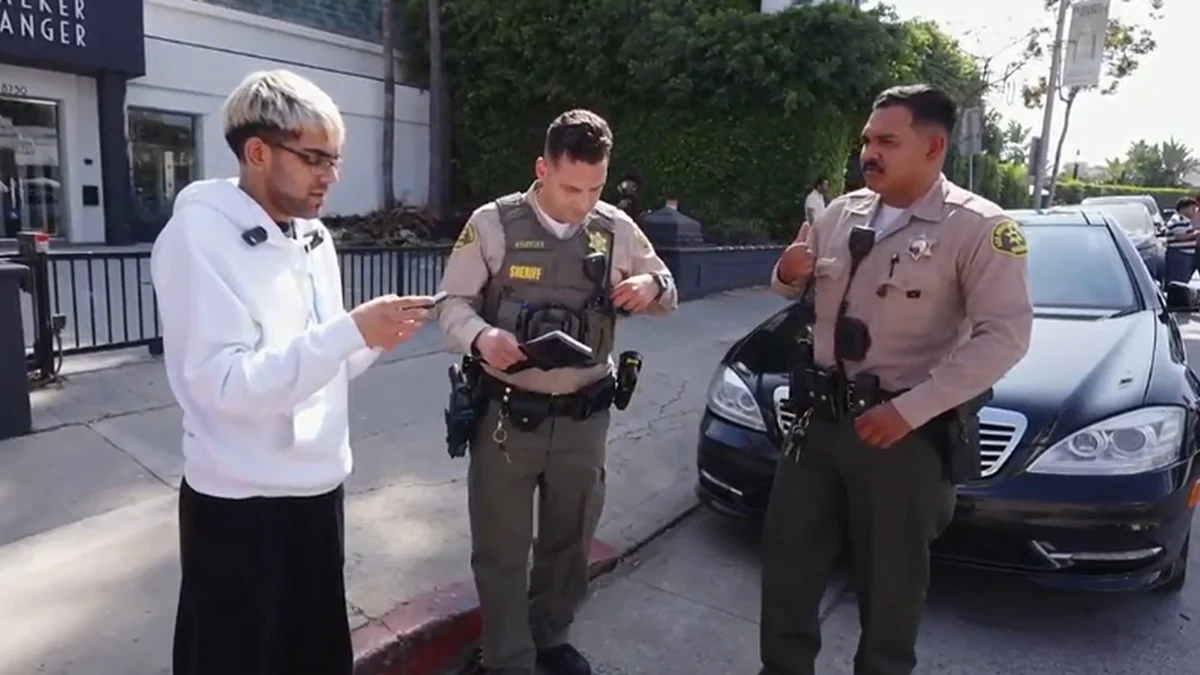
On the afternoon of March 22, the digital and physical worlds collided in a tense confrontation on the streets of Los Angeles when popular Kick streamer N3on, whose real name is Rangesh Sharma, and fellow influencer Benjy were detained at gunpoint by the Los Angeles Police Department. The incident, which unfolded during a live broadcast to tens of thousands of concurrent viewers, serves as a stark reminder of the persistent and dangerous phenomenon known as "swatting," an illegal practice that continues to plague the live-streaming industry and strain municipal emergency resources.
The confrontation began as N3on and Benjy were walking down a public sidewalk, engaged in a standard "In Real Life" (IRL) stream. Without warning, several police vehicles converged on their location. Officers exited their vehicles with weapons drawn, issuing immediate commands for the two content creators to descend to their knees and place their hands behind their heads. Throughout the encounter, N3on remained notably composed, immediately identifying the situation as a likely swatting attempt. He communicated clearly with the officers, informing them of his profession and the high probability that a malicious viewer had placed a fraudulent emergency call.
A Chronology of the Confrontation and Law Enforcement Response
The timeline of the March 22 incident suggests a rapid escalation followed by a professional de-escalation once the nature of the call was verified as a hoax. At approximately the mid-point of the broadcast, the entourage was intercepted. While N3on and Benjy complied with police orders, their cameramen and support staff continued to film from a distance, capturing the entire ordeal for a global audience.
After being handcuffed and escorted to the back of police cruisers, the streamers were detained for a period of questioning and verification. During this time, officers on the scene conducted a sweep of the immediate area to ensure there was no actual threat to public safety. Once the LAPD determined that the report—which typically involves false claims of a violent crime, such as a hostage situation or a person brandishing a firearm—was fabricated, the streamers were released.
The interaction between N3on and the attending officers after the handcuffs were removed provided a rare glimpse into the routine nature of these high-stakes interventions. One officer was recorded telling N3on, "I kinda figured, ’cause I know you get this a lot. It’s just something we have to do, that’s all." This statement underscores a troubling reality: law enforcement agencies in major metropolitan areas are becoming increasingly familiar with the "occupational hazards" of high-profile internet personalities, yet they remain legally and procedurally bound to treat every call as a legitimate threat until proven otherwise.
The Escalating Frequency of Swatting in the Creator Economy
Swatting is defined by the Department of Homeland Security as a criminal harassment tactic where an individual calls in a false police report to a specific location to trigger a massive law enforcement response, often involving Special Weapons and Tactics (SWAT) teams. The objective is typically to harass, intimidate, or cause physical harm to the victim, often while the victim is live-streaming so the perpetrator can witness the police raid in real-time.
For N3on, the March 22 incident was far from his first encounter with such tactics. Following his release, he detailed a history of aggressive swatting attempts that occurred away from the public eye. "There’s been times off stream, 5 AM, cops came, helicopters on top, ARs pulled at us, riot shields, they broke the door down," N3on explained to the officers and his audience. He expressed frustration with the systemic lack of prevention, noting that despite his communication with police departments, the hoaxes continue to occur, resulting in a massive waste of taxpayer money and police time.
The financial burden of these incidents is significant. A single SWAT deployment can cost municipal governments thousands of dollars in personnel hours, equipment usage, and emergency dispatch resources. More importantly, it diverts critical emergency services away from actual crimes and life-threatening situations, creating a broader risk to public safety.
A Pattern of Targeted Harassment Against High-Profile Streamers
The incident involving N3on and Benjy is part of a broader, more systemic issue within the streaming community. Over the past several years, a significant number of the world’s most successful content creators have been targeted by swatters. This list includes:
- Ludwig Ahgren: The YouTube star was swatted during a high-profile chess tournament, leading him to criticize the Los Angeles Police Department for their handling of the situation and the lack of a "verified" list for frequent victims.
- IShowSpeed: Known for his high-energy broadcasts, IShowSpeed has been the victim of multiple swatting attempts, some of which resulted in bodycam footage being leaked online, further traumatizing the creator.
- Kai Cenat: During a record-breaking "subathon," Cenat was interrupted by police after a false report was filed, highlighting how swatters often time their calls to coincide with a creator’s most successful moments.
- Adin Ross: A prominent figure on the Kick platform alongside N3on, Ross has faced numerous swatting incidents, some occurring at his private residence and others in public spaces.
The reach of this harassment extends beyond general entertainment streamers. Recently, KreeCraft, a YouTuber focused on the Roblox platform, was swatted and received death threats over a game he had not yet officially announced. Similarly, Minecraft creator Tubbo was targeted during a live event in Brighton, England. In that instance, police were told he was carrying drugs and a knife. While UK authorities quickly cleared him of any wrongdoing, the event disrupted a public gathering and caused significant distress.
The Legal and Psychological Implications of Swatting
From a legal perspective, swatting is a serious crime that can result in felony charges at both the state and federal levels. In the United States, the "Anti-Swatting Act" and various state-level statutes have sought to increase penalties for those caught making false reports. In some tragic cases, swatting has led to fatalities, such as the 2017 incident in Wichita, Kansas, where an innocent man, Andrew Finch, was shot and killed by police after a swatter called in a fake hostage situation at his address. The perpetrator in that case, Tyler Barriss, was eventually sentenced to 20 years in federal prison.
Despite the severity of the punishment, the anonymous nature of the internet makes these crimes difficult to prosecute. Perpetrators often use Voice over IP (VoIP) services, VPNs, and social engineering to mask their identities and locations.
The psychological toll on streamers is equally profound. Constant surveillance by malicious actors and the threat of armed police intervention can lead to chronic stress, anxiety, and Post-Traumatic Stress Disorder (PTSD). Many streamers have been forced to invest heavily in private security, move to undisclosed locations, or implement "kill switches" for their home internet to prevent location tracking.
Law Enforcement’s "Due Diligence" vs. Streamer Privacy
The LAPD’s response to N3on highlights the difficult balancing act law enforcement must perform. Officers are trained to treat every "active shooter" or "hostage" call with the utmost seriousness. If an officer were to dismiss a call as a "likely swatting" and it turned out to be a real emergency, the consequences would be catastrophic.
However, the "due diligence" mentioned by the officers in the N3on case is increasingly being viewed by the streaming community as a failure of modern policing to adapt to digital-age threats. There have been calls for a national "No-Swatting" registry, where high-risk individuals can register their addresses and professions. Under such a system, dispatchers would still send officers to the scene, but they would do so with the context that the location is a frequent target of hoaxes, potentially leading to a less aggressive initial approach.
Conclusion: The Future of IRL Streaming and Safety
The viral nature of N3on’s March 22 swatting incident has sparked a renewed debate about the safety of IRL streaming. While N3on was praised by viewers for his "mature" and "calm" handling of the situation, the fact remains that a young man was forced to kneel on a public street at gunpoint because of an anonymous prank.
As the creator economy continues to grow and "IRL" content becomes more prevalent, the intersections between digital harassment and physical danger will likely multiply. The incident in Los Angeles serves as a case study in the resilience of content creators, the procedural rigidity of law enforcement, and the urgent need for more robust technological and legal solutions to combat the dangerous trend of swatting. For now, streamers like N3on remain in a state of hyper-vigilance, knowing that their next broadcast could be interrupted not by a fan, but by a tactical police unit.




 Yuyun Lusiyani
 Joko Widodo
 Eva Lovia
 admin
admin
 Lina Irawan