
 Pevita Pearce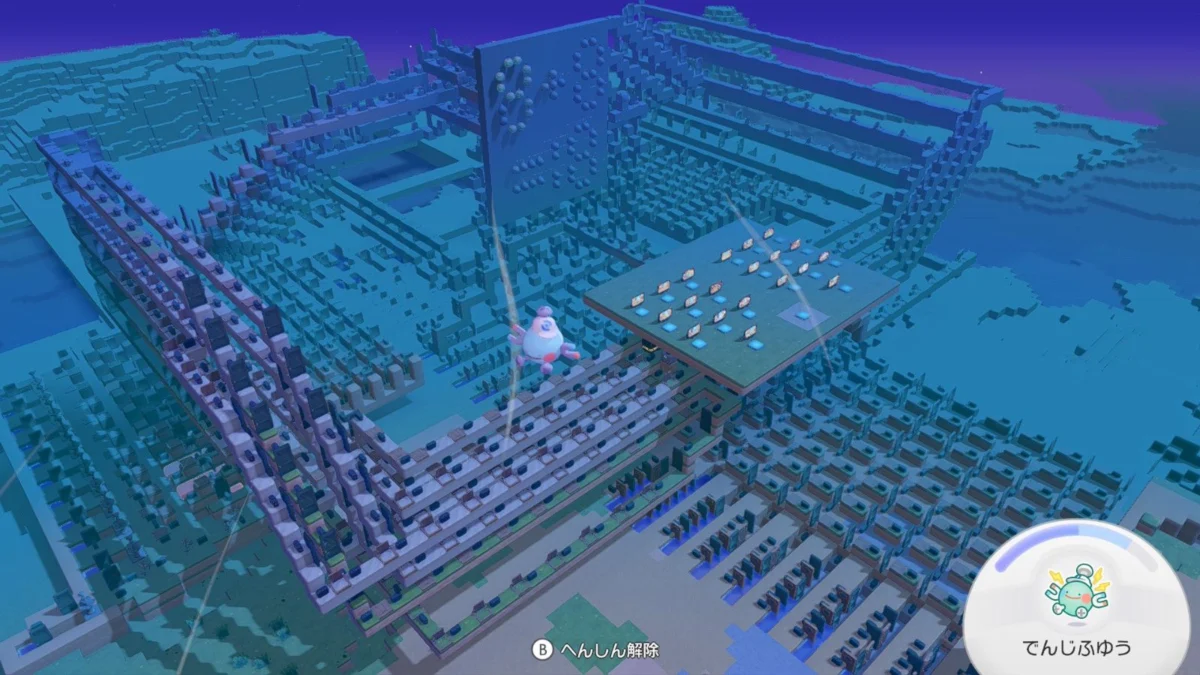
The landscape of sandbox and life-simulation gaming has witnessed a significant milestone with the successful construction of a fully functional digital calculator within the ecosystem of Pokemon Pokopia. Developed by a player known as Tarnow0530, the device utilizes a complex arrangement of in-game assets, including motion sensors, lasers, water flow mechanics, doors, and switches, to perform arithmetic operations. While the title is primarily marketed as a relaxing experience focused on habitat construction and creature companionship, this achievement highlights a burgeoning "engineering" subculture within the player base, mirroring the early days of technical innovation seen in titles such as Minecraft and Terraria.
The calculator currently operates as a single-digit adder, representing a foundational step in computational logic within the game’s engine. The feat is particularly noteworthy because it relies entirely on the game’s vanilla physics and logic components, requiring no external modifications or third-party software. By manipulating the interactions between automated sensors and physical barriers, the creator has effectively translated binary logic into a visual, physicalized format that functions in real-time.
The Evolution of Computational Logic in Pokopia
The path to creating a functional calculator was not an isolated event but rather the culmination of incremental discoveries within the Pokopia community. The process began with the exploration of "pulse circuits," a concept popularized by another prominent player, kyuphd. These circuits allow for the transmission of discrete signals across a distance, serving as the nervous system for more complex builds.
Following the initial inspiration from kyuphd’s pulse circuit, Tarnow0530 embarked on a multi-stage development cycle. The first major breakthrough was the creation of a counter circuit. This initial device was capable of displaying a sequence of numbers from 0 through 7. By utilizing motion sensors to detect the presence of objects or players and lasers to trigger specific state changes, the counter proved that the game’s engine could maintain a "memory" of previous inputs.
Building upon the logic of the counter, Tarnow0530 expanded the system’s architecture to handle mathematical operations. The transition from a simple counter to an adder required the implementation of logic gates—the fundamental building blocks of any digital computer. In the context of Pokopia, these gates are formed by the interaction of water flow and doors. For instance, an "AND" gate might be constructed so that a signal is only passed forward if two different water valves are opened simultaneously, while an "OR" gate might allow a signal to pass if either of two sensors is triggered.
Technical Specifications and Mechanical Architecture
The calculator’s design is a marvel of spatial engineering, utilizing a variety of disparate game mechanics to simulate a CPU. The core components of the build include:
- Motion Sensors and Lasers: These serve as the input and transmission layers. When a player or an object interacts with a specific zone, the sensors trigger a laser pulse. These pulses represent the "1s" and "0s" of binary code.
- Water Flow Mechanics: One of the most unique aspects of the build is the use of fluid dynamics to create timing delays. In digital electronics, clock speeds and timing are essential to ensure signals do not collide. By directing water through specific channels, Tarnow0530 can control the speed at which a "signal" (often represented by a floating object or the triggering of a pressure plate) moves from the input stage to the output stage.
- Doors and Switches: These act as the physical transistors of the system. Depending on the logic being processed, doors will open or close to allow or block the flow of signals. The mechanical sound of these components interacting provides a tactile feedback loop for the calculation process.
- The Display Interface: The final result of the addition is rendered through a series of visual indicators that translate the internal binary state back into a human-readable format.
One of the most praised aspects of the device by the community is its efficiency. Unlike previous attempts at in-game logic which often suffered from significant "latency"—the time between input and result—Tarnow0530’s calculator operates with minimal delay. This suggests a highly optimized layout that minimizes the distance signals must travel and maximizes the speed of the water-based timing components.
Community Reception and the Minecraft Comparison
The reveal of the calculator on social media platforms, specifically X (formerly Twitter), sparked immediate comparisons to the "Redstone" era of Minecraft. In the early 2010s, Minecraft players discovered that Redstone dust could be used to create logic gates, eventually leading to the creation of 8-bit computers, word processors, and even working versions of other video games inside Minecraft.
Community member Plagueful noted the historical parallel, stating, “This is reminding me of when Minecraft first added redstone. I wonder who our Pokopia SethBling will be.” This reference to SethBling, a legendary figure in the Minecraft technical community known for complex command block and Redstone engineering, underscores the significance the community places on Tarnow0530’s work.
Other players have focused on the technical refinement of the build. One user commented on the cleanliness of the "wiring," noting that their own attempts at water-based logic resulted in bulky, slow systems. The ability to perform a calculation in seconds rather than minutes is being hailed as a "gold standard" for Pokopia engineering.
Analysis of Emergent Gameplay and Educational Potential
The emergence of complex engineering in a game like Pokopia is a classic example of "emergent gameplay"—where players use a game’s systems in ways the developers did not explicitly intend. While the developers at The Pokemon Company and their partners designed Pokopia as a social and creative space, the inclusion of robust physics and sensor-based items inadvertently provided the tools for Turing-complete experimentation.
From a technical analysis standpoint, the achievement of single-digit addition is the most difficult hurdle in creating an in-game computer. Once a system can successfully perform a "half-adder" or "full-adder" operation (the logic required to add two bits and handle a carry-over), scaling the system to handle larger numbers or different operations like subtraction and multiplication becomes a matter of space and resource management rather than a new theoretical challenge.
Furthermore, these types of builds have significant educational value. They provide a visual representation of Boolean algebra and computer architecture. By seeing how a "door" can act as a "gate," younger players or those without a background in computer science can gain an intuitive understanding of how the processors in their real-world devices function.
The Future of Engineering in Pokopia
As news of the Pokopia calculator spreads, the community is looking toward the future. The next logical step for Tarnow0530 or other aspiring engineers is the development of a multi-digit adder, followed by a memory storage system (RAM). If players can find a way to "save" a state and recall it later using the game’s sensors, the possibility of creating a programmable computer within the game becomes a reality.
The success of this build also places a spotlight on the game’s developers. In other titles where such engineering communities have flourished, developers have often responded by adding more specialized logic tools, such as "logic gates" in Terraria or "logic lamps" in other builders. Whether the creators of Pokopia will lean into this technical niche remains to be seen, but the demand for more sophisticated components is clearly present.
For now, Tarnow0530’s calculator stands as a testament to player ingenuity. It serves as a reminder that even in the most serene and "relaxing" virtual environments, the human drive to innovate and build complex systems remains a powerful force. As the Pokopia "Redstone" community grows, this single-digit calculator will likely be remembered as the "Level 0" moment that started a new era of digital discovery within the Pokemon universe.
The project continues to be documented on social media, with the creator providing video evidence of the machine in action. These videos show the player toggling switches and the intricate dance of lasers and water that follows, culminating in a correct numerical output. It is a slow, methodical, and deeply impressive display of how logic can be found in the most unexpected places.




 Yuyun Lusiyani
 Joko Widodo
 Eva Lovia
 admin
admin
 Lina Irawan