Pevita Pearce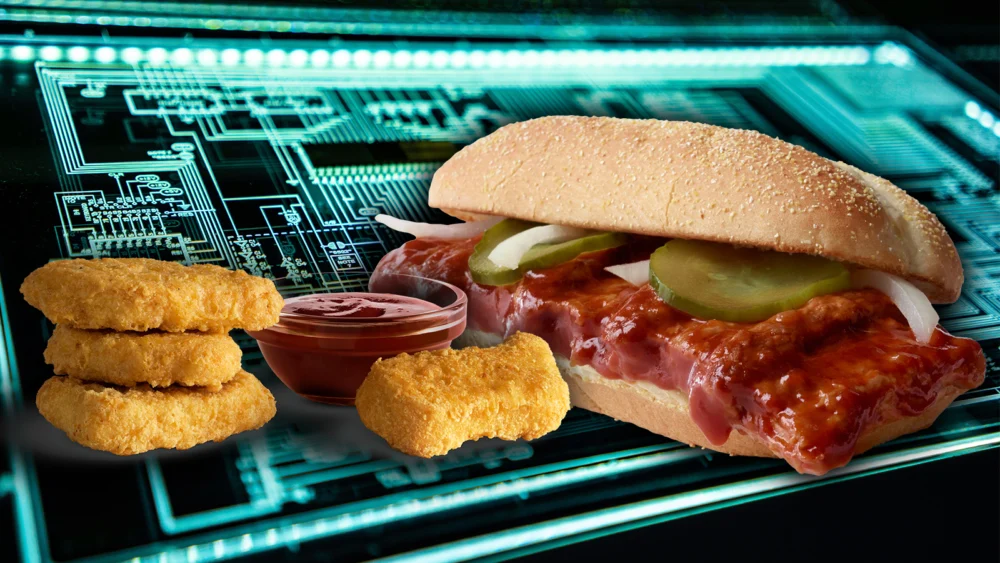
Chris Kempczinski, the Chief Executive Officer of McDonald’s Corporation, has revealed that he is utilizing advanced generative artificial intelligence to influence the future of the company’s domestic menu. In a strategic move that highlights the increasing intersection of Silicon Valley technology and fast-food product development, Kempczinski recently utilized Google’s Gemini AI to identify potential "limited-time offer" (LTO) items designed to resonate with evolving consumer preferences in the United States. The result of this digital brainstorming session yielded two primary concepts: McRib Nuggets and Korean-style dipping sauces, both of which have already been presented to the company’s internal menu development team for further evaluation.
The disclosure comes at a pivotal moment for the Chicago-based fast-food giant as it navigates a highly competitive landscape often referred to by industry analysts as the "burger wars." Kempczinski has increasingly taken a front-facing role in the company’s marketing efforts, appearing in viral social media content to promote new offerings and engage directly with a younger, tech-savvy demographic. This latest revelation regarding AI-driven innovation follows a February 19 video posted to Instagram, where the CEO detailed his personal use of Google Gemini as a tool for corporate strategy and creative thinking.
The Genesis of AI-Generated Menu Items
During his social media address, Kempczinski explained the specific prompt he provided to the AI. He tasked Gemini with analyzing global food trends and cross-referencing them with the existing McDonald’s menu to generate "innovation that would work at McDonald’s in the US on a limited-time-only basis." The objective was to find a balance between the familiar "core" identity of McDonald’s and the adventurous palates of modern diners who are increasingly seeking international flavors and novel formats.
The AI’s suggestion of McRib Nuggets represents a significant departure from the traditional McRib sandwich, which has maintained a cult-like following since its introduction in 1981. By "nuggetizing" the seasoned pork product, the AI identified a way to leverage an existing brand powerhouse while adapting it to a snackable, portable format—a category that has seen immense growth in the quick-service restaurant (QSR) sector.
Complementing the McRib concept was the suggestion of Korean-style dipping sauces. This reflects a broader culinary shift in the United States, where flavors such as gochujang, ginger, and sesame have transitioned from niche ethnic markets to mainstream popularity. By integrating these flavors, McDonald’s aims to capture a share of the "global fusion" trend that has successfully boosted sales for competitors in the chicken and sandwich segments.
Chronology of the "Burger Battle" and CEO Branding
The timing of Kempczinski’s AI reveal is inextricably linked to a series of promotional events that have kept McDonald’s at the forefront of social media discourse. On March 3, a video of the CEO performing a "taste test" of the new Big Arch Burger went viral. In the video, Kempczinski’s understated reaction—calling the burger a "delicious product"—became the subject of widespread parody and response from rival chains.
Competitors such as Wendy’s and Burger King quickly capitalized on the moment, releasing their own social media content that mimicked the CEO’s delivery, thereby fueling a "viral burger battle" that dominated industry headlines for weeks. Analysts suggest that this "humanization" of the CEO is a calculated move to position McDonald’s as a transparent and approachable brand. The transition from the Big Arch promotion to the discussion of AI-driven McRib Nuggets indicates a broader strategy to maintain momentum through constant digital engagement.
The Strategic Importance of the McRib Legacy
To understand the potential impact of McRib Nuggets, one must look at the historical performance of the McRib sandwich. Created by McDonald’s former executive chef Rene Arend, the McRib was originally developed as a solution to a chicken shortage. While it struggled to gain permanent status on the menu, its periodic "farewell tours" and limited-time returns have turned it into one of the most successful marketing tools in fast-food history.
The introduction of a nugget version of the McRib could solve several operational challenges. The traditional sandwich requires a specific bun and assembly process; however, a nugget format utilizes the existing infrastructure used for Chicken McNuggets, potentially streamlining kitchen operations while offering the same flavor profile that drives massive consumer demand. Data from previous McRib releases shows a consistent spike in foot traffic, and industry experts believe that a "McRib Nugget" could attract both nostalgic fans and new customers looking for a novel experience.
Global Flavor Trends and the Korean Influence
The suggestion of Korean-style sauces is backed by significant market data. According to recent consumer research, the demand for "sweet and spicy" profiles—often found in Korean BBQ—has increased by over 20% in the QSR space over the last three years. By adopting these flavors, McDonald’s is following a path successfully blazed by its international divisions.
In markets like South Korea and Singapore, McDonald’s has long experimented with regional flavors, often to great success. Bringing these concepts to the U.S. market via AI suggestion suggests that the company is looking to "cross-pollinate" its global successes. This approach reduces the risk associated with new product launches, as the flavor profiles have already been "road-tested" in other territories.
AI Integration in the Fast-Food Ecosystem
McDonald’s partnership with Google, announced in late 2023, extends far beyond menu brainstorming. The company is currently undergoing a massive digital transformation, utilizing AI to optimize drive-thru efficiency, manage complex supply chains, and personalize the "MyMcDonald’s" rewards app experience for millions of users.
Kempczinski’s use of Gemini for menu innovation is a high-profile example of how large language models (LLMs) are being used to synthesize vast amounts of market data that would traditionally take R&D teams months to analyze. While the "menu team" still holds the final authority on whether these items reach the kitchen, the use of AI allows the CEO to act as a bridge between data-driven insights and creative marketing.
Reactions from Stakeholders and the Public
The public response to the prospect of McRib Nuggets and Korean sauces has been overwhelmingly positive on platforms like X (formerly Twitter) and Instagram. Food influencers and casual diners alike have expressed enthusiasm for the "mash-up" concept. One viral comment suggested a "Korean BBQ sauce Filet-O-Fish," indicating that consumers are open to even more radical menu departures.
However, industry skeptics point out that the transition from an AI suggestion to a nationwide rollout is fraught with logistical hurdles. "Pork supply chains are distinct from poultry," noted one supply chain analyst. "Scaling a new pork-based nugget for over 13,000 U.S. locations requires significant lead time and investment in quality control."
Despite these challenges, the internal pitch by Kempczinski signals a top-down endorsement of technological experimentation. It also puts pressure on the company’s culinary teams to match the speed of digital innovation with physical product execution.
Implications for the Future of Quick-Service Dining
The "Kempczinski Method" of using AI for public-facing R&D could set a new standard for the industry. If McRib Nuggets become a reality and achieve commercial success, it will validate the use of generative AI as a legitimate tool for product development, rather than just a gimmick for social media engagement.
Furthermore, this move underscores the importance of "snackability" in the current economic climate. As consumers face rising costs, smaller, high-flavor items like nuggets and specialized sauces offer a lower entry price point for a "treat" experience compared to full-sized premium burgers.
As of now, McDonald’s has not officially confirmed a release date for the McRib Nuggets or the Korean-style sauces. The company maintains that these items remain in the "pitch" phase. However, given the CEO’s public endorsement and the enthusiastic reception from the brand’s digital community, the industry is watching closely to see if the next great fast-food icon will be one born from a silicon brain.
In the broader context of corporate leadership, Kempczinski’s approach demonstrates a shift in how CEOs interact with their brands. By positioning himself as a user of the technology and a fan of the food, he is bridging the gap between the boardroom and the drive-thru. Whether this leads to a permanent change in the McDonald’s menu or simply serves as a masterclass in modern brand engagement, the "AI-McRib" saga has already succeeded in making the world’s largest restaurant chain the center of the global culinary conversation once again.




 Jia Lissa
 Yuyun Lusiyani
 Joko Widodo
 Eva Lovia