
 Joko Widodo
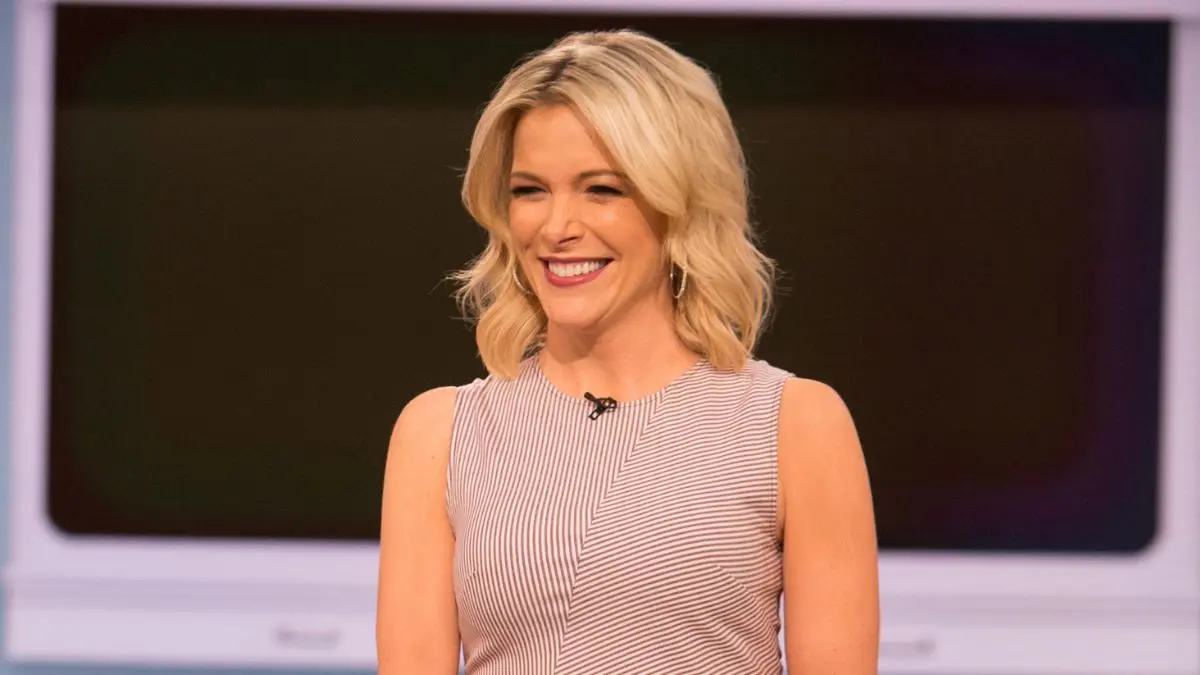
The reliably conservative political landscape of South Carolina, a bedrock of Republican support, is unexpectedly finding itself at the center of national political scrutiny, largely due to concerns voiced by prominent media personality Megyn Kelly. Kelly has publicly questioned the Republican Party’s ability to retain a crucial Senate seat, issuing a stark warning that a potential defeat for GOP candidate Darline Graham could cast a significant shadow over former President Donald Trump’s political influence and future endeavors.
The alarm bells were first rung following the release of a New York Times/Siena College poll, which revealed an unexpectedly tight race. The poll indicated that Darline Graham, the Republican nominee, is locked in a dead heat with her Democratic challenger, Annie Andrews. This development is particularly striking given South Carolina’s history; the state has not elected a Democrat to the U.S. Senate in over two decades, a testament to its deeply ingrained conservative voting patterns. Kelly, speaking on her podcast, expressed palpable surprise at the poll results, struggling to reconcile the competitive nature of the race with the state’s traditional political leanings. "South Carolina is now tied… Is that real?" she remarked, underscoring the surprising nature of the polling data.
The path to this precarious position for Darline Graham began with an appointment from former President Trump himself. Following the untimely death of her brother, Senator Lindsey Graham, in July, Trump tapped Darline Graham to serve out the remainder of his term. This interim appointment was quickly followed by Graham’s decision to seek a full term in the Senate, a move that garnered immediate and enthusiastic backing from Trump. However, her candidacy has not been without its internal party challenges and broader political headwinds. Even within South Carolina’s established political circles, Graham’s bid has faced opposition from influential figures. Notably, former Republican Governor David Beasley and former Democratic Governor Jim Hodges have both publicly endorsed her opponent, Annie Andrews, signaling a complex and divided political terrain within the Palmetto State. This bipartisan endorsement of Andrews by former governors from opposing parties highlights the unusual dynamics at play in this election.
Further complicating Graham’s campaign, a notable controversy arose during the Republican primary debates. When asked about her expertise on national security, Graham candidly stated, "National security is not my thing." This admission, intended perhaps as a humble acknowledgment of her priorities, was swiftly seized upon by the Andrews campaign as a critical vulnerability. Trump, in his characteristic defense of his endorsed candidates, attempted to mitigate the impact of Graham’s statement by asserting that ultimate responsibility for national security rested with the President. However, Andrews drew a stark analogy to illustrate the perceived risk. "If your surgeon said that appendectomies aren’t really his thing, would you still hand him a scalpel? No," Andrews stated, directly challenging Graham’s qualifications and preparedness for the responsibilities of a U.S. Senator.
Megyn Kelly’s analysis of the situation centers on the inextricable link between Graham’s candidacy and Donald Trump’s direct involvement. Kelly posited that Trump would find it exceedingly difficult to distance himself from the outcome of this election, given his pivotal role in placing Graham in the Senate initially and his subsequent vocal support for her full-term bid. "To actually make her the candidate was always risky," Kelly elaborated. "It happened because Trump made it happen," she concluded, emphasizing the former president’s personal investment in Graham’s political ascent. This interconnectedness means that any electoral setback for Graham could be interpreted as a referendum on Trump’s judgment and his ability to pick winning candidates, even in traditionally Republican strongholds.
The former president’s strategic involvement in the South Carolina race is further evidenced by his scheduled rally in the state. Trump is slated to appear in South Carolina on Thursday, October 29, just days before the November 3 midterm elections. This will mark his second visit to the state specifically in support of Darline Graham’s campaign. Kelly interpreted this intensified engagement as a potential indicator of underlying concern within Trump’s political orbit. She speculated that the former president would likely not dedicate valuable time to campaigning in a state described as "redder than red" unless he perceived a genuine threat to the Republican hold on the Senate seat. Such a high-profile appearance, especially a second visit, suggests a strategic effort to shore up support and energize the Republican base in a race that was not anticipated to be this competitive.
Background and Chronology of the South Carolina Senate Race
The current political contest in South Carolina’s Senate race is the culmination of a series of events that began with the passing of Senator Lindsey Graham in July. His death created a vacancy in one of the state’s two Senate seats, a position that has been held by Republicans for decades. In the wake of this vacancy, former President Donald Trump made the decision to appoint Darline Graham, Lindsey Graham’s sister, to serve out the remainder of the term. This appointment, while placing a familiar name on the ballot, immediately set the stage for a unique electoral dynamic.
Following her appointment, Darline Graham declared her intention to run for a full six-year term in the upcoming general election. Her candidacy was quickly embraced by Donald Trump, who saw it as an opportunity to maintain a Republican hold on the seat and to rally his base around a candidate he had personally selected. Trump’s endorsement provided a significant boost to Graham’s campaign, leveraging his considerable influence within the Republican Party.
The primary election phase saw Graham competing for the Republican nomination. During this period, her statement regarding national security during a debate became a focal point of discussion and criticism. This moment, coupled with her background and relative lack of extensive political experience prior to her brother’s passing and her subsequent appointment, began to shape public perception and provided fodder for her opponents.
As the general election campaign intensified, the emergence of the New York Times/Siena College poll revealed a far more competitive race than many political observers had predicted. The poll, released in the weeks leading up to the election, showed Darline Graham and Democratic challenger Annie Andrews in a statistical tie, a result that sent ripples through the political establishment and media. This unexpected parity in a state that consistently votes Republican has elevated the race from a local contest to a national talking point, drawing increased attention from political strategists, commentators, and former presidents alike.
Supporting Data and Polling Insights
The New York Times/Siena College poll is a critical piece of data driving the current narrative surrounding the South Carolina Senate race. While the exact date of the poll’s release is not specified in the original report, its findings are presented as a recent indicator of the race’s competitiveness. The poll’s methodology, which typically involves surveying a representative sample of likely voters in the state, aims to provide an accurate snapshot of public opinion.
Historically, South Carolina has been a staunchly Republican state. In the 2020 presidential election, Donald Trump won South Carolina with 55.1% of the vote, while Joe Biden received 43.4%. The state’s U.S. Senate delegation has been exclusively Republican since 2003, when Lindsey Graham first won his seat. Prior to that, Strom Thurmond, a Republican, held the seat for an unprecedented eight terms. This long-standing Republican dominance underscores the significance of a competitive poll in the current Senate race.
The tight polling numbers between Darline Graham and Annie Andrews suggest a potential shift or at least a significant mobilization of Democratic voters, or perhaps a degree of dissatisfaction among Republican-leaning voters that could lead to a split in the ticket. The Democratic challenger, Annie Andrews, has been effectively leveraging the national political climate and any perceived weaknesses in the Republican candidate to galvanize support. The fact that a Democratic candidate is even in contention in South Carolina is, in itself, a notable political phenomenon.
While specific demographic breakdowns or confidence intervals for the New York Times/Siena College poll are not provided in the initial report, the implication of a "neck and neck" race is that the margin of error could easily place either candidate slightly ahead. This uncertainty fuels the concern expressed by Megyn Kelly and highlights the high stakes for both the Republican Party and Donald Trump.
Official Responses and Campaign Strategies
In response to the intensifying scrutiny and the surprisingly close polling, both campaigns are actively adjusting their strategies. The Darline Graham campaign, backed by the former president, is likely focusing on reinforcing its core Republican message, emphasizing conservative values, and mobilizing the party’s loyal base. The Trump rally scheduled for October 29 is a clear demonstration of this strategy, aiming to energize voters and project an image of strong party unity and commitment to Graham’s candidacy. Trump’s presence is intended to remind voters of his popularity and influence, encouraging them to turn out in support of Graham.
The Andrews campaign, conversely, is capitalizing on the narrative of a competitive race. By highlighting Graham’s controversial statements, such as her remark about national security, and by securing endorsements from prominent former governors, Andrews is attempting to broaden her appeal beyond the traditional Democratic base. The analogy of an unprepared surgeon is a deliberate tactic to question Graham’s readiness for the demanding role of a U.S. Senator. The campaign is likely working to persuade moderate Republicans and independent voters who may be disillusioned with the current political climate or with the Republican nominee.
Donald Trump’s continued engagement with the race, including his upcoming rally, suggests a strategic imperative. For Trump, the outcome in South Carolina is more than just a single Senate seat; it represents a test of his enduring political power and his ability to influence electoral outcomes in key states. A victory for Graham would be seen as a testament to his continued sway, while a defeat could be interpreted by his detractors as a sign of his diminishing influence.
Megyn Kelly’s commentary, while from a media personality, reflects a sentiment that may be shared by some within the Republican establishment. Her direct linking of Graham’s potential defeat to Trump’s political standing underscores the high-stakes nature of this election for the former president. Her warnings suggest that the Republican Party may be bracing for a challenging election night, with the South Carolina Senate race being a potential flashpoint.
Broader Impact and Implications
The unexpected competitiveness of the South Carolina Senate race carries significant implications for both the Republican Party and the broader political landscape. If Darline Graham were to lose, it would represent a major upset in a state that has been a reliable pillar of Republican support. Such a defeat would undoubtedly fuel discussions about the strength of Donald Trump’s endorsement and his ability to deliver victories in crucial elections. It could also embolden Democratic strategists, suggesting that no Republican-held seat is entirely safe, regardless of the state’s historical voting patterns.
For Donald Trump, a loss in South Carolina could be perceived as a personal setback, potentially weakening his standing as the de facto leader of the Republican Party and complicating his future political aspirations, including any potential presidential run in 2024. Conversely, a victory would serve to reinforce his influence and demonstrate his continued ability to mobilize voters and secure wins for his chosen candidates.
The race also highlights the evolving nature of political polarization and the potential for shifts in traditional voting blocs. The fact that a Democratic candidate is within striking distance in South Carolina suggests that factors beyond party affiliation, such as candidate quality, campaign messaging, and the national political mood, are playing a significant role. The endorsements of Annie Andrews by former governors from both parties further indicate a complex electorate that may be seeking alternatives to strict partisan alignment.
Furthermore, the focus on Darline Graham’s qualifications, particularly her statement on national security, raises broader questions about the vetting of candidates and the public’s expectations of elected officials. The emphasis on experience and preparedness in a role as significant as a U.S. Senator is a recurring theme in political discourse, and this race provides a real-world case study of how such issues can impact electoral outcomes.
The outcome of the South Carolina Senate race will be closely watched as a bellwether for the Republican Party’s strength, Donald Trump’s continued influence, and the potential for electoral surprises in the upcoming midterm elections. The attention drawn by figures like Megyn Kelly underscores the national significance of what was once considered a predictable electoral contest.




 Nila Kartika Wati

 Eva Lovia

 Lina Irawan

 Yuyun Lusiyani

 Ana Megawati
