
 Pevita Pearce
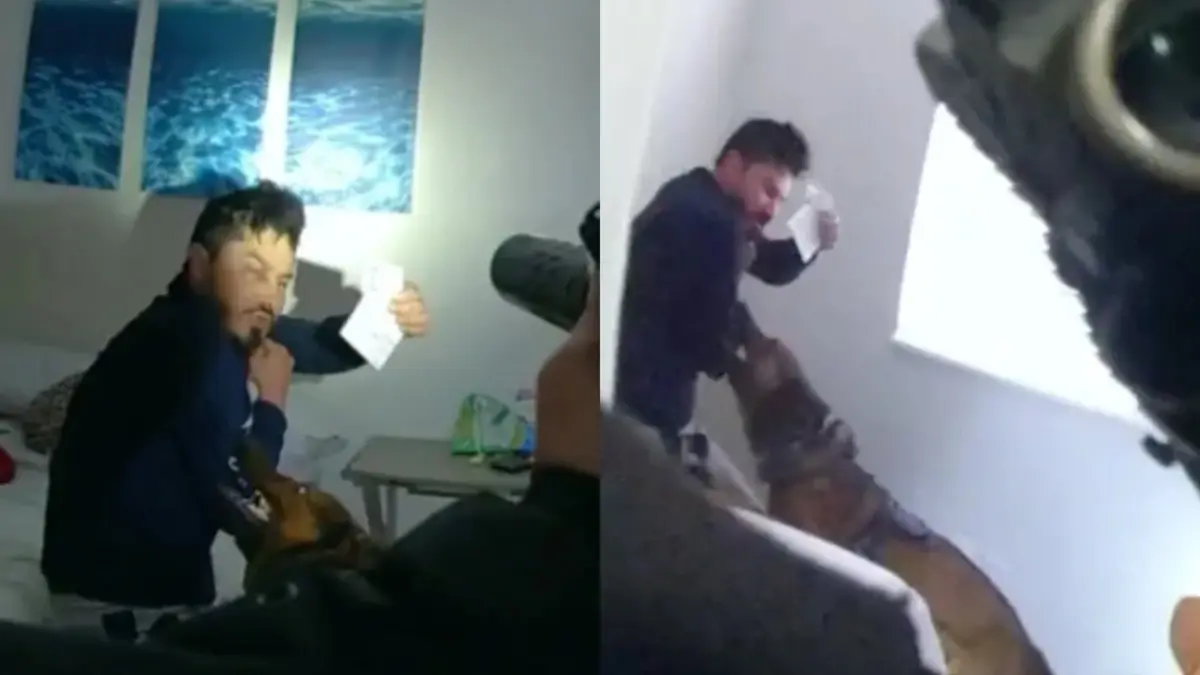
A Mexican citizen visiting the United States on a tourist visa has filed a federal lawsuit against the Aurora Police Department in Colorado, alleging that a series of catastrophic linguistic failures and the use of excessive force led to a violent encounter with a police K-9. Salvador Alonso Guerrero-Salmeron, a professional musician, claims that during a March 3, 2023, SWAT operation, officers shouted nonsensical Spanish commands that translated to “Fart police, fart the wood” before deploying a service dog to attack him while he was unarmed and attempting to comply with what he believed were law enforcement procedures. The lawsuit, which includes claims of excessive force and malicious prosecution, highlights growing concerns regarding the training of law enforcement officers in handling non-English speaking residents and the protocols surrounding the deployment of K-9 units in high-pressure environments.
The incident occurred at a multi-unit rental property in Aurora, a suburb of Denver, where Guerrero-Salmeron was staying. According to court documents and the initial report by The Denver Post, the Aurora Police Department’s SWAT team had surrounded the building to execute an arrest warrant for another resident. While the primary suspect was successfully taken into custody, the situation escalated when officers turned their attention to the remaining occupants of the building, including Guerrero-Salmeron. The resulting legal battle has now reached a critical juncture, with a judge ruling that the case should proceed to a jury trial to determine whether the level of force used by the officers was constitutionally reasonable.
Chronology of the SWAT Operation and Linguistic Failures
The events of March 3, 2023, began when the Aurora SWAT team initiated a high-risk operation to apprehend a suspect unrelated to Guerrero-Salmeron. As per standard procedure, the team utilized a loudspeaker to issue commands to any occupants remaining inside the residence. In an attempt to communicate with Spanish-speaking residents, officers utilized a series of phrases that were intended to warn of the presence of a police dog and to demand that occupants exit the building with their hands visible.
However, the lawsuit alleges that the Spanish used by the officers was not only grammatically incorrect but entirely incomprehensible. A translator later analyzed the recordings of the announcements and determined that the officers were repeatedly shouting, “Pedo policía pedo la madera.” In Mexican slang and standard Spanish, "pedo" can mean "fart," but it is also used in various colloquialisms. In the context used by the officers, the phrase literally translated to "Fart police, fart the wood."
While the linguistic errors were absurd, the atmosphere on the ground was one of extreme tension. Guerrero-Salmeron, who does not speak English, reported feeling a sense of profound terror. Hearing the commotion and the distorted shouting through the loudspeaker, he initially believed that the property was being targeted by criminals rather than legitimate law enforcement. This fear prompted him to send a desperate text message to his landlord, stating, “It’s very ugly here, I don’t know what is happening,” and pleading for her to contact the authorities.
The confusion was further compounded by comments made by officers on the scene. According to the legal complaint, at least one officer was recorded making a flippant remark over the radio or loudspeaker, telling the residents, “You just ordered the taco plate,” a comment the plaintiff’s attorneys argue demonstrates a lack of professional conduct and a dismissive attitude toward the Spanish-speaking community.
The Deployment of K-9 Loki and the Physical Encounter
Following the arrest of the primary suspect, the SWAT team moved to clear the rest of the house. Officers approached the bedroom where Guerrero-Salmeron was located and breached the door. The lawsuit asserts that at the moment of entry, Guerrero-Salmeron was standing in the room, unarmed, and holding his identification and his U.S. tourist visa in his hands to prove his legal status and identity.

Despite his non-threatening posture, officers began shouting commands in English, which Guerrero-Salmeron could not understand. Within seconds of the breach, a police dog named Loki was ordered to engage. The K-9 bit Guerrero-Salmeron on the arm, maintaining its grip for approximately 15 seconds. The attack resulted in significant tissue damage and permanent scarring.
Following the K-9 attack, Guerrero-Salmeron was taken into custody and charged with obstructing a peace officer and failing to obey a lawful order. During the arrest process, an officer reportedly told the bleeding musician, “Don’t speak Spanish. Speak English. I speak English.” This interaction has been cited by the plaintiff’s legal team as evidence of a systemic bias and a failure to accommodate language barriers, which are protected under various civil rights frameworks. The criminal charges against Guerrero-Salmeron were eventually dropped by prosecutors, but the physical and psychological damage had already been done.
Legal Arguments and the Plaintiff’s Professional Impact
The lawsuit filed by Guerrero-Salmeron’s attorneys, led by Luke McConnell, centers on the Fourth Amendment’s protection against unreasonable searches and seizures. The core of the argument is that the deployment of a K-9 constitutes a "heightened level of force" that is only permissible when a suspect poses an immediate threat to officers or the public.
“The police cannot order a K-9 to attack someone unless that person presents a threat sufficient to justify that heightened level of force, and in this case, our client presented no threat whatsoever,” McConnell stated. He further emphasized that Guerrero-Salmeron’s attempt to show his visa was a clear gesture of compliance and a plea for recognition of his status as a lawful visitor.
Beyond the civil rights violations, the lawsuit highlights the specific economic and professional damages suffered by the plaintiff. As a professional musician, Guerrero-Salmeron relies on the full functionality of his arms and hands. The injuries sustained from the dog bite have reportedly hindered his ability to perform, threatening his livelihood and long-term career prospects. The lawsuit seeks compensatory damages for medical expenses, lost wages, and emotional distress, as well as punitive damages against the officers involved.
Response from the Aurora Police Department and the Defense
In response to the allegations, the Aurora Police Department and the individual officers named in the suit have maintained that their actions were reasonable given the circumstances of a high-risk SWAT raid. The defense argues that the officers were operating in a "split-second" decision-making environment where the potential for hidden weapons or additional suspects necessitated a rapid and forceful response.
Defense attorneys have pointed out that the standoff lasted for more than an hour, during which time Guerrero-Salmeron failed to exit the building despite the announcements made over the loudspeaker. They contend that his failure to emerge led officers to believe he could be a threat or was intentionally barricading himself. From the perspective of the officers, the use of the K-9 was a tool to ensure officer safety while clearing a room where an unknown individual was refusing to comply with verbal commands.
A presiding judge reviewed the motions for summary judgment and determined that there were sufficient disputes of material fact to warrant a trial. The judge noted that a jury must decide whether the officers’ failure to provide intelligible commands in Spanish contributed to the "non-compliance" and whether the subsequent use of the K-9 was an excessive response to an unarmed man holding documents.

Broader Implications for Law Enforcement and Language Access
The case of Salvador Alonso Guerrero-Salmeron is not an isolated incident but rather part of a broader conversation regarding the "Language Access" responsibilities of police departments. Under Title VI of the Civil Rights Act of 1964, agencies receiving federal financial assistance are required to take reasonable steps to ensure meaningful access to their programs and activities by persons with limited English proficiency (LEP).
Data from the U.S. Department of Justice suggests that a significant percentage of violent encounters between police and civilians involve individuals who struggle to understand English commands. When law enforcement agencies rely on "broken" or "Google-translated" commands during high-stakes operations, the risk of tragic misunderstandings increases exponentially. In this instance, the use of the word "pedo" (fart) instead of a proper command for "surrender" or "police dog" served to confuse rather than clarify, potentially escalating a situation that could have been resolved through effective communication.
Furthermore, the Aurora Police Department has faced intense scrutiny in recent years following several high-profile incidents involving the use of force. The department was placed under a consent decree with the state of Colorado following an investigation by the Attorney General’s office, which found a pattern of racially biased policing and excessive force. While the department has implemented new training modules, the Guerrero-Salmeron case suggests that gaps remain, particularly in the realm of linguistic competence and K-9 deployment protocols.
Comparative Context: Recent Trends in Police Litigation
The lawsuit in Aurora comes at a time when police departments across North America are facing a surge in litigation related to procedural errors and unconventional incidents. The original report notes several other bizarre or high-stakes legal battles currently making headlines:
- Arizona Swatting Case: A man is seeking $176 million after being paralyzed during a "swatting" incident—a prank call intended to draw a SWAT team to a location. The victim had previously warned police that he might be a target of such a prank, yet the tactical response proceeded with catastrophic results.
- Canadian Streamer Dispute: In Canada, police have threatened a content creator with fines for every fire truck that responds to "swatting" calls made against him, illustrating the administrative strain and legal complexities of modern harassment tactics.
- Internal Misconduct and AI Errors: Other recent reports include an AI-generated police report that bizarrely claimed an officer "turned into a frog," and the arrest of a detective who allegedly pointed a firearm at a colleague for microwaving fish in a shared workspace.
These cases, while varying in severity and nature, point to a period of significant volatility in law enforcement-civilian relations and internal departmental discipline. The common thread is the failure of standard operating procedures to adapt to complex or non-standard environments.
Conclusion and Upcoming Trial
As the trial date of October 19 approaches, the legal community and civil rights advocates are closely watching the outcome of the Guerrero-Salmeron case. The verdict could set a precedent for how "meaningful access" is defined in the context of tactical police operations. If the jury finds in favor of the plaintiff, it may compel police departments nationwide to invest in certified bilingual officers for SWAT negotiations or to utilize more reliable translation technology rather than relying on officers with rudimentary or flawed language skills.
For Salvador Alonso Guerrero-Salmeron, the trial represents a quest for accountability after a traumatic experience that turned a professional visit to the United States into a nightmare of violence and confusion. The case serves as a stark reminder that in the high-stakes world of law enforcement, the difference between a successful operation and a civil rights violation often hinges on the clarity of a single word—and the consequences of getting that word wrong can be life-altering.




 Nila Kartika Wati

 Eva Lovia

 Lina Irawan

 Yuyun Lusiyani

 Ana Megawati

 Joko Widodo
