
 Pevita Pearce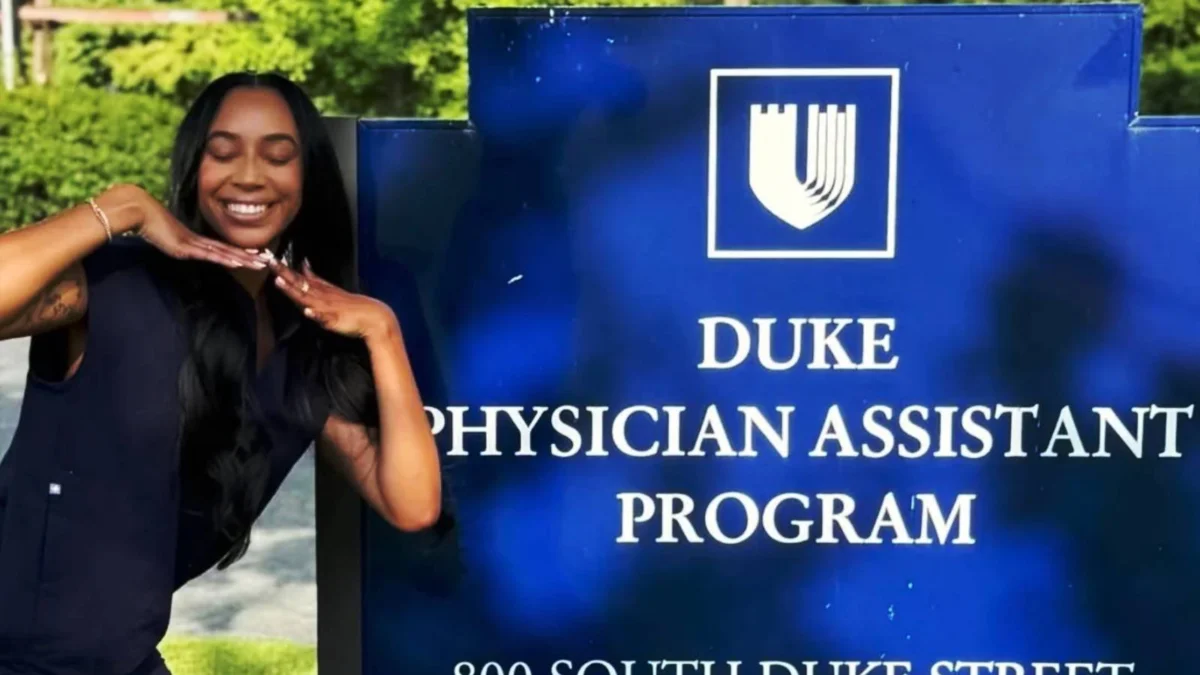
The landscape of reality television and social media influence has been significantly disrupted following a series of revelations concerning Angel Victoria Murdock, a participant in the 2025 season of Netflix’s hit series Temptation Island. Murdock, who rose to prominence as a featured single on the program, is currently facing intense public scrutiny and potential legal questions after investigative efforts by peers and journalists uncovered evidence suggesting she systematically fabricated her academic background at Duke University and her professional status as a licensed real estate agent.
Murdock’s public persona was built upon the image of a high-achieving professional balancing the rigors of medical education with a lucrative career in luxury real estate. On Temptation Island, which Murdock joined during the fourth episode of its latest season, she was officially introduced to millions of viewers as a "PA school student/Airbnb host." This branding was consistent with her social media presence, where she had amassed a following of over 300,000 users. Her content frequently featured the "aesthetic" of a graduate student, including videos of clinical rotations, study sessions, and campus life, purportedly at Duke University’s prestigious Physician Assistant (PA) Program.
The Unraveling of the Duke University Narrative
The controversy began to gain traction when actual students and alumni of the Duke University PA program noticed inconsistencies in Murdock’s digital content. The Duke PA program is known for its small, tight-knit cohorts—typically consisting of fewer than 90 students—where peer recognition is a standard byproduct of the intense, collaborative curriculum.
An extensive exposé first appeared on Reddit, authored by a user who identified as a recent graduate of the Duke program. The whistleblower noted that while Murdock’s videos portrayed her as a member of the Class of 2026, none of the 89 enrolled students in that cohort could recall her presence in lectures, clinical labs, or mandatory program events. The suspicion turned into a coordinated investigation by the student body after a classmate reportedly reached out to Murdock via social media to offer congratulations on their shared enrollment. According to the graduate’s account, Murdock blocked the student within five minutes of the interaction, a move that signaled an intentional avoidance of her supposed peers.
The situation reached a tipping point when Murdock posted a series of "graduation" photographs taken in front of the iconic Duke Chapel. Students quickly identified several discrepancies in her academic regalia. Most notably, the velvet "hood" Murdock wore—a symbol of a specific degree and institution in academic dress—was the incorrect color for a Master of Health Sciences, which is the degree conferred by the Duke PA program. Further investigation of the official Class of 2026 composite photograph and the recorded commencement ceremony confirmed that Murdock was not among the graduates.
"We started realizing something even weirder. None of us had ever even seen her," the graduate wrote in the online disclosure. "Not in class, not on campus, not at program events, and that’s when we discovered she was never even enrolled as a student."
Official Verification and Academic History
Following the viral spread of these allegations, formal inquiries were made to the institutions involved. A spokesperson for Duke University provided a definitive statement to the New York Post, confirming that there is "no record of a student by the name of Angel Murdock having applied to or attended the Duke Physician Assistant Program." This statement effectively nullified Murdock’s primary social media identity as a "Duke PA student."
The investigation into her academic history extended to her undergraduate claims. Murdock had previously asserted that she held a double major in psychology and biology from the University of North Carolina at Charlotte (UNCC). However, when contacted for verification, university officials reported that while Murdock had been enrolled at the institution at one point, she departed before completing the requirements for graduation and does not hold a degree from the university.
Allegations of Unlicensed Real Estate Activity
Parallel to her academic claims, Murdock maintained a secondary professional identity as a high-end realtor. She operated a dedicated Instagram account under the handle "Angel Murdock REALTOR," where she claimed to be licensed in both North Carolina and Georgia. Her posts showcased multi-million dollar property listings, elaborate house tours, and testimonials of successful closings with high-profile clients.
In a 2022 post, Murdock claimed, "I got my license in September and I’ve been grinding ever since!" She frequently shared financial milestones, claiming to earn upwards of $7,200 per month through her real estate commissions. To the casual observer, her profile suggested a burgeoning career within the reputable firm Howard Hanna Allen Tate Real Estate.
However, a search of the public licensing databases for the North Carolina Real Estate Commission (NCREC) and the Georgia Real Estate Commission yielded no results for "Angel Victoria Murdock" or any variations of her name. Furthermore, a representative for Howard Hanna Allen Tate Real Estate confirmed that the company has no record of ever employing Murdock in any capacity.
The implications of these findings extend beyond social media "clout-chasing." In North Carolina, the Real Estate Commission maintains strict guidelines regarding the representation of professional status. According to the NCREC, performing brokerage activities—such as negotiating sales or representing clients in real estate transactions—without a valid license is classified as a Class 1 misdemeanor. While the act of falsely claiming a career online may not always meet the threshold for criminal prosecution, it becomes a legal matter if the individual has engaged in actual transactions or accepted funds under false pretenses.
Chronology of the Controversy
The timeline of Murdock’s alleged fabrications suggests a multi-year effort to construct a false professional persona:
- September 2022: Murdock begins posting as a licensed realtor, claiming to have passed her licensing exams and joined a major firm.
- 2023–2024: Murdock’s social media presence shifts toward "Med-Tok" and "Study-Gram" content, where she documents her purported journey into the Duke PA program.
- Early 2025: Murdock debuts on Netflix’s Temptation Island Season 2025. Her official cast bio lists her as a "PA school student," indicating that Netflix’s vetting process likely relied on her self-reported credentials.
- Mid-2026: Students at Duke University begin to flag inconsistencies in Murdock’s graduation posts. The Reddit exposé goes viral, prompting media outlets to investigate.
- August 2026: Duke University, UNC Charlotte, and the North Carolina Real Estate Commission confirm the lack of credentials. Murdock makes her social media accounts private and subsequently removes them.
Reactions and Broader Implications
As of late August 2026, Murdock has not issued a public statement addressing the evidence of her fabricated credentials. Her primary Instagram and TikTok accounts, which served as the foundation of her influencer career, have been deactivated or set to private.
The Charlotte-Mecklenburg Police Department (CMPD) has acknowledged the reports but stated that Murdock is not currently the subject of a criminal investigation. A source within the department noted that law enforcement typically intervenes in cases of professional impersonation only when a specific victim comes forward alleging financial loss or physical harm resulting from the deception.
The Murdock case has sparked a broader conversation regarding the vetting processes employed by major streaming platforms and reality TV production companies. The fact that a contestant could be marketed as a medical professional on a global platform like Netflix without a thorough verification of their educational status has raised concerns about the authenticity of reality casting.
Industry analysts suggest that the "influencer-to-reality-star" pipeline often prioritizes social media following and personality over background checks. Murdock’s 300,000 followers likely served as a form of "social proof" that bypassed traditional scrutiny. However, the fallout from this exposure may force production companies to implement more rigorous academic and professional verification protocols.
Furthermore, the case highlights the psychological and social pressures of the "aesthetic" economy, where the appearance of success and prestige—such as an Ivy-plus education or a luxury career—can be monetized through brand deals and television opportunities. Murdock’s alleged actions represent an extreme version of "fake it till you make it," a culture that increasingly blurs the line between personal branding and fraud.
Summary of Findings
The evidence compiled against Angel Victoria Murdock presents a comprehensive pattern of professional and academic misrepresentation:
- Duke University: No record of application, enrollment, or graduation from the PA program.
- UNC Charlotte: Attended but did not graduate; no degree conferred.
- Real Estate Licensing: No valid license found in North Carolina or Georgia databases.
- Employment: Denied by the firm she claimed to represent.
- Media Representation: Discrepancy between her Netflix-verified bio and her actual legal and academic standing.
While the immediate impact of this exposure has been the dissolution of Murdock’s online brand, the long-term consequences may include legal challenges from the Real Estate Commission and a permanent exclusion from the entertainment industry. The story serves as a cautionary tale for both the public and media corporations regarding the ease with which digital identities can be manufactured and the inevitable speed with which they can be dismantled when scrutinized by the communities they claim to represent.

 Eva Lovia
 Nana Wu
 Amara Maple
 Joko Widodo
 admin
admin