
 Pevita Pearce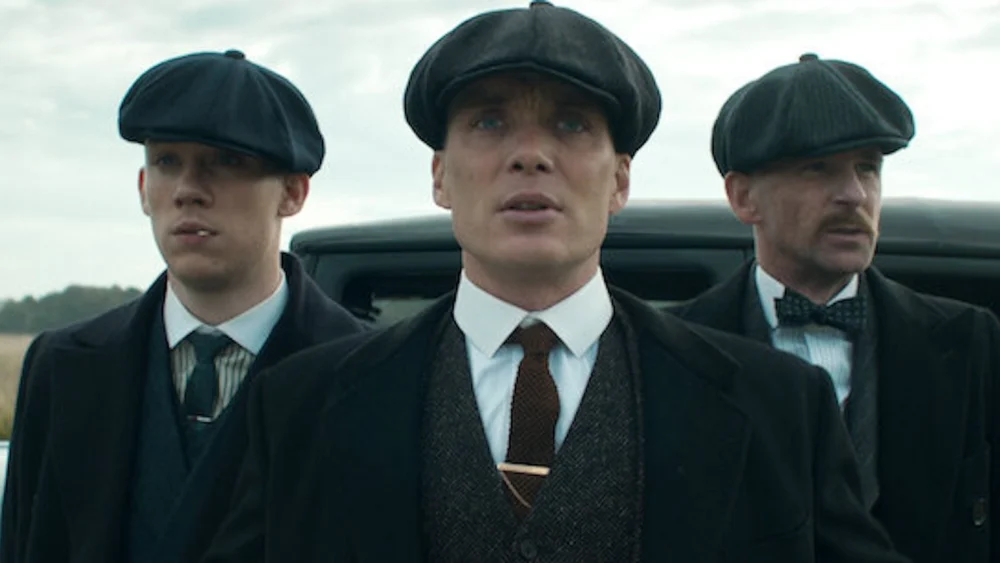
The cinematic expansion of the Peaky Blinders universe has reached a critical milestone with the production of The Immortal Man, a feature-length continuation of the Shelby family saga. However, the project has sparked significant discussion among the global fanbase due to the confirmed absence of one of the franchise’s most foundational characters: Arthur Shelby, portrayed by Paul Anderson. As the film prepares to transition the gritty underworld of Birmingham from the small screen to a global theatrical or streaming release, Anderson has broken his silence regarding his character’s exclusion, while simultaneously providing a rare glimpse into the original, unproduced conclusion of the television series.
The Immortal Man serves as a direct sequel to the events of the sixth season of the BBC and Netflix drama. It centers on Tommy Shelby, played by Academy Award winner Cillian Murphy, who returns to the fold of his criminal empire amidst the existential threat of World War II. After the series finale depicted Tommy riding off into a metaphorical sunset, leaving his former life behind, the film finds him drawn back into the fray. The narrative focuses on a generational clash between Tommy and his son, Duke Shelby, played by Barry Keoghan, who has assumed leadership of the Birmingham gang in his father’s absence.
The Narrative Displacement of Arthur Shelby
The absence of Arthur Shelby, the eldest and most volatile of the Shelby brothers, represents a significant shift in the franchise’s dynamic. For six seasons, Arthur served as the "enforcer" and the emotional, albeit fractured, heart of the Peaky Blinders. Paul Anderson’s portrayal of a man struggling with post-traumatic stress disorder, addiction, and a desperate search for redemption made him a fan favorite.
In a recent interview with LadBible, Anderson addressed the fact that Arthur’s story is effectively concluded prior to the events of The Immortal Man. While he avoided specific spoilers that would compromise the viewing experience, Anderson suggested that the resolution of Arthur’s arc is intended to subvert expectations. He noted that viewers will see Arthur "in a very different light," describing the narrative choice as a "powerful thing to do" that deviates from standard television tropes.
Cryptically, Anderson hinted that Arthur’s perceived end is "not as straightforward as you think." This has led to intense speculation regarding whether the character’s fate is handled via off-screen exposition, a flashback, or a definitive narrative closure that occurs in the temporal gap between the end of Season 6 (set in the mid-1930s) and the start of the movie (set during the 1940s).
Plot Dynamics and the Nazi Counterfeit Conspiracy
The Immortal Man elevates the stakes of the franchise by intertwining the Shelby family’s criminal interests with the geopolitical turmoil of the Second World War. The plot centers on a sophisticated Nazi conspiracy designed to destabilize the British economy. Duke Shelby, seeking to expand the gang’s influence, becomes inadvertently or perhaps ambitiously embroiled in a plot to flood the United Kingdom with forged currency.
This plot point draws historical inspiration from real-world events, such as Operation Bernhard, a secret Nazi plan during World War II to drop forged British banknote denominations of £5, £10, £20, and £50 over England to trigger hyperinflation. By placing the Peaky Blinders at the center of this historical espionage, creator Steven Knight has shifted the series from local gang warfare to a high-stakes thriller involving national security.
The tension of the film is built upon the ideological and tactical rift between Tommy Shelby, a veteran of the First World War who understands the true cost of global conflict, and Duke Shelby, who represents a new, perhaps more reckless, generation of the Birmingham underworld. The inclusion of Barry Keoghan, an actor known for his intense and unpredictable performances, provides a foil to Cillian Murphy’s more calculated and weary Tommy Shelby.
Chronology of the Peaky Blinders Franchise
To understand the current state of the franchise, it is necessary to examine the timeline of its development and the shifts in its creative direction:
- September 2013: Peaky Blinders premieres on BBC Two, introducing the post-WWI world of the Shelby family.
- 2014–2019: The series gains international acclaim, moving to BBC One and securing a global distribution deal with Netflix.
- April 2022: The sixth and final season concludes, leaving Tommy Shelby’s fate open-ended after he discovers he does not have a terminal illness.
- 2023–2024: Production begins on The Immortal Man, confirmed as the definitive "end of the beginning" for the franchise.
- 2025–2026: Anticipated release of the movie and the commencement of production on two spin-off series set in the 1950s.
The transition from a seventh season to a feature film was a strategic pivot. Steven Knight originally intended to produce seven seasons of the show, but the disruptions caused by the COVID-19 pandemic and the tragic passing of actress Helen McCrory (Polly Gray) necessitated a change in plans. The decision to conclude the main narrative with a film was seen as a way to provide the "Peaky" world with a cinematic scale befitting its cultural impact.
The Lost Ending: Steven Knight’s Original Vision
One of the most revealing aspects of Paul Anderson’s recent commentary is the disclosure of how the television series was originally intended to conclude. For years, Steven Knight had publicly stated that his goal was to end the show with the first air-raid siren of World War II in Birmingham.

Anderson confirmed the specifics of this vision, noting that Knight had planned a scene involving the three core Shelby brothers: Tommy, Arthur, and John (played by Joe Cole, whose character was killed off in Season 4). In this original concept, the series would have ended with the tolling of bells and the wail of sirens signaling the start of the war with Germany.
"He wanted it with Joe, Cillian, and I," Anderson explained. "We hear the bells, and the siren rings out for the Second World War. Off go our children to fight—that was how he wanted to end it."
The scene was envisioned as a grand, sweeping camera movement panning over the industrial landscape of Birmingham as the announcement of war echoed across the city. This ending would have brought the series full circle—starting with the psychological scars of the "Great War" and ending with the arrival of the next great catastrophe. However, the narrative evolution of the show, including the deaths of key characters and the introduction of new antagonists like Oswald Mosley, pushed the story in a different direction.
Critical Reception and Anderson’s Reservations
Despite his respect for the project, Paul Anderson expressed a degree of professional skepticism regarding the move to film. He admitted to being "slightly apprehensive" about the transition, suggesting that the franchise might have been better served by additional television seasons rather than a single movie.
"We made a good show, we ain’t made enough seasons—I think we should’ve just done a couple more seasons," Anderson remarked. "I don’t see a reason to do a film to be honest."
This sentiment reflects a broader debate within the entertainment industry regarding the "Prestige TV" trend of concluding series with movies. While films offer higher production values and a concentrated narrative, some actors and fans argue that the serialized format of television allows for deeper character exploration that a two-hour runtime cannot replicate.
Broader Implications for the Peaky Blinders Universe
The Immortal Man is not the end of the Peaky Blinders brand, but rather a bridge to a wider "Shelby Cinematic Universe." The BBC and Netflix are currently in the developmental stages of two new seasons/spin-offs set in the 1950s. These projects are expected to focus on the next generation of the family and potentially move the setting beyond the confines of Birmingham.
Cillian Murphy is confirmed to be producing these new chapters, ensuring that the DNA of the original series remains intact even as the cast rotates. The focus on the 1950s suggests a narrative shift toward the post-war boom, the rise of rock and roll culture, and the evolution of organized crime in a modernizing Britain.
The absence of Arthur Shelby in the upcoming film, while disappointing to long-time viewers, serves a strategic narrative purpose. By removing the "old guard," the franchise forces the audience to engage with the new reality of the Shelby empire. It emphasizes the theme of legacy—specifically, whether the sins of the father (Tommy) will be redeemed or amplified by the son (Duke).
Conclusion and Historical Context
The Peaky Blinders franchise has always been more than a simple crime drama; it is a stylized exploration of British working-class history, trauma, and ambition. By setting The Immortal Man against the backdrop of the Nazi forgery plots and the onset of World War II, the production team is leaning into the historical gravity that has always anchored the show’s more fantastical elements.
Birmingham’s role as a manufacturing hub made it a primary target for the Luftwaffe during the war, and the city’s resilience is expected to be a major theme of the film. As the franchise prepares to debut this new chapter, the revelations from Paul Anderson provide a bittersweet reminder of the show’s origins and the inevitable march of time that affects both the characters and the production itself. Whether Arthur Shelby’s absence is felt as a void or a necessary evolution remains to be seen, but the stakes for the Shelby family have never been higher.




 Yuyun Lusiyani
 Joko Widodo
 Eva Lovia
 admin
admin
 Lina Irawan