
 Yuyun Lusiyani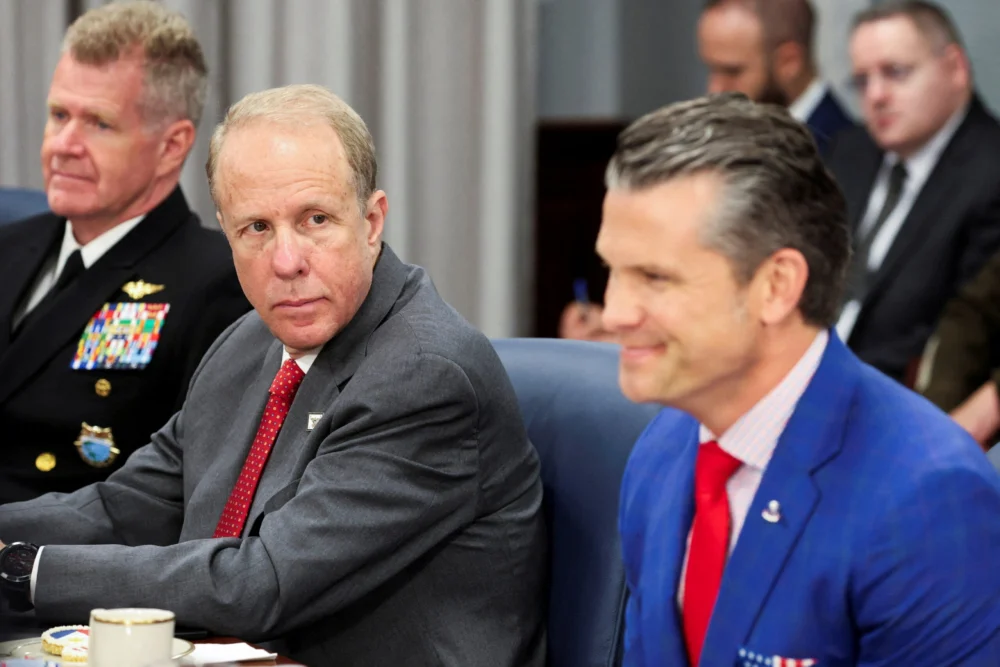
Thousands of companies are vying for a share of billions of dollars in Defense Department contracts to construct the "Golden Dome for America," a cutting-edge missile defense shield designed to intercept and neutralize incoming threats to the United States. Yet, amidst this fierce competition for a project critical to national security, a distinct advantage appears to be held by a select group of firms: those with direct ties to the Pentagon’s second-highest-ranking official.
At the heart of this controversy is Steve Feinberg, the current Deputy Secretary of Defense, who until last year spearheaded Cerberus Capital Management, a prominent private equity firm. Investigations reveal that at least four companies awarded contracts for the Golden Dome project are owned by Cerberus. What raises significant ethical concerns is Feinberg’s direct oversight of the very office responsible for the Golden Dome initiative, a project explicitly modeled on Israel’s highly successful Iron Dome missile defense system.
Feinberg has publicly stated he divested from Cerberus and its associated entities upon assuming his government role. However, his official government ethics records contain an extraordinary provision: he is permitted to maintain financial dealings with Cerberus for essential services such as tax compliance, accounting, and health care coverage. This arrangement, as documented, could potentially persist indefinitely, creating a continuous financial link between the top Pentagon official and his former business empire, which is now benefiting from the department he helps lead.
This intricate web of financial connections and the perceived conflicts of interest come to light through a massive trove of nearly 3,200 financial disclosure records, made public by ProPublica. These documents offer an unprecedented glimpse into the finances of over 1,500 federal officials appointed by former President Donald Trump, including the President himself and Vice President JD Vance. The revelations underscore a pattern of deep financial ties between senior government officials and the very industries they are tasked with regulating or overseeing, relationships that have intensified scrutiny following the Trump administration’s dismantling of key ethics safeguards.
The Golden Dome for America: A New "Star Wars" Vision
The concept of a sophisticated, multi-layered missile defense shield for the United States is not new. It echoes President Ronald Reagan’s ambitious Strategic Defense Initiative (SDI) in the 1980s, famously dubbed "Star Wars." SDI envisioned a space-based system capable of shooting down ballistic missiles, a technologically audacious goal that faced both scientific and political hurdles. While SDI never fully materialized in its original form, its legacy has influenced subsequent missile defense efforts, laying the groundwork for later systems focused on limited attacks.
President Trump rekindled this grand vision on the campaign trail, proposing the "Golden Dome for America" as a comprehensive defense architecture. Unlike its predecessors, the Golden Dome concept envisions a battery of advanced weapons deployed from land, sea, and space, designed to provide a robust defense against missile attacks. The project carries an estimated budget of up to $151 billion, signaling an enormous investment in next-generation defense capabilities crucial for protecting against emerging global threats. In December of last year, the Defense Department initiated the process of selecting companies for this monumental undertaking, ultimately granting awards to over 2,000 firms. This sheer scale of contracting activity highlights the vast opportunities available to defense contractors, ranging from aerospace giants to specialized technology firms.
However, the involvement of companies linked to Deputy Secretary Feinberg has cast a shadow over the project’s integrity. Of the thousands of firms selected, at least four – North Wind, Stratolaunch, Red River Technology, and NetCentrics Corp. – are either owned or majority-invested in by Cerberus Capital Management. Citing national security concerns, defense officials have refrained from publicizing the specific amounts of each contract or the exact products and services these companies are providing. While the Defense Department is legally bound to announce only contracts exceeding $9 million, the lack of granular detail for such a critical and costly project further fuels transparency concerns, hindering public and congressional oversight.
Feinberg’s Indefinite Financial Link to Cerberus
Steve Feinberg, who co-founded Cerberus in 1992, reported assets worth at least $2 billion when he was nominated by President Trump. His ethics agreement outlined a plan to divest his stake in the firm, potentially transferring assets into irrevocable trusts for the benefit of his adult children. While this maneuver is technically legal under federal conflict-of-interest laws, ethics experts frequently argue that it can undermine the spirit of such regulations, as it allows for a continued, albeit indirect, familial benefit from the former business, potentially influencing decision-making.

More controversially, Feinberg initially informed ethics officials that he required a short-term arrangement to contract with Cerberus for accounting, tax, and health care services, with a commitment to find alternative providers by April 2026. Yet, earlier this year, at Feinberg’s explicit request, Defense Department officials approved an extension, effectively allowing this financial relationship to continue indefinitely. An amendment to his ethics agreement states he would "pay customary and reasonable fees" for Cerberus’s services, but provides no specific figures, leaving the financial scope of this ongoing relationship opaque and difficult to scrutinize for potential undue benefits.
The Defense Department, in response to ProPublica’s inquiries, stated that Feinberg does not "have direct responsibility for any Golden Dome acquisitions." However, this statement appears to contradict his overall role. As Deputy Secretary, Feinberg undeniably oversees the office in charge of the Golden Dome initiative. Crucially, Space Force Gen. Michael Guetlein, who leads the project, reports directly to Feinberg. This reporting structure suggests a significant level of influence, even if direct acquisition decisions are delegated. The department declined to comment on whether Feinberg or his staff had met with any contractor representatives, adding another layer of opacity to the process.
Richard Painter, a former White House ethics lawyer under President George W. Bush, critically assessed Feinberg’s ongoing relationship with Cerberus. Painter stated that it "creates at least a perception of a conflict of interest that could undermine confidence in the fairness of the contracting process." Drawing a historical parallel, Painter invoked President Dwight D. Eisenhower’s famous 1961 farewell address, where Eisenhower warned against the dangers of the "military-industrial complex" – a too-close relationship between the military and private defense industries that could unduly influence policy and spending. Feinberg’s situation, Painter suggested, perfectly embodies the very concerns Eisenhower raised over half a century ago.
A Cerberus spokesperson, responding via email, asserted that "Mr. Feinberg divested his stake in Cerberus and any funds that it manages, and is not involved with the operations of Cerberus or any of its portfolio companies in any way." The spokesperson further clarified that the administrative services provided to Feinberg "are unrelated to any investment activities or operations of Cerberus or its funds and were pre-approved by the Department of War’s Ethics Office and the Office of Government Ethics," seeking to legitimize the arrangement through formal compliance.
Eroding Ethics Safeguards: A Pattern of Weakened Oversight
The controversy surrounding Steve Feinberg unfolds against a broader backdrop of significant changes to federal ethics enforcement during the Trump administration. On his very first day back in office, President Trump rescinded an executive order signed by President Joe Biden, which had mandated his appointees to adhere to a stringent ethics pledge. This pledge specifically prohibited appointees from working on issues directly related to their former lobbying activities or clients for a period of two years, a common safeguard designed to prevent regulatory capture and ensure public officials prioritize public interest over private gain.
Weeks later, the administration took further steps that drew widespread criticism from ethics watchdogs. Seventeen inspectors general, independent officials charged with investigating fraud, waste, corruption, and conflicts of interest across federal agencies, were abruptly fired. Inspectors general serve as crucial internal watchdogs, providing independent oversight and accountability for government operations. Their removal sent a chilling message about the administration’s tolerance for independent scrutiny. Concurrently, the head of the Office of Government Ethics (OGE), the agency tasked with overseeing ethics compliance throughout the executive branch, was removed. Alarmingly, the OGE currently operates without a permanent head or chief of staff, leaving a critical ethics oversight body significantly weakened and potentially rudderless at a time when its role is arguably more important than ever.
Ethics experts across the political spectrum have voiced profound concerns. Virginia Canter, chief counsel for ethics and corruption at the nonprofit governmental watchdog group Democracy Defenders Fund, lamented, "Ethics is in the toilet." Canter, who served as an ethics lawyer in multiple administrations (George H.W. Bush, Bill Clinton, George W. Bush, and Barack Obama), underscored that Trump’s second term represents a "sharp break from modern norms" regarding governmental ethics, suggesting a deliberate dismantling of established guardrails.
President Trump has openly defended his family’s financial enrichment during his time in office, including through highly scrutinized cryptocurrency deals. Critics contend that such ventures allow investors, potentially including foreign entities, to curry favor and exert influence by directly boosting the president’s personal wealth. Trump, in response to questions about his family’s business dealings, famously told The New York Times, "I found out nobody cared, and I’m allowed to," reflecting a perceived indifference to traditional ethical boundaries. Another striking example cited by Canter is Trump’s acceptance of a Boeing 747, valued at approximately $400 million, from the Qatari government, and the subsequent transfer of nearly $1 billion from a nuclear weapons program to retrofit the plane – an act described as a "brazen example of self-dealing" that blurred the lines between state assets and personal gifts.
White


 Jia Lissa
 Joko Widodo
 Eva Lovia

 Pevita Pearce