
 Pevita Pearce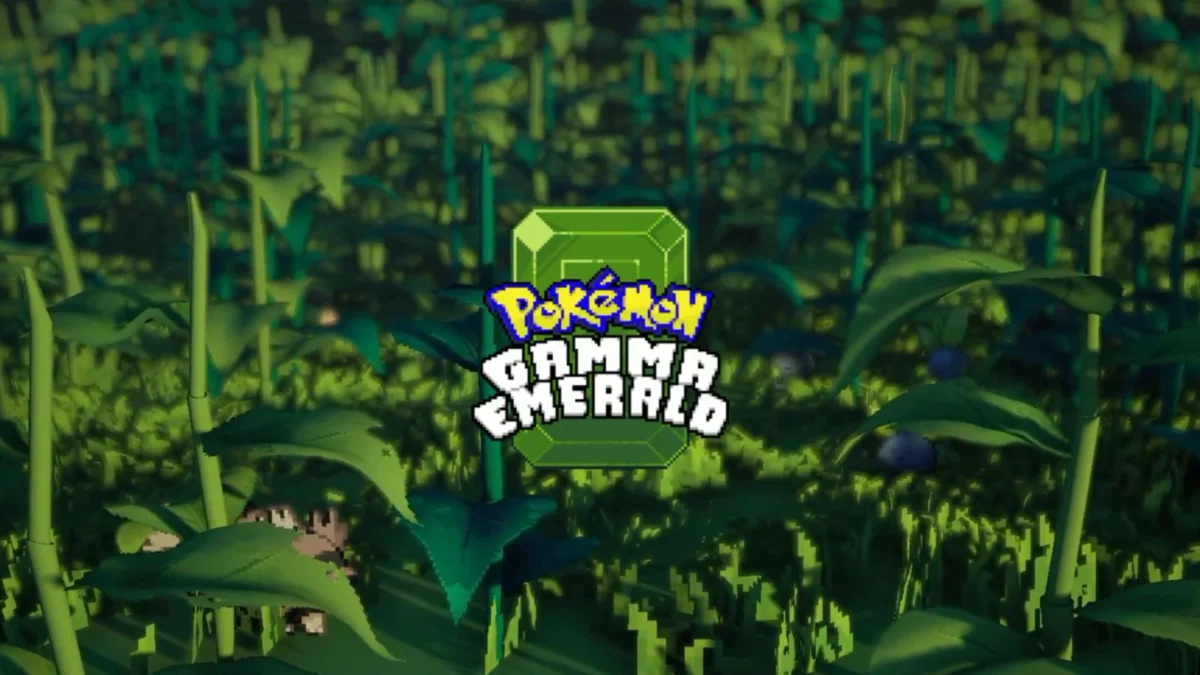
The solo developer behind the highly anticipated fan-made project Pokémon Gamma Emerald has publicly voiced significant distress and disillusionment regarding the community’s reaction to the game’s early access release. UndreamedPanic, the creator who has dedicated over two years to the ground-up reconstruction of the classic Generation 3 experience, revealed in a series of social media statements that the mental and physical toll of the project, compounded by what he perceives as an ungrateful audience, has led to a desire to distance himself from the work entirely. This development highlights a growing tension within the fan-game community, where the boundaries between hobbyist passion projects and professional-grade expectations have become increasingly blurred.
The Technical Scope of a Ground-Up Remake
To understand the source of the developer’s frustration, it is necessary to examine the technical scale of Pokémon Gamma Emerald. Unlike a "ROM hack," which involves modifying the existing code and assets of an original Nintendo Game Boy Advance file, Pokémon Gamma Emerald is a "fan game" built from the ground up. This distinction is critical in the world of software development, as it implies that every line of code, every user interface (UI) element, and every mechanical system was authored without the foundational support of the original game’s engine.
UndreamedPanic reported that the development cycle spanned two years, with the final 18 months characterized by a grueling "crunch" schedule consisting of 12-hour workdays. During this period, the developer functioned as a polymath, handling responsibilities that would typically be distributed across a full-scale studio. This included the creation of custom 3D models, the composition of an original musical score, and the design of a modern UI. Perhaps most staggering is the claim regarding the game’s visual assets: the developer reportedly drew 384,000 individual frames of animation. These frames were subsequently compressed into sprite sheets to maintain the aesthetic spirit of the Generation 3 era while providing a level of fluidity and detail not possible on original hardware.
The Early Access Launch and the Optimization Hurdle
The recent early access launch was intended to be a milestone for the project, showcasing its technical stability and performance. A significant portion of the pre-release phase was dedicated to optimization. Initially, the game’s memory footprint was substantial, requiring approximately 12GB of RAM to operate—a high barrier for many casual players. Through an intensive optimization push, UndreamedPanic managed to reduce the requirement to under 4GB.
This optimization was specifically targeted at the Steam Deck, a popular handheld gaming PC. Following these updates, the game reportedly runs at a locked 60 frames per second (FPS) on the base LCD model of the Steam Deck. For a solo-developed project utilizing modern rendering techniques to simulate a classic aesthetic, achieving this level of performance is a significant technical achievement. However, the developer suggests that these efforts have been largely overshadowed by a segment of the community focused on perceived shortcomings and "impossible needs."
Chronology of the Conflict: From Release to Burnout
The timeline of the current controversy began shortly after the early access build was made available to the public. While many fans praised the project for its ambition, a vocal minority began criticizing the game for minor bugs and missing features typical of early-stage software.
On August 15, 2026, the frustration reached a breaking point. UndreamedPanic took to X (formerly Twitter) to address the feedback. The primary grievance cited was the persistent mischaracterization of the project as a "mod" or a "ROM." In the hierarchy of game development labor, calling a from-scratch engine recreation a "mod" is often viewed as a dismissal of the thousands of hours required to build the underlying architecture.
"Calling it a mod is literally dismissing all of that," the developer wrote. "I’ve been working to death for 18 months from the ground up and people are still calling this a rom."
The discourse quickly shifted from technical definitions to the developer’s mental health. The statement "Can’t wait to be done with this game" served as a stark admission of burnout. Furthermore, UndreamedPanic announced an immediate cessation of bug fixes and community engagement, stating a desperate need for a break from the project. This reaction is emblematic of the "solo developer trap," where the lack of a buffer between the creator and the consumer leads to direct emotional impact from negative feedback.
Analyzing the "Mod vs. Engine" Misconception
The friction between UndreamedPanic and the community stems largely from a lack of public understanding regarding game development terminology. In the Pokémon community, "ROM hacking" has been the standard for decades. Tools like AdvanceMap and PKSV allow users to edit existing games with relatively low technical barriers. Consequently, the general public often labels any fan-made Pokémon project as a "ROM hack" or a "mod."
However, projects like Pokémon Gamma Emerald, often built in engines like Unity, Godot, or specialized frameworks like RPG Maker (with Pokémon Essentials), require a fundamentally different skill set. By building a 3D engine that mimics 2D sprites, the developer had to solve complex problems regarding camera angles, lighting, and collision detection that are already "solved" in a ROM hack. When a community treats a ground-up engine as a simple modification, it ignores the creative labor of the systems programmer, the 3D artist, and the sound designer—all of whom, in this case, are the same person.
Broader Context: The Culture of Entitlement in Fan Communities
The situation surrounding Pokémon Gamma Emerald is not an isolated incident. The history of fan-made gaming is littered with projects that were abandoned due to community toxicity or legal pressure. Because fan games are typically distributed for free to avoid trademark infringement lawsuits from entities like The Pokémon Company and Nintendo, a unique dynamic emerges: the developers receive no financial compensation, yet the audience often demands a level of polish and support comparable to a $60 retail product.
This "entitlement" was referenced by UndreamedPanic when he mentioned "impossible needs." In June 2026, a similar instance of extreme fan backlash occurred in the Chinese gaming market, where a studio cancelled a new character for a romance game after disgruntled fans mailed cow manure to the office. While the reaction to Gamma Emerald has not reached that level of physical harassment, the psychological impact on a solo developer can be just as paralyzing.
Industry analysts suggest that the "parasocial" nature of modern game development—where developers are expected to be constantly available on Discord and social media—accelerates burnout. For a solo developer, there is no PR department to filter the vitriol, meaning every "dogging" of the work is felt personally.
Legal and Ethical Implications of Fan Remakes
Beyond the emotional toll, projects like Pokémon Gamma Emerald exist in a precarious legal gray area. Nintendo has historically been protective of its intellectual property, famously issuing DMCA takedown notices to high-profile projects like Pokémon Uranium and AM2R (Another Metroid 2 Remake).
The irony of the current situation is that the developer has invested thousands of hours of unpaid labor into a project that he does not own and cannot legally monetize, only to face hostility from the very demographic intended to enjoy the work. This raises questions about the sustainability of the fan-game ecosystem. If the "reward" for such labor is a combination of legal risk and community derision, the incentive for high-quality, ground-up fan projects may dwindle.
The Future of Pokémon Gamma Emerald
As of the latest updates, the future of Pokémon Gamma Emerald remains uncertain. While the game is still in early access, the developer’s stated intention to "be done with this game" suggests that the original roadmap may be truncated. The immediate priority for UndreamedPanic is a period of total detachment from the project to recover from the 18-month "crunch" period.
The community reaction has since split. While the initial wave of criticism prompted the developer’s outburst, a secondary wave of support has emerged, with many users defending the developer’s right to set boundaries and praising the technical merit of the 3D-to-sprite pipeline. Whether this support is sufficient to encourage the developer to return and finish the project remains to be seen.
Conclusion: A Lesson in Developer-Player Relations
The saga of Pokémon Gamma Emerald serves as a cautionary tale for both developers and players. For developers, it highlights the necessity of managing community expectations and the dangers of extreme solo "crunch." For the gaming community, it is a reminder of the human cost behind "free" entertainment.
As the line between amateur and professional production values continues to thin, the need for a more empathetic and informed discourse becomes paramount. Without a shift in how fans interact with creators, the industry may see a decline in the ambitious, boundary-pushing fan projects that have historically served as a training ground for the next generation of professional game designers. For now, Pokémon Gamma Emerald stands as a testament to what a single individual can achieve—and a somber reflection of the toll such an achievement can take.



 Yuyun Lusiyani
 Joko Widodo
 Jia Lissa
 admin
admin
