
 Joko Widodo
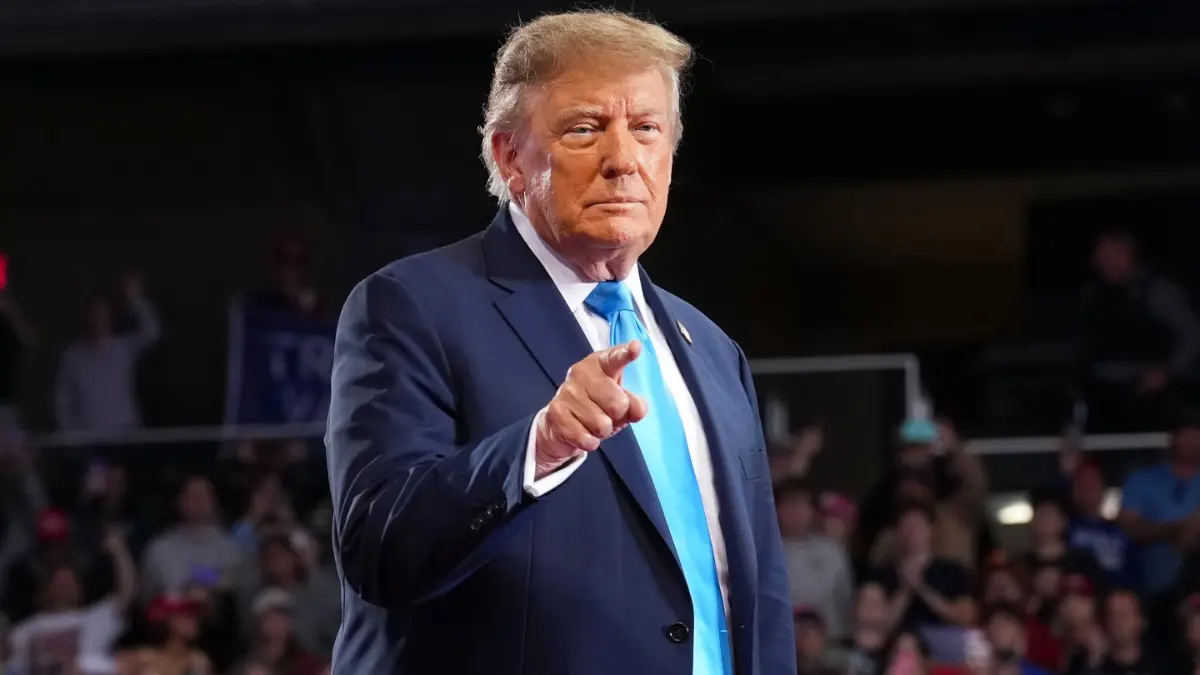
President Donald Trump engaged in a heated and personal exchange with CNN correspondent Kaitlan Collins outside the White House on Wednesday, launching a barrage of insults after the reporter pressed him on his decision to waive sanctions against Russia. The confrontation occurred just before Trump’s departure for a rally in South Carolina, a moment he typically uses to address the press corps. Collins’ persistent questioning focused on the specifics of the waived sanctions, their connection to the late Senator Lindsey Graham, and their potential impact on a crucial election for Graham’s sister, Darline Graham, who is currently campaigning for his former Senate seat.
The Core of the Confrontation: Sanctions, a Detained American, and a Political Campaign
The contentious exchange began when Collins directly questioned President Trump about his administration’s decision to lift sanctions that were slated to be implemented under legislation named in honor of the late Senator Lindsey Graham. This legislative move, typically aimed at pressuring Russia over its actions, had been a significant point of focus for Graham during his tenure. Collins’ line of questioning then pivoted to the current political landscape, specifically Trump’s involvement in campaigning for Darline Graham, Senator Graham’s sister. Darline Graham has been appointed to fill her brother’s Senate seat and is facing a competitive election to retain it. Collins’ query was pointed: "You’re campaigning for Darline Graham. What has she said to you about lifting those sanctions on Russia that her brother fought so hard for?"
President Trump, rather than offering a direct response regarding any conversations with Darline Graham or the political considerations, steered the conversation toward the case of Stephen Hubbard, a 74-year-old American teacher who had been held in Russian detention. Trump asserted that waiving the sanctions was a necessary precondition for Hubbard’s safe return. "If I would have done that, you would not have Mr. Hubbard coming back," Trump stated, directly linking the sanctions waiver to the release of the American citizen.
This response, however, did not satisfy Collins, who continued to press for clarity on the decision’s rationale and its potential political ramifications. It was at this juncture that President Trump’s demeanor shifted markedly, escalating from evasion to direct personal attacks against the reporter. He dismissed Collins’ understanding of the situation, stating, "You don’t know what you’re talking about." This was followed by a series of highly personal insults, including the declaration, "You’re a dummy. You’re a low-IQ person. You’re a dummy, and you work for CNN." He further disparaged Collins’ employer, labeling CNN as "fake news CNN."
Background: The Graham Sanctions and Stephen Hubbard’s Detention
The sanctions in question were part of a broader legislative framework designed to hold Russia accountable for various actions, including alleged interference in U.S. elections and human rights abuses. The legislation bearing Senator Lindsey Graham’s name was a testament to his consistent stance on imposing pressure on Moscow. Senator Graham, a prominent Republican voice on foreign policy and national security, passed away unexpectedly in July, creating a vacancy in his South Carolina Senate seat. His sister, Darline Graham, was subsequently appointed to serve out his term and is now engaged in a challenging electoral battle to secure a full term.
The release of Stephen Hubbard, the Michigan teacher, occurred on the very same Wednesday that the confrontation took place. Hubbard had been detained in Russia for an unspecified period, and his release was heralded by the Trump administration as a diplomatic success. President Trump’s administration frequently highlighted the release of detained Americans abroad as a key foreign policy achievement, often leveraging these successes for political gain. The timing of Hubbard’s release, coinciding with the sanctions waiver and the president’s departure for a campaign event, suggested a deliberate strategy to underscore this accomplishment.
Chronology of Events
- Prior to Wednesday: Sanctions against Russia were in place or being considered under legislation named after the late Senator Lindsey Graham. Stephen Hubbard, an American citizen, was reportedly being held in detention in Russia. Senator Lindsey Graham passed away in July, and his sister, Darline Graham, was appointed to his Senate seat and began campaigning for election.
- Wednesday, Morning/Afternoon: President Donald Trump prepares to depart the White House for a rally in South Carolina.
- Wednesday, Outside the White House: President Trump engages with reporters. CNN correspondent Kaitlan Collins asks about the decision to waive sanctions against Russia, specifically linking it to Senator Graham’s legislative efforts and Darline Graham’s current campaign.
- Wednesday, During the Exchange: President Trump deflects the question about Darline Graham and instead cites the release of Stephen Hubbard as the direct result of waiving the sanctions. He then launches into personal insults directed at Kaitlan Collins and CNN.
- Wednesday, Later in the Day: News emerges of Stephen Hubbard’s release from Russian custody, a fact confirmed by the State Department and framed by the administration as a successful outcome of diplomatic efforts, implicitly linked to the sanctions waiver.
Supporting Data and Analysis of Implications
The decision to waive sanctions, even those seemingly designed to pressure Russia, can have complex geopolitical and economic ramifications. Sanctions are typically employed as a tool to alter the behavior of a targeted nation. Their removal can be interpreted as a signal of diminished pressure, potentially emboldening the sanctioned country. In this instance, the sanctions were tied to a specific legislative act, suggesting a bipartisan consensus in Congress regarding their necessity. The administration’s decision to override this, even temporarily, raises questions about the administration’s broader strategy toward Russia and its commitment to holding Moscow accountable for its actions.
The case of Stephen Hubbard highlights the delicate balancing act of foreign policy. The paramount concern for any administration is the safety and well-being of its citizens abroad. Securing the release of a detained national often involves intricate diplomatic negotiations, which can sometimes necessitate concessions or strategic adjustments in policy. The Trump administration’s emphasis on Hubbard’s release as a direct consequence of the sanctions waiver suggests that the administration viewed this as a justifiable trade-off, prioritizing the immediate return of an American citizen over the continued application of punitive measures against Russia.
However, the timing of this decision and its potential connection to Darline Graham’s electoral campaign cannot be entirely dismissed as a coincidental political alignment. While the administration may not have explicitly stated a quid pro quo, the optics of waiving sanctions championed by a late Republican senator while campaigning for his sister can create perceptions of political expediency. Such perceptions, regardless of their factual basis, can influence public opinion and the broader political discourse. The competitive nature of Darline Graham’s race underscores the importance of any perceived advantage, and a diplomatic success, even one achieved through a controversial policy adjustment, could be leveraged by her campaign.
The broad impact of such exchanges extends beyond the immediate political theater. The personal nature of President Trump’s attacks on a journalist can have a chilling effect on press freedom and the ability of reporters to conduct their work without fear of reprisal. When a head of state resorts to personal insults and dismisses legitimate journalistic inquiries, it can undermine the public’s trust in both the media and the government. Furthermore, the president’s characterization of CNN as "fake news" contributes to a polarized media environment where factual reporting is often questioned and dismissed.
Official Responses and Broader Context
While the direct exchange between President Trump and Kaitlan Collins was the focal point, the broader implications of the waived sanctions and the release of Stephen Hubbard have drawn attention from various quarters. Members of Congress, particularly those who championed the sanctions legislation, are likely to scrutinize the administration’s actions. Statements from the State Department typically confirm the release of American citizens held abroad, often highlighting the diplomatic efforts involved. However, specific details of negotiations or concessions are rarely disclosed due to national security and diplomatic sensitivities.
The international community also observes such actions closely. Russia’s reaction to the sanctions waiver would be significant. While the waiver might be interpreted as a goodwill gesture or a sign of U.S. policy flexibility, it could also be viewed by other nations as a weakening of resolve against Russian assertiveness.
The context of U.S.-Russia relations is crucial here. Relations between the two countries have been strained for years, marked by allegations of Russian interference in U.S. elections, cyberattacks, and geopolitical disagreements. Decisions concerning sanctions and diplomatic engagement are therefore viewed through the lens of this ongoing adversarial relationship. The Trump administration has often sought to foster a more cooperative relationship with Russia, a stance that has frequently been met with skepticism and concern from both domestic political opponents and international allies.
In conclusion, the exchange between President Trump and Kaitlan Collins outside the White House encapsulates a complex interplay of foreign policy decisions, domestic politics, and the dynamics of presidential-press relations. The waiver of sanctions against Russia, ostensibly to secure the release of Stephen Hubbard, occurred at a politically sensitive moment, raising questions about the administration’s motivations and the potential for political expediency to influence foreign policy. The personal nature of the president’s response to journalistic inquiry further underscores the challenging environment in which reporting on the executive branch often takes place. The long-term implications for U.S.-Russia relations, the effectiveness of sanctions as a foreign policy tool, and the health of democratic discourse remain subjects of ongoing analysis and debate.



 Nila Kartika Wati

 Eva Lovia

 Lina Irawan

 Yuyun Lusiyani

 Ana Megawati
