
 admin
admin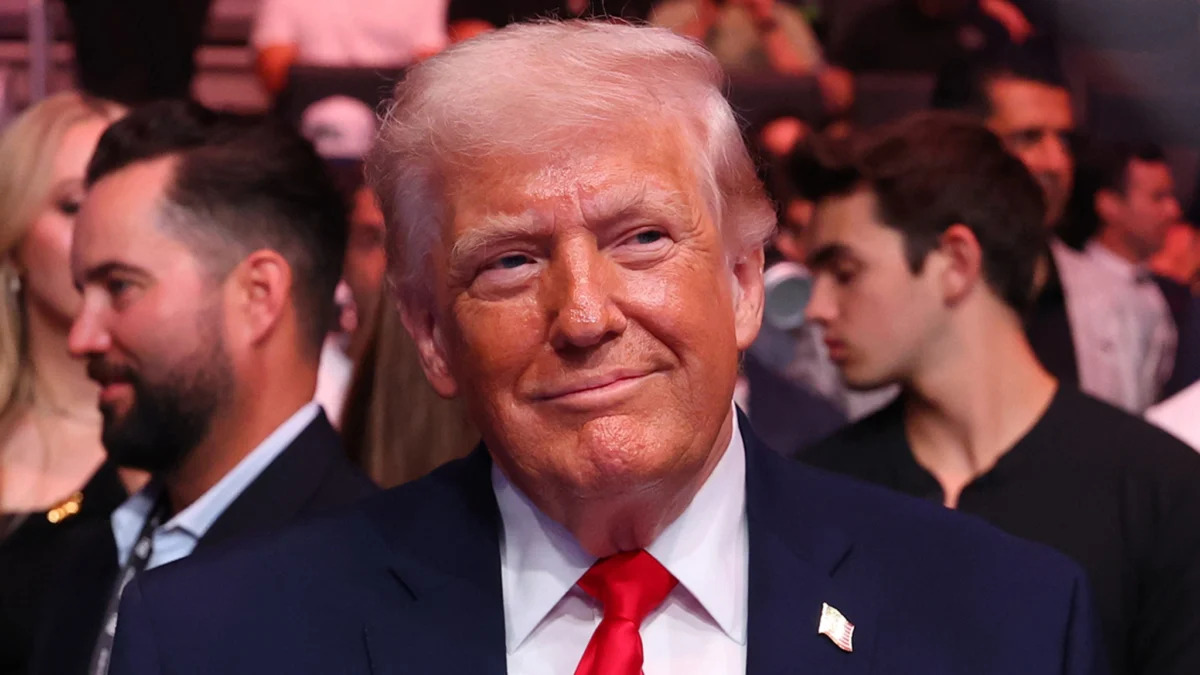
In a stark demonstration of a presidency marked by unconventional optics, President Donald Trump momentarily shifted his focus from the escalating geopolitical conflict in Iran to the electrifying atmosphere of a Ultimate Fighting Championship (UFC) event in Miami on Saturday night. His highly publicized attendance at UFC 327 at the Kaseya Center underscored a presidency that frequently blends high-stakes policy with populist entertainment, drawing both fervent support and pointed criticism amidst a brewing international crisis.
A Grand Entrance in Miami Amidst Geopolitical Tensions
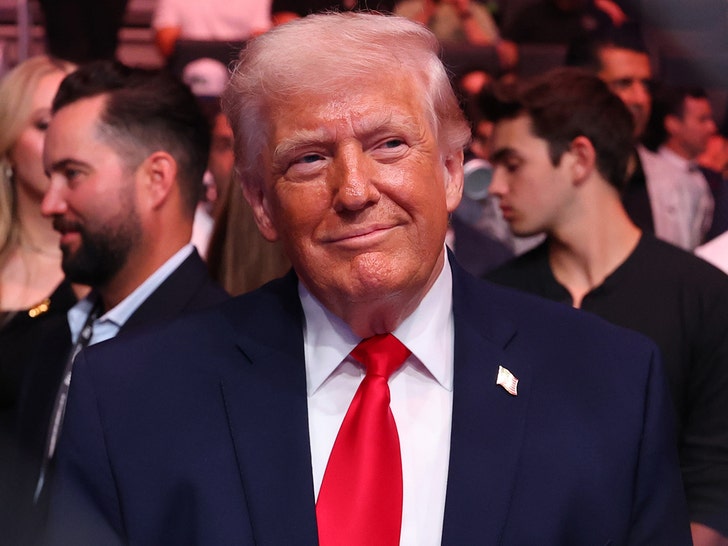
The evening of April 12, 2026, saw President Trump make a characteristic grand entrance, walking out of a tunnel alongside UFC President Dana White. The crowd at Miami’s Kaseya Center erupted in a chorus of cheers and applause, a reception that has become a familiar hallmark of the former president’s appearances at such events. Social media quickly became awash with videos depicting Trump waving to enthusiastic fans, many of whom were capturing the moment on their cell phones. He paused to shake hands with several supporters before proceeding to his prime ringside seats directly in front of the Octagon. A notable figure already awaiting his arrival was Secretary of State Marco Rubio, highlighting the blend of political and entertainment spheres.
This appearance came at a particularly sensitive juncture for global diplomacy and national security. The United States was actively engaged in efforts to de-escalate a burgeoning conflict with Iran, a situation that had gripped international attention since late February. The President’s decision to attend a high-profile sporting event during such a period immediately ignited discussions about presidential priorities, leadership style, and the symbolism of his public engagements.
The Enduring Alliance: Trump and the UFC

President Trump’s affinity for combat sports, particularly the UFC, is well-documented and spans decades, predating his foray into national politics. His relationship with Dana White and the organization deepened significantly during his first term and has continued into his current presidency. Trump was an early supporter of the UFC, offering venues like his Trump Taj Mahal in Atlantic City during a time when many mainstream arenas and broadcasters shunned the sport. This historical context has fostered a strong personal and professional bond between Trump and White, positioning the UFC as one of the few major sports leagues that has consistently embraced the former president.
His appearances at UFC events are often more than just a casual outing; they are carefully orchestrated political statements. The demographic of UFC fans often aligns with a significant portion of his political base, and his presence serves to energize supporters and reinforce his image as a leader connected to mainstream American culture, unburdened by conventional political decorum. The “massive applause” he received in Miami is indicative of this symbiotic relationship, where his presence lends an air of importance to the event, and the event, in turn, offers a platform for a display of popular support.
The Escalating Iran Conflict: A Deeper Dive
The "conflict in Iran" referenced in the news cycle is far from a minor skirmish; it represents a serious escalation of long-standing tensions between the United States and the Islamic Republic. Originating in late February, the current phase of the conflict reportedly centers around Iranian naval activities in the Strait of Hormuz and accusations of cyber warfare targeting critical infrastructure in the Persian Gulf. The Strait of Hormuz, a narrow waterway between the Persian Gulf and the Gulf of Oman, is one of the world’s most strategically important choke points, through which approximately 20% of the world’s petroleum and a significant portion of its liquefied natural gas pass. Any disruption to this vital artery has immediate and severe global economic repercussions.
Reports from intelligence agencies and defense ministries suggest a pattern of escalating maritime incidents, including alleged harassment of international shipping by Iran’s Islamic Revolutionary Guard Corps Navy (IRGCN) and counter-maneuvers by US and allied naval forces. While full-scale conventional warfare has been averted, the situation has been described by defense analysts as a "grey zone conflict," characterized by asymmetrical tactics, proxy engagements, and a heightened risk of miscalculation. The U.S. has maintained a robust military presence in the region for decades, primarily to ensure freedom of navigation and deter Iranian aggression. The current crisis has seen an increase in naval deployments and heightened alert levels for military personnel stationed across the Middle East.
Diplomatic Efforts and the Islamabad Stalemate
In parallel to the President’s public appearance in Miami, significant diplomatic efforts were underway to avert a full-blown crisis. Vice President J.D. Vance led the American delegation in ceasefire talks held over the weekend in Islamabad, Pakistan. The choice of Islamabad as a neutral ground for these critical discussions underscored Pakistan’s historical role as an intermediary in regional conflicts and its complex relationship with both the U.S. and Iran.
The American delegation, under Vice President Vance’s leadership, engaged in marathon discussions with both Pakistani and Iranian counterparts. The talks, aimed at resolving the conflict that began in late February, spanned an intense 21 hours. Key points of contention reportedly included the future status of the Strait of Hormuz, the cessation of alleged Iranian cyber-attacks, and the scaling back of Iranian uranium enrichment activities, which have long been a source of international concern. Despite the prolonged negotiations and the high stakes involved, Vice President Vance ultimately reported that "no agreement was reached." This diplomatic stalemate indicates a failure to find common ground on critical issues, raising the specter of continued, or even intensified, hostilities in the Persian Gulf. The failure of these talks places additional pressure on the administration to consider alternative strategies, including potentially harsher economic sanctions or increased military posturing.
Presidential Media Scrutiny and Public Exchanges
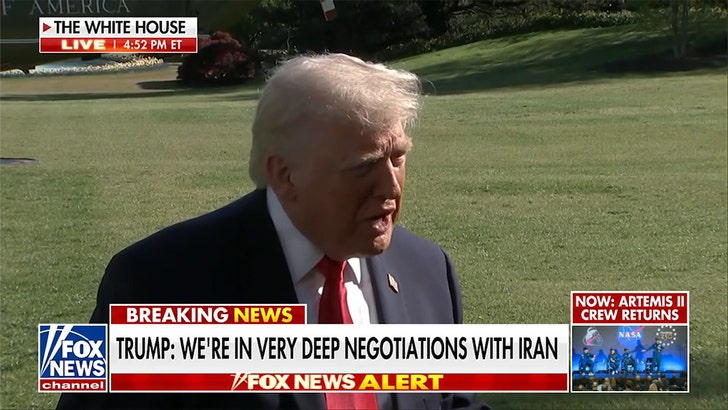
Hours before his flight to Miami, President Trump engaged in a contentious exchange with reporters outside the White House, particularly concerning the Iran conflict. An NBC journalist pressed the President on why the Strait of Hormuz remained effectively closed or heavily restricted, a question that evidently struck a nerve. In what has become a hallmark of his public interactions, President Trump responded by lambasting the reporter, asserting her lack of understanding regarding the complexities of the situation in Iran. He subsequently dismissed NBC as "fake news," a label he has frequently applied to media outlets critical of his administration.
This interaction highlights the persistent tension between the Trump administration and segments of the mainstream media. The President’s confrontational style with reporters, often seen as an attempt to control narratives and appeal directly to his base, contrasts sharply with the traditional decorum expected of a Commander-in-Chief during a foreign policy crisis. Critics argue that such exchanges undermine journalistic integrity and democratic institutions, while supporters contend that they represent a direct challenge to what they perceive as biased media coverage. The incident served as a prelude to his evening in Miami, setting a tone of defiance and an assertion of his own narrative, even as geopolitical pressures mounted.
The Optics of Leadership: A Calculated Contrast
The juxtaposition of President Trump attending a high-octane sporting event while his administration grappled with a significant international crisis offers a multifaceted lens through which to view his leadership. For his supporters, his presence at UFC 327 could be interpreted as a demonstration of strength, resilience, and an ability to project normalcy and confidence even in challenging times. It might suggest a leader capable of delegating critical tasks, such as ceasefire talks, while maintaining a public presence that reassures the populace and signals business as usual. The cheering crowd in Miami would further reinforce this narrative of a leader connected to the people, enjoying popular support despite external pressures.
Conversely, critics might view the decision as tone-deaf or even irresponsible. They could argue that a president should be fully engaged in crisis management, projecting an image of sober determination and singular focus during a period of international instability. The image of the President enjoying a sporting event while his Vice President was engaged in arduous, ultimately unsuccessful, peace talks could be framed as a dereliction of duty or a disconnect from the gravity of the situation. Such optics could potentially undermine diplomatic efforts or send mixed signals to international allies and adversaries about the seriousness with which the U.S. views the Iran conflict. The presence of Secretary of State Marco Rubio at the event further complicates this perception, suggesting that even top-tier foreign policy officials were partaking in the spectacle.
Broader Implications and the Path Forward
The failure of the Islamabad ceasefire talks marks a critical juncture in the Iran conflict. With diplomatic avenues currently exhausted, the United States and its allies face a heightened risk of continued escalation. This could manifest in several ways: increased economic sanctions targeting Iran’s oil exports and financial institutions, potentially leading to further economic instability in the region; enhanced military readiness and defensive postures in the Persian Gulf, increasing the chances of accidental confrontation; or even a shift towards more direct military engagement, although such a move would carry immense political and humanitarian costs.
Domestically, the events of the weekend contribute to the ongoing narrative surrounding President Trump’s unique political style. His ability to galvanize a loyal base through appearances like the UFC event, even amidst significant national challenges, remains a potent force in American politics. However, the scrutiny from traditional media and political opponents will likely intensify, particularly regarding his administration’s handling of foreign policy crises and the balance between public engagement and presidential gravitas.
The confluence of a high-profile presidential appearance, a critical diplomatic failure, and a confrontational media exchange paints a vivid picture of the political landscape in 2026. As the situation in the Strait of Hormuz remains unresolved and the specter of conflict looms large, the world will be watching closely to see how the Trump administration navigates these treacherous geopolitical waters, balancing domestic optics with international realities. The "different war" the President was watching in the Octagon may have provided a temporary reprieve, but the real conflict in the Middle East continues to demand urgent and decisive attention.

 Jia Lissa
 Yuyun Lusiyani
 Joko Widodo
 Eva Lovia

 Pevita Pearce