
 Jia Lissa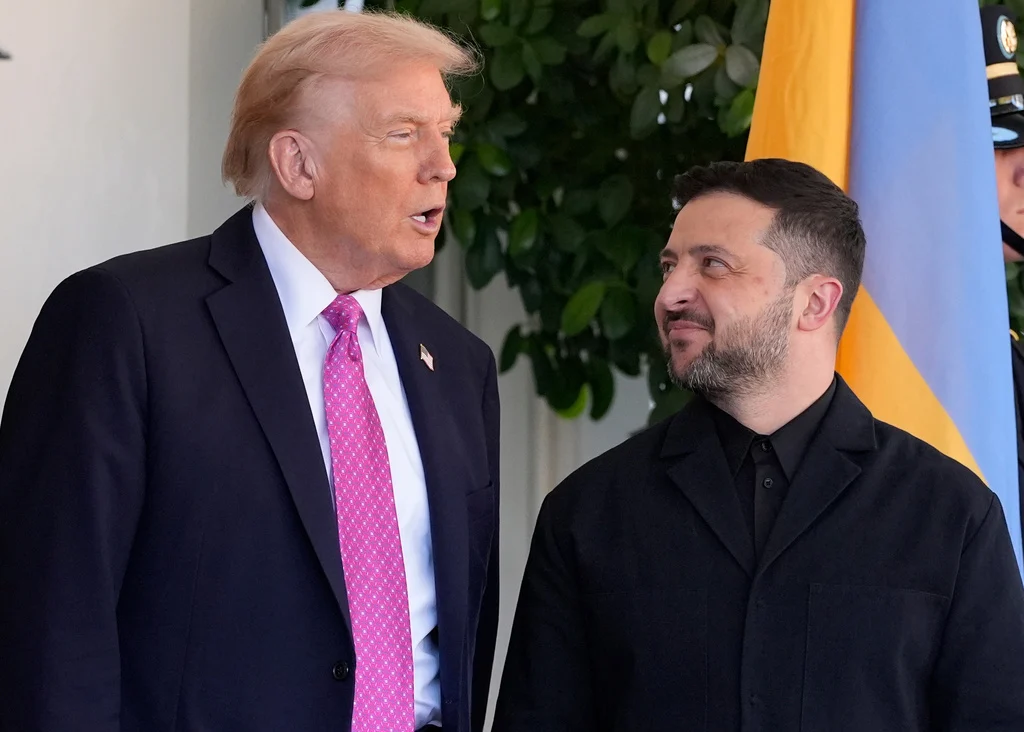
During a press engagement aboard Air Force One while returning from a diplomatic visit to Ireland, President Donald Trump confirmed that he has personally requested Ukrainian President Volodymyr Zelensky to halt the ongoing military campaign targeting Russian oil and diesel infrastructure. The President cited the escalating volatility of global energy markets and the specific surge in domestic fuel prices as the primary drivers for this diplomatic intervention. As the conflict between Russia and Ukraine enters a more intensive phase of infrastructure warfare, the administration is increasingly focused on the secondary economic impacts felt by American consumers and the global logistics sector.
The President’s remarks come at a critical juncture for the domestic economy. According to recent data from AAA, U.S. diesel prices have climbed to an average of $6.20 per gallon in several regions, a figure that has placed immense strain on the trucking industry. For long-haul operators, the cost of filling a single commercial fuel tank has approached $1,000, threatening to exacerbate inflationary pressures across the supply chain. President Trump articulated that while the conflict remains a matter of international security, the specific targeting of Russian refineries is having a disproportionate effect on the availability and cost of diesel globally.
The Geopolitics of Energy and Infrastructure Warfare
Since the onset of the full-scale invasion of Ukraine by Russia in early 2022, the conflict has primarily been fought on the ground in the Donbas and southern regions. However, in recent months, Ukraine has significantly expanded its tactical reach. Utilizing advanced, long-range unmanned aerial vehicles (UAVs), Kyiv has launched a series of precision strikes against Russian energy assets, including refineries in Nizhny Novgorod, Ryazan, and the Leningrad region. These strikes are designed to cripple the Russian war machine by reducing the Kremlin’s export revenue and disrupting the fuel supplies necessary for military logistics.
President Trump, however, signaled that the strategic benefits of these strikes may be outweighed by the global economic consequences. "The problem I have with Ukraine and Russia is that a lot of the diesel comes, and that’s one where there’s a big up," the President told reporters. "It comes from Russia, and the Russian plants are being hit by Ukraine. And I’ve asked President Zelensky not to hit the diesel plants, refineries." He emphasized that the global nature of the energy market means that a reduction in Russian refining capacity inevitably leads to a price spike that "hurts the world."
While the President did not disclose the specifics of President Zelensky’s response, the request highlights a growing tension between Ukraine’s military objectives and the economic stability of its Western allies. For Ukraine, the destruction of Russian refineries is a matter of national survival; for the United States, the resulting energy inflation presents a significant domestic challenge.
Analyzing the Impact on U.S. Diesel Markets
To understand the President’s concerns, it is necessary to examine the mechanics of the global diesel market. Although the United States has moved toward greater energy independence over the last decade, it is not immune to global price fluctuations. Data from the U.S. Energy Information Administration (EIA) indicates that while the U.S. produces the vast majority of its diesel fuel domestically, petroleum is a fungible global commodity. When Russian refining capacity is taken offline, European and Asian markets seek alternative supplies, often drawing from the same global pool that services the United States, thereby driving up prices everywhere.
Furthermore, the "crack spread"—the difference between the price of crude oil and the wholesale price of refined products like diesel—has widened significantly. This is partly due to a global shortage of refining capacity that existed even before the war. The loss of Russian output, which historically accounted for a significant portion of Europe’s diesel imports, has forced a massive realignment of global trade routes.
Contrary to some political rhetoric, the U.S. does not currently import finished diesel fuel directly from Russia, following the implementation of strict sanctions. However, the President’s focus on the "hard time coming out of Russia" refers to the broader supply vacuum created when one of the world’s largest exporters is hampered by internal infrastructure damage. The administration’s stance suggests a belief that maintaining a baseline of global supply is essential to preventing a full-scale economic contraction.
A Timeline of Escalation and Economic Response
The current energy crisis is the result of a multi-year trajectory of conflict and market shifts. Understanding this timeline is essential for contextualizing the President’s recent request to Kyiv:
- February 2022: Russia launches a full-scale invasion of Ukraine. Global oil prices immediately surge past $100 per barrel.
- Late 2022: The U.S. and its G7 allies implement a price cap on Russian oil to limit the Kremlin’s revenue while keeping the oil flowing to global markets.
- Early 2023: Ukraine begins developing a robust long-range drone program, specifically designed to bypass Russian air defenses and strike deep into the Russian interior.
- January – March 2024: Ukraine executes a series of successful strikes on major Russian refineries, including the Lukoil-Nizhegorodnefteorgsintez plant. Estimates suggest that at one point, up to 10% of Russia’s refining capacity was affected.
- April 2024: U.S. diesel prices hit a peak of $6.20 per gallon in certain markets. President Trump publicly acknowledges his request for Ukraine to cease these specific operations.
This timeline illustrates a shift from traditional territorial defense to an economic war of attrition. While Ukraine views these refineries as legitimate military targets, the White House is increasingly viewing them as critical nodes in the global economy that, if destroyed, could trigger a recession.
Broader Geopolitical Factors: Iran and the Strait of Hormuz
During his briefing, President Trump also linked the current fuel crisis to ongoing tensions with Iran. He suggested that geopolitical turmoil in the Middle East is a secondary but significant driver of energy costs. Although the U.S. imports very little oil through the Strait of Hormuz, the waterway remains the most important oil transit chokepoint in the world. Approximately 20% of the world’s total oil consumption passes through the Strait daily.
The President argued that the "war with Iran"—referring to the ongoing shadow conflict and regional instability—must be resolved to stabilize the market. Market analysts note that any disruption in the Strait of Hormuz would lead to an immediate and catastrophic spike in global crude prices, which would filter down to diesel and gasoline prices at American pumps regardless of domestic production levels.
The administration’s strategy appears to be a dual-track approach: pressuring Ukraine to limit its economic sabotage of Russia while simultaneously seeking to de-escalate tensions in the Middle East to ensure the free flow of energy.
Domestic Security and Technology: The Flock Camera Discussion
In a departure from energy policy, the President also addressed domestic security technology during his return flight. He commented on the proliferation of "Flock" cameras—automated license plate recognition (ALPR) systems that have become increasingly common in American suburbs and cities. While civil liberties groups have raised concerns regarding the privacy implications of such pervasive surveillance, the President expressed a pragmatic view.
"I understand the security concerns about them," the President noted, acknowledging the debate over data privacy and government overreach. However, he concluded, "overall, I like them." This endorsement aligns with the administration’s broader "law and order" platform, suggesting that the benefits of crime prevention and investigative efficiency provided by these high-tech tools outweigh the potential for privacy infringement. The inclusion of this topic in the briefing highlights the administration’s focus on a wide range of security issues, from the battlefields of Eastern Europe to the streets of American neighborhoods.
Implications for Future Foreign Policy
The President’s request to Ukraine marks a potential shift in the "blank check" narrative of Western support. While the United States remains Ukraine’s most significant military benefactor, the demand to spare Russian refineries indicates that there are clear limits to the types of warfare the U.S. is willing to subsidize, especially when those tactics threaten domestic economic stability.
Military analysts suggest that if Ukraine complies with the request, it may lose one of its most effective levers for forcing Russia to the negotiating table. Conversely, if Ukraine continues the strikes, it risks alienating its most important ally during a crucial election year in the United States.
The economic implications are equally profound. If the strikes cease and global diesel supplies stabilize, it could provide much-needed relief to the American logistics industry. However, it also means that the Russian economy may continue to generate the funds necessary to sustain its military operations in the Donbas.
As the international community watches these developments, the focus remains on the delicate balance between military strategy and global economic health. The President’s remarks serve as a reminder that in the modern era, the front lines of a conflict are not just found in trenches, but in the price of fuel at a truck stop in the American heartland. For now, the administration’s priority is clear: stopping the "up" in diesel prices, even if it means altering the tactical landscape of the war in Ukraine.




 Yuyun Lusiyani
 Joko Widodo
 Pevita Pearce
 admin
admin
