
 Jia Lissa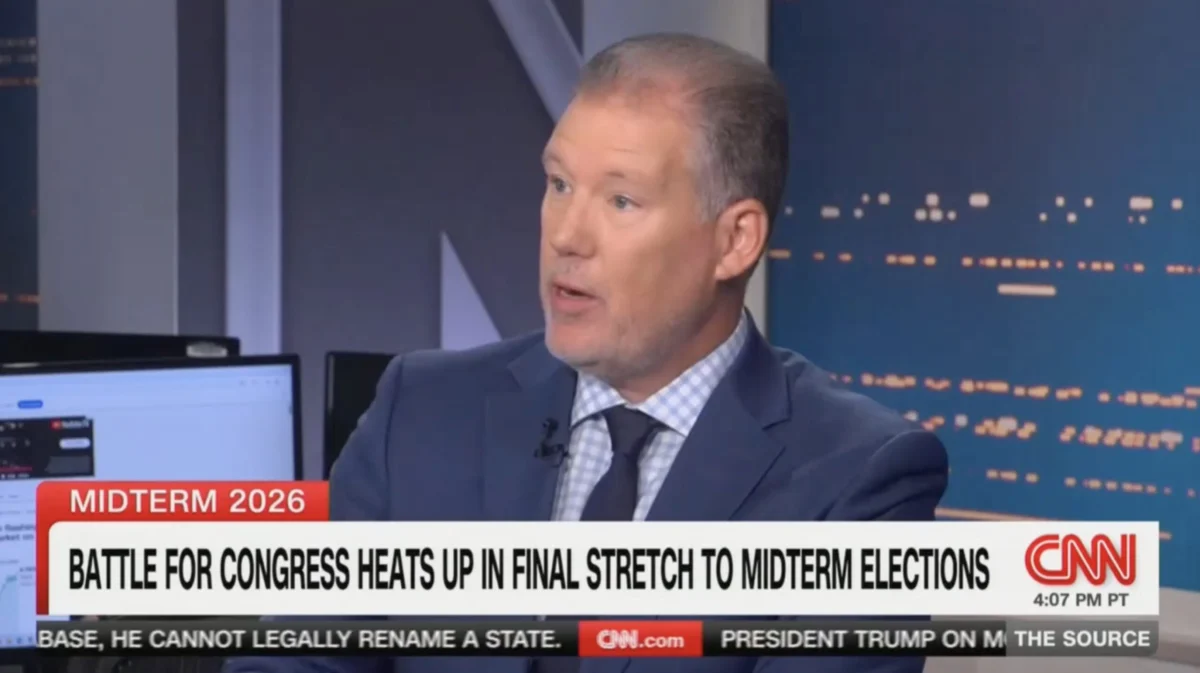
The internal friction within the Republican Party reached a new flashpoint this week as veteran strategist Doug Heye issued a blistering critique of former President Donald Trump’s financial strategy ahead of the upcoming midterm elections. Appearing on a special edition of CNN’s "The Source" with anchor Kaitlan Collins, Heye argued that the former president is intentionally withholding his significant political war chest from struggling GOP candidates, choosing instead to prioritize his own image and personal political record. The comments highlight a deepening divide between the Trump-aligned wing of the party and establishment strategists who fear that a lack of coordinated financial support could lead to catastrophic losses in November.
Heye’s remarks come at a precarious moment for the Republican Party. Despite a historical trend that usually favors the opposition party during midterm cycles, the GOP faces a complex electoral map and a series of high-stakes contests in both the House and the Senate. According to Heye, the former president’s decision to keep his "MAGA Inc." Super PAC funds largely on the sidelines is a primary factor in what he described as "bleak" prospects for the party.
The Financial Paradox: A $403 Million War Chest
At the heart of the controversy is the sheer scale of the funds controlled by Donald Trump’s primary fundraising vehicle, MAGA Inc. Federal Election Commission (FEC) filings and internal reports as of the end of July indicate that the group is sitting on a staggering $403 million in cash. This figure represents one of the largest accumulations of political capital in modern American history for a non-candidate-specific organization at this stage of a cycle.
However, despite this massive liquidity, the organization has been notably conservative in its disbursements to individual Republican campaigns. Until very recently, the group had refrained from making significant independent expenditures in key battleground races. This stands in stark contrast to Democratic-aligned Super PACs, which have been aggressively pouring funds into television markets in swing states to define Republican challengers early in the cycle.
Heye noted that the former president’s reluctance to share these resources is not merely a matter of fiscal conservatism, but a deliberate strategic choice. "Donald wants to spend money on himself," Heye told Collins. "He doesn’t want to give things away. He wants Republicans to earn it." Heye went as far as to compare the current state of GOP fundraising to Trump’s former reality television show, "The Apprentice," suggesting that candidates are being forced to compete for the former president’s favor—and his funds—rather than receiving the institutional support traditionally provided by a party leader.
The Shift Toward a Personal Referendum
Adding to the frustration of GOP strategists is a recent report from The Atlantic, which suggests that Trump has decided to pivot his Super PAC’s strategy toward a self-centered media blitz. Rather than producing "attack ads" targeting Democratic incumbents or "contrast ads" highlighting the platforms of GOP challengers, the former president reportedly intends to use millions of dollars to purchase television airtime for advertisements focused on his own presidential record.
The goal of this campaign is to create what Heye and others describe as a "backdrop" of Trump’s achievements for individual House and Senate contests. Critics argue that this strategy effectively turns the midterms into a referendum on Donald Trump himself, rather than a referendum on the current administration or the economic issues currently facing voters. This approach is seen as high-risk, particularly given recent polling data suggesting that the former president’s personal brand may be a liability in moderate suburban districts.
Case Study: The Texas Senate Intervention
The tension over Trump’s spending reached a boiling point last week regarding the Texas Senate race, where incumbent Republican Attorney General Ken Paxton is facing a surprisingly competitive challenge from Democratic state Representative James Talarico. Despite Texas being a traditional Republican stronghold, internal polling reportedly showed a tightening race, prompting urgent calls from high-ranking GOP senators for Trump to intervene.
After weeks of silence, MAGA Inc. finally "opened its coffers" over the weekend, committing $10 million toward television and online advertisements in the Lone Star State. While the infusion of cash was welcomed by the Paxton campaign, Heye and other strategists pointed out that $10 million is a relatively small fraction of the $403 million available. Furthermore, the fact that such a significant expenditure was required in a state like Texas is being viewed as an omen of the broader "bleak" outlook for the party nationwide.
The delay in supporting Paxton has been cited as evidence of Trump’s "pay-to-play" or "loyalty-first" mentality. Strategists argue that by waiting until a race is in jeopardy to provide support, the former president is ceding the narrative to Democrats who have been outspending Republicans on the airwaves for months.
Historical Context and Approval Rating Headwinds
The historical precedent for midterm elections generally suggests that the party out of power makes significant gains. However, the 2024 midterm cycle is being shaped by unique factors, including the continued influence of Donald Trump and a shifting legal landscape. Heye’s assessment that GOP prospects are "bleak" is backed by recent data regarding the former president’s public standing.
In August, a Reuters/Ipsos polling series showed Trump hitting an all-time low in his approval rating. The data indicated that only 33% of Americans approved of his performance and overall influence on the political landscape, while 64% expressed disapproval. For down-ballot Republicans, these numbers are alarming. In competitive districts, Republican candidates often need to win over independent and moderate voters who may be alienated by a campaign strategy that focuses heavily on the former president’s record rather than local or economic issues.
Heye highlighted a disconnect between Trump’s rhetoric and the lived experience of the American electorate. He noted that while Trump frequently tells rally-goers that the country has "never been hotter or richer," many voters are struggling with the cost of living and do not "feel hot or rich right now." This messaging gap, Heye argues, makes it difficult for GOP candidates to connect with the middle-class voters necessary to secure a majority.
Chronology of the Funding Dispute
To understand the current friction, one must look at the timeline of the GOP’s 2024 financial trajectory:
- January – June: Donald Trump’s various fundraising committees, including Save America and MAGA Inc., report record-breaking small-dollar donations, largely driven by reactions to his ongoing legal proceedings.
- July 31: MAGA Inc. files its monthly report with the FEC, revealing a cash-on-hand balance exceeding $403 million. At this point, very little has been spent on non-Trump-related advertising.
- August 15: Reuters/Ipsos releases polling showing Trump at a 33% approval rating, sparking concerns among NRSC (National Republican Senatorial Committee) and NRCC (National Republican Congressional Committee) leadership.
- August 25: Reports surface in The Atlantic detailing Trump’s plan to use Super PAC funds for a national ad campaign focused on his own record rather than specific candidate support.
- September 1: Top GOP senators reportedly make direct appeals to the Mar-a-Lago team to release funds for the Texas Senate race and other "at-risk" seats.
- September 7: MAGA Inc. announces a $10 million buy for Ken Paxton in Texas, marking the first significant move of the midterm cycle for the group.
- September 9: Doug Heye appears on CNN, articulating the frustration felt by many in the party establishment regarding the delay and the nature of the spending.
Broader Implications for the Republican Party
The implications of this financial standoff extend beyond the current election cycle. If the Republican Party fails to capture the House or Senate in November, or if they underperform relative to historical expectations, the blame is likely to be placed squarely on the "hoarding" of resources by the Trump campaign.
There is also the matter of "opportunity cost." Every dollar spent on an ad about Trump’s past record is a dollar not spent on an ad attacking a vulnerable Democratic incumbent’s record on inflation, border security, or crime. By forcing the election to be about himself, Trump may be inadvertently helping Democrats nationalize the race in a way that favors their base mobilization.
Furthermore, the "Apprentice" style of candidate support creates a culture of dependency and subservience within the party. Candidates who feel they must "earn" the former president’s financial backing may be less likely to stake out independent positions that could appeal to a broader general election audience. This "loyalty test" could result in a slate of candidates that are perfectly aligned with the MAGA base but unpalatable to the wider electorate.
As the calendar moves closer to November, the pressure on MAGA Inc. to liquidate more of its $403 million will only increase. Whether that money will be used to bolster the party’s collective chances or simply to polish the former president’s legacy remains the central question of the 2024 midterm cycle. For strategists like Doug Heye, the answer provided thus far is a cause for significant concern, suggesting a party at war with its own leadership over the very resources needed to win.




 Yuyun Lusiyani
 Joko Widodo
 Pevita Pearce
 admin
admin
