
 Yuyun Lusiyani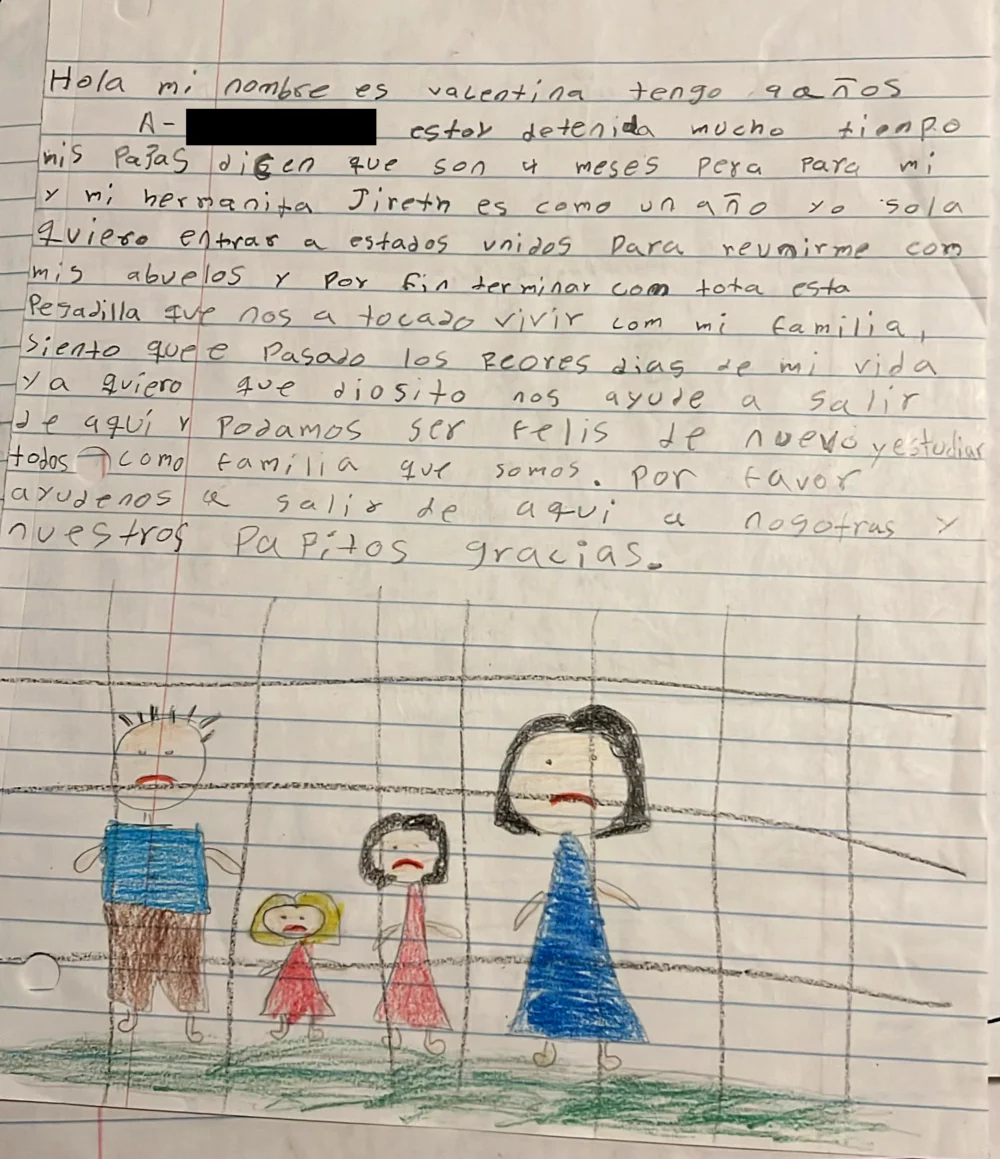
Christian Hinojosa, recently released from the South Texas Family Residential Center in Dilley, Texas, recounted a harrowing experience earlier this month. When guards approached the room she shared with her son and other women and children, she instinctively knew their purpose. In a moment of quick thinking, she donned her puffy winter jacket, concealing a manila envelope filled with children’s writings and artwork – a vital collection of their experiences within America’s sole detention facility dedicated to immigrant families. "Thank God the weather was cool," she later remarked, explaining how the jacket, a common sight in the chilly conditions, averted suspicion. Her foresight allowed these poignant messages, detailing life inside the sprawling complex of trailers and dormitories nestled in the South Texas brush country, to eventually reach the outside world.
A Climate of Secrecy: Allegations from Within
Hinojosa’s account is not isolated. Along with three other former detainees, as well as lawyers and advocates in regular contact with families still inside, she describes a pattern of escalated room searches, seizures of personal items, and tightening communication restrictions. These measures reportedly include the confiscation of crayons, colored pencils, and drawing paper – basic tools of expression for children coping with detention. Even seemingly innocuous items, such as a child’s drawing of Bratz fashion dolls, were reportedly seized.

Beyond physical items, digital communication has also been affected. Detainees have reportedly lost access to Gmail and other Google services in the Dilley library, significantly hindering their ability to contact legal counsel and advocacy groups. Furthermore, family members and former detainees report that guards frequently hover within earshot during video calls to relatives and reporters, creating an atmosphere of surveillance and chilling open communication. These actions collectively paint a picture of a system attempting to control the narrative by limiting the voices of those detained.
Children’s Voices: A Silent Cry for Help
The confiscated artwork and letters represent more than just childish doodles; they are a critical means of expression for children trapped in an unsettling environment. Seven-year-old Mathias Bermeo, for instance, penned a heart-wrenching plea: “I’m writing this letter so that you can hear my story. I need you to help us I have been detained for 23 days with my mom and my 3-year-old sister. I cry a lot I want to get out of here go back to my school they don’t treat us Well here there are many children we are kidnapped help!” Another detainee wrote, “I feel bad being here! Bad because I can’t because I can’t see my pet willi and I can’t eat what I want and I can’t see my friends from school and at home.” These testimonies underscore the profound emotional toll of detention on young minds, far removed from the comforts and routines of home and school.
The absence of adequate schooling and the prohibitive outdoor weather conditions mean that drawing and writing often serve as the primary diversions for children at Dilley. One anonymous mother described watching guards remove drawings from walls and confiscate art supplies from her room in late January. "What were they going to do now?" she lamented, recalling her children’s distress. "They were so bored." Following the inspection, she said, her children "cried and cried and cried." The removal of these creative outlets, even if seen as administrative, deeply impacts the well-being and emotional processing of detained children.

Escalation: A Response to Public Outcry
This perceived clampdown reportedly intensified following a specific series of events that thrust Dilley into the national spotlight. On January 22, the detention of Liam Conejo Ramos, a 5-year-old boy in a blue bunny hat, along with his father, sparked widespread protests and congressional visits. Liam and his father, originally from Ecuador, had been apprehended in Minnesota and transferred to Dilley. This incident, combined with previous ProPublica reporting that shared letters from detained children, galvanized public attention.
Just two days after Liam’s arrival, on January 24, dozens of detainees staged a mass protest in the yard, holding up hand-drawn signs proclaiming "libertad" (freedom). These signs, according to former detainees, were crafted using the facility’s art supplies. The protest garnered aerial photographs and significant media coverage, further fueling the outcry against the Trump administration’s expanded deportation campaign, which had originally promised to focus on individuals with criminal records, not families.
U.S. Rep. Joaquin Castro, a Texas Democrat, visited Dilley after Liam’s detention and returned the following week. At a news conference, he addressed reports of children’s letters and drawings being suppressed, stating, "I believe those stories, because I’ve heard similar stories myself." He further noted that detainees had repeatedly informed him that guards had warned them against speaking with him, leading him to conclude, "Yes, I think there’s a lot of secrecy there." The confluence of ProPublica’s published letters, the mass protest, and the congressional visit undeniably amplified the detainees’ narratives, prompting what many perceive as a retaliatory tightening of controls.

Official Denials and Persistent Questions
In response to these allegations, CoreCivic, the private company contracted by U.S. Immigration and Customs Enforcement (ICE) to operate the Dilley facility, issued a statement vehemently denying any wrongdoing. They asserted that routine inspections are standard practice and that detainees are informed of permissible items in their rooms. "We vehemently deny any claims that our staff have confiscated or destroyed children’s personal artwork or their related supplies," the statement read, adding that children’s artwork is "proudly displayed" throughout the facility.
The Department of Homeland Security (DHS), which oversees ICE, also weighed in. While stating, "ICE is not destroying children’s letters," the agency acknowledged one specific instance where "all the written items in the cell were seized" as part of an investigation into a mother who allegedly refused to comply with a search and pushed an employee. DHS later released press statements aimed at "correcting the record" about Dilley, claiming that "adults with children are housed in facilities that provide for their safety, security, and medical needs."
However, both CoreCivic’s and DHS’s statements to ProPublica notably failed to address key allegations regarding the blocking of Google services or the surveillance of detainees’ calls. CoreCivic also denied any knowledge of staff members warning residents not to speak with Rep. Castro. The discrepancy between detainee accounts and official denials highlights a persistent lack of transparency and raises significant questions about accountability within these facilities.

The Broader Context of Family Detention
The Dilley Immigration Processing Center, also known as the South Texas Family Residential Center, has a complex history. It first opened during the Obama administration to accommodate families crossing the border. While President Biden initially ended the practice of detaining families in 2021, the Trump administration later restarted it. Now, with ICE increasingly focusing on immigration arrests inside the country, Dilley detains many families who have lived in the United States for years, not just recent border crossers.
The facility, capable of holding thousands, currently houses families behind metal fences, in rooms containing six bunk beds and a common area with limited tables and desks. Since the Trump administration recommenced family detentions last spring, over 3,500 individuals have passed through the center. This includes families like Christian Hinojosa’s, who, along with her 13-year-old son, Gustavo, both originally from Mexico, spent four months at Dilley before their release in early February to return to San Antonio.
The legality and ethics of family detention have been a long-standing debate. The Flores Settlement Agreement, a legal precedent from the 1990s, generally stipulates that children should not be detained for more than 20 days. However, DHS has often sought to terminate this settlement, arguing that newer regulations adequately address the needs of child detainees. Critics, however, argue that prolonged detention, particularly for children, has severe and lasting psychological consequences. The letters from children like 9-year-old Valentina, who wrote, "My parents say it’s been 4 months but for me and my little sister Jireth it feels like a year I just want to go to the United States to be with my grandparents and finally end this nightmare," vividly illustrate this impact.

Implications for Oversight and Well-being
The alleged suppression of communication and artistic expression at Dilley carries profound implications. For children, the ability to draw and write is not merely a pastime but a critical coping mechanism and a way to process traumatic experiences. Removing these outlets can exacerbate psychological distress, potentially leading to long-term developmental and emotional issues. Edison, a 13-year-old seventh grader from Chicago born in Guatemala, encapsulated this sentiment in his letter: “I see how they treat us like criminals, and we’re not.” During a video call with his father, Edison reportedly cried, saying, "Dad, there’s an agent here and he’s watching us," highlighting the chilling effect of surveillance on their ability to express themselves freely, even to family.
For adults, restrictions on communication, particularly access to legal resources and advocates, can directly impede their ability to pursue their immigration cases effectively. The lack of transparency also makes it challenging for external oversight bodies, media, and the public to ascertain the true conditions within such facilities and hold operators accountable.
As families held at Dilley continue their struggle to be heard, those recently released, like Christian Hinojosa, are determined to amplify their voices. Hinojosa’s meticulous efforts to safeguard the 34 pages of drawings and letters, carrying them constantly within her jacket to prevent confiscation, underscore the perceived value and vulnerability of these personal accounts. These documents, some drawn in plain pencil due to the scarcity of colored supplies, depict a poignant reality: teddy bears, buses heading home, beloved pets, and numerous stick figures trapped behind wire fences, almost uniformly depicted with frowning faces. Each line and sketch is a testament to the enduring human spirit seeking connection and liberation amidst confinement. The ongoing efforts by detainees and advocates to bring these stories to light highlight the persistent need for transparency, accountability, and humane treatment within the nation’s immigration detention system.



 Joko Widodo
 Eva Lovia
 Pevita Pearce
 admin
admin
 Lina Irawan