
 Pevita Pearce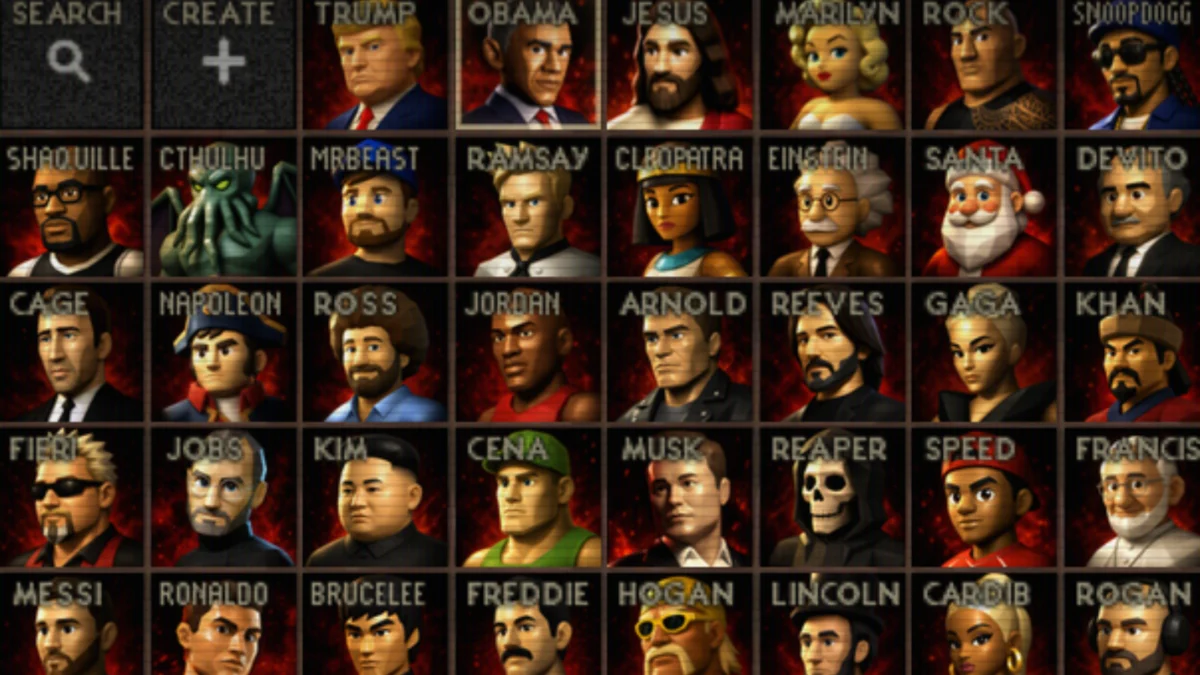
The landscape of retro gaming and fan-driven modifications has reached a new milestone with the release of Smash.fun, a sophisticated browser-based port of the 1999 Nintendo 64 classic, Super Smash Bros. Developed by programmer Thomas Dimson, the project represents more than a simple emulation; it introduces a generative pipeline that allows users to inject themselves, celebrities, and historical figures into the game as fully functional, low-poly fighters. By bridging the gap between modern web technology and legacy console architecture, Smash.fun has created a digital arena where Taylor Swift can engage in combat with Lionel Messi, Elon Musk, or John Cena, all within a standard web browser environment.
The project first gained significant public attention following a social media announcement by Dimson on September 4, 2026. In his unveiling, Dimson articulated that the genesis of the project was a personal desire to see himself represented within the iconic fighting game. “I love Smash 64 but I wish I was in it,” Dimson shared via X (formerly Twitter). This personal ambition led to a complex technical endeavor: hacking the original game code to run via a browser and developing an automated system to generate custom character assets. To date, the platform has already seen the creation of over 1,000 unique fighters, ranging from tech moguls like Steve Jobs and Hideo Kojima to internet personalities such as MrBeast and Snoop Dogg.
The Technical Architecture of Custom Fighter Generation
At the core of Smash.fun is a sophisticated integration of character modeling and the original Super Smash Bros engine. Unlike traditional mods that require manual 3D modeling and skinning—a process that can take days or weeks for a single character—Smash.fun utilizes an automated pipeline. When a user uploads a reference photo and assigns a name, the system processes the image to create a low-poly character model that adheres to the specific aesthetic constraints of the Nintendo 64 hardware.
To ensure the new fighters are playable and balanced within the existing game mechanics, the system maps these custom models onto one of the 12 original fighter "skeletons." In the 1999 original, characters like Mario, Link, Pikachu, and Fox McCloud each possessed unique movement data, hitboxes, and animation sets. By utilizing these existing skeletons as a foundation, Smash.fun ensures that a custom-generated fighter—whether it be Jesus Christ or Donald Trump—moves and attacks with the mechanical reliability of a professionally developed character.
Furthermore, the project’s open-source GitHub page, titled "opensmash," reveals the depth of the integration. The generation process does not stop at the 3D model; it also procedurally generates a character selection portrait, a stock icon for the in-game heads-up display (HUD), a series emblem to represent the character’s "universe," and even a custom announcer call. This holistic approach allows the new characters to feel like native additions to the roster rather than superficial overlays, maintaining the immersion of the original gaming experience.
Navigating the Legal and Ethical Boundaries of Emulation
The release of Smash.fun occurs within a complex legal framework regarding intellectual property and video game emulation. Nintendo, the owner of the Super Smash Bros franchise, is historically protective of its copyrights and has a long-standing reputation for issuing "Cease and Desist" orders to fan projects. Notable examples include the shutdown of the "AM2R" (Another Metroid 2 Remake) project and legal actions against various ROM-hosting websites.
Dimson has implemented several safeguards to distance Smash.fun from direct copyright infringement. Most notably, the website does not host or provide the Super Smash Bros ROM file itself. To utilize the service, players must provide their own legally obtained digital copy of the game. According to the project’s documentation, the ROM and all associated assets remain strictly on the player’s local device. No proprietary Nintendo assets are included in the project’s public source code, nor are they hosted on the Smash.fun servers.
This decentralized approach is designed to comply with fair use and emulation laws, which generally protect the act of creating software that can run legally owned files. However, the use of celebrity likenesses—such as those of Taylor Swift or Lionel Messi—introduces a different set of legal considerations regarding "right of publicity." While the low-poly, transformative nature of the models may offer some protection under parody or artistic expression, the intersection of AI-assisted generation and celebrity intellectual property remains a burgeoning area of legal debate.
The Cultural Significance of the "Impossible Matchup"
The primary draw of Smash.fun lies in its subversion of traditional gaming crossovers. While the official Super Smash Bros. Ultimate for the Nintendo Switch was praised for its massive "Everyone is Here" roster, it was still limited to established video game characters. Smash.fun removes these barriers, leaning into the "meme culture" that defines modern internet interaction.
The roster’s diversity is a testament to the platform’s viral appeal. Users have generated matchups that serve as social commentary or absurdist humor. Battles between Elon Musk and Mark Zuckerberg, or Hideo Kojima and a generic "Executive" character, allow players to dramatize real-world rivalries. The inclusion of figures like The Rock and John Cena bridges the gap between professional wrestling and digital combat, while the presence of historical or religious figures like Jesus Christ highlights the platform’s lack of editorial restriction.
This democratization of game content reflects a broader trend in the industry where players are no longer content with being passive consumers. Through tools like Smash.fun, the player becomes a co-creator, contributing to a communal library of content that evolves in real-time. The fact that the project reached over 1,000 fighters within days of its launch suggests a high demand for personalized, interactive media.
Chronology of the Browser-Based Retro Movement
Smash.fun is the latest entry in a growing timeline of projects aimed at making classic console games accessible through web browsers. This movement has been accelerated by advancements in WebAssembly (Wasm) and WebGL, technologies that allow high-performance code to run efficiently within a browser’s engine.
- Early 2020s: The rise of sophisticated JavaScript-based emulators allowed for the stable play of NES and SNES games in browsers.
- 2024-2025: Projects like the browser port of Super Monkey Ball and its sequel demonstrated that 3D, sixth-generation console games could be rendered with high fidelity without dedicated hardware.
- Early 2026: A version of Super Mario 64 became playable through YouTube’s interface, utilizing interactive video elements to simulate gameplay.
- September 2026: Thomas Dimson launches Smash.fun, moving beyond simple emulation by introducing real-time character generation and injection.
This chronology suggests a shift in the emulation community from preservation (saving old games) to innovation (reimagining old games). By leveraging the "hackability" of older software, developers are finding new ways to keep classic titles relevant for a generation of players who prioritize accessibility and customization.
Broader Implications for the Gaming Industry and AI
The success of Smash.fun provides a glimpse into the future of "User-Generated Content" (UGC). As procedural generation and AI tools become more refined, the barrier to entry for game modding is collapsing. In the past, adding a custom character to a game required knowledge of C++, 3D rigging, and texture mapping. Today, it requires a single photograph and a web connection.
For major game studios, this presents both a challenge and an opportunity. While companies like Nintendo may view these projects as a threat to their brand control, others may see them as a roadmap for future features. The ability for a player to scan their own face into a game and have it automatically rigged and voiced is a feature that many AAA titles have attempted with varying degrees of success. Smash.fun demonstrates that such a feature is not only possible but highly desired by the gaming public.
Furthermore, the project highlights the resilience of the modding community. In an era where digital rights management (DRM) and "always-online" requirements often stifle fan creativity, projects like Smash.fun use open-source principles to ensure that gaming remains a participatory medium. Even the looming threat of legal action has become part of the culture; as noted in the original report, some modders have gone as far as turning a "Cease and Desist" letter into a playable fighter in other Smash mods, signaling a defiant stance against corporate overreach.
Conclusion: The Future of Smash.fun
As Smash.fun continues to grow, its longevity will likely depend on the community’s ability to maintain the "opensmash" repository and the developer’s success in navigating potential legal hurdles. For now, the site remains a vibrant hub of digital experimentation. It stands as a technical marvel that transforms a 27-year-old fighting game into a modern, generative platform, proving that with enough ingenuity, the boundaries between the real world and the Mushroom Kingdom are thinner than ever.
The project ultimately serves as a reminder of the enduring power of the Nintendo 64 era. The simplicity of its 3D geometry and the clarity of its mechanics make it the perfect "sandbox" for 21st-century innovation. Whether one is looking to settle a celebrity feud or simply see themselves standing alongside Mario and Link, Smash.fun offers a unique, albeit unofficial, portal into the history and future of interactive entertainment.




 Joko Widodo
 admin
admin
 Nila Kartika Wati
 Lina Irawan
 Eva Lovia