
 Eva Lovia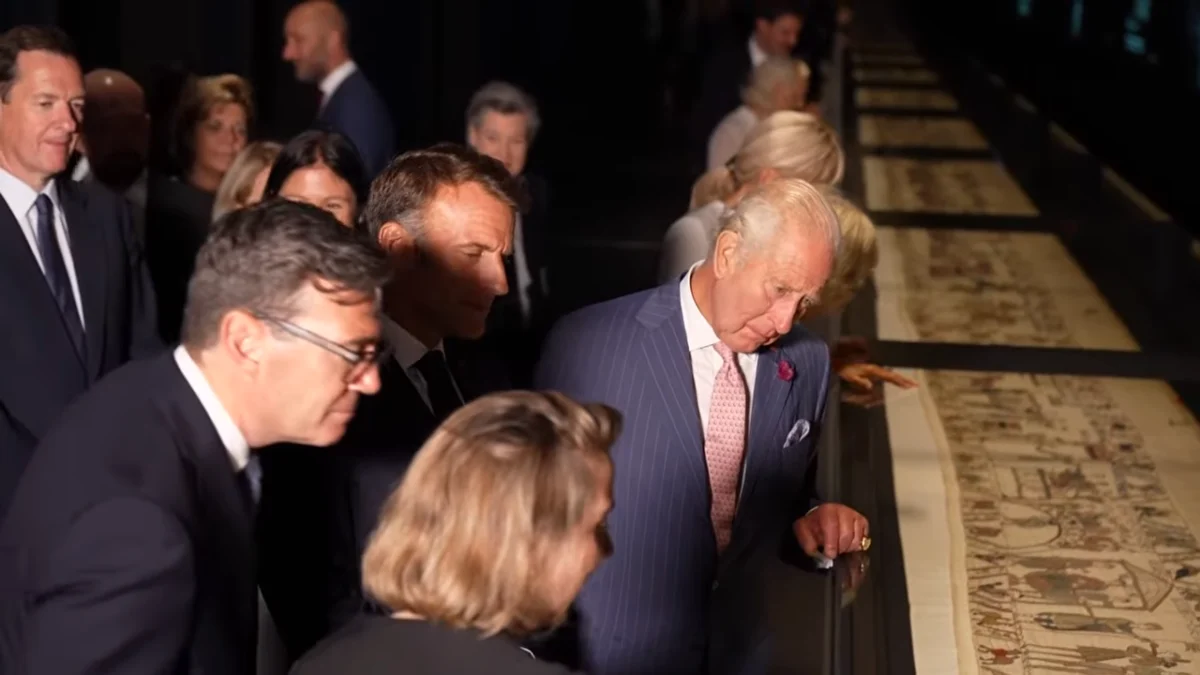
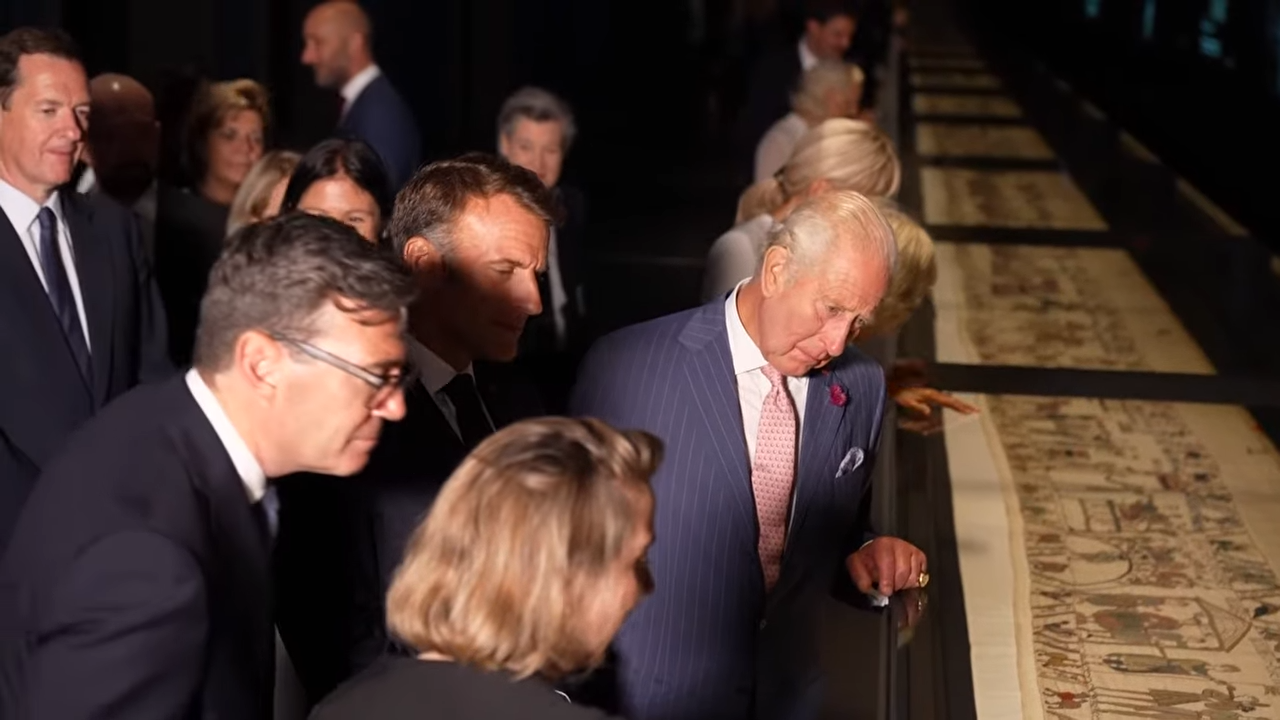
In an event of profound historical and diplomatic significance, the Bayeux Tapestry, a near-millennium-old embroidered masterpiece depicting the Norman Conquest of England, has made its maiden voyage to British soil. For the first time in its 960-year existence, this iconic artifact has left France, marking a monumental occasion in international cultural exchange. King Charles III, alongside French President Emmanuel Macron, officially inaugurated the British Museum’s highly anticipated exhibition, an event that underscores the enduring and intricate relationship between Britain and France.
The Bayeux Tapestry, a sprawling narrative woven in 58 embroidered scenes, meticulously recounts the events leading up to and including the pivotal Battle of Hastings in 1066. This seismic conflict saw William the Conqueror, Duke of Normandy, triumph over Harold Godwinson, the last Anglo-Saxon king of England, fundamentally reshaping the course of British history and establishing a royal lineage that, remarkably, extends unbroken to the current monarch, King Charles III.
The idea of the Bayeux Tapestry embarking on a journey to England had been a subject of discussion for years, with President Macron being a strong advocate for such a cultural exchange. However, the logistics and political will required for such an undertaking were substantial. The loan represents the first time the tapestry has ventured beyond French borders since its creation in the years immediately following the Battle of Hastings. The momentum for this historic loan gained considerable traction following successive state visits by both King Charles and President Macron to each other’s nations, culminating in the official announcement of the loan last year.
The official opening ceremony, held earlier this week, saw President Macron and First Lady Brigitte Macron travel to London to join King Charles and Queen Camilla at the British Museum. President Macron eloquently described the occasion as an "entente amicale" on social media, highlighting the spirit of friendly cooperation that facilitated this extraordinary cultural repatriation.
During the opening, both royal and presidential couples delivered addresses, each underscoring the deep historical and cultural ties that bind their nations. King Charles expressed his profound delight at seeing the tapestry displayed on British soil. "The Bayeux Tapestry tells a story familiar to most people in this country: the events of 1066, the Battle of Hastings and the Norman Conquest – a moment that changed the course of these islands forever," His Majesty remarked. He further elaborated on the personal resonance of the tapestry, noting, "It also tells the story of the beginning of what I like to think of as the French side of my Family’s history in these islands."
The precise origins of the Bayeux Tapestry remain a subject of historical debate. While legend attributes its commission to Queen Mathilda, wife of William the Conqueror, for her husband, alternative scholarly perspectives suggest that William’s half-brother, Bishop Odo of Bayeux, may have commissioned the work. Regardless of its precise genesis, its historical significance is undeniable.
King Charles, in a moment of charming wit, acknowledged his direct lineage to William the Conqueror. He playfully alluded to the complexities of historical claims, stating, "I am informed that the 13th Century Treaty of Paris may sadly affect any claims to be the current duc de Normandie!" This lighthearted remark served to underscore the long and often intertwined history of the British and French monarchies.
Weaving a thread through the historical narrative to contemporary international relations, the King emphasized the enduring connection between Britain and France. "These seventy metres of memory and artistry remind us, therefore, that our two Nations have been bound together for almost a millennium," he stated. "The moments depicted in the Tapestry echo into our own days… It was then, and remains now, a commonplace truth that neither of us can fully tell our own story without the other."
President Macron, in his address, echoed the sentiment of shared history and partnership. He lauded the strong, cooperative relationship between the United Kingdom and France, expressing his hope that the two countries could "forge a bond as close as the threads of this thousand-year-old embroidery." This poetic metaphor encapsulates the delicate yet powerful nature of diplomatic and cultural alliances.
A Glimpse into History: The Bayeux Tapestry’s Narrative
The Bayeux Tapestry is not merely an ancient textile; it is a visual chronicle of a pivotal moment in European history. Measuring approximately 70 meters (230 feet) in length and 50 centimeters (20 inches) in height, it is made of linen embroidered with woollen yarn in eight different colours. The intricate stitching, a testament to the skill of its anonymous creators, depicts a sweeping panorama of events, from the political machinations preceding the invasion to the climactic battle and its immediate aftermath.
Key scenes include the death of Edward the Confessor, the coronation of Harold, Harold’s alleged oath to William, the comet that presaged disaster, the mustering of Norman forces, the sea crossing, and the brutal fighting at Hastings. The tapestry offers a unique, albeit Norman-centric, perspective on these events, providing invaluable insights into the military tactics, societal structures, and political ideologies of the 11th century.
The Journey of a Masterpiece: From Normandy to London
The journey of the Bayeux Tapestry from its home in Bayeux Cathedral, Normandy, to the British Museum is a testament to meticulous planning and international cooperation. For centuries, the tapestry remained in Bayeux, rarely venturing far from its ecclesiastical home. During periods of conflict, it was hidden for safekeeping, notably during World War II when it was moved by the Nazis, only to be recovered and returned to France.
The idea of a temporary exhibition in the UK had been discussed for decades, but the fragility of the tapestry and the complex security and conservation requirements presented significant hurdles. The successful loan signifies a new era of trust and shared commitment to cultural heritage preservation between France and the United Kingdom.
The exhibition at the British Museum, titled "The French in England," offers a comprehensive look at the tapestry and its historical context. It is complemented by a range of related artifacts and scholarly interpretations, providing visitors with a multi-faceted understanding of the Norman Conquest and its lasting impact.
Supporting Data and Context
- Creation Date: Believed to have been created between 1070 and 1080, within a decade of the Battle of Hastings.
- Dimensions: Approximately 70 meters (230 feet) long and 50 centimeters (20 inches) high.
- Materials: Linen cloth with woollen embroidery.
- Depicted Events: Primarily the lead-up to and the Battle of Hastings in 1066, a turning point in English history.
- Historical Significance: The tapestry is considered one of the most important surviving artworks of the medieval period, offering invaluable insights into 11th-century history, art, and culture.
- Previous Movements: While primarily housed in Bayeux, the tapestry has been moved for safekeeping on several occasions, most notably during wartime. Its loan to the UK marks its most significant international journey.
- Exhibition Duration: The Bayeux Tapestry is on display at the British Museum until July 2027.
- Public Demand: Tickets for the initial four months of the exhibition sold out within 24 hours of release, highlighting the immense public interest and the cultural significance of this event. A second release of tickets is scheduled for late October, anticipating continued high demand.
Official Responses and Diplomatic Undertones
The joint inauguration by King Charles and President Macron carries significant diplomatic weight. It serves as a powerful symbol of the contemporary strength of the Franco-British relationship, demonstrating a shared commitment to cultural heritage and historical understanding. The speeches delivered by both leaders emphasized not only the historical narrative of conquest and change but also the evolving narrative of partnership and cooperation between their two nations.
The "entente amicale" referred to by President Macron reflects a broader effort to strengthen bilateral ties in various sectors, including defense, economy, and cultural exchange. This exhibition can be seen as a flagship initiative within this ongoing diplomatic agenda. The visible presence of both heads of state underscores the high priority placed on this cultural bridge-building.
Broader Impact and Implications
The loan of the Bayeux Tapestry to Britain is more than just a cultural event; it has several broader implications:
- Reinforcing Cultural Diplomacy: Such high-profile cultural exchanges are vital tools in modern diplomacy, fostering goodwill and mutual understanding between nations. This exhibition has undoubtedly strengthened the cultural ties between France and the UK.
- Economic Benefits: The exhibition is expected to attract hundreds of thousands of visitors to London, providing a significant boost to the city’s tourism sector and generating revenue for hospitality and related industries. The rapid sell-out of initial tickets indicates the potential for sustained economic impact.
- Educational Value: For historians, art enthusiasts, and the general public, the exhibition offers an unparalleled opportunity to engage directly with a primary source document of immense historical importance. It provides a tangible link to a formative period in both British and French history, encouraging deeper learning and appreciation.
- Symbol of Reconciliation and Shared Heritage: While the tapestry depicts a conquest, its exhibition in Britain can be viewed as a modern-day symbol of reconciliation and the acknowledgment of a shared, albeit complex, heritage. It demonstrates a mature approach to history, recognizing that past conflicts have shaped the present and can be a foundation for future cooperation.
- Setting Precedents for Future Loans: The successful negotiation and execution of this loan, overcoming considerable logistical and conservation challenges, could pave the way for future ambitious international loans of significant cultural artifacts. It sets a benchmark for international collaboration in safeguarding and sharing global heritage.
The presence of the Bayeux Tapestry in London is a momentous occasion, a tangible thread connecting the past to the present and weaving a stronger narrative of Franco-British understanding. As the exhibition continues, it serves as a powerful reminder of the enduring impact of historical events and the vital role of cultural diplomacy in fostering lasting international relationships. The tapestry, a silent witness to centuries of change, now stands as a vibrant symbol of enduring partnership.



 Joko Widodo
 admin
admin
 Nila Kartika Wati
 Lina Irawan
 Pevita Pearce