
 Ana Megawati
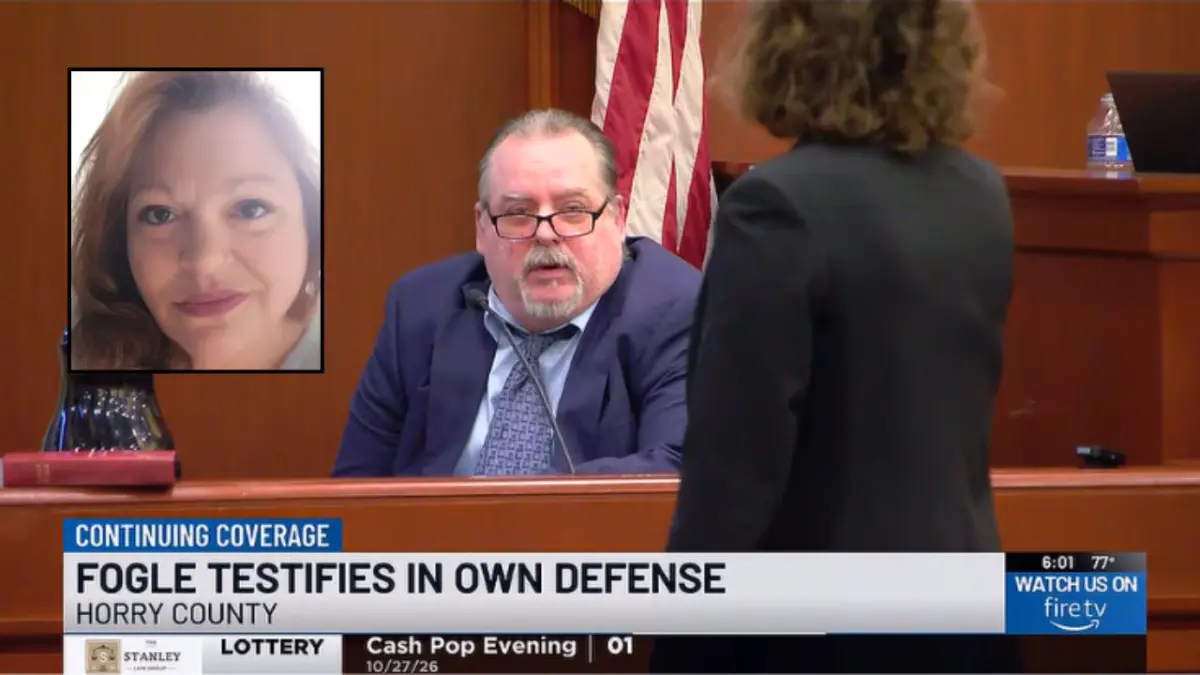
A South Carolina man has been sentenced to spend the remainder of his life behind bars following his conviction for the murder of his girlfriend, whose body was discovered buried beneath a firepit at his residence nearly two years after her disappearance. Sheridan Dirk Fogle, 56, was found guilty of murder on Thursday, concluding a trial that brought to light a disturbing narrative of domestic violence, deception, and a prolonged concealment of a heinous crime. The victim, 51-year-old Penni Whiteside, was identified after her remains were exhumed from Fogle’s Myrtle Beach property, bringing a tragic end to what had been a two-year missing persons investigation. The case has drawn significant attention, not only for the chilling manner in which Whiteside’s body was hidden but also for the defendant’s shifting accounts and prior history of domestic abuse.
The Verdict and Sentencing: Justice for Penni Whiteside
On Thursday, after days of compelling testimony and evidence presentation, a South Carolina jury delivered a guilty verdict against Sheridan Dirk Fogle for the murder of Penni Whiteside. The conviction carries an automatic sentence of life in prison without parole, a stark reflection of the gravity of the crime. The court’s decision underscores the justice system’s commitment to holding perpetrators of domestic violence and murder accountable, particularly in cases involving such extreme efforts to conceal the truth. The sentencing marks the culmination of an intensive investigation that began with a missing person report and evolved into a complex murder inquiry, ultimately revealing the brutal circumstances of Whiteside’s death and Fogle’s desperate attempts to evade responsibility.
Discovery of a Macabre Secret
The macabre discovery of Penni Whiteside’s remains came in June 2024, at Sheridan Fogle’s Myrtle Beach home, approximately two years after authorities believe she was killed in March or April 2022. The breakthrough in the case was initiated by a series of suspicious remarks made by Fogle himself. According to an arrest warrant obtained by local ABC affiliate WPDE, Fogle confided in neighbors, telling them he had buried "something" in his backyard. His subsequent behavior—becoming "territorial of the area" whenever anyone approached the firepit—further fueled suspicions among his acquaintances, who eventually alerted law enforcement.
This critical piece of information prompted investigators to obtain a search warrant for the property. Armed with the warrant, forensic teams and law enforcement personnel meticulously excavated the area around the firepit. Their efforts led to the grim discovery of a wooden box, which contained human remains. Through forensic analysis, these remains were later positively identified as those of Penni Whiteside. The autopsy revealed the cause of death to be strangulation, a violent act that offered a stark contrast to Fogle’s later claims of self-defense. The deliberate burial, coupled with Fogle’s subsequent efforts to live a normal life, painted a chilling picture of calculated concealment.
A Timeline of Deception and Violence
The tragic narrative of Penni Whiteside’s death is punctuated by a disturbing timeline of escalating conflict and deliberate deception. Her brother reported her missing in May 2022, prompting an initial police inquiry. When interviewed by authorities at that time, Fogle asserted that Whiteside had simply left on her own accord, claiming she intended to return for her belongings. This statement, later proven false by his own admission, was the first layer of deceit in his intricate web of lies.
Pre-Meditation and Domestic Abuse History:
The relationship between Fogle and Whiteside was reportedly fraught with tension and a history of domestic violence, which provides crucial context for the eventual murder. The Myrtle Beach Sun News reported that Fogle had a documented history of domestic violence against Whiteside. In November 2021, just months before her disappearance, police responded to their shared apartment after Fogle allegedly punched Whiteside in the chest, causing her to fall. Approximately a month later, in December 2021, he was reportedly involved in another incident where he stole her credit and debit cards. These incidents were not isolated; they represent a pattern of abuse that often precedes more severe acts of violence in domestic relationships. Such a history serves as a critical red flag, often indicating a heightened risk for victims.
The Murder and Concealment:
Investigators believe Whiteside was killed in March or April 2022. During his police interview, Fogle eventually confessed to the killing, though he attempted to frame it as an act of self-defense. He recounted grabbing Whiteside by the throat, stating she "hit the floor." He then claimed he "panicked" and, after getting "high," proceeded to conceal her body. The chilling details of the concealment reveal a calculated, multi-day effort: "I put her in the box, and I kept the box in the house for like two days… it took me like three days to get all that done," he told police. The wooden box used to hide Whiteside’s body was not an ordinary container; it was custom-built for Fogle by his grandfather, intended as a keepsake, making its use in this context even more disturbing.
Living with the Secret:
Perhaps one of the most unsettling revelations was Fogle’s admission that he continued to live in the home with Whiteside’s body for days. He even entertained another man who spent the night, discussing the possibility of becoming roommates. "I was still trying to act like everything was normal," Fogle stated in the video played at trial. "I didn’t know what to do with this body in my [expletive] bedroom." This period of profound deception highlights a deep psychological detachment, allowing him to maintain a facade of normalcy while harboring a gruesome secret. The body remained hidden under the firepit for roughly two years until Fogle’s own careless remarks led to its discovery in June 2024, finally unraveling his carefully constructed deception.
Fogle’s Shifting Narrative and Legal Scrutiny
Throughout the investigation and trial, Sheridan Fogle presented inconsistent and often contradictory accounts of the events leading to Penni Whiteside’s death. His narrative evolved from outright denial of any knowledge of her whereabouts to an admission of the killing, coupled with a claim of self-defense.
Police Interview Confession:
During his interview with police following his arrest, a video of which was played for the jury, Fogle detailed his version of the fatal encounter. He asserted that Whiteside "came at him" with a knife. In response, he claimed, "I grabbed her by the throat, she hit the floor… by the time it was over, I panicked, I didn’t know what else to do." This initial confession, while admitting to the act, sought to mitigate his culpability by portraying himself as a victim reacting to a threat. However, the subsequent actions—getting high, concealing the body for days, and burying it—contradicted the narrative of pure panic and suggested a more deliberate cover-up.
Trial Testimony and Self-Defense Claim:
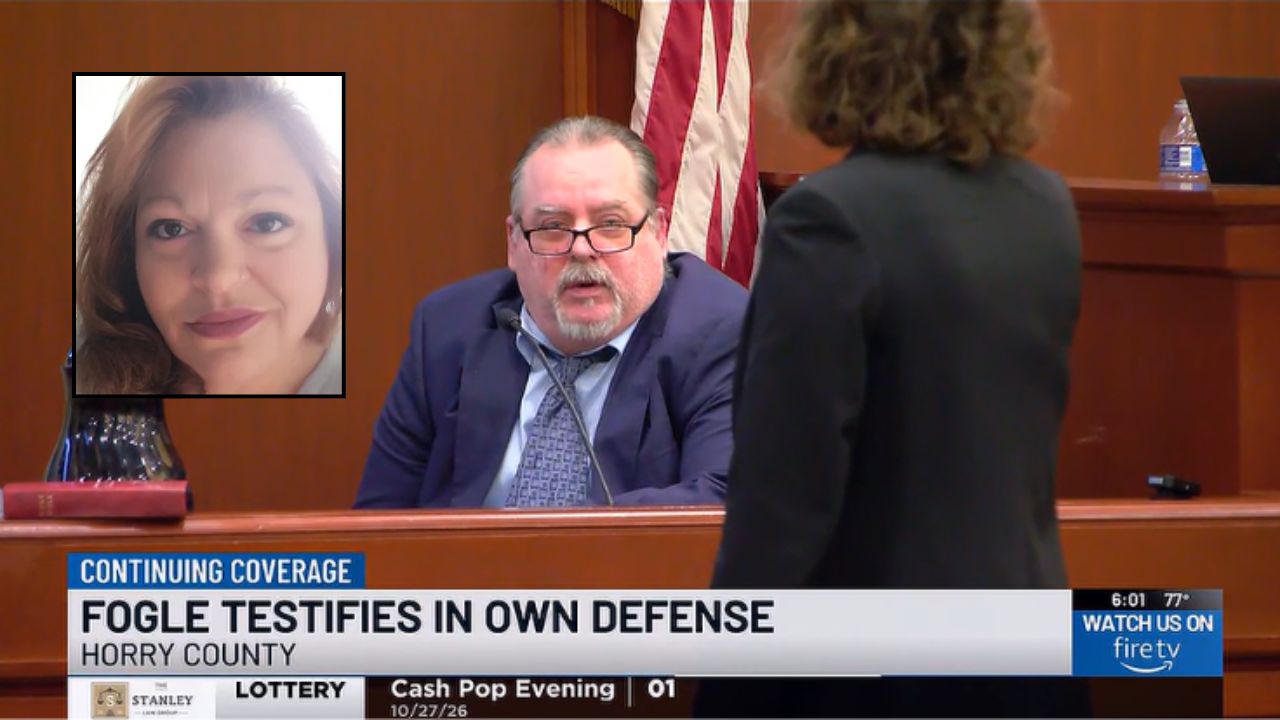
Taking the stand in his own defense, Fogle reiterated a version of events centered on self-defense, though his testimony often veered into explanations of uncontrollable anger. "I get angry, and I snap… and I say things that I don’t normally do," he testified, according to WPDE. He claimed, "I lost it… I was in fear for my life." He asserted that he "blacked out" during the struggle.
However, prosecutor Nancy Livesay meticulously dismantled Fogle’s defense during cross-examination. She pointed out the inherent contradiction between "snapping" due to anger and acting in self-defense. "That’s different than self-defense, right?" Livesay pressed. Fogle, despite the prosecutor’s probing, continued to insist on his self-defense claim: "I wouldn’t say that at all. I was trying to defend myself, and I blacked out, period." The prosecution highlighted that genuine self-defense implies a reasonable and proportionate response to an immediate threat, not an uncontrolled outburst of anger.
The Lie and the New Life:
Livesay also aggressively challenged Fogle’s earlier deception to police, when he falsely claimed Whiteside had left on her own. "When you told police she said she was coming back for her stuff, that wasn’t true, was it?" Livesay asked. Fogle reluctantly conceded, "No ma’am." This admission further eroded his credibility.
Perhaps most damning was the prosecution’s revelation of Fogle’s life post-murder. While Fogle claimed he had "carried" the burden of killing Whiteside for two years, and that it was "time for it to come over," Livesay painted a different picture. She noted that Fogle had remarried and relocated to Orangeburg, effectively starting a new life, while Whiteside’s body lay buried in his backyard. "During the two years you struggled with this, while Penni was facedown in that box… you had remarried and moved to Orangeburg and started a new life. Is that correct?" she questioned. Fogle’s one-word response, "Yes," starkly highlighted the profound disconnect between his purported remorse and his actions. This detail underscored the prosecution’s argument that Fogle was not a man consumed by guilt but rather one who sought to escape the consequences of his actions and move on.
The Broader Context: Domestic Violence in South Carolina
Penni Whiteside’s tragic death is a stark reminder of the pervasive issue of domestic violence, a crisis that continues to plague communities across the nation, including South Carolina. The state has historically faced significant challenges in addressing domestic violence, often ranking among the worst states for the rate of women killed by men. The fact that Fogle had a documented history of domestic violence against Whiteside, including arrests just months before her disappearance, underscores the critical importance of recognizing warning signs and providing robust support systems for victims.
Domestic violence is defined as a pattern of abusive behaviors by one partner against another in an intimate relationship, such as marriage, cohabitation, dating, or within the family. It can take many forms, including physical, emotional, sexual, and financial abuse. In Whiteside’s case, the documented incidents of Fogle punching her and stealing her cards are textbook examples of physical and financial abuse, often precursors to more severe violence.
Statistics from organizations like the National Coalition Against Domestic Violence (NCADV) indicate that nearly 1 in 4 women and 1 in 7 men have experienced severe physical violence by an intimate partner in their lifetime. Furthermore, the presence of a weapon, strangulation attempts, and a history of domestic violence are all significant risk factors for intimate partner homicide. Whiteside’s death by strangulation, coupled with Fogle’s prior violent acts, fits a tragically common pattern. The reluctance of victims to report abuse, fear of retaliation, and the complex cycle of violence often make these situations difficult to escape without external intervention.
Implications for Law Enforcement and Community Vigilance
The resolution of Penni Whiteside’s case also highlights the crucial role of community vigilance and persistent law enforcement efforts. The initial missing persons report, followed by Fogle’s suspicious behavior noticed by neighbors, proved instrumental in cracking the case. Neighbors who observe unusual activities or hear concerning remarks play a vital role in public safety, and their willingness to come forward can be the difference between a cold case and a solved murder. This case serves as a powerful testament to the adage "if you see something, say something."
For law enforcement, the investigation underscores the challenges of missing persons cases, especially when the perpetrator actively conceals evidence and deceives authorities. It also emphasizes the importance of thorough follow-up on domestic violence reports. Each incident, no matter how seemingly minor, can be a precursor to a more severe crime. Improved coordination between domestic violence support services and law enforcement agencies is critical to ensure that victims receive the protection and resources they need, and that perpetrators are held accountable before their violence escalates.
A Life Sentence: The Pursuit of Justice
Sheridan Dirk Fogle’s life sentence without parole is the maximum penalty available for murder in South Carolina, reflecting society’s condemnation of his actions. This outcome ensures that Fogle will no longer pose a threat to the community and provides a measure of justice for Penni Whiteside and her grieving family. While no judicial outcome can ever fully heal the wounds of such a loss, the verdict brings closure and acknowledges the gravity of the crime.
The case of Penni Whiteside stands as a somber reminder of the devastating impact of domestic violence and the lengths to which some individuals will go to conceal their crimes. It reinforces the importance of community awareness, robust law enforcement, and a justice system committed to protecting victims and holding perpetrators accountable. As the legal proceedings conclude, the focus now shifts to remembering Penni Whiteside, advocating for stronger protections against domestic violence, and ensuring that similar tragedies can be prevented in the future.




 Nila Kartika Wati

 Eva Lovia

 Lina Irawan

 Yuyun Lusiyani

 Joko Widodo
