
 Pevita Pearce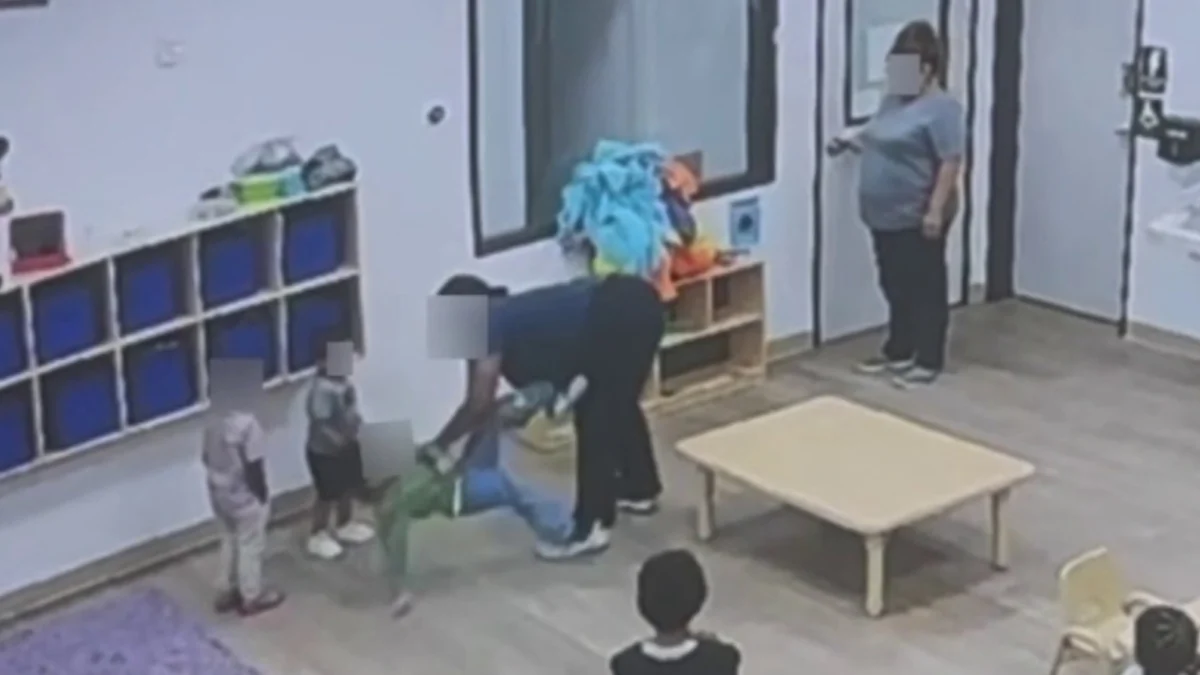
A Fort Worth family has initiated a legal battle against a local Montessori academy, seeking more than $1 million in damages following allegations that a substitute teacher orchestrated and encouraged physical altercations between toddlers. The lawsuit, filed on September 4 in Tarrant County, accuses Arka Risinger Educators LLC—the operator of Arka Montessori Academy of Risinger—of gross negligence and premises liability. The legal action centers on a disturbing incident captured on surveillance footage, which the plaintiffs’ attorney has characterized as a "toddler fight club."
The plaintiffs, Heather and Richard Harris, allege that their four-year-old son, identified in court documents as U.H., was subjected to physical abuse and psychological trauma at the hands of a staff member and another student. The incident has raised significant questions regarding the safety protocols, hiring practices, and regulatory oversight of childcare facilities in North Texas.
Detailed Chronology of the April 27 Incident
The events leading to the lawsuit occurred on the afternoon of April 27, 2024. According to the complaint, the atmosphere within the daycare shifted as the workday drew to a close and staff members began their departures. At approximately 4:30 p.m., U.H. was moved into a combined afternoon classroom, a common practice in many childcare facilities to manage declining student-to-teacher ratios during pickup hours.
The initial supervision of the combined class was handled by teacher Jacqueline De Luna. Court documents state that while De Luna’s attention was diverted elsewhere, a fellow four-year-old student—the son of another employee—struck U.H. in the back. While De Luna reportedly intervened to separate the two children, the situation escalated significantly when Chynia Johnson, a substitute teacher and the mother of the other child, entered the room to take over coverage.
Surveillance footage, which serves as the primary evidence in the case, allegedly shows Johnson’s son pointing at U.H. and pushing him in the chest. Rather than de-escalating the conflict, the lawsuit claims Johnson actively participated in the aggression. When U.H. attempted to defend himself by raising his hands, Johnson allegedly grabbed him by the arm, shook him violently, and shoved him away.
The complaint further details a sequence of events that the Harris family’s attorney, Russell Button, describes as a choreographed assault. Johnson is alleged to have spoken to her son and then stepped aside, providing him with a clear path to charge at U.H. When the other boy fell during the ensuing scuffle, Johnson reportedly reacted by grabbing U.H. with both arms, shaking him, and screaming directly into his face.
Allegations of Physical Assault and Facilitated Combat
The most severe allegations involve the period when De Luna returned to the classroom. Instead of reporting the conflict, Johnson is accused of dragging U.H. toward her son while verbally encouraging the boy to kick and hit him. The lawsuit describes a harrowing moment where Johnson allegedly held U.H. by the wrist and used her leg to sweep his feet out from under him. This maneuver caused the four-year-old to crash onto the hardwood floor.
Throughout this sequence, the lawsuit alleges that De Luna was present and watching the events unfold but failed to intervene or protect U.H. from the substitute teacher’s actions. This failure to act forms a central pillar of the negligence claim against the daycare center, suggesting a systemic breakdown in the facility’s duty of care.
The Discovery and Immediate Aftermath
The incident came to light when Heather Harris arrived at Arka Montessori to collect her son. She reportedly found U.H. crying hysterically, a departure from his usual demeanor. When she questioned the staff about his distress, employees initially provided a sanitized version of events, claiming the two boys had engaged in a typical playground scuffle and had been promptly separated.
Dissatisfied with the explanation and noting her son’s visible distress, Mrs. Harris demanded to review the facility’s internal surveillance footage. The daycare, which had marketed itself to the Harris family based on its "round-the-clock" camera system and high educational standards, eventually allowed the review.
"Nothing prepared me for seeing my child aggressively handled and attacked by another child at a teacher’s orders," Heather Harris stated in a public release. "My heart just shattered into pieces because I couldn’t be there to protect my son from being harmed, all while he was being cared for by a daycare that I trusted."
Medical evaluations following the incident revealed that U.H. suffered physical injuries, including bruises and scratches on his arms. More significantly, the child has reportedly suffered from post-traumatic headaches and severe anxiety. The lawsuit states that these psychological impacts have made it difficult for the child to reintegrate into a classroom environment, as he now associates childcare facilities with physical danger.

Regulatory History and Safety Violations
An investigation into Arka Montessori Academy by the Texas Health and Human Services Commission’s (HHSC) Child-Care Licensing Division has yielded troubling findings. The state agency cited the facility for multiple violations stemming directly from the April 27 incident, including the use of prohibited disciplinary methods. These methods specifically included grabbing, pulling, yelling at, and physically restraining a child in a manner that exceeds reasonable necessity.
Furthermore, the facility was cited for a fundamental failure to ensure that caregivers protected the children under their supervision. However, the April incident appears to be part of a broader pattern of non-compliance. Since opening its doors in January 2024, the Arka Montessori Academy of Risinger has reportedly accumulated between 16 and 21 safety citations.
Records indicate that prior deficiencies included high-risk scenarios such as:
- Children being left unattended in classrooms.
- Minors being left unsupervised in outdoor play areas.
- General failures in maintaining the minimum standards for health and safety as mandated by Texas law.
While an inspection on August 20, 2024, reportedly found no new deficiencies, the sheer volume of violations within the facility’s first nine months of operation has become a focal point for the plaintiffs’ legal team.
Legal Arguments and Financial Redress
The lawsuit filed by the Harris family seeks in excess of $1 million in monetary relief. The legal filing outlines several specific causes of action:
- Negligence: The claim that the daycare failed to exercise the degree of care that a reasonably prudent childcare provider would have exercised under similar circumstances.
- Gross Negligence: A higher standard of fault, alleging that the daycare’s actions (or inactions) demonstrated a conscious indifference to the safety and welfare of the children in its care.
- Premises Liability: The argument that the daycare maintained an unsafe environment where staff members posed a direct physical threat to students.
- Negligent Hiring and Supervision: The allegation that the facility failed to properly vet, train, or supervise Chynia Johnson and Jacqueline De Luna.
Attorney Russell Button emphasized that the lawsuit is intended to hold the facility accountable and serve as a warning to other providers. "This place looked like a child fight club. It felt like one," Button told local media. "This lawsuit puts all daycares on notice that the safety of our children is non-negotiable."
Broader Implications for the Childcare Industry
The case against Arka Montessori Academy arrives amid a period of heightened scrutiny for the Texas childcare industry. State regulators are frequently overwhelmed by the volume of facilities, and parents often rely on the "brand" of a school—such as the Montessori name—as a proxy for quality.
The Montessori method, developed by Maria Montessori, emphasizes independence and respect for a child’s natural psychological development. The allegations in this case represent a complete antithesis to those pedagogical values. This discrepancy highlights a growing concern in the industry where private franchises may adopt a prestigious educational label without strictly adhering to the rigorous staffing and behavioral standards associated with it.
Moreover, the role of "substitute coverage" in this incident points to a common vulnerability in childcare centers: the "end-of-day" transition. As primary teachers clock out, classrooms are often consolidated, and substitute or administrative staff may step in. This period is statistically higher risk for supervision lapses, a fact that safety experts suggest requires more robust institutional oversight.
Current Status of the Parties Involved
Chynia Johnson is no longer employed by Arka Montessori Academy. Despite the severity of the allegations and the findings by the Texas Health and Human Services Commission, no criminal charges have been filed against Johnson or De Luna as of the date of the lawsuit’s filing. The Fort Worth Police Department has not released a statement regarding any ongoing criminal investigation into the matter.
The Harris family continues to seek specialized care for their son to address the ongoing psychological trauma. Richard Harris expressed the family’s sense of betrayal, noting that they had meticulously researched facilities, choosing Arka specifically for its perceived transparency and security measures. "The trust that I put in this daycare, they failed us," he said.
As the case moves toward the discovery phase, the legal community and parental advocacy groups will be watching closely. The outcome could set a significant precedent for how Texas courts value the psychological well-being of minors in the context of institutional negligence and the degree of liability assigned to childcare corporations for the intentional acts of their employees.




 Yuyun Lusiyani
 Joko Widodo
 Jia Lissa
 admin
admin
