
 Nana Wu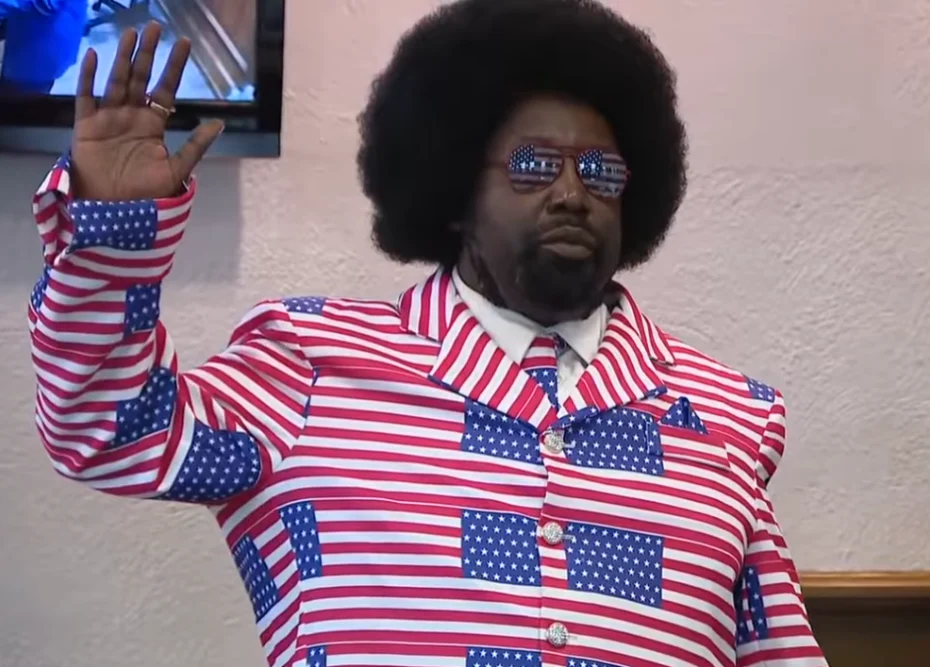
The ongoing defamation trial involving musician Joseph Foreman, widely known as Afroman, and the Adams County Sheriff’s Office in Ohio has become a compelling legal drama, offering a unique intersection of celebrity, law enforcement accountability, and the far-reaching impact of viral content. The trial, which commenced recently, is unfolding with a series of events and courtroom testimonies that are captivating legal observers and the public alike, particularly due to Afroman’s strategic and flamboyant courtroom attire.
The genesis of this legal battle dates back to August 2022, when deputies from the Adams County Sheriff’s Office executed a search warrant at Afroman’s residence. The warrant was reportedly issued on grounds of drug trafficking and, notably, kidnapping, a charge that many, including Afroman, found bewildering. The subsequent search yielded minimal evidence: a few marijuana joints and legal hemp products, along with a vape pen. No arrests were made, and no charges were ultimately filed. Investigations later suggested that the warrant itself may have been hastily compiled, potentially containing boilerplate language that was not adequately purged, leading to the inclusion of the erroneous kidnapping allegation.
During the raid, however, deputies caused significant damage to Afroman’s property, including his front door and gate. Furthermore, a sum of $400 in cash was reportedly taken by the officers, which was later attributed to a "miscount." Crucially, Afroman’s home security system captured the entire incident on video. The footage depicted deputies engaging in a series of actions that many found unusual, including a notable instance where officers cautiously approached a lemon pound cake situated on a kitchen counter. Despite attempts by the deputies to disable the security cameras by cutting power, they were not entirely successful, leaving Afroman with substantial video evidence of the raid.
In response to what he perceived as an unjustified and intrusive raid, Afroman, a musician known for his distinctive style and humor, ingeniously transformed the raid footage into a pair of viral songs and music videos: "Lemon Pound Cake" and "Will You Help Me Repair My Door." These videos, released in early 2023, gained widespread traction across social media platforms, showcasing the raid’s more absurd moments and Afroman’s artistic interpretation of the events. The popularity of these videos, however, led to an unexpected legal repercussion.
The Lawsuit and the Streisand Effect
In March 2023, several deputies involved in the August 2022 raid initiated a lawsuit against Afroman. They alleged that his use of their images in his music videos subjected them to "emotional distress, embarrassment, ridicule, loss of reputation, and humiliation." This legal action, from its inception, was viewed by many as a misguided attempt to silence criticism and avoid accountability, potentially triggering what is known as the Streisand Effect – where an attempt to suppress information or silence an individual inadvertently amplifies their reach and visibility.
The current defamation trial is now serving as a stark illustration of this phenomenon. Afroman, far from being silenced, has embraced the courtroom as a stage. His decision to appear in a full American flag suit has been interpreted as a deliberate and powerful statement, signaling his understanding of the public platform the trial has provided. Legal reporter Meghann Cuniff has been diligently documenting the proceedings on her Instagram account, sharing key moments and testimonies that highlight the unfolding narrative.
Afroman’s Defense: The Root Cause of the "Distress"
A cornerstone of Afroman’s defense, as articulated in his courtroom testimony, is the fundamental argument that the deputies’ alleged "emotional distress" is a direct consequence of their own actions. He has asserted that none of the ensuing events – the creation of the songs, the viral spread of the videos, or the subsequent claims of humiliation – would have occurred had the sheriff’s office not conducted the raid in the first place. This simple yet potent argument underscores the idea that the deputies initiated the sequence of events that led to their current predicament.
When pressed by the plaintiffs’ attorneys about the perceived unfairness of his portrayal of the deputies, Afroman reportedly responded with a remark that has been widely shared, suggesting a pragmatic and somewhat defiant stance. His defense also hinges on the principles of free speech, emphasizing his right to create humorous content for entertainment and, critically, to recoup the costs associated with the property damage incurred during the raid. The songs, in this context, are not merely artistic expressions but also a means of seeking financial redress for the destruction of his property.
Key Testimonies and Emerging Defenses
The trial has seen several pivotal testimonies that appear to be undermining the deputies’ claims. Sergeant Randolph "Randy" Walters Jr., one of the plaintiffs, reportedly conceded on the witness stand that much of the public commentary and criticism directed at him, which he claims caused him distress, constitutes statements of opinion rather than fact. In defamation law, a successful defense often rests on the distinction between factual assertions and expressions of opinion. If the allegedly defamatory statements are deemed opinions, they are generally not actionable. This admission from a plaintiff is a significant development that could weaken their case considerably.

Another plaintiff, Deputy Shawn Cooley, has reportedly expressed particular distress over being nicknamed "Lemon Pound Cake" by the public, a moniker directly derived from the raid footage. His complaint centers on the perceived ridicule associated with this nickname, stemming from his cautious interaction with the dessert during the search. However, the defense has introduced testimony from Cooley’s ex-wife, who reportedly stated under oath that Cooley was aware the song was intended as a joke and even found humor in it himself. This revelation directly contradicts his claims of severe emotional distress and undermines the sincerity of his complaint.
The implications of these testimonies are substantial. The deputies’ lawsuit, intended to protect their reputations and seek compensation for emotional harm, is instead exposing them to further public scrutiny and, in the eyes of many, solidifying the perception that they are overreacting to criticism. The juxtaposition of a law enforcement officer claiming deep emotional suffering over a humorous nickname, while evidence suggests he previously found it amusing, highlights the perceived absurdity of their legal pursuit.
Broader Implications: Accountability and Free Speech
Beyond the immediate legal drama, the Afroman trial raises significant questions about accountability for law enforcement officers and the robust protections afforded by the First Amendment. The situation exemplifies a recurring pattern where public servants, when faced with public criticism or embarrassment stemming from their professional conduct, may resort to legal means to silence dissent. This includes actions such as arresting individuals for filming police, seizing personal devices during investigations, or charging citizens with offenses that appear to be retaliatory.
The underlying message that critics often perceive from such legal actions is that law enforcement officers can operate with a degree of impunity, and any attempt to hold them accountable through public commentary or artistic expression will be met with punitive legal measures. The cost of such accountability, it is argued, is deliberately made prohibitively high to discourage future challenges.
Afroman’s defense, however, offers a counter-narrative. By appearing in his symbolic attire and calmly articulating his perspective, he has presented a clear and principled stand for free speech and the right to comment on the actions of public officials. His argument that he has every right to use his own security footage to critique an allegedly unwarranted raid resonates with many who believe in transparency and accountability in law enforcement.
The Verdict of Public Opinion and the Streisand Effect’s Triumph
As the trial progresses, the narrative is increasingly tilting in favor of Afroman, not just in legal terms but in the court of public opinion. The deputies’ decision to sue has inadvertently amplified the reach of Afroman’s videos and brought renewed attention to their conduct during the raid. This outcome is a textbook example of the Streisand Effect, where attempts to suppress information lead to its wider dissemination.
The situation serves as a potent reminder that in the digital age, attempts to control narratives can backfire spectacularly. The legal system, in this instance, has become an unintentional catalyst for further exposure, transforming a musician’s artistic response to a perceived injustice into a mainstream legal spectacle.
The Adams County Sheriff’s Office, by pursuing this lawsuit, has found itself in a position where their actions are under intense public scrutiny, and their own testimonies are contributing to the narrative they sought to suppress. The trial is not only about defamation; it is a broader discussion about the balance between the public’s right to know and criticize, and the rights of individuals, including law enforcement officers, to be free from unwarranted reputational harm.
Ultimately, the Afroman defamation trial is a testament to the power of artistic expression, the complexities of free speech in the face of perceived overreach by authority, and the unpredictable consequences of legal action in the era of social media. The unfolding events promise to continue to be a compelling case study in the intersection of law, celebrity, and public accountability, with the "Lemon Pound Cake" nickname now etched indelibly in the annals of courtroom folklore.




 Yuyun Lusiyani
 Joko Widodo
 Eva Lovia
 Pevita Pearce
 admin
admin
 Lina Irawan