
 Jia Lissa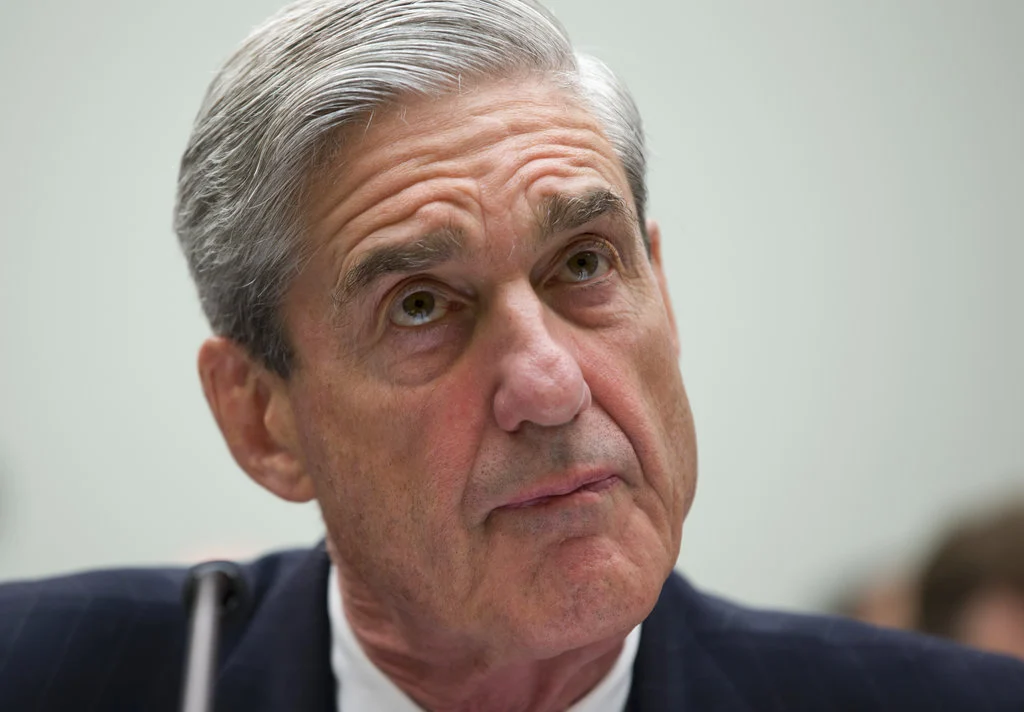
The death of Robert S. Mueller III, the former Director of the Federal Bureau of Investigation and the Special Counsel who led the inquiry into Russian interference in the 2016 United States presidential election, has reignited a profound national debate over his work, his character, and the institutional integrity of the American justice system. Mueller, who passed away at the age of 81, leaves behind a legacy defined by decades of public service under both Republican and Democratic administrations, yet his final chapter remains one of the most polarizing periods in modern political history. While his supporters view him as a paragon of institutional stability and the rule of law, his detractors, most notably former President Donald Trump, have characterized his work as a partisan "hoax." The news of his passing was met with a starkly divided response, reflecting the deep-seated cultural and political schisms that the 2017–2019 investigation laid bare.
A Lifetime of Public Service: From Vietnam to the FBI
Robert Swan Mueller III was born into a tradition of service. A graduate of Princeton University and the University of Virginia School of Law, he interrupted his education to join the United States Marine Corps during the Vietnam War. Serving as a second lieutenant, Mueller led a rifle platoon and earned the Bronze Star with "V" device for valor, two Navy Commendation Medals, the Purple Heart, and the Vietnamese Cross of Gallantry. His military background deeply informed his later approach to law enforcement, instilling a rigid sense of discipline, a preference for chain-of-command protocols, and a reputation for being a "straight arrow" prosecutor.
Mueller’s career in the Department of Justice (DOJ) spanned several decades. He served as the United States Attorney for the Northern District of California and as the Assistant Attorney General for the Criminal Division under President George H.W. Bush. In 2001, President George W. Bush appointed him Director of the FBI, a position he assumed just one week before the September 11 terrorist attacks. Mueller is credited with fundamentally transforming the FBI from a traditional domestic law enforcement agency into a modern, intelligence-led organization focused on counterterrorism. His leadership was so highly regarded that in 2011, President Barack Obama asked him to stay on for an additional two years beyond his ten-year term, a request that required special congressional approval.
The Genesis of the Special Counsel Investigation
On May 17, 2017, Deputy Attorney General Rod Rosenstein appointed Mueller as Special Counsel to oversee the investigation into "any links and/or coordination between the Russian government and individuals associated with the campaign of President Donald Trump." The appointment followed the controversial firing of FBI Director James Comey by President Trump, an event that raised immediate concerns regarding potential obstruction of justice.
The investigation, which lasted 22 months, was expansive in scope. Mueller’s team issued more than 2,800 subpoenas, executed nearly 500 search warrants, obtained more than 230 orders for communication records, and interviewed approximately 500 witnesses. By its conclusion, the investigation had resulted in 34 indictments or guilty pleas, including those of several top Trump campaign officials.
Key Findings: Russian Interference and Campaign Contacts
The Special Counsel’s final report, released in redacted form in April 2019, was divided into two primary volumes. Volume I detailed a "sweeping and systematic" campaign by the Russian government to interfere in the 2016 election. Mueller established that the interference took two primary forms:
- Social Media Disinformation: The Internet Research Agency (IRA), a Kremlin-linked organization, conducted a "pro-Trump" social media campaign designed to sow discord in the U.S. political system and disparage Hillary Clinton.
- Hacking and Leaking Operations: Russian military intelligence (the GRU) successfully hacked the email accounts of the Democratic National Committee and the Clinton campaign, subsequently releasing the stolen documents through WikiLeaks and online personas like "Guccifer 2.0."
Regarding coordination, the report found that while the Trump campaign expected to benefit from the Russian efforts, and while there were numerous contacts between campaign officials and individuals linked to the Russian government, the evidence was insufficient to charge a criminal conspiracy. However, the report documented several significant interactions:
- The Trump Tower Meeting: In June 2016, senior campaign officials, including Donald Trump Jr., Paul Manafort, and Jared Kushner, met with a Russian lawyer after being promised "dirt" on Hillary Clinton as part of the Russian government’s support for Trump.
- The Manafort-Kilimnik Relationship: Paul Manafort, the campaign chairman, regularly shared internal campaign polling data with Konstantin Kilimnik, a business associate whom the U.S. government later identified as a Russian intelligence agent.
- The Roger Stone-WikiLeaks Connection: Longtime Trump associate Roger Stone sought to communicate with WikiLeaks regarding the timing of stolen email releases, keeping senior campaign officials informed of his efforts.
The Obstruction of Justice Inquiry
Volume II of the Mueller Report focused on whether President Trump had obstructed justice. The Special Counsel investigated ten specific episodes, including the president’s efforts to remove Mueller from his post, his attempts to curtail the investigation, and his private communications with witnesses.
Mueller notably declined to make a traditional prosecutorial judgment on whether a crime was committed. He cited a longstanding Office of Legal Counsel (OLC) policy that states a sitting president cannot be indicted. However, Mueller explicitly stated in the report, "While this report does not conclude that the President committed a crime, it also does not exonerate him."

This nuanced legal stance created a vacuum that was quickly filled by political rhetoric. Attorney General William Barr’s four-page summary of the report, released days before the full document, framed the findings as a total vindication for the president. This characterization was later challenged by Mueller himself in a letter to Barr, where he argued that the summary failed to capture the "context, nature, and substance" of the investigation.
Bipartisan Confirmation: The Senate Intelligence Committee Report
While the Mueller investigation was often dismissed by critics as a partisan exercise, its findings were largely mirrored and expanded upon by the Republican-led Senate Intelligence Committee. In August 2020, the committee released its fifth and final volume on the matter, a nearly 1,000-page report that was even more blunt in its assessment of the counterintelligence threats posed by the Trump campaign’s actions.
The Senate report described Paul Manafort’s sharing of polling data with Kilimnik as a "grave counterintelligence threat," noting that Kilimnik may have been involved in the Russian hacking operations themselves. The bipartisan report confirmed that the Russian government had engaged in an aggressive effort to assist Trump’s candidacy and that the Trump campaign was a willing recipient of that assistance, even if it did not meet the legal threshold for a criminal conspiracy charge.
Reactions to Mueller’s Passing
The reaction to Robert Mueller’s death served as a final testament to the polarized environment his investigation inhabited. Former President Trump, upon learning of Mueller’s passing, issued a statement on social media: "Good, I’m glad he’s dead." This sentiment reflects a significant portion of the Republican base that views the Mueller probe as the origin point of a "deep state" effort to undermine the 45th president.
Conversely, former colleagues and legal experts praised Mueller as a man of integrity who followed the facts wherever they led, despite immense political pressure. Former FBI officials noted that Mueller’s refusal to engage in the media circus surrounding the probe was a hallmark of his old-school approach to law enforcement—an approach that some argue left him ill-equipped for the modern era of high-velocity political disinformation.
Broader Impact and Implications for the Justice System
The legacy of Robert Mueller is inextricably tied to the question of institutional resilience. His investigation tested the boundaries of executive power and the independence of the Department of Justice. The aftermath of the report saw a significant shift in how the public perceives federal law enforcement, with trust in the FBI becoming increasingly split along partisan lines.
Furthermore, the "Mueller model" of the Special Counsel has been scrutinized by legal scholars. Some argue that his strict adherence to OLC guidelines and his refusal to make a definitive "guilty or not guilty" statement allowed the narrative to be controlled by political actors. Others maintain that his restraint was the only way to preserve the integrity of the DOJ in a hyper-partisan environment.
The data from the investigation remains a matter of public record: 34 individuals and three Russian companies were charged. Six former Trump advisors—Manafort, Flynn, Cohen, Gates, Papadopoulos, and Stone—were convicted of various crimes. Despite these results, the "hoax" narrative persists, illustrating a disconnect between legal findings and political perception.
Conclusion
Robert Mueller’s career was defined by a commitment to the institutions he served, from the battlefields of Vietnam to the halls of the J. Edgar Hoover Building. His final mission, the investigation into the 2016 election, remains a Rorschach test for the American public. To some, he was the investigator who documented a historic assault on American democracy; to others, he was the face of a bureaucratic overreach. As the nation reflects on his passing, the facts established by his team—of foreign interference, campaign vulnerability, and executive pressure—remain a permanent, if contested, part of the American historical record. The forgetting of these details may be a political goal for some, but the documentation Mueller left behind ensures that the debate over his work will continue long after his death.

 Yuyun Lusiyani
 Joko Widodo
 Eva Lovia
 Pevita Pearce