
 Yuyun Lusiyani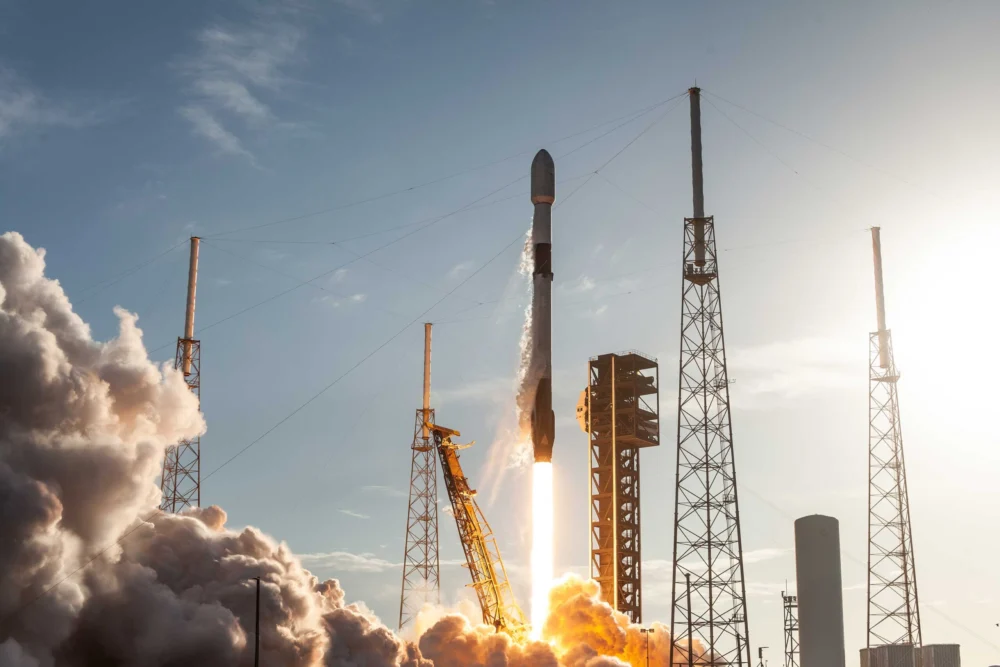
The Trump administration has opted to withdraw a significant proposed rule by the Federal Aviation Administration (FAA) aimed at compelling commercial space companies to responsibly remove spent rocket stages from Earth’s orbit, a move that experts warn could exacerbate the growing threat of space debris to public safety, vital telecommunications, and the long-term viability of space operations. This decision, a concession to a burgeoning commercial space industry, marks a reversal of a Biden-era initiative designed to mitigate the proliferation of orbital junk.
The Genesis of the Rule and Its Withdrawal
The FAA, under the Biden administration, initially proposed the measure in 2023. The rule sought to address the escalating problem of derelict hardware circling the planet, often referred to as space junk. Specifically, it would have mandated that launch providers, including industry giants like Elon Musk’s SpaceX, ensure the safe removal of their upper rocket stages and other mission-related debris within 25 years of launch. The FAA’s rationale was clear: these discarded spacecraft, some hundreds of feet tall and weighing tons, "pose a significant risk to people on the ground due to their mass and the uncertainty of where they will land."
This concern was not theoretical. Officials cited several alarming incidents, such as the uncontrolled re-entry of a SpaceX Falcon 9 rocket stage over the Pacific Northwest in March 2021. The event produced spectacular streaks of light across the night sky, captivating observers, but ultimately resulted in a propellant tank crashing onto a farm in Washington state, narrowly avoiding potential harm. Such occurrences underscore the tangible dangers posed by uncontrolled re-entries.
However, the proposal met with strong opposition from commercial space companies. Industry stakeholders, including SpaceX, voiced significant concerns, primarily citing the potential economic burden and operational complexities associated with implementing such stringent debris mitigation requirements. In January of the current year, the FAA officially nixed the rule, explaining that the agency required additional time to thoroughly research its implications, particularly regarding industry cost inputs and the scope of its regulatory authority. "FAA intends to review the space launch industry cost inputs and expectations with respect to debris mitigation activities," the agency stated, adding that it would also scrutinize its legal mandate to enact such regulations. An agency spokesperson later reiterated this rationale when questioned for this story, while the White House declined to comment on the withdrawal.
This action aligns with a broader pattern observed last year, where the Trump administration initiated rollbacks of various environmental and public safety regulations impacting rocket launches. A White House spokesperson, addressing similar regulatory shifts last summer, stated, "The Trump administration is committed to cementing America’s dominance in space without compromising public safety or national security." Critics, however, argue that such decisions represent a missed opportunity to establish crucial safeguards and, in doing so, needlessly endanger the public and the orbital environment.
The Escalating Threat of Space Debris
Space debris, or orbital debris, encompasses any human-made object orbiting Earth that no longer serves a useful function. This includes defunct satellites, spent rocket stages, fragments from collisions, and even flecks of paint. The problem is multifaceted, threatening active space missions, future exploration, and daily life on Earth.
Orbital Crowding and Kessler Syndrome: The sheer volume of objects in orbit is rapidly increasing, primarily driven by the proliferation of mega-constellations like SpaceX’s Starlink and OneWeb, which aim to provide global internet access. Each launch adds more components, some of which become debris. Experts warn of the potential for a catastrophic chain reaction known as Kessler syndrome, where a single collision generates thousands of new fragments, each capable of causing further collisions, eventually rendering vast swaths of popular orbits unusable. A stark illustration of this risk occurred in 2009 when a defunct Russian Cosmos satellite collided with an active Iridium communications satellite over northern Siberia. This single event generated over 2,300 pieces of trackable debris, many of which remain in orbit today, posing a continuous threat. The FAA, in its 2023 proposal, explicitly warned that an unchecked growth of orbital debris "could clutter orbits used for human spaceflight and increase the chance of collisions causing damage to satellites that support communications, weather forecasting and global positioning systems."
Risks to Life on Earth: While the dangers to orbital assets are widely acknowledged, the threat to people on the ground from re-entering debris is often underestimated. Rockets are complex machines, and after their lower stages separate, the upper stage continues into space to deploy payloads. When these upper stages, or other large components, re-enter Earth’s atmosphere in an uncontrolled manner, they often do not fully disintegrate, scattering potentially dangerous fragments across vast areas.
Ewan Wright, a Ph.D. candidate at the University of British Columbia and a junior fellow at the Outer Space Institute, a nonprofit advocating for debris mitigation, highlighted the alarming statistics. His research, conducted with colleagues, found a "20% to 29% chance that debris from a reentering rocket would kill at least one bystander sometime in the next decade." He criticized the withdrawal, stating, "Instead of requiring companies to responsibly dispose of these upper stages, the U.S. has decided to roll the dice on a person or a plane getting hit by falling debris."
While no fatalities have been definitively linked to falling space debris, numerous incidents have documented the concrete risks:
- In 2007, a boy in China suffered a broken toe after being hit by a piece of falling space debris.
- In 1997, a woman in Tulsa, Oklahoma, was struck on the shoulder by a fragment believed to be from a Delta II rocket.
- Just this year, in April 2024, a piece of metal from the International Space Station (ISS) punched through the roof of a home in Naples, Florida, demonstrating that even carefully tracked objects can pose unexpected hazards.
- Last year, an eight-foot, 1,100-pound ring from a rocket plummeted onto a remote Kenyan village.
- Fragments of a Falcon 9 rocket were discovered in a forest, a warehouse, and a field across Poland, underscoring the widespread potential impact zones.
Beyond land-based risks, the re-entry of uncontrolled spacecraft also poses a significant danger to air traffic. The explosions of two SpaceX Starship megarockets last year, which rained debris over the Caribbean, brought this particular threat into sharp focus. Following investigations into these mishaps, ProPublica reported that the FAA issued a new warning to airlines, cautioning that rocket launches could "significantly reduce safety" and advising pilots to prepare for "catastrophic failures" that might generate dangerous debris fields.
Industry Practices and the Mitigation Challenge
The commercial space industry’s response to debris mitigation varies, and the withdrawal of the FAA rule highlights the ongoing tension between regulatory oversight and industry self-governance.
SpaceX’s Efforts and Statistics: SpaceX, a dominant player in the launch market, has publicly addressed its commitment to reducing space debris. On its website, the company states it is "working to reduce – and ultimately eliminate – space debris left behind by Falcon," its workhorse rocket system that regularly deploys Starlink satellites. SpaceX provided specific data: "In 2024, 13 out of 134 upper Falcon 9 stages remained on-orbit after successful payload deploys. In 2025, we reduced this number to three out of a total of 165 launches." While these numbers suggest an improving trend, critics like Ewan Wright point out that even a small percentage of abandoned stages from an increasing number of launches still contributes significantly to the debris problem. Wright noted that U.S. rocket companies, including SpaceX and United Launch Alliance, have abandoned 41 upper stage rockets in orbit over the past three years, with 33 still remaining. "Abandoning truck-sized upper stages in orbit is an irresponsible act," he asserted.
United Launch Alliance (ULA): In contrast to SpaceX’s on-orbit retention, United Launch Alliance (ULA), a joint venture of Lockheed Martin and Boeing, stated through a spokesperson that it disposes of its upper stage rockets safely "by placing them in a graveyard orbit or conducting a controlled reentry where most of the stage disintegrates over the remote, deep ocean." Graveyard orbits are higher, less trafficked orbits where defunct satellites and rocket stages can be parked to minimize collision risks with active satellites in lower, more critical operational orbits. Controlled re-entries involve guiding the spent stage to burn up over unpopulated areas, typically vast stretches of the deep ocean.
The FAA’s proposed rule would have mandated that launch companies submit a detailed plan for debris removal prior to launch, applicable to any debris larger than five millimeters. Acceptable disposal options, for components that couldn’t fully burn up, included pushing them into a higher "disposal" orbit or navigating them for a controlled splashdown in a designated "broad ocean area." These methods are generally considered best practices in space debris mitigation.
The Regulatory and Economic Crossroads
The withdrawal of the FAA rule brings to the forefront the complex interplay of regulatory authority, economic incentives, and international norms in the rapidly evolving space sector.
FAA’s Authority and the Legal Labyrinth: The FAA’s stated concern about its "authority to enact such regulations" highlights a fundamental challenge in space governance. The commercial space industry is regulated by a patchwork of agencies, including the FAA (for launch and re-entry), the Federal Communications Commission (FCC) (for spectrum use and satellite operations), and NOAA (for remote sensing licenses). There is no single, comprehensive U.S. space agency with overarching regulatory power. This fragmented approach can create jurisdictional ambiguities and enforcement gaps. The proposed rule was an attempt to bring the evolving commercial space industry in line with national practices followed by NASA and with existing international guidelines, which are often voluntary.
Cost-Benefit Analysis and Industry Pushback: The industry’s primary objection centered on cost. SpaceX, in its comments responding to the proposal, argued that the FAA "grossly underestimates the costs and impacts of the proposed rule and overstates the benefits." Implementing controlled re-entry or orbital disposal maneuvers adds complexity and fuel requirements to missions, which can translate to higher launch costs. However, proponents of the rule argue that these upfront costs are negligible compared to the long-term economic and safety consequences of a cluttered and hazardous orbital environment. The cost of a major collision, in terms of lost satellites, disrupted services (telecommunications, GPS, weather forecasting), and cleanup efforts, could be astronomical. Moreover, the risk to human life carries an immeasurable cost.
International Context and Global Stewardship: The issue of space debris is inherently global. Debris created by one nation’s launches can threaten the satellites of all nations. International guidelines, such as those from the Inter-Agency Space Debris Coordination Committee (IADC) and the United Nations Committee on the Peaceful Uses of Outer Space (UN COPUOS), advocate for the 25-year post-mission disposal guideline. However, these are largely voluntary. The U.S., as the leading spacefaring nation, plays a critical role in setting standards. The FAA’s original proposal aimed to solidify the U.S.’s commitment to these international norms, fostering responsible behavior globally. The withdrawal might be perceived by other nations as a step back from this leadership role.
Implications and the Path Forward
The decision to withdraw the space debris rule carries significant implications across several domains:
Environmental Stewardship of Space: Just as Earth’s terrestrial and oceanic environments require protection, so too does the orbital environment. The lack of stringent regulations allows a "tragedy of the commons" scenario to unfold, where individual actors benefit from discarding waste while the collective orbital environment degrades, impacting everyone.
Economic Sustainability of the Space Industry: While companies cite immediate costs, a severely cluttered orbit could ultimately stifle the very industry it aims to protect. If critical orbits become too hazardous, insurance premiums for satellites will skyrocket, mission planning will become exponentially more complex, and the development of new space-based services could be curtailed. The paradox is evident even now: SpaceX’s Starlink satellites, while contributing to orbital crowding, performed approximately 300,000 collision avoidance maneuvers last year alone to dodge other satellites and debris, as reported by New Scientist. This constant maneuvering adds operational complexity and consumes fuel, shortening satellite lifetimes.
National Security and Geopolitical Stability: A robust and accessible space environment is crucial for national security, supporting intelligence gathering, military communications, and missile warning systems. A debris-riddled orbit complicates these operations and could even lead to miscalculations if a collision were to be misinterpreted as an act of aggression.
The FAA’s stated intention to "review the space launch industry cost inputs and expectations" and its own regulatory authority suggests that the issue is not entirely off the table. However, the immediate effect is a continuation of a less regulated approach, placing the onus on companies for voluntary compliance or future, potentially more reactive, regulatory measures. Experts like Ewan Wright contend that this inaction is a critical missed opportunity, pushing the responsibility for managing a global problem onto the uncertain winds of corporate goodwill rather than firm regulatory mandates. As humanity ventures further into space and becomes increasingly reliant on its capabilities, the question of who bears responsibility for its cleanliness and safety remains one of the most pressing challenges of the 21st century.



 Joko Widodo
 Jia Lissa
 Pevita Pearce
 admin
admin