
 Pevita Pearce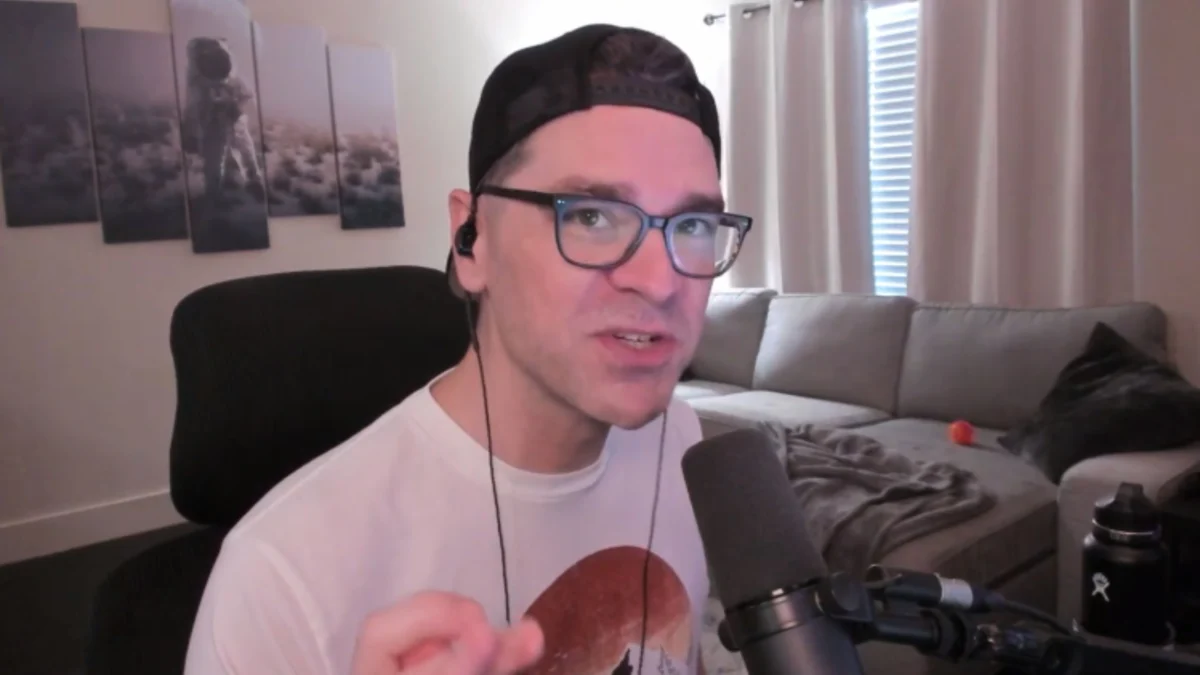
The Amazon-owned streaming giant Twitch has officially issued an apology to content creator SmaK following a 30-day suspension that many observers characterized as a failure of the platform’s automated moderation systems. The incident, which occurred during a live broadcast on July 31, saw the streamer abruptly disconnected and barred from his account moments after making a joke regarding his desire to take a break from the internet. While the suspension has since been rescinded, the event has reignited a long-standing debate regarding the consistency of Twitch’s enforcement policies and the limitations of artificial intelligence in interpreting human nuance and context.
The controversy began when SmaK was engaging with his audience, reading various "odd" or "crazy" messages from his chat. In a moment of apparent hyperbole intended to express exhaustion with the current state of online discourse, the streamer stated, “I need to not exist in this world anymore. I need to go away for a long time. The amount of crazy sh*t I’m seeing and reading and hearing every day, I don’t know if I can handle it anymore.” Almost immediately after the words were spoken, the stream went dark, and SmaK received notification that he had been hit with a month-long ban.
The Mechanics of Automated Moderation and the Immediate Fallout
The speed at which the ban was enacted suggests that Twitch’s automated safety tools were triggered by specific keywords related to self-harm or suicidal ideation. Under Twitch’s Community Guidelines, the platform maintains a zero-tolerance policy toward content that "encourages or provides instructions on how to self-harm or commit suicide." These protocols are designed to be proactive, often utilizing Natural Language Processing (NLP) to flag and terminate broadcasts that appear to show a creator in a mental health crisis.
However, in the case of SmaK, the system failed to distinguish between a genuine cry for help and a satirical comment about "social media fatigue." On the social media platform X (formerly Twitter), SmaK shared his perspective on the incident, suggesting that the automated nature of the system poses a risk to all creators. “So this is an automated system and likely to happen to others in the future for various things said,” he remarked.
The incident quickly caught the attention of the broader streaming community, with high-profile creators expressing disbelief at the severity of the punishment. Nick "NICKMERCS" Kolcheff, one of the most prominent figures in the industry, commented on the absurdity of the situation, stating, “There’s no way you were banned for this.” Other creators pointed to a perceived "tone-deafness" in Twitch’s moderation, arguing that while the platform’s intent to protect users is noble, the execution often lacks the human oversight necessary to prevent erroneous punishments.
A History of Inconsistent Enforcement
The backlash against SmaK’s ban is rooted in a broader history of what many call "inconsistent enforcement" on Twitch. For years, the platform has faced criticism for how it doles out punishments for various infractions. Critics often compare the severity of bans for verbal slips or jokes to the relatively light punishments given for physical endangerment.
For instance, the community frequently references an incident involving streamer ExtraEmily, who received a short suspension after a clip of her nearly crashing a car while distracted by her stream went viral. Similarly, prominent streamer Asmongold has publicly called out the platform for its 14-day suspensions for what he deems minor infractions, while other creators remain active despite more egregious violations of safety standards.
The 30-day ban handed to SmaK was seen as particularly harsh given that it was a first-time occurrence for that specific type of speech and was clearly intended as a joke within the context of the broadcast. In the professional streaming world, a 30-day absence can be catastrophic for a creator’s livelihood. It results in a total loss of ad revenue, a significant drop in active subscribers, and a loss of algorithmic momentum that can take months to recover.
The Rare Official Apology and Reinstatement
By Friday, August 2, the situation had reached a resolution. SmaK revealed to his followers that Twitch had not only overturned the ban but had taken the rare step of issuing a formal apology. According to the streamer, the platform admitted that a mistake had been made in the classification of his comments. While Twitch rarely provides granular details on why a specific ban was triggered, the apology serves as a tacit admission that their automated systems overreached.

SmaK expressed surprise at the apology, noting that Twitch’s communication with creators regarding bans is typically sparse. Upon returning to the platform, he reflected on the irony of the situation, pointing out that streamers frequently use violent metaphors in the context of gaming—such as "killing" themselves in-game—without consequence. The fact that a meta-comment about his desire to "go away" from the internet triggered a month-long ban highlighted a specific sensitivity in the AI’s programming regarding phrases that mimic self-harm scripts.
This is not the first time Twitch has had to walk back a high-profile error. In 2019, the streamer ‘Viperous’ was banned for allegedly using a racial slur; however, upon review, it was discovered she had actually used the word "nerd." In 2023, a Serbian streamer known as ‘Pajja’ was banned because his username was accidentally flagged as an offensive term in Spanish. Each of these cases follows a similar pattern: an automated or low-level moderator makes a swift decision based on a rigid set of parameters, leading to a public relations crisis that requires senior intervention to correct.
Broader Implications for the Streaming Industry
The SmaK incident underscores a growing tension between massive digital platforms and the creators who provide their content. As Twitch grows, the sheer volume of live content—thousands of hours per minute—makes human moderation of every stream an impossibility. Consequently, the reliance on AI and automated flags will only increase.
However, the "SmaK precedent" suggests that the current state of AI is not yet sophisticated enough to handle the complexities of human language, especially "dark humor" or "internet slang." For streamers, this creates an environment of "walking on eggshells," where a single misunderstood sentence can jeopardize their entire career.
Industry analysts suggest that if Twitch and similar platforms like YouTube and Kick wish to maintain healthy relationships with their top-tier talent, they must implement a more robust "human-in-the-loop" system for long-term bans. While an automated system might be justified in temporarily "shadow-banning" or pausing a stream if a life-threatening situation is detected, the leap to a 30-day suspension without human verification is increasingly seen as a failure of corporate responsibility.
The Mental Health Context
There is also a layer of complexity regarding how platforms handle mental health. Twitch has been under pressure to ensure their site is not used to broadcast self-harm, a responsibility that carries significant legal and ethical weight. In their effort to be hyper-vigilant, they have seemingly tuned their algorithms to be "better safe than sorry."
While this approach may save lives in genuine emergencies, the false positives—like the one experienced by SmaK—can have their own negative impact on the mental health of creators. Being suddenly cut off from one’s community and income source due to a misunderstood joke can cause significant stress and anxiety.
Conclusion
SmaK has since resumed his regular streaming schedule, but the ripples of his 30-day "instant ban" continue to be felt across the platform. The event serves as a cautionary tale for creators about the power of keywords and a reminder to the platform that automation is no substitute for human judgment.
As Twitch continues to refine its moderation tools, the community remains watchful. The apology to SmaK is a positive step toward transparency, but for many, it is a band-aid on a larger systemic issue of how the "purple platform" governs its digital citizens. For now, the streaming world remains a space where the line between a viral joke and a career-ending ban is thinner than ever, often determined by an algorithm that cannot tell the difference between a streamer needing a vacation and a streamer in crisis.


 Yuyun Lusiyani
 Joko Widodo
 Jia Lissa
 admin
admin
