
 Yuyun Lusiyani
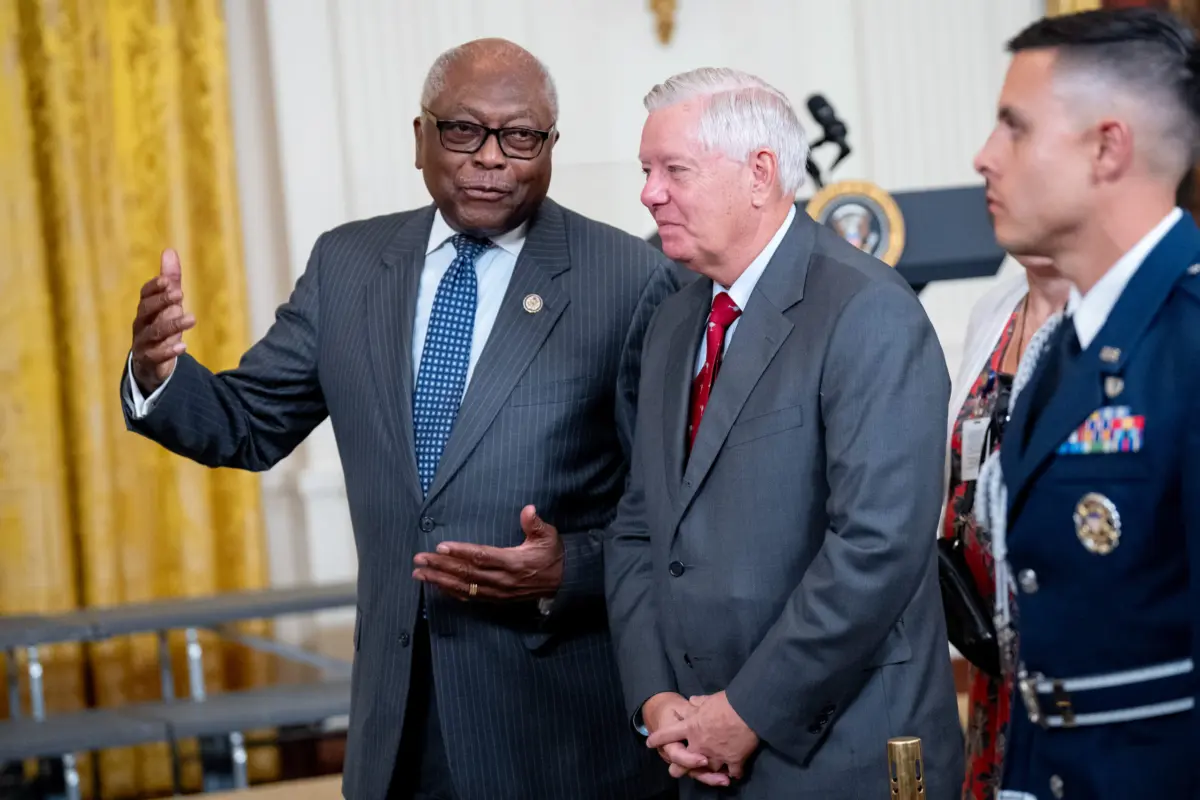
In a revelation that casts a stark shadow over the integrity of Capitol Hill, a comprehensive FBI investigation into an alleged bribery scheme involving a Hawaiian naval defense contractor, Navatek, and several high-profile U.S. lawmakers was abruptly shuttered by the Trump administration. At the heart of the probe lay a March 3, 2020, dinner meeting at Charlie Palmer Steak in Washington, D.C., where then-Senator Lindsey Graham of South Carolina allegedly agreed to steer a $10 million government contract to Navatek in exchange for a substantial campaign contribution. This clandestine deal, along with similar arrangements involving other influential members of Congress, was exposed through the confession of Navatek’s CEO, Martin Kao, whose testimony formed the bedrock of a burgeoning anti-corruption effort that was ultimately dismantled.
The Alleged Quid Pro Quo: A Dinner, a Deal, and $100,000
The evening of March 3, 2020, was meticulously orchestrated. Senator Lindsey Graham, a powerful figure whose time was explicitly valued, met with Navatek CEO Martin Kao, two company executives, and a lobbyist. The price of admission for this 45-minute private dinner was a committed $40,000 in campaign contributions to Graham’s reelection bid. Kao, a man with a self-admitted strategy of leveraging political donations for government contracts, was reportedly confident that this brief encounter was all that was needed. An email seen by ProPublica, sent by Kao to a Navatek lobbyist and a fellow executive the day before the meeting, chillingly articulated his transactional approach: "Shoot all he has to really do is stop by and say ‘yes,’" Kao wrote. "That should only take a minute and he’s on his way. We don’t need to pretend we give a shit about each other."
At the dinner, Kao later recounted to the FBI, Graham consumed little but spoke voluminously, ultimately delivering the coveted "yes." Graham allegedly agreed to direct a $10 million government contract towards Navatek’s operations in his home state of South Carolina. In return, Kao claimed, the Senator explicitly requested a total of $100,000 for his reelection campaign. This alleged exchange of official action for campaign cash would, if proven in court, constitute a clear act of bribery.
A Broad Conspiracy Unveiled: Beyond Senator Graham
Kao’s confession, made to federal agents in early 2025, painted a disturbing picture of a systemic bribery model embedded within Navatek’s operations. The CEO admitted that his business strategy revolved around bribing public officials to secure government contracts, often for research that he himself conceded was "worthless." His revelations implicated some of the most influential figures across the political spectrum in Congress. In South Carolina, Kao informed agents that Navatek had struck similar campaign cash-for-contracts deals not only with Senator Graham but also with the state’s leading Democrat, Representative James Clyburn, and another prominent Republican, Representative Joe Wilson.
According to notes taken by an FBI agent during Kao’s late 2024 debrief, Graham was particularly direct in his demands. Kao remembered the Senator stating, "This is how much I want, and how much I am going to give you," leaving little room for ambiguity regarding the nature of the transaction. These admissions, if substantiated, would lay bare a vast criminal bribery scheme spanning multiple powerful congressional offices.
The FBI’s Investigation and Its Initial Trajectory
Despite the significant legal hurdles posed by recent Supreme Court rulings that have complicated the prosecution of corruption cases, the FBI moved forward with its investigation. Two experienced anti-corruption investigators, Michelle Ball and Kevin Gounaud, recognized that much of Kao’s detailed confession aligned with a trove of internal company records they had seized from Navatek. These records included color-coded spreadsheets maintained by Navatek executive Duke Hartman, which meticulously tracked congressional relationships and funding requests, often labeling lawmakers like Graham as "key supporters."
The FBI formally designated two former Navatek executives, Duke Hartman and Joshua Knight, as subjects of the bribery investigation. While Senator Graham, Representative Clyburn, and Representative Wilson were not immediately designated as subjects, agents were actively investigating their interactions with Kao and indicated to their superiors that the lawmakers could become subjects in the future. The details of this expansive investigation remained previously unreported until ProPublica’s extensive review of thousands of pages of legal documents, internal company emails, FBI evidence, and dozens of interviews with former Navatek employees and eyewitnesses.
Navatek’s "Method": A Blueprint for Influence Peddling

Martin Kao’s ambition for Navatek was immense. He envisioned transforming the company, founded in Hawaii in the 1970s and once reliant on its ties to the late Senator Daniel Inouye, into a major defense contractor. Lacking engineering expertise, Kao compensated with a relentless drive and a sophisticated, albeit illicit, "method" for cultivating political patrons.
This method involved opening offices in the districts or states of powerful members of Congress and partnering with local universities. Together, they would concoct proposals for federally funded research, often for projects where Navatek had "zero people" capable of performing the promised work. Aided by well-connected lobbyists and the veneer of academic credibility, Navatek would then approach lawmakers for federal research funding.
Kao told the FBI that these deals were typically struck in small, face-to-face meetings with members or their trusted staff. In return for generous campaign donations from Navatek executives, family members, and lobbyists, the lawmakers would insert detailed, company-specific language into defense budgets. This language would not explicitly name Navatek but would describe research so specific to the company’s "planned" work that it effectively ensured Navatek would be the sole logical choice for the eventual government contract. Furthermore, congressional staff would allegedly backchannel with the Navy after the bill’s passage to ensure the funds were directed to Navatek, bypassing the spirit of competitive bidding. This strategy, according to a former executive, helped Navatek rebound from an uncertain period to secure $40.7 million in new government contracts in 2020 alone.
Chronology of Influence: From Initial Outreach to Congressional Appropriations
The timeline of Navatek’s alleged influence peddling in South Carolina began in early 2019. Kao, Hartman, and other Navatek executives initiated contact with the offices of Graham, Clyburn, and Wilson. Partnering with the University of South Carolina, they sought $9.5 million for a joint "power and energy" research project. This initial request was part of a larger plan to secure up to $90 million in funding over several years for multiple projects in the state.
Despite a former executive’s assessment that Navatek’s initial research in this area "looked like a college senior’s graduation project," the company’s legislative efforts quickly gained traction.
- May 2019: Willie Lyles III, Clyburn’s legislative director, alerted Navatek to language that would be endorsed by the House Appropriations Committee for a "modular and scalable integrated power and thermal system capable of powering a directed energy weapon system of 100 or more kilowatts." Three days later, this exact language appeared in the House Appropriations Committee report, as flagged by the FBI.
- September 2019: The Senate Appropriations Committee, on which Graham sat, released a budget report allocating $9.5 million for "Talent and Technology for Navy Power and Energy Systems." FBI agents noted the technical description accompanying this line item was "almost identical" to language found in Hartman’s internal spreadsheets two months prior, suggesting ghostwriting by Navatek.
- Late 2019: After the Senate advanced its budget, Navatek spent nearly $4,800 on bourbon for several lawmakers, including Graham and Senator Susan Collins of Maine (whose conduct was also probed by the FBI in a related investigation reported by ProPublica). Navatek also sent a fruit basket to Clyburn. Both Graham’s and Collins’ offices denied receiving the bourbon.
- December 19, 2019: Congress passed the final spending bill, including the $9.5 million for Navatek’s project.
- Days after passage: An executive pledged $750 to Wilson’s campaign at a fundraiser. In the following weeks, Kao and his lobbyist donated $3,500 to Wilson’s campaign.
- Early 2020: Kao began planning $300,000 in political contributions. Lobbyists sought private meetings with Graham, Wilson, and Clyburn, where Kao planned to ask for significantly more federal funding.
- March 3, 2020: The private dinner with Senator Graham took place, where Kao alleged the explicit quid pro quo for $10 million in contracts and $100,000 in donations. Campaign records show half of the $40,000 committed for the dinner was delivered that night, with the rest following in May.
- March 6, 2020: Craig Abele, Graham’s national security adviser, confirmed to an Office of Naval Research official that Graham’s office intended the initial $9.5 million to be awarded to the Navatek partnership, ensuring the contract was "set."
- March 10, 2020: A University of South Carolina lobbyist submitted requests to Graham’s office for an additional $20.5 million in appropriations for Navatek projects.
- Early March 2020 (post-Graham dinner): Kao met with Representative Clyburn, who allegedly asked for the same $100,000 in donations that Graham had requested. FBI records show $20,000 in contributions from Kao and his family to Clyburn days after this meeting, followed by a $10,000 gift to South Carolina State University, Clyburn’s alma mater, arranged by Hartman.
- Concurrent with other meetings: Kao and Hartman allegedly struck a similar bargain with Representative Wilson, who Kao claimed also requested the same amount as Clyburn in exchange for his support on the House Armed Services Committee. Records show $3,500 in donations from Kao and Tongour to Wilson’s campaign.
- July 2020: Navatek received the initial $9.5 million contract, which it split with the University of South Carolina.
- August 2020: Internal records show Hartman projected that the final budget could include up to $15.5 million of the $20.5 million Navatek had lobbied for.
- September 30, 2020: Martin Kao was arrested, abruptly halting further planned donations.
Legal Hurdles and the Fate of Corruption Prosecutions
Kao’s admissions, while extensive, faced significant legal challenges. He was already facing prison for fraud and campaign finance violations and was cooperating with the FBI in hopes of reducing his sentence. This raised questions about his credibility, which the FBI sought to address by corroborating his claims with seized company records.
However, a more formidable obstacle came in the form of recent Supreme Court rulings that have made it increasingly difficult to secure convictions in public corruption cases. These rulings have narrowed the definition of bribery, often requiring explicit "quid pro quo" evidence – a direct exchange of money for an official act – rather than simply a pattern of influence. This legal landscape underscores the difficulty federal prosecutors face in proving corruption, even with compelling testimony and supporting documentation.
The Investigation’s Demise: A Political Purge
The investigation, poised to escalate, met an abrupt and politically charged end. In early 2025, President Donald Trump, upon returning to the White House, allegedly initiated a sweeping purge within the FBI and Department of Justice. This action, perceived by many as an act of revenge for previous investigations into his own conduct, directly targeted the specialized teams dedicated to public corruption.
FBI agent Michelle Ball, who had authored a December 9, 2024, memo detailing the "lengthy history" of Navatek’s pay-for-play scheme and flagging the case’s sensitive nature, was fired in October 2025. Her colleague, Kevin Gounaud, was pushed out in early 2026. Kate Fifield, the career prosecutor from the DOJ’s anti-corruption section who had been assigned to the case and was considering deploying undercover agents to secure definitive evidence, quit after Trump appointees reportedly forbade her section from filing any new cases.

The Trump administration’s DOJ spokesperson, Audrey Cook, later claimed the department was "rooting out the weaponization, corruption, and institutional rot" that existed under the previous administration, while FBI spokesperson Ben Williamson dismissed Kao’s claims as "half baked" and "misleading," asserting that personnel removals were due to unethical conduct or undermining the mission. However, these statements stand in stark contrast to the accounts of agents and prosecutors who witnessed the dismantling of their units and the shuttering of active investigations. Today, with the anti-corruption teams gutted, "there is no one left to look into Kao’s explosive allegations," effectively killing the case.
Reactions and Denials from the Accused
The implicated lawmakers and their representatives have largely denied any wrongdoing, dismissing Kao’s claims as those of a "convicted liar."
- Lindsey Graham (posthumously): Taylor Reidy, who served as Graham’s communications director and now holds the same position for his sister, Darline Graham (appointed to fill his seat), stated that "any allegations of quid-pro-quo behavior or wrongdoing by the late Senator Lindsey Graham or his staff are simply false." She described the accusations as "ravings of a convicted felon" and asserted that her office was never contacted by the FBI. She added that Graham’s campaign disgorged Kao’s donations after his arrest. A Graham spokesperson confirmed their office added the $9.5 million to the budget at the request of the university and Navatek, denying motivation by campaign cash and calling fundraising minimums "normal practice."
- Representative James Clyburn: Jami LaRue, Clyburn’s communications director, emphasized that "Whatever a donor may think or say, a donation would never cause Congressman Clyburn to increase his support for the donor’s request." She defended his efforts to assist South Carolina institutions and dismissed Kao’s claims as the "crimes and lies of an imprisoned fraudster." The spokesperson confirmed the dinner but did not address discussions.
- Representative Joe Wilson: David Snider, Wilson’s communications director, did not address specific allegations but stated, "Congressman Wilson does and has always abided by campaign donation regulations set forth by the Federal Election Commission."
- Michael Tongour (Lobbyist): Tongour, who arranged Graham’s dinner, confirmed many elements of Kao’s story, including the delivery of checks and the brevity of the meeting. However, he vehemently denied witnessing any explicit quid pro quo, stating, "I would remember that forever." He maintained that Graham supported Navatek’s requests for the benefit of the state and stated he would have quit earlier if he had seen corruption. Tongour did terminate Navatek as a client immediately after Kao’s arrest.
- University of South Carolina: Jeff Stensland, a university spokesperson, stated, "University officials were not aware of any political contributions from Navatek," and reiterated that their objective was "to expand our research enterprise."
The Aftermath: Kao in Prison, Integer Technologies on the Rise
Martin Kao is indeed the only individual involved in this alleged scheme to serve prison time. He pleaded guilty in 2022 to making illegal campaign donations and a loan fraud scheme, receiving an 87-month sentence in 2025. From federal detention, Kao bitterly reflected, "[It’s] corruption at its best. But I am the only one rotting in prison." He described Navatek’s operations as "nothing more than government contracting done through placating senior appropriation members for contracts. The whole thing is a grand lie."
Meanwhile, as Navatek spiraled into disarray and Kao faced justice, Duke Hartman, the executive whom Kao implicated as fully aware of the "impropriety of the business model," began building a new enterprise. In 2021, Hartman and Joshua Knight co-founded Integer Technologies, a new military research company headquartered in South Carolina. Notably, Integer’s first project was the very contract Navatek had brokered with Senator Graham.
Hartman, who faced no criminal charges but later settled a civil lawsuit brought by his former employer for $425,000 (admitting no wrongdoing), has seen Integer Technologies flourish. The company was recognized as one of the fastest-growing government contractors in the country, reporting $81 million in contracts last year and projecting growth to $375 million by 2030. Integer has forged new partnerships with universities and continues to cultivate ties with powerful politicians, including Speaker of the House Mike Johnson, with whom Hartman posted a photo on LinkedIn in late 2024, expressing appreciation for "people in positions of power who seem to really care for the people they serve."
Broader Implications for Accountability and Public Trust
The story of Navatek and the aborted FBI investigation serves as a stark illustration of the vulnerabilities within the American political system to alleged influence peddling and the profound implications when anti-corruption efforts are curtailed. The explicit accusations of a transactional relationship between campaign donations and government contracts, made by the CEO of a defense contractor, underscore persistent concerns about transparency and accountability in federal spending.
The abrupt termination of an active, evidence-backed FBI probe, coupled with the alleged purging of dedicated anti-corruption units, raises serious questions about the political independence of law enforcement and the Department of Justice. It suggests that accountability for powerful figures can be circumvented through administrative actions, leaving the public with unaddressed allegations of wrongdoing and eroding trust in governmental institutions. As Martin Kao serves his sentence while the beneficiaries of his alleged schemes thrive, the narrative highlights a system where the pursuit of justice for political corruption remains an arduous and often politically fraught endeavor.




 Nila Kartika Wati

 Eva Lovia

 Lina Irawan

 Ana Megawati

 Joko Widodo
