
 Yuyun Lusiyani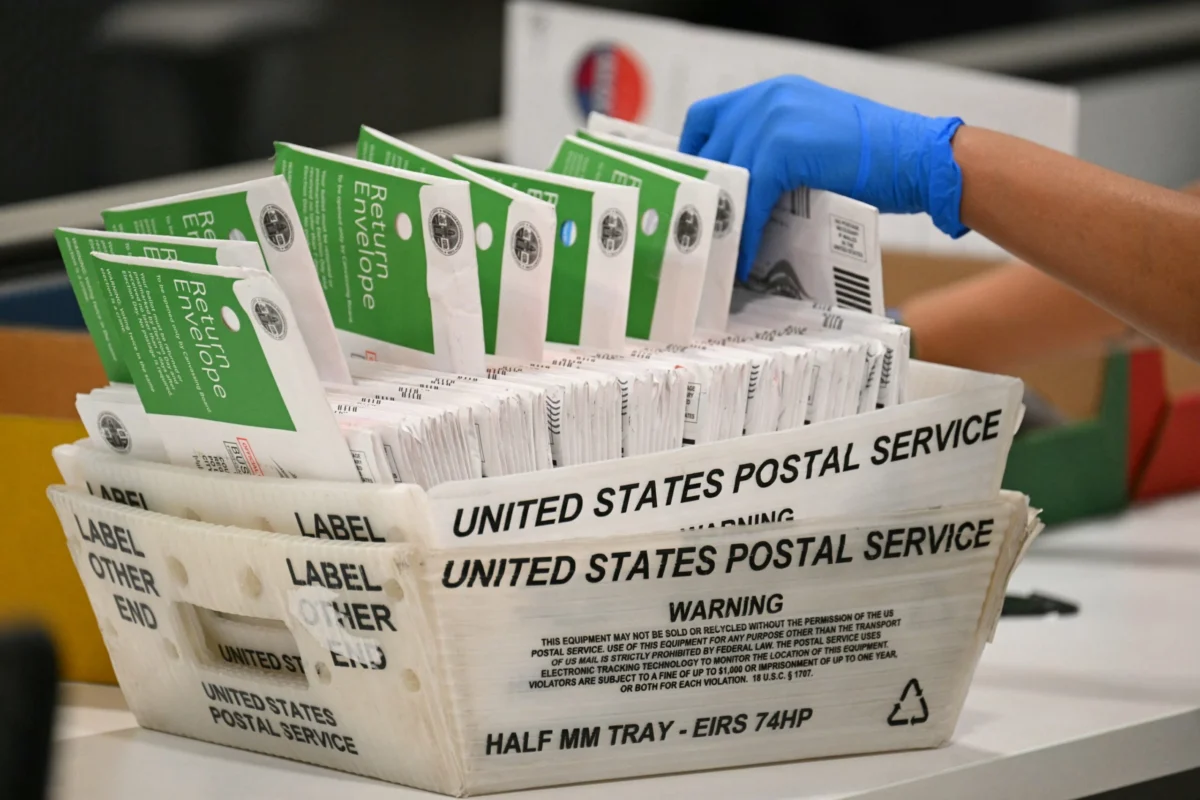
Top officials within the U.S. Postal Service (USPS), tasked with developing new regulations governing mail voting, privately voiced profound concerns that the rules they were drafting could lead to significant delays or outright blockage of ballots for vast segments of eligible voters in the upcoming midterm elections. Despite these internal apprehensions, the controversial regulations proceeded, according to an investigation by ProPublica. This revelation casts a stark light on the internal struggles and potential ramifications of an executive directive aimed at overhauling the mail voting process.
The Genesis of Controversy: A Presidential Directive
The impetus for these new regulations stems from a March executive order issued by President Donald Trump. The order specifically directed the Postal Service to establish a new framework for mail ballot verification and delivery. Key components of this directive included requiring states to furnish USPS with comprehensive lists of all voters eligible to receive ballots by mail. The USPS was then mandated to utilize these lists to verify and determine which ballots would ultimately be dispatched to voters.
This executive order emerged against a backdrop of heightened national debate surrounding election integrity and the security of mail-in voting, particularly following the substantial increase in mail ballot usage during recent election cycles, notably the 2020 presidential election due to the COVID-19 pandemic. While proponents argued such measures were essential to prevent fraud and bolster confidence, critics swiftly raised alarms about potential voter suppression and the practical challenges of implementing such sweeping changes.
Unveiling Internal Dissent: Warnings from Within
The internal discussions, detailed by an anonymous source familiar with the rulemaking process, indicate a clear awareness among high-ranking USPS officials of the contentious nature of their task. These meetings reportedly focused on two conflicting objectives: complying with the presidential executive order while simultaneously striving to minimize adverse impacts on voters. A recurring and significant concern centered on the potential for an entire batch of ballots to be invalidated if even a single voter within that batch could not be confirmed as eligible. Some participants in these meetings advocated for measures to mitigate harm, such as avoiding the rejection of entire batches.
However, these internal recommendations appear to have been overruled. A separate, anonymous federal employee has filed a whistleblower disclosure with U.S. Senator Richard Blumenthal (D-CT), painting a grim picture of the process. The whistleblower explicitly warned that the new system remains untested, prone to errors, and could precipitate widespread disenfranchisement in the upcoming election. The entire undertaking was characterized by the whistleblower as "secretive, rushed, chaotic, and fundamentally flawed." Crucially, the disclosure alleges that despite internal concerns, the directive to reject entire batches of ballots if they contained just one unverified entry moved forward.
"As presently designed, if even one bar code on one single ballot in a bulk-mailing of 10,000 ballots fails to properly scan during the verification process, the entire batch is rejected and sent back to the state — effectively stopping the ballots from being mailed to voters," the whistleblower’s filing stated, underscoring the severity of the "zero-percent failure policy" adopted by the USPS.
Operational Quagmires and Election Officials’ Alarms
The practical implications of this "batch rejection" policy were a major point of contention and concern for election officials nationwide. Just days before the final rule was formally issued, election clerks directly conveyed their anxieties to USPS officials at a mid-August National Association of Election Officials conference in Kansas City, Missouri.
A particularly striking example cited during the conference involved Maricopa County, Arizona, one of the largest voting jurisdictions in the country, which frequently dispatches over two million ballots in its initial mailings. Attendees reported that USPS officials confirmed the very real possibility that a single ballot with an unreadable barcode or incorrect voter information within such a massive mailing could indeed delay the entire batch. This scenario highlights the immense logistical hurdles and potential for chaos that such a system could introduce, especially in high-volume jurisdictions. For instance, in the 2020 general election, over 69 million Americans voted by mail, representing a significant portion of the electorate, making any systemic delays or rejections a matter of national concern.
The new system necessitates the creation of a new portal for states to upload voter information and sophisticated back-end software designed to allow mail delivery sites and local post offices to track and potentially block ballots. This technological overhaul, critics argue, is far too ambitious for the given timeframe.
A Precarious Timeline and Unresolved Details
Both the whistleblower and the anonymous source familiar with the internal discussions emphasized the significant time typically required for developing such a sophisticated tracking system. They estimated a minimum of nine months for proper development and testing. However, the whistleblower’s disclosure states that work on the system commenced in mid-June, leaving workers with only weeks to meet a stringent September 1st deadline. While the anonymous source acknowledged that priority projects within USPS often operate under crunched timelines, the rapid development schedule for a system with such critical implications for democratic processes raises serious questions about its stability and efficacy.
Further complicating matters are the myriad "trivial things that create massive problems," as described by Jeff Ellington, CEO of Runbeck Election Services, a major printer of ballots and envelopes for counties. These unresolved details include fundamental aspects such as the specific file format for uploading voter lists and whether to provide mailing or residential addresses to the USPS. Ellington also pointed out that most counties lack the necessary barcodes to make the new system function and that the Postal Service has yet to provide guidance on designing new ballot envelopes and securing USPS approval within the compressed timeline.
The whistleblower further alleged significant operational problems with the new portal intended to hold eligible voter information and a glaring absence of adequate system testing. They expressed alarm that while typical systems account for known error rates, the USPS has seemingly adopted a "zero-percent failure policy" for this new mail ballot system, ignoring the inevitability of human and technical errors. This approach, if rigidly applied, could lead to disproportionate ballot rejections.
Legal Battlegrounds and Injunctions
The controversial rules have not gone unchallenged. Voting rights organizations, state election officials, and Democratic political groups swiftly filed lawsuits, arguing that the new requirements infringe upon voting rights and create unnecessary barriers to participation. A federal court has already issued a temporary injunction, blocking the implementation of these requirements for states. The legal merits of the new rule are widely expected to reach the Supreme Court before the November election, setting the stage for a high-stakes judicial showdown.
Even if the Supreme Court were to permit the plan to move forward, election officials and experts remain highly skeptical that the new system could be ready in time for the current election cycle. This is particularly critical given that ballots for military personnel and overseas citizens, who rely heavily on mail-in voting, must be dispatched this month. The whistleblower also alleged that the administration proceeded with steps to develop the new system during two initial court injunctions, a move that, if proven, would constitute a violation of court orders. The USPS had previously stated that it would adhere to injunctions and would not implement the rule for the 2026 election unless the injunctions were lifted.
Official Responses and Political Repercussions
In response to the mounting criticism and revelations, the Postal Service has publicly defended its final rule in court filings, asserting that it does not intend to seize control of election administration. The agency maintained that the rule "need not and should not prevent a single voter from voting by mail." In a statement to ProPublica, a USPS spokesperson affirmed that the agency is carefully reviewing the whistleblower’s concerns and has dedicated months to developing its system in a manner consistent with court orders. The spokesperson added that instructions for election officials on how to use the system would soon be provided, emphasizing a shared goal of ensuring secure and reliable election mail.
Lauren Bis, a White House spokesperson, echoed this defense, stating that the process of building software for mail ballot checks "is neither complex nor unique for USPS since the Postal Service regularly uses bulk mailing and intelligent mail barcodes for a wide variety of large customers." Bis concluded by asserting that "Under President Trump, the federal government is working to ensure safe, transparent, and honest elections."
However, Senator Blumenthal, who received the whistleblower disclosure, has taken a strong stance against the new rule. In a letter to the Postmaster General this week, he requested detailed information about the plan. Speaking to reporters, Blumenthal declared that the new USPS rule jeopardizes all mail voters and accused the administration of being "hellbent on changing the framework of casting ballots in this country, clearly for political reasons."
Broader Implications for Democracy and Voter Confidence
The ongoing controversy surrounding the new USPS mail voting regulations carries profound implications for the integrity of the upcoming midterm elections and public confidence in democratic processes. The prospect of widespread ballot rejections due to technical glitches or unverified information, coupled with a rushed and untested system, threatens to disenfranchise eligible voters, particularly those in large jurisdictions or those who rely on absentee voting, such as military personnel.
The legal battles are likely to persist, potentially creating uncertainty for state election officials who need clear guidance to prepare for November. The tension between enhancing election security and ensuring voter access is at the forefront of this debate. While the administration emphasizes the need for "safe, transparent, and honest elections," critics argue that the methods employed—especially the "reject entire batch" policy and the compressed timeline—risk achieving the opposite effect by sowing confusion and eroding trust in the very mechanisms designed to facilitate democratic participation. The revelations of internal dissent within the USPS only amplify these concerns, suggesting that even those tasked with implementing the changes harbor serious doubts about their feasibility and fairness.




 Joko Widodo
 Jia Lissa
 Pevita Pearce
 admin
admin