
 Joko Widodo
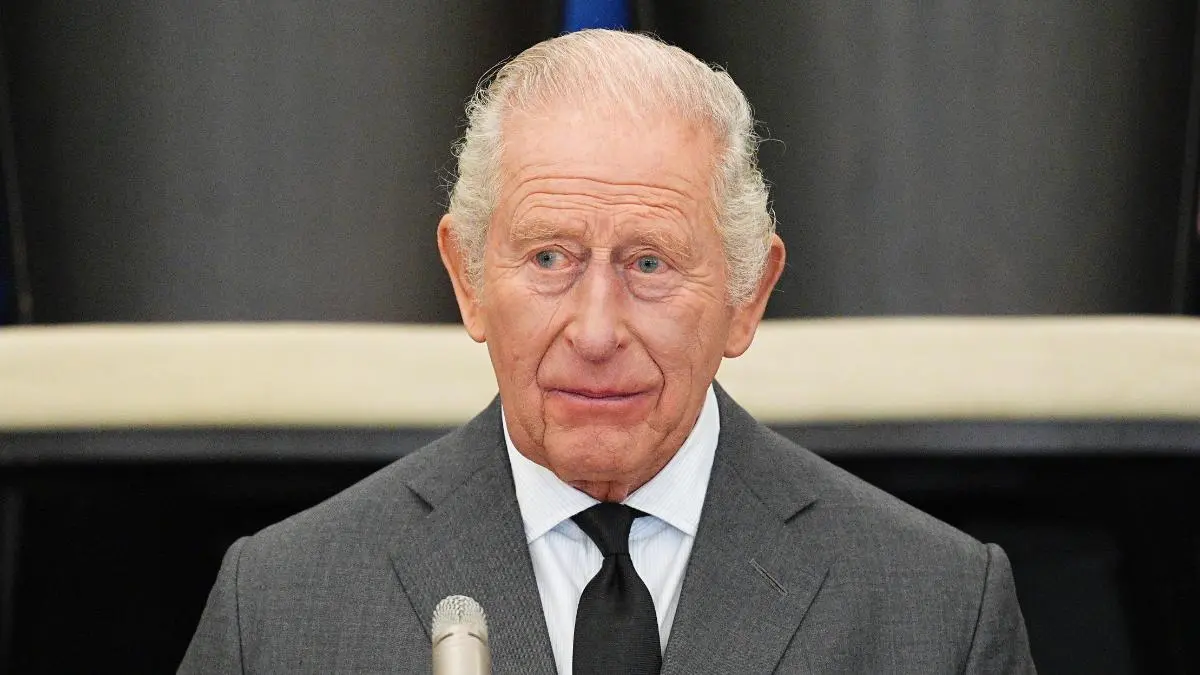
Actor Vinnie Jones, known for his roles in "Lock, Stock and Two Smoking Barrels" and "Snatch," has voiced a controversial opinion regarding the British royal succession, suggesting that King Charles III should have stepped aside for his son, Prince William, and his wife, Catherine, Princess of Wales, following the death of Queen Elizabeth II. Jones, who identifies as a royalist, shared these views during an appearance on The Louis Theroux Podcast, where he also touched upon his preference for a Winston Churchill tattoo over one of the current monarch and discussed the evolving traditions within the royal family, particularly concerning King Charles’s marriage to Queen Camilla.
"I was hoping that he would have done the right thing and said, ‘Thank you very much. We’re going to step aside,’ and William and Kate are going to be the king and queen," Jones stated to podcast host Louis Theroux, articulating a vision of what he perceived as "his Britain." This sentiment indicates a belief that a more immediate transfer of power to the younger generation, represented by Prince William and the Princess of Wales, would have been more in line with a Britain he holds dear.
The actor further elaborated on his perspective, expressing that he felt the royal institution had deviated from its established norms, specifically referencing King Charles’s path to marriage with Camilla. "You see, I think [Charles] went against the grain," Jones commented. "I think they moved the goalposts for him with Camilla, and I’m a William and Kate supporter now. I think they’ve done it right." This statement suggests a perceived bending of traditional royal rules to accommodate Charles’s personal life, while positioning William and Kate as exemplars of adherence to perceived royal propriety.
Background of Royal Marriages and Succession
The context of King Charles’s marriage to Queen Camilla is significant. Charles married Lady Diana Spencer in 1981 in a widely televised event, symbolizing a traditional royal union. However, the marriage was fraught with difficulties, and the couple divorced in 1996. Camilla Parker Bowles, whom Charles had known for many years, was also married at the time of their early relationship. Her previous marriage to Andrew Parker Bowles ended in divorce in 1995. The relationship between Charles and Camilla became public knowledge and a subject of intense media scrutiny, particularly following Princess Diana’s tragic death in 1997.
The eventual marriage of Prince Charles and Camilla Parker Bowles took place in a civil ceremony on April 9, 2005, at Windsor Guildhall. This union was seen by many as a significant departure from the historical norms and expectations surrounding royal partnerships, particularly given the Church of England’s stance on remarriage for divorced individuals, with the living ex-spouse still alive.
Timeline of Royal Events and Rule Interpretations
- 1981: Prince Charles marries Lady Diana Spencer.
- 1995: Camilla Parker Bowles divorces Andrew Parker Bowles.
- 1996: Prince Charles and Princess Diana’s divorce is finalized.
- 1997: Princess Diana dies in a car accident in Paris.
- 2002: The Church of England revises its guidelines on remarriage for divorced individuals, allowing remarriage under certain circumstances even if an ex-spouse is living. However, this does not alter the laws of succession.
- 2005: Prince Charles marries Camilla Parker Bowles.
- 2022 (September 8): Queen Elizabeth II passes away.
- 2022 (September 8): Prince Charles immediately becomes King Charles III, as per the Act of Settlement and the Bill of Rights.
The Church of England’s 2002 revision to its rules on remarriage, while accommodating for individuals within the general population, does not directly impact the constitutional monarchy’s line of succession. The law of succession is governed by parliamentary statutes, not by ecclesiastical pronouncements on marriage. When Queen Elizabeth II died, the throne passed automatically to her eldest son, Charles, as the heir apparent. There was no legal or constitutional provision for him to "step aside" in favor of Prince William. The succession is a matter of birthright and established law, making the monarch the sovereign at the moment of the previous monarch’s death.
Analysis of Vinnie Jones’s Stance
Vinnie Jones’s comments, while expressing a personal preference, do not align with the established legal and constitutional framework of the British monarchy. His argument appears to stem from a traditionalist viewpoint that values a perceived past era of royal decorum and continuity. By stating, "That, to me, was my Britain," Jones is invoking a romanticized notion of the monarchy that may not fully account for the complexities of modern society and the evolving nature of royal roles.
The "goalposts" Jones refers to likely allude to the societal and religious shifts that have made it more acceptable for individuals with previous marriages to enter into new unions, even within the highest echelons of the monarchy. While Charles and Camilla’s marriage was met with some controversy and required careful management of public perception, it ultimately proceeded, with Queen Elizabeth II herself expressing her wish for Camilla to be known as Queen Consort.
Prince William and Catherine, Princess of Wales, are indeed next in line to the throne. Prince William is the heir apparent, and his eldest son, Prince George, is second in line. Their current roles as Prince and Princess of Wales involve significant public duties, and they are widely seen as actively preparing for their future responsibilities. Their popularity and modern approach to royal life have resonated with many, potentially contributing to Jones’s preference for their reign.
Wider Implications and Royal Traditions
The debate surrounding royal succession and tradition is perennial. The British monarchy, while a symbol of continuity, has also demonstrated a capacity for adaptation over its long history. King Charles III, as the longest-serving heir apparent, has had decades to prepare for the throne, and his reign is expected to bring a different style and set of priorities compared to his mother’s 70-year rule.
Jones’s comments highlight a segment of public opinion that may feel a sense of nostalgia for a more rigidly defined era of royal conduct. However, the reality of the modern monarchy involves navigating contemporary social values and maintaining relevance in a rapidly changing world. The choices made by previous generations of royals, including King Charles’s personal life, have shaped the institution, and the current generation of royals are tasked with continuing that evolution.
The distinction between personal preference and constitutional reality is crucial in understanding Jones’s remarks. While his opinions offer a glimpse into a particular perspective on royal leadership and tradition, they do not alter the legal framework that governs the succession or the established roles and responsibilities within the monarchy. The future of the British monarchy will undoubtedly continue to be shaped by a balance between tradition and the need to adapt to the evolving expectations of the public it serves. The discourse initiated by figures like Vinnie Jones, while sometimes provocative, contributes to the ongoing conversation about the role and image of the monarchy in the 21st century.



 Nila Kartika Wati

 Eva Lovia

 Lina Irawan

 Yuyun Lusiyani

 Ana Megawati
