
 Nana Wu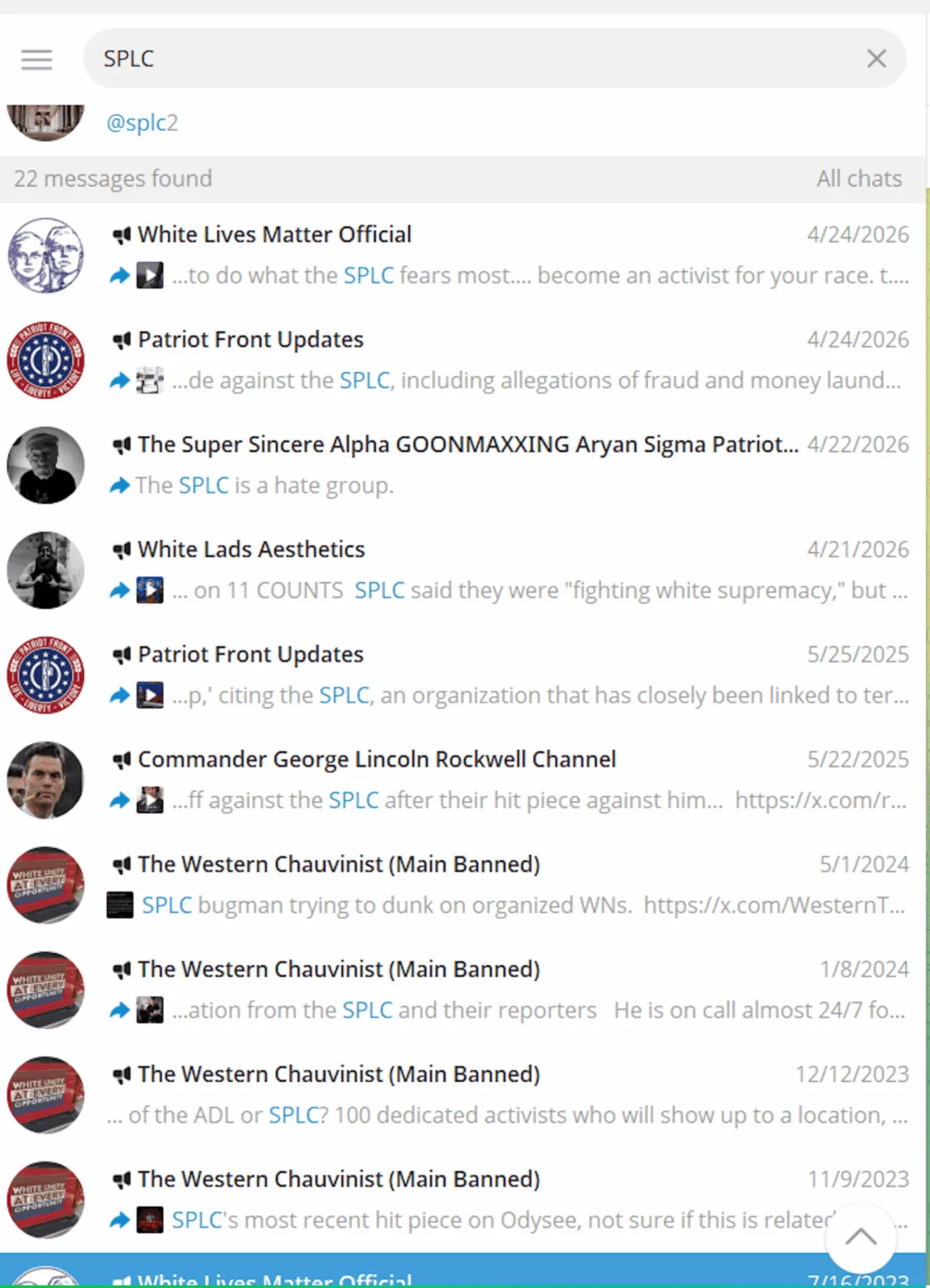
In a significant development that has sent ripples through civil rights and extremist circles, a federal grand jury returned indictments in April 2026, charging the Southern Poverty Law Center (SPLC) with wire fraud, bank fraud, and conspiracy to commit money laundering. The charges, brought forth by the Department of Justice, allege that the SPLC, a prominent nonprofit legal advocacy organization, engaged in a clandestine operation to funnel over $3 million in donated funds to individuals associated with violent extremist groups, including the Ku Klux Klan and Aryan Nations. Prosecutors contend that the SPLC secretly compensated eight informants between 2014 and 2023 for their cooperation, a fact deliberately withheld from donors. U.S. Attorney General Todd Blanche detailed the indictment, asserting that these payments were designed to obfuscate the nature of the SPLC’s work and potentially mislead its benefactors.
The Southern Poverty Law Center has vehemently denied all charges, vowing to vigorously contest the indictment in court. Lawyers representing the organization have characterized the prosecution as "vindictive," arguing that it stems from an improper motive rather than legitimate legal grounds. Bryan Fair, the interim president of the SPLC, has defended the organization’s informant program, asserting that it has "saved lives" and is a continuation of decades of critical civil rights work aimed at combating hate and extremism.
This legal battle has quickly become a focal point for commentary and analysis, particularly within legal and academic circles. Critics of the Justice Department’s action, including those at Lawfare, a publication dedicated to the U.S. legal system, have labeled the indictment as "among the most cynical criminal cases ever brought by the Department of Justice." These critics highlight that the SPLC, as a private entity, may not have had a legal obligation to disclose the confidential operational details of its informant program to its donors, suggesting the charges may be misconstrued or politically motivated.
The reverberations of the indictment were almost immediate within online extremist communities. Within hours of the Justice Department’s announcement, white supremacist influencers on platforms such as Telegram and Gab began celebrating the news. These actors swiftly framed the charges as irrefutable evidence that organizations dedicated to monitoring and documenting extremist movements, along with journalists, could no longer be trusted. The indictment has been repurposed by these groups as a rallying point to not only discredit the SPLC but also to undermine the broader body of research and advocacy concerning hate groups and political extremism. Analysts anticipate that these narratives will be strategically employed to legitimize and justify increasingly radical, and at times violent, responses from these elements.
Ideological Ammunition and Narrative Warfare
The indictment has been seized upon by conservative advocacy groups and right-wing media outlets, including Moms for Liberty and The Daily Signal. These entities have, in many instances, stripped the legal proceedings of their judicial context, recasting the charges as definitive proof that the SPLC has deliberately manufactured extremist activity rather than objectively investigating it. Online posts and commentary have propagated the narrative that the SPLC has been engaged in a long-standing deception, intentionally creating the very phenomena it claims to combat.

A swift analysis of online discourse following the indictment revealed a pattern of immediate and widespread adoption of this narrative within white nationalist channels. A search conducted on Telegram on May 6, 2026, identified 22 posts referencing the SPLC across at least six distinct white nationalist channels. The majority of these posts appeared within 72 hours of the indictment’s announcement, indicating a coordinated or rapidly disseminated response. These discussions, while not always extensive, consistently repeated a core set of claims. For example, the "Super Sincere Alpha GOONMAXXING Aryan Sigma Patriot" channel declared, "The SPLC is a hate group."
Other channels, such as the "White Lives Matter Official" Telegram channel, utilized the indictment to rally support, urging users to "become an activist for your race" while positioning the SPLC as a primary antagonist. This consistent framing across disparate channels and social media platforms suggests a rapid circulation of a shared narrative, likely orchestrated or amplified by key influencers, rather than organic, independent commentary. The speed and uniformity of these responses underscore the strategic utility of such legal developments for extremist networks.
The Neo-Nazi and Neo-Fascist Amplification
The commentary surrounding the SPLC indictment within channels affiliated with neo-Nazi and neo-fascist ideologies, such as the "Commander George Lincoln Rockwell" channel—named for the founder of the American Nazi Party—illuminates how antisemitic conspiracy theories are often woven into broader narratives, moving beyond explicit rhetoric to a more pervasive and insidious influence. These discussions frequently portray the SPLC as a politically motivated or illegitimate actor. Posts from channels like "Patriot Front Updates" have disseminated allegations of fraud and money laundering, simultaneously criticizing the SPLC’s mission to identify and challenge white nationalist activities.
Further analysis indicates that this criticism of the SPLC has become inextricably linked to a broader antisemitic conspiracy narrative. This narrative posits that organizations like the SPLC are not merely advocacy groups with political and ideological stances but are, in fact, operating on behalf of purported Jewish interests. This alleged hidden agenda, according to these conspiracy theories, aims to suppress white identity and influence. These narratives are often circulated in tandem with the "great replacement theory," a pervasive and dangerous conspiracy theory that falsely claims a clandestine network of elites is orchestrating immigration and demographic shifts to deliberately replace the white population and diminish its political and cultural power. The SPLC and other researchers have extensively documented this theory as a foundational element of contemporary white nationalism, linking it to a surge in hate crimes and extremist violence. Within this conspiratorial framework, the SPLC indictment is not viewed as an isolated legal issue but as concrete evidence of a systematic, coordinated effort by a network of institutions to suppress white identity.
Victimhood Narratives as a Recruitment Tool
Scholars who specialize in the study of white nationalism have long identified victimhood narratives as a central pillar of the movement’s appeal. By cultivating a sense that white people are under attack, unfairly marginalized, or systematically displaced, these narratives transform social change into a story of persecution. This perceived persecution then serves as a powerful justification for political mobilization and radicalization.
Research into contemporary white nationalism highlights a shift away from formal membership structures towards decentralized digital spaces. It is within these online environments that narratives, grievances, and identities are continuously reinforced and amplified. Major real-world events, such as the SPLC indictment, are thus transformed into strategic opportunities for these movements. Extremist groups leverage these events to validate their existing worldviews and attract individuals who may be feeling disenfranchised, seeking explanations for societal changes, or searching for a sense of belonging.

The Recurring Pattern of Exploiting Controversy
Extremist movements have a long and documented history of utilizing mainstream controversies as fertile ground for recruitment. Participants within these movements frequently interpret external events through pre-existing narratives of threat, injustice, and persecution. This interpretive lens allows them to transform moments of public controversy into perceived validation of their ideological frameworks.
A salient historical example can be found in the 1990s, when the deadly standoffs between federal law enforcement and groups like the Branch Davidians near Waco, Texas, and the Ruby Ridge incident involving survivalist Randy Weaver in Idaho, became foundational persecution narratives for the burgeoning militia and Christian Identity movements. These groups interpreted these events as irrefutable proof that the federal government was actively targeting gun owners and religious dissenters. In the context of online extremist communities, such events can serve as potent tools for reinforcing group identity and attracting individuals susceptible to radical ideologies.
The SPLC indictment, as a real-world legal event, provides a similar opportunity for extremists. They can point to government action, even if based on allegations, as validation of their worldview. This creates a narrative that appears responsive to current events, regardless of the factual accuracy or the legal outcome. The perceived validation from a governmental indictment, even if the allegations are contested, lends an aura of legitimacy to their deeply held beliefs and grievances.
Redirecting Domestic Terrorism Policy and Its Implications
Legal scholars have observed that the Justice Department’s indictment of the SPLC aligns with a broader pattern, particularly noted during the Trump administration, of redirecting domestic terrorism policy away from groups identified as white supremacist. For instance, the 2026 U.S. Counterterrorism Strategy released by the Trump White House notably omitted any mention of violent far-right groups as a domestic terrorism threat. This contextual backdrop is crucial for understanding how the SPLC case has been interpreted and weaponized within extremist spaces. It is not perceived as an isolated fraud allegation but rather as a form of institutional permission or validation. The indictment has effectively become a potent symbol for these groups, eclipsing the need for factual evidence or legal due process.
In the current fragmented digital media landscape, symbols and emotionally resonant narratives travel far more rapidly than factual evidence, especially when they confirm pre-existing biases and desires within a radicalized audience. The true danger, therefore, may not lie in whether white supremacists believe the SPLC is guilty of the charges. Instead, the profound implication is that the controversy itself, irrespective of its ultimate legal resolution, has already served its purpose. It has been successfully weaponized to reinforce extremist ideologies, recruit new adherents, and sow further distrust in institutions dedicated to combating hate and extremism. The enduring impact will likely be the further entrenchment of these harmful narratives and the continued challenge they pose to efforts aimed at countering domestic terrorism and safeguarding civil liberties.
Art Jipson is Associate Professor of Sociology at the University of Dayton.




 Amara Maple
 Joko Widodo
 admin
admin
 Yuyun Lusiyani
 Pevita Pearce