
 Yuyun Lusiyani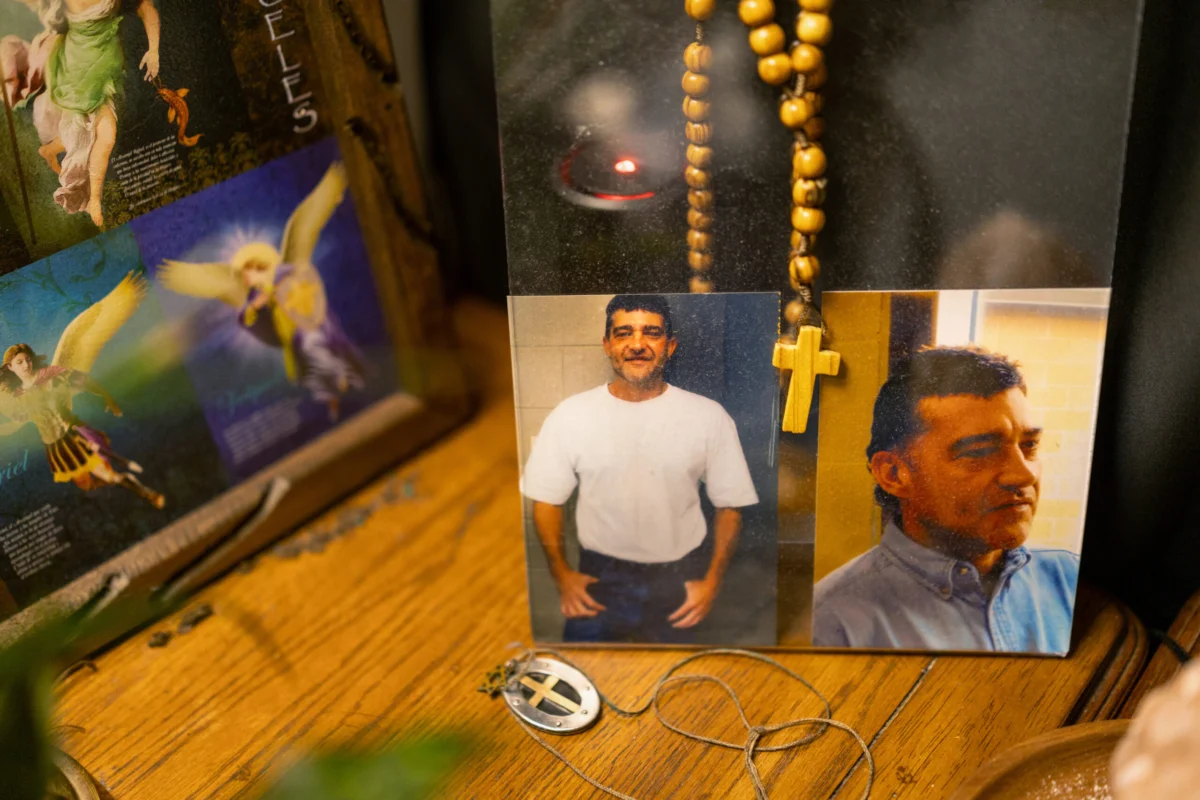
Jimmie "Chris" Duncan, a West Monroe native, has emerged from a harrowing three-decade ordeal on Louisiana’s death row, his conviction for the 1993 murder of a toddler definitively overturned by the state’s highest court. Yet, as he wipes sweat from his brow outside a central Louisiana motel, the shadow of his past still looms, a stark reminder of a justice system that, for too long, prioritized flawed forensics over factual innocence. His current temporary abode, a $350-a-week room in a rundown motel amidst whispers of drug dealing and suspected meth production, might seem precarious to many. But for a man who has faced state-sanctioned death, his perspective is chillingly clear: "I feel safe here. I mean, I’ve been on death row. I feel safe anywhere."
A Conviction Built on Quicksand: The Discredited Bite Mark Evidence
Duncan’s journey into the abyss began on December 18, 1993, following the tragic death of 23-month-old Haley Oliveaux, the daughter of his then-girlfriend, Allison Layton Statham. Duncan maintained that he had placed Haley in the bath, only to find her unresponsive later, floating face down. Police initially considered negligent homicide, but the case escalated dramatically after forensic pathologist Steven Hayne and dentist Michael West conducted the child’s medical examination. Their claims of sexual assault and intentional drowning, buttressed by purported bite marks on Haley’s body, became the linchpin of the prosecution’s first-degree murder charge. In 1998, after a two-week trial, a jury convicted Duncan, and he was subsequently sentenced to death.
However, the foundation of this conviction began to crumble years later under intense scrutiny. An investigation by Verite News and ProPublica last year meticulously detailed how prosecutors had relied on "key evidence that appeared to be fabricated by a pair of forensics experts whose use of bite mark analysis has since been widely discredited as junk science." This "junk science" refers to forensic odontology, specifically the practice of comparing bite marks on victims to a suspect’s dentition. While once accepted in courtrooms, the scientific community has largely disavowed bite mark analysis, citing its lack of empirical validation, high error rates, and subjective interpretation. The National Research Council of the National Academies of Sciences, for instance, issued a scathing report in 2009, highlighting the severe limitations and often unreliability of many forensic disciplines, including bite mark analysis. The American Board of Forensic Odontology (ABFO) itself, which once championed the technique, has faced increasing pressure and criticism, leading to a significant reevaluation of its standards.

Despite mounting evidence of scientific invalidity, Louisiana prosecutors, notably Steve Tew, the district attorney for Ouachita Parish where the crime occurred, continued to argue fiercely for Duncan’s execution. This stance was particularly alarming given Louisiana’s troubling history of wrongful convictions and death sentences, a record that has drawn national criticism. Governor Jeff Landry’s recent push to expedite executions further intensified the existential threat to Duncan.
The Supreme Court’s Resounding Rebuke and Judicial Outrage
The turning point arrived in June, when the Louisiana Supreme Court delivered a decisive ruling, throwing out Duncan’s murder conviction. The court unequivocally stated that the bite marks found on the child’s body – the sole physical evidence connecting Duncan to the alleged crime – "could not have been made by a human." This ruling was not merely a technicality; it was a profound indictment of the evidence that had condemned Duncan for three decades.
Chief Justice John Weimer, in a rare display of judicial indignation, penned an opinion that resonated with historical gravity, comparing the prosecution of Duncan to "17th-century witch trials." He wrote, "We now look back at those practices as asinine and absurd with no basis whatsoever in logic." He then drew a chilling parallel, asserting that some of the evidence against Duncan was "similarly specious." This powerful condemnation from the state’s highest judicial officer underscored the egregious nature of the injustice and the profound scientific and ethical failures that underpinned Duncan’s conviction.
Three Decades in Angola: A Descent into the Abyss

Duncan’s 30 years in the Louisiana State Penitentiary at Angola, often referred to as "The Farm," were a living nightmare that extended far beyond the confines of his cell. His initial decade was particularly brutal. The crushing blow of losing his first appeal in 2002 extinguished any immediate hope of convincing the courts of his innocence. More devastating, he watched helplessly as the fabric of his family unraveled under the immense strain.
His mother, Barbara Oren, a pillar of support who visited him every Thursday, suddenly stopped coming in 2004. Duncan’s description of his "almost obsessing" vigil at his cell window, clinging to the hope of her appearance, paints a poignant picture of desperation. Three years later, Barbara died. Her sister, Elaine Whiteside, confirmed that excessive drinking was the cause, but added a crucial clarification: "grief killed her." Whiteside elaborated on the profound impact: "She fought for Chris for so long, and she turned to alcohol. It’s been very traumatizing for everybody. For the last 32 years, how do you tell someone your nephew’s on death row for the rape and murder of a baby?"
The tragedy continued. Fourteen years after his mother’s death, Duncan’s brother, David, succumbed to an overdose. Duncan recounted how David, once a successful car salesman, descended into addiction, unable to cope with the stigma and pain of his brother’s incarceration. "He just couldn’t take it. He couldn’t escape being my brother." The cruel irony of a system that first imprisoned him unjustly and then denied him the dignity of attending his mother’s and brother’s funerals adds another layer to the trauma.
Life on death row itself was a constant assault on his sanity. For nearly 20 years, Duncan endured solitary confinement for 23 hours a day, a practice widely condemned by human rights organizations as a form of psychological torture. The one hour he was allowed out was never on a fixed schedule, sometimes occurring at 2 a.m., rendering the phone calls he could make virtually impossible. (Conditions improved slightly after a 2017 class-action lawsuit mandated at least four hours outside cells, communal meals, and recreation). The concept of time blurred, yet Duncan fought to maintain a routine: waking early, coffee, news, exercise, and extensive reading. He learned Hebrew to better understand the Bible and became a tutor, helping other inmates earn their GEDs. These acts of self-preservation and service speak to an incredible resilience in the face of dehumanizing conditions.
Physically, his health deteriorated rapidly. By 34, he suffered severe heart pain from a bacterial infection, often going to sleep unsure if he would wake. The Louisiana summers, with cell temperatures soaring to 115 degrees, triggered seizures, leading Duncan to believe he suffered brain damage. "There were times when I got out of bed and I didn’t even know if I was left-handed or right-handed. There were a few times when I got up, I didn’t even know my name." These conditions were not unique to Duncan; in 2013, three other death row inmates sued the Department of Public Safety and Corrections over "appalling and extreme conditions" due to heat. While a judge initially ordered air conditioning, a federal appeals court overturned it, leaving many in similar predicaments. Far from breaking him, Duncan asserts, these brutal conditions only hardened his resolve to fight for his innocence, even as his cries often seemed unheard, met with cynical laughter by those who dismissed all claims of innocence from death row.

The Long Road to Vindication: Investigations, Advocacy, and a Crucial Video
Signs of hope, however faint, began to emerge around 2008 when Duncan learned of other individuals convicted on the basis of discredited bite mark evidence from Hayne or West who had been exonerated. By 2009, journalist Radley Balko spotlighted Duncan’s case in Reason magazine, framing it within a larger pattern of "forensics fraud" perpetrated by the two experts. At this point, Duncan’s initial legal team, a New Orleans nonprofit, lacked the resources for a comprehensive investigation, leaving his case in limbo.
The tide turned significantly in 2016 when his attorneys connected with the American Bar Association, which facilitated pro bono representation from an Atlanta law firm. Six years later, the Innocence Project in New York also joined the formidable legal team. Their diligent discovery requests unearthed a wealth of exonerating evidence. Expert witnesses emerged, asserting that Haley’s death was an accidental drowning likely caused by a seizure, directly refuting the prosecution’s murder theory. A jailhouse informant, whose trial testimony claimed Duncan confessed, recanted his statement, further eroding the prosecution’s case.
Crucially, the legal team uncovered a grainy, black-and-white video recording from 1993, capturing Michael West’s examination of Haley. The footage chillingly shows West taking a mold of Duncan’s teeth and, disturbingly, grinding it into and across the child’s body, seemingly fabricating bite marks where none previously existed. These fabricated marks were then used to secure Duncan’s death sentence. The initial trial judge had inexplicably deemed this video irrelevant and barred the jury from seeing it. Atlanta attorney Christian Bromley, who joined the case, recalled his horror upon seeing the video in 2016, shocked that such a damning piece of evidence had been ignored for over two decades. This video became the cornerstone of Duncan’s renewed bid for freedom.
Michael West, who has since offered various explanations for his methods, including a "direct comparison" technique of pressing tooth molds onto suspected bite marks, admitted in a 2011 deposition in another case that he no longer believed in bite mark analysis. Steven Hayne died in 2020, taking his methodologies with him, but leaving a legacy of controversy.

Filmmaker Catherine Legge’s documentary about Duncan’s case also played a pivotal role, particularly in her success in tracking down Allison Layton Statham, Haley’s mother. Statham, who had lived for 30 years under the implicit accusation of being an accomplice to her child’s killer, eventually became convinced of Duncan’s innocence. Her powerful testimony at Duncan’s bail hearing in July 2025 was a watershed moment. She bravely told the court that the district attorney’s office had "lied about her daughter’s death to make it look like murder and continues to perpetuate the lie," asserting that Duncan deserved to be free. Duncan, overwhelmed, wept as he listened to his former girlfriend champion his cause, validating his decades-long fight for truth.
In April of last year, Ouachita Parish Judge Alvin Sharp overturned Duncan’s conviction, explicitly criticizing the "questionable" work of Hayne and West. District Attorney Tew, however, appealed this decision, arguing that bite mark evidence was "accepted science" at the time of the trial and still considered useful by "some experts." This appeal, rooted in a defense of outdated and discredited forensic practices, ultimately failed. Four months after Statham’s testimony, Judge Sharp granted Duncan bail, leading to his release into his family’s embrace the day before Thanksgiving. The Louisiana Supreme Court’s June ruling finally rejected Tew’s appeal, definitively overturning Duncan’s conviction, making him the last of at least nine individuals sentenced to death or facing severe penalties based on the work of Hayne or West to be freed.
Lingering Limbo: The Unfinished Fight for Full Justice and Compensation
Despite his exoneration and release, Duncan is far from truly free. District Attorney Steve Tew had explicitly warned the Supreme Court during an April hearing that he would retry Duncan if the conviction was vacated. Tew, who did not respond to requests for comment, has consistently maintained his belief in Duncan’s guilt and his deserving of execution. While Tew’s term ends in January and he is not seeking reelection, he has until next June to decide on a retrial, leaving Duncan in a torturous state of mental and financial limbo.
The financial toll of wrongful conviction is immense, and Louisiana’s compensation program offers little immediate solace. The state has a restitution program designed to compensate exonerees up to $480,000 over a decade. However, Duncan is not eligible until the district attorney either officially declines to retry him or he is acquitted in another trial – a process that can take years. Even then, compensation is not guaranteed. Louisiana Attorney General Liz Murrill has actively opposed nearly all applications for compensation, telling lawmakers that defending against such claims consumes vast state resources and even advocating for the fund’s complete abolition. This adversarial stance from the state’s highest legal officer highlights a systemic resistance to acknowledging and rectifying wrongful convictions, placing an additional burden on individuals who have already lost decades of their lives.

"The foreseeable future for me is the year between now and when they can’t prosecute me no more. That’s the only future I get to play with," Duncan laments. "I’m 100% factually innocent, but not 100% free from prosecution." This statement encapsulates the lingering injustice, the state’s unwillingness to fully clear his name, and the profound psychological burden of potential re-prosecution.
Rebuilding a Fragmented Life: From Angola to Walmart
Duncan’s journey since his release is a testament to human resilience, but also a stark illustration of the challenges exonerees face. He emerged from Angola with nothing. His initial accommodation was his aunt’s living room couch in Pineville. A broken leg for his aunt necessitated his move to the motel in Alexandria, where he found himself surrounded by the very social ills he had escaped in prison. In August, he achieved a small but significant milestone: moving into his own apartment, the first place he has ever lived by himself. "I never really had a place to just be comfortable and relax," he reflects, highlighting the fundamental stability he has long been denied.
His main focus is his job at Walmart, working the night shift unloading and stocking freight for $17 an hour. Despite the meager pay, he enjoys the work, finding a measure of peace in its routine, often listening to music with earbuds, letting "the world drift away." He was even named employee of the month in June, a small but meaningful recognition of his dedication. He is also looking to the future, having enrolled in a Walmart management training program, seeking upward mobility and a more secure financial footing.
Beyond personal stability, Duncan is determined to leverage his experience for broader change. He plans to turn his attention back to the flaws in the criminal justice system, particularly the conditions in Angola prison. He wants to ensure that others do not suffer the horrors he endured, advocating not only for the innocent but also for the humane treatment of all inmates, including those he befriended on death row. "I was under the same roof with those people twice as long as I was under the same roof with my own family," he notes, underscoring the deep bonds forged in shared adversity.

In a poignant moment of reconnecting with his past, Duncan recently reconnected with his childhood sweetheart through Facebook, a woman he last saw at a skating rink in the early 1980s. This unexpected reunion offers a glimpse into the life he was abruptly forced to abandon, a "simple, country life" where he hunted, fished, rode motorcycles, and dreamed of becoming a firefighter like his father. But that life, he understands, is irretrievably lost. "I can’t be a simple person anymore," Duncan acknowledges. "I try to find ways to be happy, but nothing is simple anymore."
Broader Implications for Justice and Reform in Louisiana
Jimmie Duncan’s case serves as a profound and multifaceted indictment of critical failings within Louisiana’s criminal justice system. Firstly, it starkly exposes the perils of relying on discredited forensic science. The continued use and defense of bite mark analysis, long after its scientific validity was debunked, led directly to a wrongful death sentence. This calls for urgent and comprehensive reform in how forensic evidence is evaluated and presented in Louisiana courts, demanding adherence to rigorous scientific standards rather than subjective interpretations.
Secondly, the protracted legal battle and the district attorney’s persistent efforts to retry Duncan, even after a Supreme Court exoneration, highlight a troubling prosecutorial culture. The resistance to acknowledging error, coupled with the Attorney General’s opposition to exoneree compensation, reveals a systemic reluctance to accountability and rehabilitation. This adversarial stance prolongs trauma and denies justice to those proven innocent, further eroding public trust in the system.
Finally, Duncan’s experience in Angola prison, particularly the prolonged solitary confinement and inhumane living conditions, underscores the urgent need for prison reform. While some improvements have been made, the psychological and physical toll on inmates, especially those later found innocent, is immeasurable.

Jimmie Duncan’s odyssey is far from over. His story is not just one of exoneration but a continuing struggle for full freedom, financial stability, and the restoration of a life stolen by injustice. His resolve to advocate for change, despite his own ongoing challenges, is a powerful call to action for a justice system that must learn from its grievous errors and truly embrace fairness, accountability, and the pursuit of truth.



 Pevita Pearce
 Eva Lovia
 Joko Widodo
 admin
admin
 Lina Irawan