
 Jia Lissa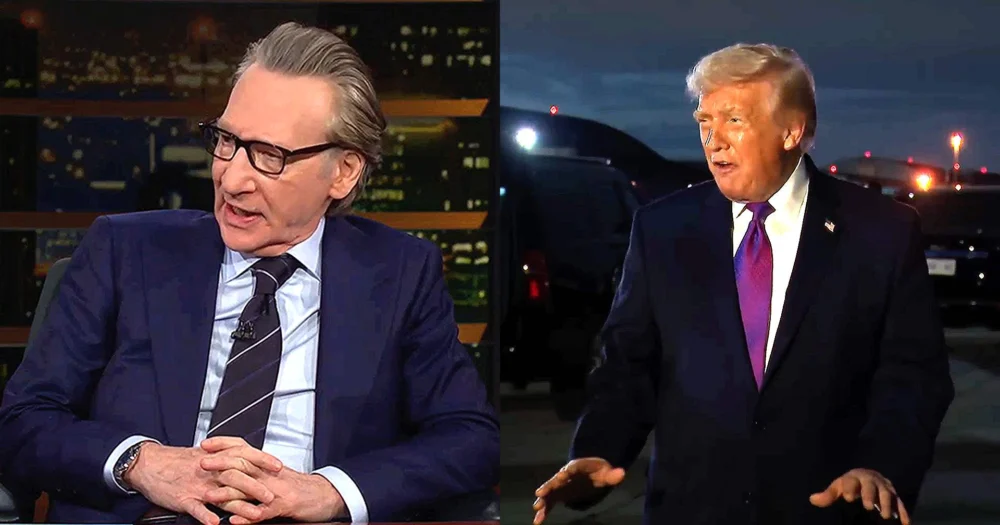
The intersection of televised political commentary and international security strategy took center stage during the latest broadcast of HBO’s Real Time with Bill Maher, as the host voiced significant concerns regarding the United States’ apparent inability to secure the Strait of Hormuz. Despite recent expressions of support for a robust stance against Iranian provocations, Maher utilized his platform to question the effectiveness of current military deployments in the face of ongoing attacks on commercial oil tankers. The discussion, which featured a panel of high-profile political and financial figures, highlighted a growing tension between the rhetoric of American military superiority and the logistical realities of protecting one of the world’s most vital maritime chokepoints.
The segment followed a week of heightened activity in the Persian Gulf, where the Trump administration’s "maximum pressure" campaign against Tehran has coincided with a series of kinetic incidents involving energy infrastructure. Maher, who just seven days prior had signaled a degree of approval for limited military action—provided it did not involve "boots on the ground"—expressed frustration over what he perceived as a tactical failure to maintain control over essential waterways. The dialogue underscored the complexities of asymmetric warfare, where conventional military dominance is often challenged by low-cost, high-impact disruptions.
The Real Time Discussion: Strategic Frustrations and Tactical Gaps
During the panel segment of the program, Maher was joined by Anthony Scaramucci, the former White House Communications Director, and Lloyd Blankfein, the former CEO of Goldman Sachs. Also appearing on the program was Pennsylvania Governor Josh Shapiro. The conversation quickly turned toward the paradox of American military power: the possession of unparalleled technological and fire superiority versus the persistent vulnerability of global trade routes.
Maher opened the dialogue by referencing the administration’s claims regarding the degradation of Iranian capabilities. "Trump says, no Air Force. Iran has no Air Force, no missiles, and no Navy," Maher noted, paraphrasing the administration’s dismissive stance toward Iranian conventional strength. "He says, there’s nothing left to bomb. Apparently, they have something left to bomb, which is the Strait of Hormuz."
The comedian and pundit pressed his guests on why the United States, despite its massive defense budget and naval reach, seemed unable to guarantee the safe passage of tankers through the 21-mile-wide strait. Lloyd Blankfein responded by highlighting the nature of the geography involved, noting that the narrowness of the passage allows for effective disruption with minimal resources. Blankfein argued that Iran does not require significant "firepower" to create obstacles, but rather the ability to deploy "cheap drones" and "menace ships," thereby creating a psychological and economic deterrent that prevents vessels from transiting the area.
Anthony Scaramucci provided a more technical critique, focusing on recent shifts in naval deployment. He pointed to the redeployment of four U.S. minesweepers in September as a significant oversight in war planning. "That was bad war planning because if we were gonna make that attack and anticipated that they were gonna close the strait, we would have had those minesweepers in place," Scaramucci stated. He suggested that the absence of these specialized vessels has hampered the Navy’s ability to protect convoys and clear potential underwater threats.
The Strategic Importance of the Strait of Hormuz
To understand the weight of Maher’s critique, one must look at the data surrounding the Strait of Hormuz. Often described as the "world’s most important oil chokepoint," the strait links the Persian Gulf with the Gulf of Oman and the Arabian Sea. According to the U.S. Energy Information Administration (EIA), approximately 21 million barrels of oil per day pass through the strait, representing roughly 21% of global petroleum liquids consumption.
The geography of the strait makes it uniquely vulnerable. While the waterway is 21 miles wide at its narrowest point, the shipping lanes consist of only two two-mile-wide channels for inbound and outbound traffic, separated by a two-mile buffer zone. This narrow corridor is within the territorial waters of Iran and Oman, making any military presence there a sensitive and high-stakes endeavor.
For the global economy, the strait is a "single point of failure." Any prolonged closure or significant increase in insurance premiums for tankers transiting the region leads to immediate spikes in global oil prices. Analysts suggest that even a temporary disruption can add a "risk premium" of $5 to $10 per barrel to Brent Crude prices, impacting everything from domestic gasoline costs to international manufacturing overheads.
Chronology of Escalation: A Timeline of Maritime Insecurity
The current tension in the Strait of Hormuz is the result of a multi-year escalation cycle that began in earnest following the United States’ withdrawal from the Joint Comprehensive Plan of Action (JCPOA) in 2018.
- May 2018: The U.S. withdraws from the Iran nuclear deal and begins reimposing sanctions, targeting Iran’s oil exports.
- May 2019: Four commercial vessels, including two Saudi oil tankers, are damaged in "sabotage attacks" off the coast of the United Arab Emirates. U.S. intelligence attributes the attacks to limpet mines.
- June 2019: Two more tankers, the Front Altair and the Kokuka Courageous, are attacked in the Gulf of Oman. The U.S. releases video footage allegedly showing an Iranian Revolutionary Guard Corps (IRGC) patrol boat removing an unexploded limpet mine from one of the hulls.
- July 2019: Iran seizes the British-flagged tanker Stena Impero in the Strait of Hormuz, citing alleged marine violations, an act widely seen as a tit-for-tat response to the detention of an Iranian tanker in Gibraltar.
- Late 2023 – Early 2024: The emergence of regional proxies and the use of Unmanned Aerial Vehicles (UAVs) and sea drones introduce a new layer of complexity to maritime security, moving beyond traditional naval engagements.
Analysis: Asymmetric Warfare and Naval Readiness
The "minesweeper" issue raised by Scaramucci on Real Time touches on a broader debate within the Department of Defense regarding the composition of the U.S. Navy. For decades, the Navy has prioritized "blue water" capabilities—large aircraft carriers and destroyers designed for high-seas battles. However, the threats in the Strait of Hormuz are "brown water" or littoral threats: small, fast-attack boats, sea mines, and shore-based missile batteries.
Asymmetric warfare allows a smaller power like Iran to negate the advantages of a superpower. By using "cheap drones," as Blankfein noted, or low-tech mines, a secondary power can force a superior navy into a defensive crouch. Clearing mines is a slow, methodical process that is difficult to perform under fire. If the U.S. has indeed redeployed its limited number of minesweepers to other theaters, its ability to react to a sudden mining of the strait is severely compromised.
Furthermore, the "convoy" system—where warships escort commercial tankers—is resource-intensive. During the "Tanker War" of the 1980s, the U.S. launched Operation Earnest Will to protect Kuwaiti tankers. That operation required a massive commitment of naval assets and resulted in several direct confrontations with Iranian forces. The current administration’s reluctance to commit to such a large-scale, sustained presence reflects a desire to avoid another "forever war," yet it leaves a vacuum that Maher and his guests argue is being exploited.
Political and Economic Implications
The shift in Bill Maher’s tone reflects a broader segment of the American public and political establishment that is comfortable with "tough talk" but grows wary when that rhetoric fails to produce tangible security results. The frustration expressed on Real Time highlights the gap between the administration’s "Maximum Pressure" policy and the reality of regional instability.
From an economic perspective, the inability to "control" the strait has far-reaching consequences. While the U.S. has become more energy-independent due to the shale boom, global oil prices are still set on the international market. A crisis in the Hormuz directly affects American consumers. Moreover, U.S. allies in Asia—specifically Japan, South Korea, and China—rely heavily on Middle Eastern crude passing through that specific waterway. Continued insecurity threatens to strain these diplomatic relationships and embolden competitors to seek alternative security arrangements.
Official Responses and Future Outlook
While the administration has maintained that its military posture in the Middle East is sufficient to deter major aggression, the Pentagon has periodically announced the deployment of additional carrier strike groups and Patriot missile batteries to the region. However, officials have been more circumspect regarding the specific tactics used to counter small-scale sabotage and drone strikes.
The International Maritime Organization (IMO) and various shipping industry bodies have called for increased international cooperation to secure the shipping lanes. The formation of the International Maritime Security Construct (IMSC), a coalition of nations dedicated to maintaining freedom of navigation in the region, was a direct response to these challenges. Yet, as the discussion on Real Time suggests, the effectiveness of these coalitions remains a subject of intense debate.
As the situation evolves, the focus of military analysts will likely remain on the "bottleneck" of the Strait of Hormuz. The ability of the United States to balance its strategic pivot toward the Indo-Pacific while maintaining a credible deterrent in the Persian Gulf will be the defining challenge of its maritime policy. For pundits like Maher, the metric of success is simple: the ability to project power where it is needed most, ensuring that the world’s most critical energy artery remains open to the flow of global commerce. Without a clear plan to address the "mines and drones" of asymmetric warfare, the boast of military superiority may continue to be met with skepticism on both sides of the political aisle.


 Yuyun Lusiyani
 Joko Widodo
 Eva Lovia
 Pevita Pearce