
 Jia Lissa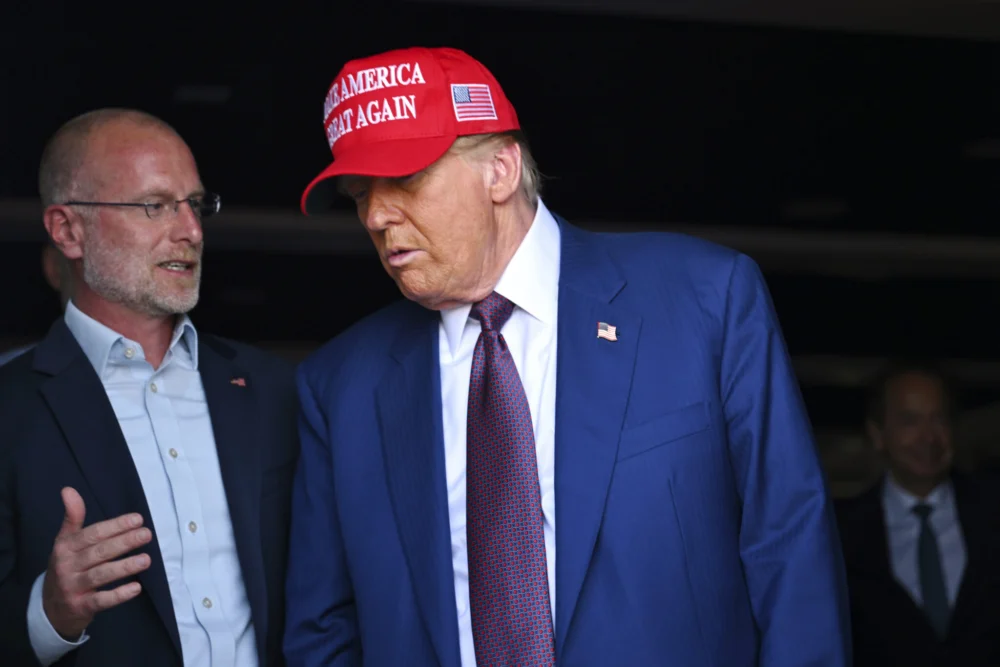
Federal Communications Commission (FCC) Chairman Brendan Carr has issued a formal warning to American broadcast stations, suggesting that their federal licenses could be at risk if they engage in what he characterized as "hoaxes and news distortions." The statement, released via social media on Saturday, comes amid a period of heightened tensions between the Trump administration and major news organizations regarding the reporting of the ongoing military conflict with Iran. Carr’s comments specifically targeted legacy media outlets, aligning his regulatory stance with recent criticisms voiced by President Donald Trump concerning the accuracy of war-time reporting.
The catalyst for the Chairman’s warning was a series of posts by President Trump on Truth Social, in which the commander-in-chief accused prominent newspapers and broadcast networks of intentionally misrepresenting military developments. Specifically, the President disputed reports regarding an Iranian-linked strike on a Saudi Arabian airfield, which allegedly targeted five tanker planes. Trump asserted that the reporting was a "hoax," claiming that four of the five aircraft sustained virtually no damage and that the strike had occurred several days prior to the media’s coverage. The President’s rhetoric escalated to accusing The New York Times and The Wall Street Journal of harboring a desire for the United States to "lose the war," labeling the outlets as "sick and demented."
The Regulatory Framework and the Public Interest Standard
Chairman Carr, who was elevated to the chairmanship by President Trump with a mandate to reform the agency’s approach to media oversight, echoed these sentiments by framing the issue as a matter of regulatory compliance. Under the Communications Act of 1934, the FCC is tasked with granting and renewing broadcast licenses based on whether the station serves the "public interest, convenience, and necessity." Historically, this "public interest" standard has been interpreted broadly, but Carr’s recent statements suggest a more aggressive application of the agency’s "News Distortion Policy."
The FCC’s longstanding policy against news distortion prohibits broadcasters from intentionally rigging or slanting the news. However, the evidentiary threshold for such a violation has traditionally been extremely high, requiring "extrinsic evidence" that the licensee intended to deceive the public. By publicly warning broadcasters that they have a "chance now to correct course" before their license renewals come up, Carr is signaling a potential shift in how the commission may evaluate these standards in the context of national security and war-time reporting.
Carr’s statement highlighted the economic and social dimensions of broadcasting, noting that the American public provides broadcasters with free access to the nation’s airwaves—a resource valued in the billions of dollars. "The law is clear," Carr wrote. "Broadcasters must operate in the public interest, and they will lose their licenses if they do not." He further argued that a change in editorial direction was a "business interest" for these companies, citing data that shows public trust in legacy media has plummeted to an all-time low of approximately 9%.
Chronology of Administrative Friction with the Press
The warning from the FCC Chairman is the latest development in a rapidly escalating conflict between the executive branch and the press corps since the outbreak of hostilities with Iran.
- Early Conflict Reporting: In the initial days of the kinetic conflict, the administration expressed dissatisfaction with the framing of U.S. defensive maneuvers, claiming that outlets were overstating the effectiveness of Iranian proxy strikes.
- The Saudi Airfield Incident: Reports surfaced regarding a drone or missile strike at a Saudi Arabian facility housing U.S. and allied assets. Major outlets reported significant damage to refueling tankers, which the administration later disputed as "fake news."
- Secretary of Defense Intervention: Secretary of Defense Pete Hegseth joined the fray, accusing media organizations of "exploiting" American casualties. Hegseth alleged that front-page coverage of U.S. service member deaths was designed to "make the president look bad" rather than to inform the public on the tactical realities of the war.
- The FCC Warning: Chairman Carr’s Saturday statement formalized these grievances into a regulatory threat, moving the discourse from political criticism to potential legal consequences for broadcast license holders.
Economic and Data Context of the Broadcast Industry
The financial implications of Carr’s threat are significant. Unlike cable news networks (such as CNN, MSNBC, or Fox News) or digital publications (such as The New York Times), local broadcast stations (affiliates of ABC, CBS, and NBC) are directly regulated by the FCC. These stations rely on the periodic renewal of their licenses to remain on the air.
The "billions of dollars" in subsidies mentioned by Carr refers to the electromagnetic spectrum. If the FCC were to move forward with license revocations or even lengthy challenges during the renewal process, it could jeopardize the valuation of major media conglomerates. Market analysts note that the broadcast industry is already facing headwinds due to "cord-cutting" and a shift in advertising revenue toward digital platforms. A regulatory environment that challenges the "public interest" standing of major networks could lead to significant volatility in media stocks.

Furthermore, the data cited by Carr regarding media trust reflects a broader trend documented by firms such as Gallup and the Reuters Institute. According to recent surveys, only a small fraction of Americans express "a great deal" or "quite a lot" of confidence in newspapers and television news. The administration appears to be using this statistical decline in trust as a foundation for its argument that the media is failing its "public interest" mandate.
Reactions and First Amendment Implications
While the FCC Chairman’s post was met with support from proponents of media reform, it has raised concerns among First Amendment advocates and legal scholars. Critics argue that using the threat of license revocation to influence news coverage constitutes a form of government-induced self-censorship, often referred to as a "chilling effect."
Legal experts point out that the First Amendment provides broad protections for the press, even when reporting is arguably inaccurate or biased. The Supreme Court has historically set a high bar for government interference in editorial decisions. However, the FCC maintains that because the airwaves are a scarce public resource, broadcasters do not have the same absolute editorial freedom as print or digital media.
Inferred responses from the media industry suggest a commitment to standing by their reporting. Historically, when faced with similar pressures, major newsrooms have doubled down on their investigative efforts, citing the importance of an independent press during wartime. Trade organizations representing broadcasters are expected to emphasize that "public interest" is best served by a diversity of voices and that the FCC should remain a neutral arbiter rather than a participant in political disputes.
Broader Impact and Potential Escalation
The implications of Carr’s warning extend beyond the immediate coverage of the Iran war. If the FCC begins to actively use the license renewal process as a tool for content oversight, it would mark a transformative era in American telecommunications law.
Possible outcomes of this shift include:
- Increased Litigation: Any attempt to revoke a license based on "news distortion" would almost certainly lead to a protracted legal battle that could reach the Supreme Court, testing the limits of the FCC’s authority in the 21st century.
- Editorial Shifts: Local stations may become more cautious in how they relay national news feeds, potentially leading to a fragmentation of news standards between national networks and their local affiliates.
- Regulatory Reform: The administration may seek to codify new definitions of "public interest" that include specific requirements for "balanced" or "factual" reporting as defined by the commission.
As the conflict with Iran continues, the information war at home appears to be intensifying. The administration’s stance, articulated by Chairman Carr and supported by President Trump and Secretary Hegseth, suggests that the "Fake News" rhetoric of previous years has evolved into a specific regulatory strategy. For broadcasters, the upcoming license renewal cycles may no longer be routine administrative hurdles, but rather high-stakes tests of their editorial independence and their ability to navigate an increasingly polarized political and regulatory landscape.
The American public remains the ultimate stakeholder in this dispute. As trust in traditional institutions continues to fluctuate, the debate over what constitutes the "public interest" in the digital age will likely remain a central theme of the current administration’s domestic policy. Whether the FCC moves from warnings to action remains to be seen, but the marker laid down by Chairman Carr has fundamentally altered the relationship between the regulator and the regulated.


 Yuyun Lusiyani
 Joko Widodo
 Eva Lovia
 Pevita Pearce
 admin
admin
 Lina Irawan