
 Lina Irawan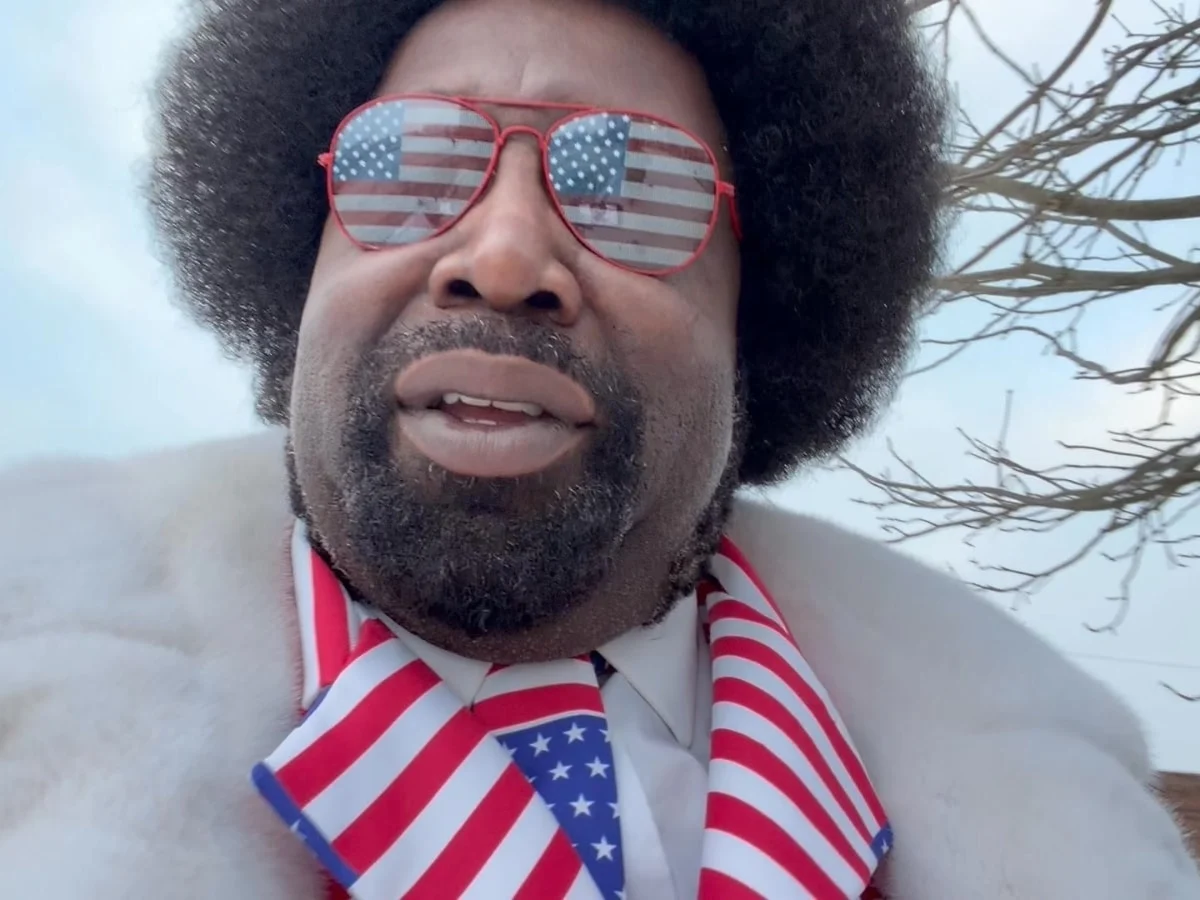
In a significant ruling for the intersection of the First Amendment and police accountability, a judge has ruled in favor of Grammy-nominated rapper Afroman, legally known as Joseph Edgar Foreman, dismissing a lawsuit brought against him by seven members of the Adams County Sheriff’s Office. The litigation, which centered on Foreman’s use of home security footage from a 2022 police raid in his music videos, concluded that the rapper’s creative output constituted protected speech and social commentary. The decision marks a pivotal moment in the legal discourse surrounding the right of private citizens to criticize public officials using digital evidence gathered on their own property.
The legal battle began following an August 2022 raid on Foreman’s residence in Manchester, Ohio, where deputies executed a search warrant related to suspected drug trafficking and kidnapping. Despite the scale of the operation, no charges were ever filed against Foreman. In the aftermath, the rapper utilized his platform to criticize the conduct of the officers, releasing a series of songs and music videos that incorporated footage of the deputies searching his home, damaging his property, and, in one instance, inspecting a lemon pound cake in his kitchen.
The Genesis of the Dispute: The 2022 Adams County Raid
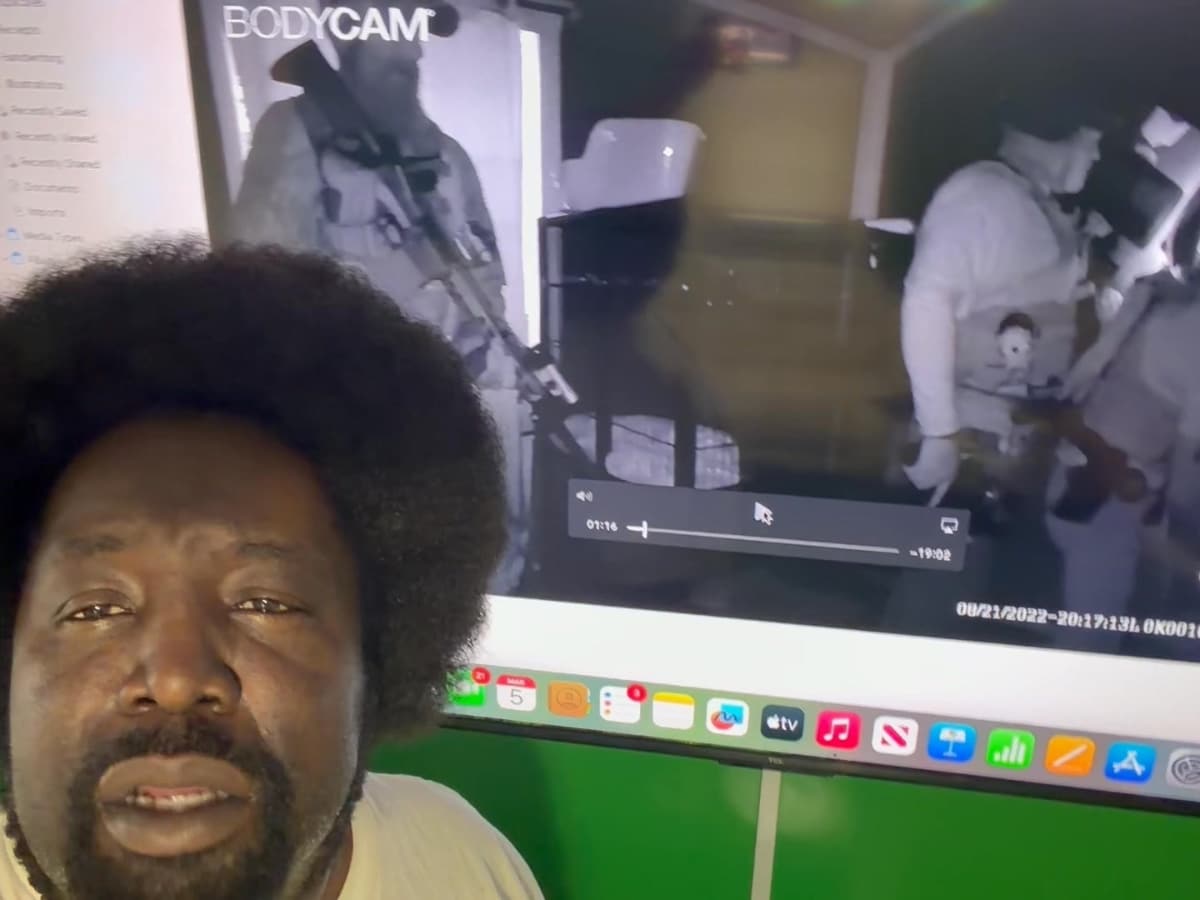
The conflict traces back to August 21, 2022, when the Adams County Sheriff’s Office executed a "no-knock" style search warrant at Foreman’s property. According to official documents, the warrant was issued based on allegations of drug possession, drug trafficking, and kidnapping. Surveillance footage from Foreman’s sophisticated home security system captured several deputies entering the premises with weapons drawn, breaking down the front door, and conducting an exhaustive search of the residence.
Foreman was not home at the time of the raid, but his wife was present and recorded portions of the encounter on her mobile device. The search resulted in the seizure of various items, including a digital scale and a small amount of currency. However, the investigation failed to produce evidence of the severe crimes alleged in the warrant. Foreman later alleged that while the police returned the seized cash, the total was $400 short of what had been taken—a claim that prompted an investigation by the Ohio Bureau of Criminal Investigation (BCI). The BCI eventually concluded that the discrepancy was a clerical error in the counting process, though Foreman remained publicly skeptical of this explanation.
Feeling violated by what he characterized as an unnecessary and racially motivated intrusion, Foreman turned to his artistic craft. He integrated the security footage into music videos for tracks such as "Will You Help Me Repair My Door?", "Lemon Pound Cake," and "Why You Disconnecting My Video Camera?" These songs quickly went viral, garnering millions of views and subjecting the involved deputies to international scrutiny and ridicule.
The Legal Complaint: Defamation and Right of Publicity
In March 2023, seven members of the Adams County Sheriff’s Office—including four deputies, two sergeants, and a detective—filed a civil lawsuit against Foreman. The plaintiffs, identified as Sgt. Shawn Cooley, Sgt. Justin Cooley, Sgt. Michael Estep, Deputy Shawn Grooms, Deputy Brian Helphinstine, Deputy Bryan Grooms, and Detective Bobby Kimmerly, alleged that Foreman had used their likenesses for commercial purposes without their consent.
The deputies’ legal team argued that the music videos and subsequent social media posts caused the officers "humiliation, ridicule, mental distress, and loss of professional reputation." They sought an injunction to prevent Foreman from further using their images and requested damages exceeding $25,000 for each of several claims, including:
- Invasion of Privacy: Specifically, the "right of publicity," which protects individuals from having their names or likenesses used for commercial gain without permission.
- Defamation: Claiming that Foreman’s lyrics and social media captions falsely portrayed the officers as criminals or corrupt.
- Intentional Infliction of Emotional Distress: Alleging that the public mockery incited by the videos led to threats and harassment against the officers and their families.
The plaintiffs argued that while they were public officials, they did not forfeit their right to privacy when performing their duties, especially when those images were used to sell merchandise and promote a music career.
Courtroom Proceedings and Key Testimony
The trial provided several moments of high tension and legal debate. One of the primary contentions from the defense was that the officers, as public servants executing a warrant, had no reasonable expectation of privacy. Foreman’s legal team, led by attorney David Osborne, maintained that the songs were a form of "political and social commentary" on police conduct.
During the proceedings, the court examined the lyrics of "Why You Disconnecting My Video Camera?", which included provocative claims regarding the personal lives of the officers. In one instance, a deputy was questioned about a lyric suggesting Foreman had an intimate relationship with the deputy’s wife. When asked if the claim was false, the deputy’s hesitant response—"I don’t know"—became a point of focus for the defense, who argued that such lyrics were clearly hyperbolic and satirical in nature, a common element in the rap genre.
Another deputy reportedly became emotional on the stand, describing the psychological toll of the viral videos. Foreman, however, remained steadfast, frequently posting updates to his social media followers during the trial. He argued that the emotional distress felt by the officers paled in comparison to the trauma his family experienced during the raid, famously asking on Instagram, "Where was these tears when she was standing in my yard with a loaded AR-15?"

The Verdict: A Victory for Satire and the First Amendment
The court’s final ruling sided with Foreman on almost all counts, primarily citing the First Amendment of the U.S. Constitution. The judge determined that the music and videos were protected forms of expression. Under the legal standard established in New York Times Co. v. Sullivan (1964), public officials must prove "actual malice"—meaning the defendant knew a statement was false or acted with reckless disregard for the truth—to win a defamation suit.
The court found that Foreman’s work fell under the umbrella of parody and satire. Because the videos were based on a real event that occurred at the defendant’s own home, and because the lyrics were stylized expressions of his grievances, they did not constitute actionable defamation. Furthermore, the court ruled that the "right of publicity" claims were inapplicable because the use of the officers’ likenesses was "incidental" to a matter of public concern—namely, the conduct of law enforcement during a high-profile raid.
"No reasonable person would expect a police officer not to be criticized," defense lawyer David Osborne stated during closing arguments. "It’s a social commentary on the fact that they didn’t do things correctly."
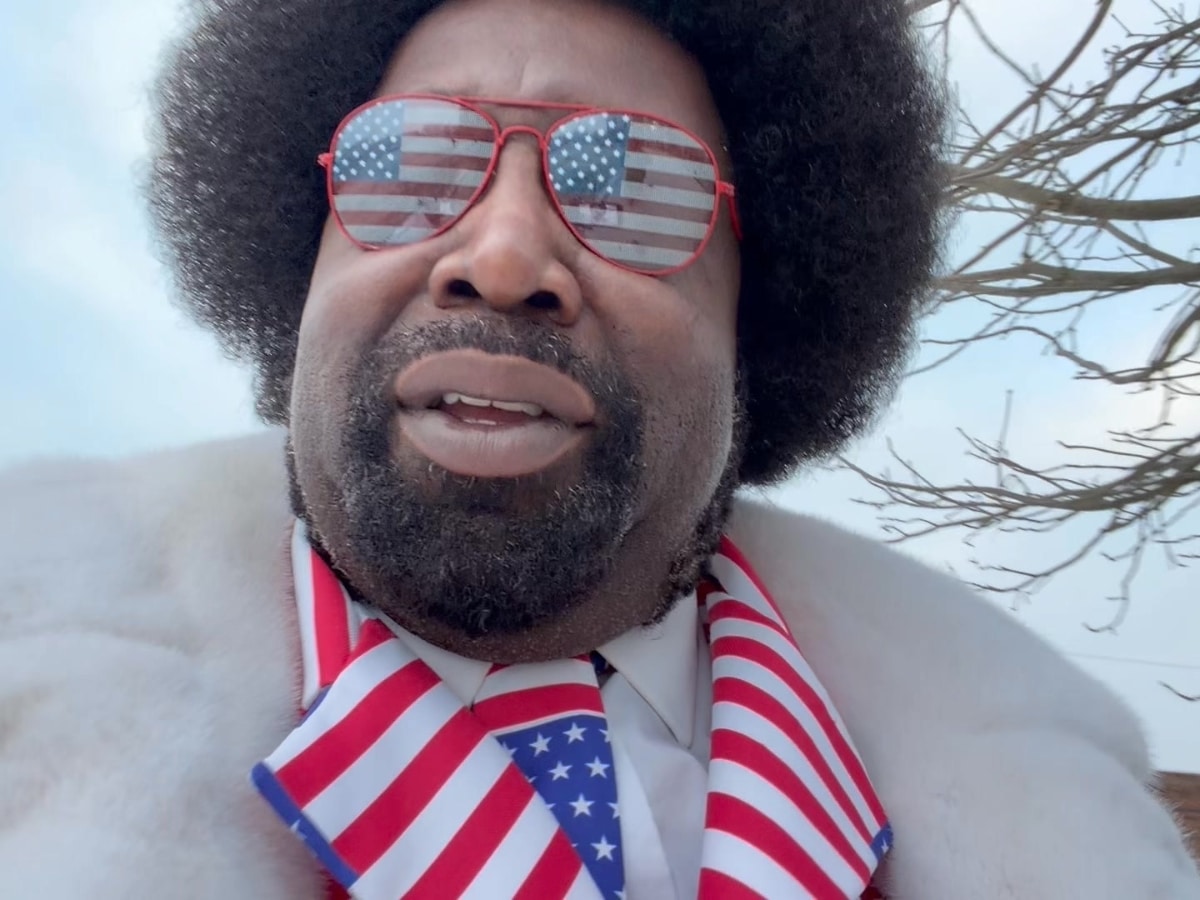
Foreman celebrated the victory outside the courthouse, wearing a suit patterned after the American flag. He framed the win as a victory for all citizens, stating, "We did it, America. Freedom of speech."
Analysis of Implications for Law Enforcement and Civil Liberties
The resolution of Afroman vs. Adams County Deputies carries several broader implications for the digital age:
1. Surveillance as a Tool for Accountability
As home surveillance technology becomes ubiquitous, the ability of citizens to document and broadcast police interactions has increased. This case reinforces the right of property owners to use their own surveillance footage to criticize government actions, even if that criticism is presented in a commercial or artistic format.
2. The "Streisand Effect" in Litigation
Legal analysts have noted that the deputies’ lawsuit likely backfired, a phenomenon known as the "Streisand Effect," where an attempt to hide or remove information results in its wider dissemination. By suing Foreman, the deputies brought renewed attention to the "Lemon Pound Cake" video and the original raid, ensuring the footage reached an even larger audience than it might have otherwise.
3. Satire as Protected Speech
The ruling reaffirms the high bar required for public officials to successfully sue for defamation or emotional distress. In the United States, the legal system provides broad protection for artists to use humor and exaggeration to criticize those in power, a principle seen as vital to a functioning democracy.
4. Police-Community Relations
The case highlights the deep-seated tensions in Adams County and beyond regarding "no-knock" warrants and the militarization of local police departments. Foreman’s defense successfully argued that his music was a "peaceful solution" to a perceived injustice, contrasting his artistic response with the physical force used during the raid.
Chronology of Events
- August 21, 2022: Adams County Sheriff’s deputies raid Afroman’s home in Manchester, Ohio, citing drug and kidnapping suspicions. No charges are filed.
- Late 2022: Afroman releases "Lemon Pound Cake" and "Will You Help Me Repair My Door?", utilizing security footage from the raid. The videos go viral.
- Early 2023: Afroman alleges $400 is missing from the money returned by the Sheriff’s Office. An investigation by the BCI later attributes this to a counting error.
- March 2023: Seven deputies file a lawsuit against Afroman for defamation and misuse of likeness.
- 2023–2024: Legal discovery and preliminary hearings take place; Afroman continues to release content mocking the lawsuit.
- September 2024: The court rules in favor of Afroman, dismissing the deputies’ claims on First Amendment grounds.
The conclusion of this case serves as a definitive legal precedent in Ohio, suggesting that while police officers have certain privacy rights as private citizens, those rights do not shield them from public criticism or artistic parody when performing their duties in the public eye. For Afroman, the verdict is not just a personal win but a validation of his "peaceful protest" through music.

 Jia Lissa
 Yuyun Lusiyani
 Joko Widodo
 Eva Lovia

 Pevita Pearce