
 Eva Lovia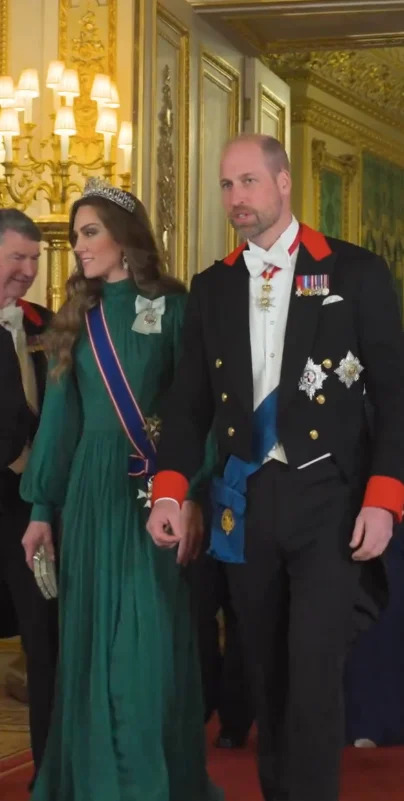
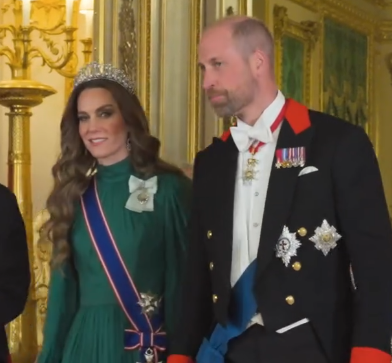
The Princess of Wales made a sartorial statement of solidarity and diplomatic courtesy as she joined His Majesty King Charles III for a State Banquet held in honour of the visiting President of Nigeria, Bola Ahmed Tinubu. The elegant gala dinner, a cornerstone event of the State Visit, took place at Windsor Castle, marking a significant moment in the deepening relationship between the United Kingdom and Nigeria. Princess Catherine, accompanied by her husband, His Royal Highness Prince William, the Prince of Wales, was among the distinguished royal attendees, showcasing a keen eye for symbolism in her chosen ensemble.
A Diplomatic Palette: Princess Catherine’s Nigerian-Inspired Ensemble
The Princess of Wales’s choice of a striking, deep green gown was a deliberate and eloquent nod to the colours of the Nigerian flag. This vibrant hue, a central element of Nigeria’s national emblem, was further complemented by the delicate cream and white tones of her cherished Lover’s Knot tiara. This particular diadem, a piece steeped in royal history and previously worn by both Queen Mary and Diana, Princess of Wales, features intricate diamond arches adorned with lustrous pearl drops. The harmonious pairing of the green gown with the pearlescent and diamond tiara created a visually cohesive and symbolically rich ensemble, underscoring the diplomatic significance of the occasion. The Princess further enhanced her look with a pair of diamond and pearl earrings that once belonged to the late Queen Elizabeth II, adding another layer of historical resonance and personal connection to the British monarchy’s enduring legacy.
A Tapestry of Royal Jewels: Queen Camilla’s Tribute
Queen Camilla also paid homage to royal tradition and familial legacy through her jewellery selection. She chose the sapphire tiara, a prominent piece from the George VI Suite, a collection of jewels meticulously assembled by Queen Elizabeth II. This significant suite comprises a sapphire necklace, a birthday gift to the then Princess Elizabeth from her father, King George VI. Queen Elizabeth II later expanded the collection by commissioning a matching sapphire and diamond necklace, which could be converted into a tiara, thus completing the ensemble. The George VI Suite has been a favoured collection for Queen Camilla since the accession of King Charles III, and it was the very first suite of jewels she wore to a formal gala event following her husband’s ascension to the throne. Her Majesty’s dress, an exquisitely embroidered white gown, was crafted by one of her preferred couturiers, Fiona Clare, further adding to the regal splendour of the evening.
The State Visit: A Formal Welcome and Diplomatic Engagements
The State Visit commenced earlier in the day with a formal ceremonial welcome at Windsor Great Park. King Charles III and Queen Camilla, alongside the Prince and Princess of Wales, greeted President Bola Tinubu and his wife, Mrs. Oluremi Tinubu. The occasion featured the playing of both national anthems and a ceremonial carriage procession, a tradition that underscores the grandeur and importance of State Visits.
A notable departure from the typical State Visit schedule was observed with the King’s decision to hold a private audience with President Tinubu instead of the customary State Lunch. This adjustment was made to accommodate President Tinubu’s observance of Ramadan. During the holy month, adherents of Islam observe fasting from sunrise to sunset, with meals consumed only during the hours of darkness until the celebration of Eid. This thoughtful consideration highlights the mutual respect and understanding between the two nations and their leaders.
A Glimpse into the Royal Party
Beyond the King, Queen, Prince, and Princess, other members of the Royal Family were in attendance, reinforcing the breadth of the United Kingdom’s engagement with Nigeria. The Duke of Edinburgh, The Princess Royal, and The Duke of Gloucester were also present, signifying the unified support of the monarchy for this significant diplomatic initiative.
Deepening Ties: The Significance of the State Visit
State Visits are carefully orchestrated events designed to foster and strengthen diplomatic, economic, and cultural ties between nations. For Nigeria, Africa’s most populous nation and a key economic powerhouse, this visit represents an opportunity to deepen its strategic partnership with the United Kingdom. Bilateral trade between the UK and Nigeria is substantial, with the UK exporting goods and services valued in the billions of pounds annually. Furthermore, a significant Nigerian diaspora resides in the UK, contributing to the rich cultural tapestry of both countries.
The visit underscores the UK’s commitment to engaging with key African nations, particularly in areas of mutual interest such as trade, investment, security, and development. Nigeria’s role as a regional leader in West Africa also makes its relationship with the UK of considerable geopolitical importance. Discussions during the State Visit are likely to have encompassed a range of issues, including economic cooperation, efforts to combat terrorism and instability in the Sahel region, and initiatives to promote sustainable development.
Historical Context and Future Prospects
The relationship between the United Kingdom and Nigeria is complex, rooted in a shared history that spans colonial periods and post-independence development. State Visits serve as a platform to acknowledge this history while focusing on building a forward-looking partnership based on shared values and mutual respect. The presence of the Princess of Wales, who has increasingly taken on a more prominent role in diplomatic engagements, signals the evolving nature of royal involvement in international relations. Her symbolic attire at the State Banquet, drawing direct parallels to the Nigerian flag, can be interpreted as a subtle yet powerful gesture of goodwill and recognition of Nigeria’s national identity.
The State Visit, which continues beyond the initial State Banquet, is expected to involve a packed schedule of engagements for President Tinubu and his delegation. These will likely include meetings with government officials, business leaders, and cultural institutions, further solidifying the multifaceted relationship between the two nations. The success of such visits is often measured by the concrete agreements reached and the enhanced understanding fostered between the participating countries. As the world navigates an increasingly interconnected and complex geopolitical landscape, the continued engagement between the UK and Nigeria, exemplified by this State Visit, holds significant implications for regional stability and global cooperation. The symbolic gestures, such as Princess Catherine’s carefully chosen attire, serve as a prelude to substantive discussions aimed at charting a course for a robust and mutually beneficial future. The dates of the visit, concluding on March 19th, mark a focused period of intensive diplomatic activity, setting the stage for continued collaboration in the months and years to come.


 Yuyun Lusiyani
 Joko Widodo
 Pevita Pearce
 admin
admin
 Lina Irawan