
 Jia Lissa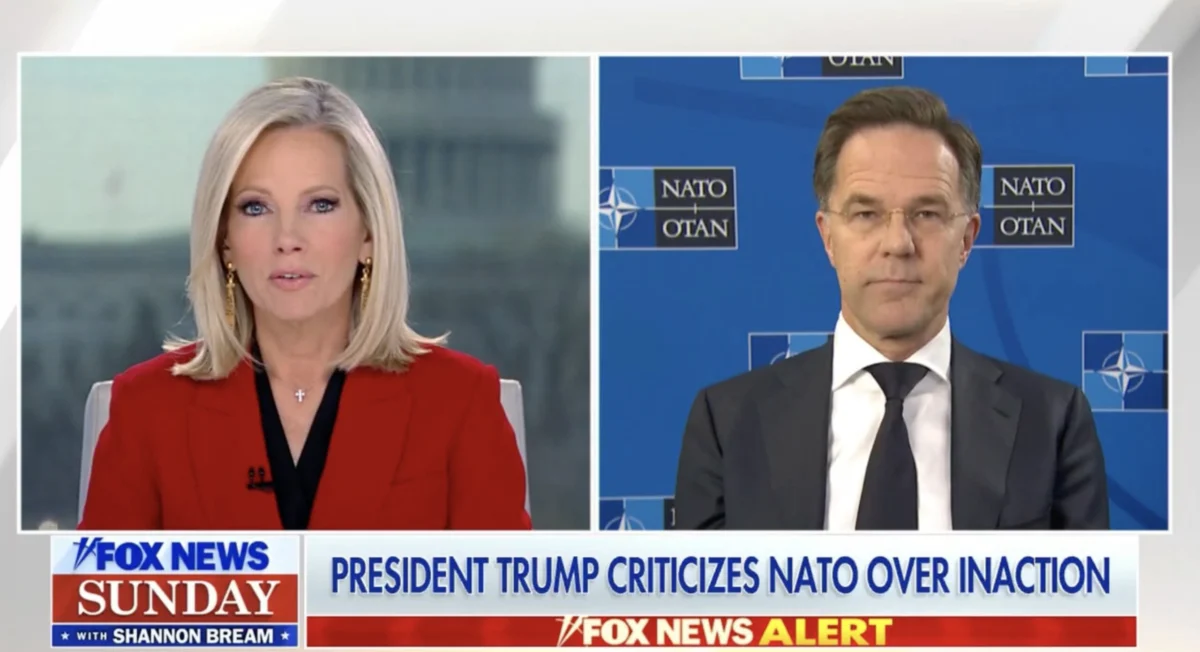
In a high-stakes television appearance on Fox News Sunday, NATO Secretary General Mark Rutte addressed the growing friction between the United States and its international partners regarding the military escalation in the Middle East. During an interview with host Shannon Bream, Rutte was confronted with recent social media statements made by President Donald Trump, who characterized European nations as "cowards" for their perceived hesitation in supporting U.S.-led operations against Iran. The exchange highlighted a significant rift in diplomatic rhetoric while simultaneously revealing the quiet formation of a 22-nation coalition intended to secure global energy corridors.
The controversy stems from a post on Truth Social where President Trump criticized NATO allies for failing to provide immediate and robust support as the conflict with Tehran intensified. According to Rutte, while the President’s frustration is palpable, the reality of the diplomatic and military response is more nuanced than public statements might suggest. Rutte emphasized that the lack of immediate synchronized action was a result of necessary operational security rather than a lack of political will among the allies.
The Strait of Hormuz and the Emerging 22-Nation Coalition
A central focus of the discussion was the collective effort to maintain the freedom of navigation in the Strait of Hormuz, a critical maritime chokepoint. Rutte revealed that since Thursday, a group of 22 countries has mobilized to ensure the waterway remains open. This coalition includes not only the core NATO members but also key Indo-Pacific and Middle Eastern partners such as Japan, South Korea, Australia, New Zealand, the United Arab Emirates (UAE), and Bahrain.
The inclusion of the UAE and Bahrain is particularly significant, as it represents a regional commitment to stability despite the proximity of Iranian military assets. The Strait of Hormuz is widely regarded as the world’s most important oil transit point. According to data from the U.S. Energy Information Administration (EIA), approximately 21 million barrels of oil per day pass through the strait, accounting for roughly 21% of global petroleum liquids consumption. Any prolonged blockade or disruption in this area would have catastrophic effects on global energy prices and supply chains, a fact that Rutte used to underscore the "crucial and necessary" nature of the current mission.
Strategic Secrecy and the Defense of Allied Delays
Shannon Bream questioned Rutte on how the President’s disparaging remarks could be reconciled with the Secretary General’s claims of allied readiness. Rutte’s response centered on the constraints of modern military intelligence and the need for tactical surprise. He explained that the United States had been planning the initial strikes against Iranian targets for several weeks in complete secrecy.
"For obvious reasons, because of security, it was impossible to share that knowledge with allies," Rutte stated during the interview. He argued that involving dozens of nations in the early planning stages would have significantly increased the risk of intelligence leaks, which could have compromised the effectiveness of the "first attack." By keeping the circle of information tight, the U.S. ensured that the initial military objectives were met without tipping off Iranian defenses.
Rutte noted that he had spoken with President Trump several times over the past week to bridge this communication gap. He reportedly told the President that the allies were "following your lead," explaining that the period of apparent inactivity was actually a window used by European and global partners to organize their own logistical and military contributions. This planning phase was essential for the allies to respond effectively once the U.S. made the decision to move forward with a broader international coalition.
Chronology of the Escalation and Diplomatic Friction
The current tension follows a rapid sequence of events that began with increased hostilities between U.S. forces and Iranian-backed proxies. The timeline of the recent escalation provides context for the current diplomatic strain:
- Mid-to-Late October: U.S. intelligence begins tracking specific threats and planning a series of deterrent strikes against Iranian military infrastructure. This planning is kept within a highly classified cell to prevent leaks.
- Early November: Tensions peak as maritime threats in the Persian Gulf increase. President Trump issues public demands for NATO allies to increase their defense spending and direct involvement in Middle Eastern security.
- The Initial Strike: The U.S. conducts a targeted military operation. In the immediate aftermath, several European leaders express caution, leading to the President’s "cowards" post on Truth Social.
- The Diplomatic Pivot: Following the initial strikes, the U.S. State Department and NATO leadership begin formalizing the 22-nation maritime task force.
- The Fox News Sunday Interview: Mark Rutte goes public with the details of the coalition, seeking to reassure the American public and the President that the alliance remains intact and functional.
Geopolitical Implications and Fact-Based Analysis
The friction between the White House and NATO headquarters reflects a broader shift in how the United States manages its traditional alliances. President Trump’s "America First" approach often utilizes public pressure to extract greater commitments from allies, a tactic that has historically led to increased defense spending across the European continent. Since 2014, NATO members have been under pressure to spend at least 2% of their GDP on defense; as of 2024, a record number of allies have met or exceeded this goal, partly in response to U.S. demands and the ongoing conflict in Ukraine.
However, the Iran conflict presents a different set of challenges. Unlike the collective defense of the North Atlantic, operations in the Middle East often fall under "coalitions of the willing" rather than formal NATO Article 5 triggers. This distinction allows for more flexibility in who participates but also creates a vacuum where public rhetoric can easily turn hostile when interests do not immediately align.
The strategic importance of the 22-nation coalition cannot be overstated. By including Japan and South Korea—two of the world’s largest energy importers—the U.S. is framing the Iran conflict not merely as a regional skirmish, but as a global economic security issue. The involvement of Bahrain, which hosts the U.S. Navy’s 5th Fleet, and the UAE further reinforces the maritime security umbrella.
Official Responses and Inferred Reactions
While Rutte’s comments were aimed at smoothing over relations, the reaction from other European capitals has been more measured. In London, the Ministry of Defence has reaffirmed its commitment to maritime security, while officials in Paris and Berlin have historically been more cautious about military intervention in Iran, favoring diplomatic pathways to prevent nuclear proliferation.
Rutte’s praise for the President’s "leadership" and his assertion that the mission to prevent Iran from obtaining nuclear weapons is "crucial" serves as a diplomatic olive branch. By aligning NATO’s goals with the President’s stated objectives, Rutte is attempting to maintain the integrity of the alliance during a period of intense political volatility.
From a strategic perspective, the Secretary General’s defense of the U.S. decision to withhold information from its allies is a rare public admission of the internal frictions within the Five Eyes and NATO intelligence-sharing communities. It acknowledges that even within the world’s most powerful military alliance, trust is often secondary to operational security.
Conclusion: The Path Forward for NATO and the U.S.
As the 22-nation coalition begins its operations in the Strait of Hormuz, the focus will shift from rhetoric to results. The success of the mission will be measured by the stability of oil prices and the prevention of further Iranian escalation. For NATO, the challenge remains balancing the domestic political requirements of the U.S. administration with the sovereign concerns of its European members.
Mark Rutte’s interview serves as a reminder that behind the scenes of public social media broadsides, the machinery of international diplomacy continues to function. The formation of a diverse coalition including Middle Eastern and Asian powers suggests that while the language of the alliance may be changing, the underlying strategic necessity of collective security remains a cornerstone of global stability. The coming weeks will determine if this 22-nation group can effectively deter Iran and if the "cowards" rhetoric will fade in the face of unified military action.


 Yuyun Lusiyani
 Joko Widodo
 Eva Lovia
 Pevita Pearce
 admin
admin
 Lina Irawan