
 Jia Lissa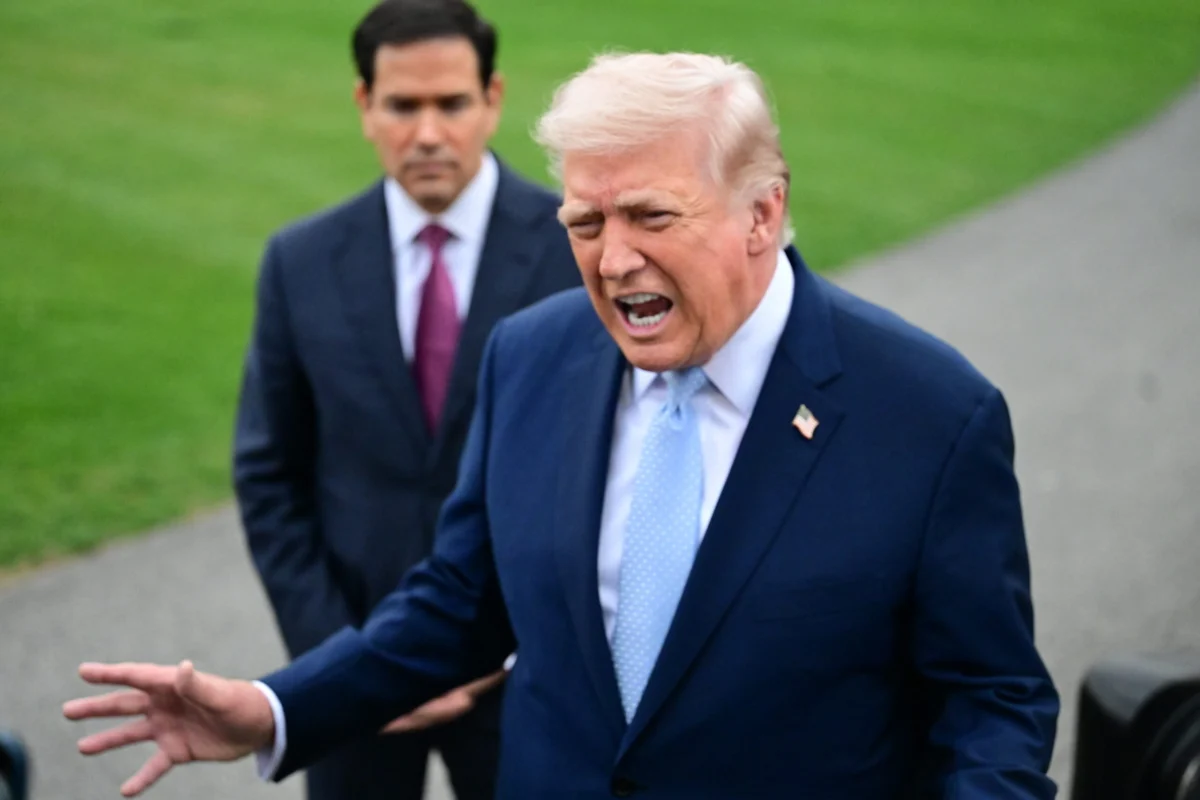
President Donald Trump intensified his stance on the ongoing partial government shutdown Sunday night, issuing a firm ultimatum to Republican lawmakers to withhold support for any Department of Homeland Security (DHS) funding measures until the "SAVE America Act" is successfully passed. In a series of high-profile communications, including a post on his Truth Social platform and an interview with NewsNation, the President made it clear that the resolution of the 36-day fiscal impasse is now inextricably linked to a sweeping legislative package that addresses both federal election protocols and controversial social issues. The President’s directive places significant pressure on Senate leadership to unify the Republican caucus, while simultaneously threatening political consequences for any GOP members who break ranks to negotiate with the Democratic minority.
The Save America Act, which has become the centerpiece of the current legislative battle, proposes a fundamental overhaul of federal voting requirements. Key provisions of the act include a mandatory requirement for citizens to provide photo identification to participate in federal elections, a strict verification process for citizenship, and significant limitations on the use of mail-in ballots. Furthermore, the legislation moves beyond election reform to address social policy, seeking to criminalize gender-affirming surgeries for minors—which the President referred to as "mutilization"—and prohibiting transgender athletes from competing in women’s sports. By bundling these disparate issues into a single legislative vehicle, the administration has created a high-stakes "all-or-nothing" scenario that has paralyzed the federal budgeting process.
The Legislative Ultimatum and the Truth Social Directive
On Sunday evening, President Trump utilized his Truth Social platform to outline his strategy, explicitly instructing Republican senators to avoid making "any deal" with what he characterized as "Crazy, Country Destroying, Radical Left Democrats." The President argued that the passage of the SAVE America Act is of paramount importance, outweighing the immediate need to restore funding to the Department of Homeland Security and the Transportation Security Administration (TSA). He specifically targeted a proposed $5 billion cut in Immigration and Customs Enforcement (ICE) funding, a point of contention in recent Senate negotiations, labeling any deal that includes such a reduction as "unacceptable" unless the SAVE America Act is approved in its entirety.
"I don’t think we should make any deal with the Crazy, Country Destroying, Radical Left Democrats unless, and until, they Vote with Republicans to pass ‘THE SAVE AMERICA ACT,’" Trump wrote. His post detailed a list of non-negotiable demands: Voter ID with photo verification, proof of citizenship to vote, the elimination of most mail-in voting, the implementation of all-paper ballots, and the bans on transgender participation in women’s sports and gender-affirming care for minors.
The President’s rhetoric was not limited to policy demands; it also included a stern warning to members of his own party. He urged Senate Majority Leader John Thune (R-SD) to "clearly identify" any Republicans who might vote against the act, suggesting that such a move would be politically fatal. "They will never be elected again!" Trump posted, signaling that he views loyalty to this specific legislative package as a litmus test for the GOP. This pressure comes as Senator Lisa Murkowski (R-AK) remains the sole Republican to have formally voted against the SAVE America Act thus far, highlighting a near-total, though fragile, unity within the Republican ranks.
A Chronology of the 36-Day Shutdown
The current government shutdown, now entering its 36th day, has become one of the longest in United States history, surpassing the 35-day record set during the 2018-2019 fiscal year. The crisis began following a breakdown in negotiations over the 2026 fiscal year appropriations. While the House of Representatives, controlled by a Republican majority, has passed several iterations of funding bills for the TSA and other DHS agencies, these measures have repeatedly stalled in the Senate.
On Friday, Senate Democrats voted to block a House-passed bill for the fifth time in recent months. The Democrats’ opposition is rooted in two primary concerns: the inclusion of the SAVE America Act provisions and the proposed funding levels for immigration enforcement. Democrats have countered with proposals that would fund the TSA by reallocating money from ICE’s enforcement budget, a move that Republicans have flatly rejected as a threat to national security and border integrity.
The human and operational cost of the shutdown has become increasingly visible. As of late March, thousands of TSA employees have been calling out sick daily, unable or unwilling to work without guaranteed paychecks. Reports from the New York Post indicate that 376 TSA employees have officially resigned since the shutdown began, leaving approximately 50,000 workers to manage the nation’s aviation security under immense strain. This labor shortage has led to massive security lines at major international hubs, prompting President Trump to announce on Saturday that he would be deploying ICE agents to airports nationwide to assist with security screenings—a move that critics argue is a misuse of specialized law enforcement resources.
Public Opinion and the Voter ID Debate
A central pillar of the SAVE America Act is the requirement for photo identification at the polls, a policy that has sparked a fierce debate over civil rights and election integrity. Senate Majority Leader Chuck Schumer (D-NY) and other leading Democrats have consistently characterized voter ID laws as "racist" and a form of modern-day "Jim Crow" legislation, arguing that such requirements disproportionately burden minority voters and the elderly who may have difficulty obtaining specific forms of identification.
However, recent data suggests a significant disconnect between the Democratic leadership’s rhetoric and public sentiment. Harry Enten, a senior data analyst for CNN, recently highlighted polling data showing that a vast majority of Americans support voter ID requirements. According to Enten, polling dating back to 2018 consistently shows that at least 75% of the American public favors such laws. A 2025 study by the Pew Research Center further corroborated this, revealing that 83% of citizens are in favor of photo ID requirements.
The data also indicates that the issue is less partisan among the electorate than it is among lawmakers. The Pew data showed that 95% of Republicans and a surprising 71% of Democrats support voter ID laws. "Normally, you might expect hey, there’d be a big divide by party… but not really here," Enten noted during a broadcast. This widespread public support provides a strategic advantage to the Trump administration, allowing them to frame the SAVE America Act as a common-sense measure backed by a broad consensus of the American people.
The Role of Senate Leadership and the Filibuster
The impasse has placed Senate Majority Leader John Thune in a difficult position. President Trump has publicly prodded Thune to "be a leader" and consolidate the Republican vote to force the Democrats’ hand. The President’s suggestion to "Kill the Filibuster" to pass the SAVE America Act represents a radical shift in Senate procedure. While the filibuster has historically been used by both parties to protect minority interests, Trump’s call to eliminate it reflects his frustration with the slow pace of the legislative process and the Democrats’ ability to block his agenda.
The President’s demand that senators "stay in D.C. for Easter, if necessary," underscores the urgency he feels regarding the passage of the act. By linking the holiday recess to the passage of the bill, Trump is attempting to use the personal schedules of lawmakers as leverage. The strategy aims to make the political cost of a continued shutdown higher for Democrats than the political cost of passing the Republican-led election reforms.
Broader Implications and Economic Impact
The prolonged shutdown of the Department of Homeland Security carries significant implications for national security and the national economy. Beyond the immediate chaos at airports, the lack of funding affects the U.S. Coast Guard, the Secret Service, and the Federal Emergency Management Agency (FEMA). While many employees in these agencies are considered "essential" and continue to work, they do so without pay, creating a secondary crisis of morale and financial stability for hundreds of thousands of federal families.
Economists warn that the continued disruption of air travel could have a "trickle-down" effect on the hospitality and tourism industries, which rely heavily on efficient transportation networks. If TSA "call-outs" continue to rise, major airports could face partial closures, leading to billions of dollars in lost revenue for airlines and associated businesses.
Furthermore, the inclusion of social issues like the ban on gender-affirming care and transgender sports participation within a funding bill sets a precedent for future "omnibus" style battles. Critics argue that by tethering essential government functions to highly divisive social legislation, the administration is making the federal budget process a permanent battlefield for the "culture wars." Supporters, conversely, argue that the President is using the only leverage available to him to enact policies that he believes are essential to the protection of children and the integrity of women’s sports.
Conclusion and Outlook
As the shutdown enters its sixth week, the political landscape remains frozen. President Trump’s Sunday night declarations have effectively closed the door on any middle-ground negotiations that do not include the SAVE America Act. For the Democrats, the dilemma is whether to concede on voter ID—an issue where they lack public majority support—to save TSA operations, or to continue their opposition to what they view as an overreaching and discriminatory legislative package.
The coming days will be critical as Senate Majority Leader John Thune attempts to navigate the President’s demands while managing a narrow and occasionally divided Republican majority. With the Easter recess approaching and the TSA on the brink of operational collapse, the pressure to reach a resolution has never been higher. Whether that resolution comes through a Democratic surrender, a Republican compromise, or a fundamental change to Senate rules remains to be seen, but the President has made his position clear: there will be no DHS funding until the SAVE America Act becomes the law of the land.



 Yuyun Lusiyani
 Joko Widodo
 Eva Lovia
 Pevita Pearce
 admin
admin
 Lina Irawan