
 Lina Irawan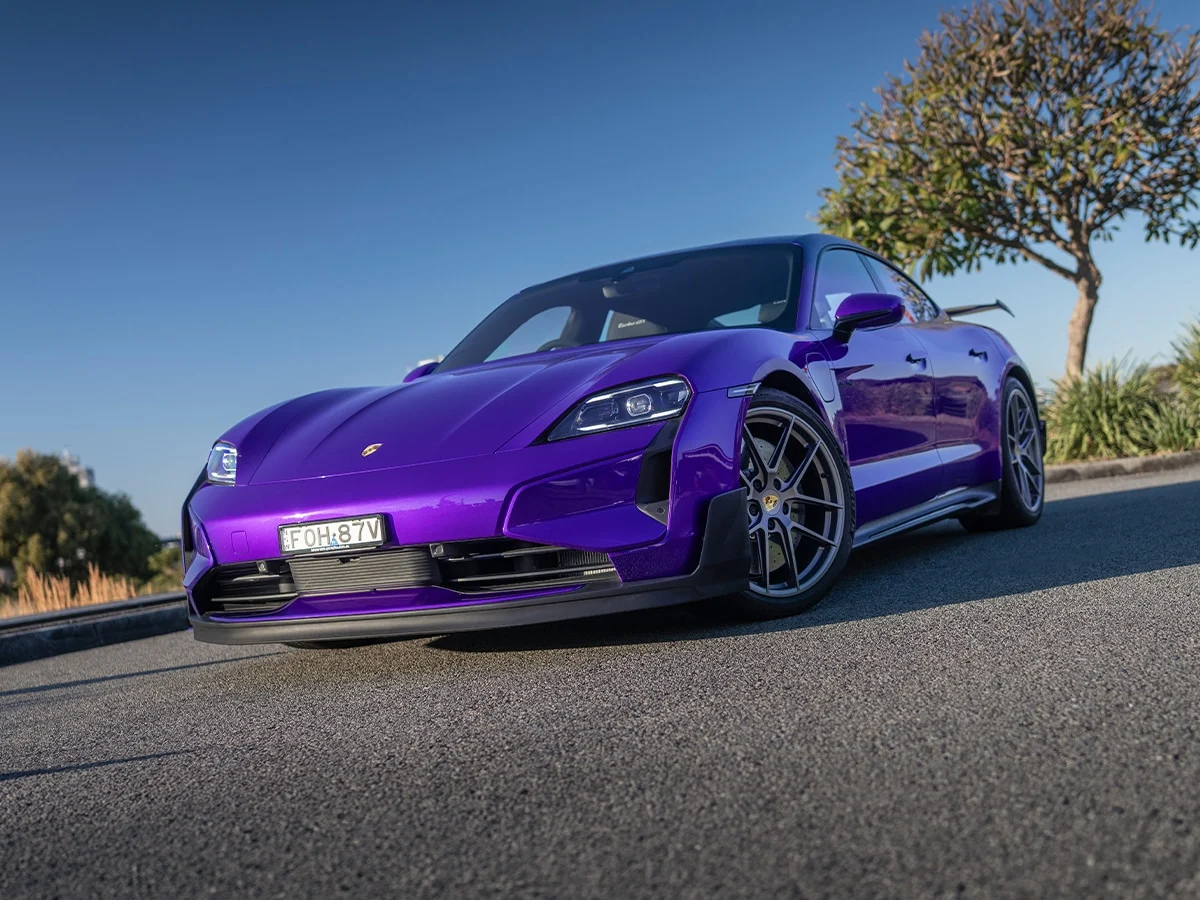
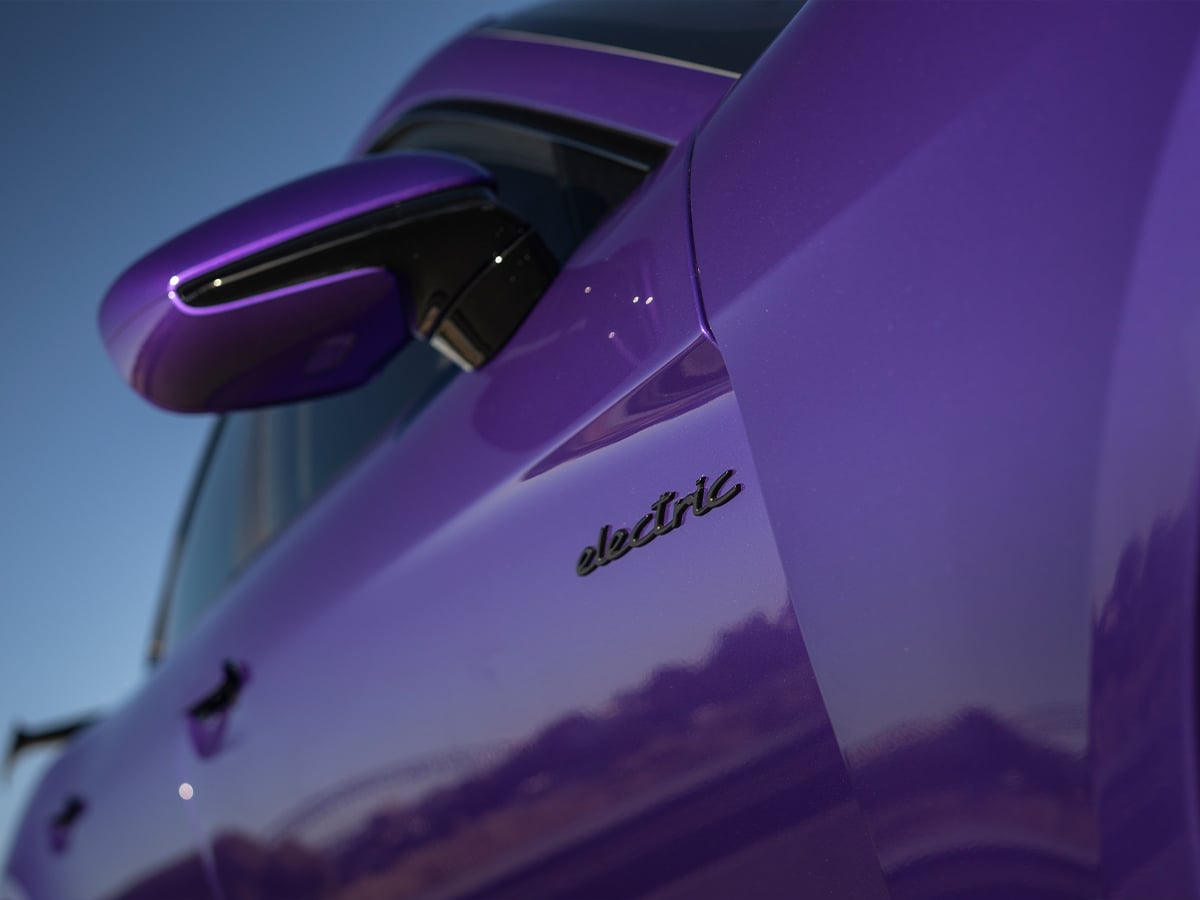
The automotive landscape has reached a significant milestone with the commercial release of the Porsche Taycan Turbo GT equipped with the Weissach Package, a vehicle that redefines the boundaries of electric propulsion and track-oriented engineering. Priced from AUD $416,000 before on-road costs, this flagship model represents Porsche’s most aggressive foray into the electric vehicle (EV) sector to date. By merging the utility of a four-door sedan platform with the uncompromising weight-reduction philosophy of the brand’s "GT" and "RS" racing divisions, Porsche has produced a machine capable of eclipsing the performance metrics of traditional internal combustion engine (ICE) hypercars.
Engineering the Pinnacle of Electric Performance
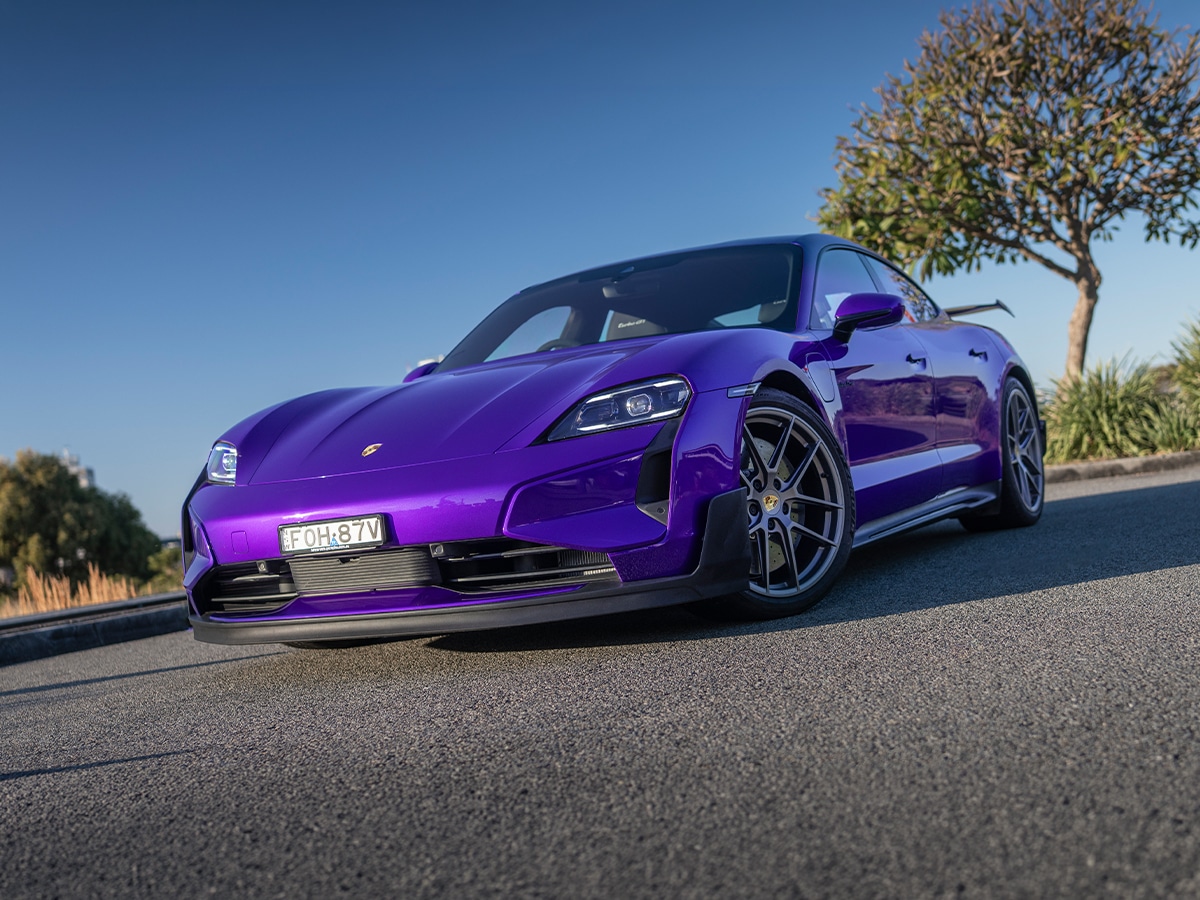
At the heart of the Taycan Turbo GT is a dual-motor, all-wheel-drive powertrain that utilizes a more powerful and efficient pulse-controlled inverter on the rear axle. This hardware enables a standard maximum output of 580 kW (789 PS), which can be temporarily increased via Launch Control to a staggering overboost power of 760 kW (1,034 PS). The torque figure is equally formidable, peaking at 1,240 Nm.
The performance data recorded during recent testing cycles underscores the vehicle’s dominance. The Taycan Turbo GT with Weissach Package achieves a 0-100 km/h sprint in just 2.2 seconds. Its acceleration continues unabated, reaching 200 km/h in 6.4 seconds and completing the quarter-mile in a blistering 9.4 seconds. In a notable demonstration at a domestic drag strip in Australia, a production-spec model recorded a time of 9.083 seconds at a terminal speed of 252.04 km/h (156.61 mph). This performance was so high that it exceeded the safety regulations of the venue for unmodified vehicles, technically requiring a parachute for further passes.

To manage this immense power, Porsche introduced "Attack Mode," a feature derived from the brand’s Formula E program. When activated via the steering wheel-mounted paddle or mode switch, it provides an additional 120 kW of power for 10-second intervals, optimized for track overtaking and exit speeds.
The Weissach Philosophy: Weight Reduction and Aerodynamics
The Weissach Package is a historical designation within Porsche for models that prioritize track performance above all else. In the case of the Taycan Turbo GT, this package facilitates a weight reduction of approximately 70 kg compared to the standard Turbo GT. This brings the curb weight to 2,220 kg—a figure that remains substantial due to the 106 kWh (gross) Performance Battery Plus, yet is lighter than several contemporary plug-in hybrid competitors, such as the new Audi RS 5 and BMW M5.
The weight savings are achieved through a radical "rear-seat delete" strategy. The rear passenger compartment is replaced by a lightweight carbon-fiber cladding that incorporates specialized storage compartments. Further reductions are found in the removal of sound-deadening material, the replacement of the electric charging port covers with manual versions, and the omission of the floor mats and the analog clock from the Sport Chrono package.
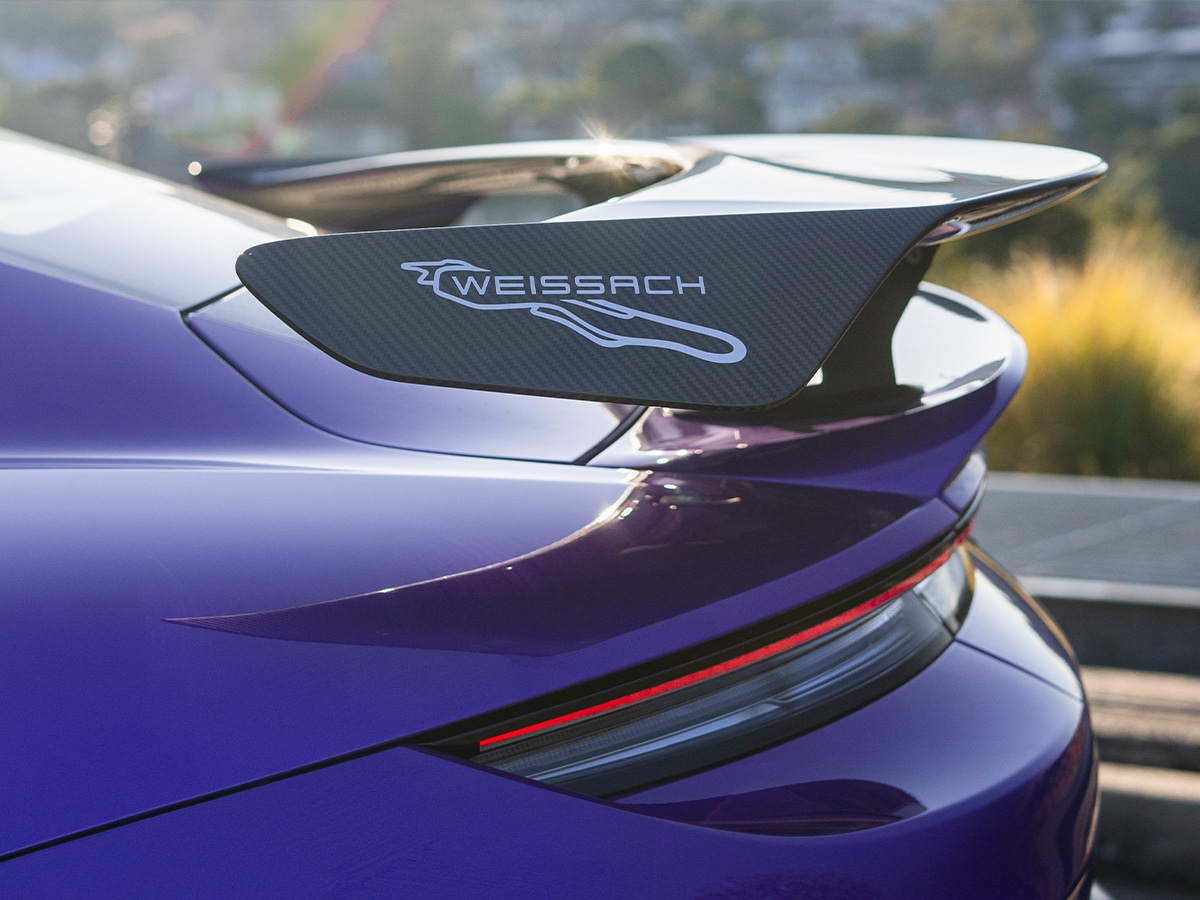
Aerodynamically, the Weissach Package is distinguished by a fixed rear wing with a carbon-weave finish. Combined with other modifications, including a front-diffuser geometry and underbody air deflectors, the vehicle generates up to 220 kg of total downforce. This aerodynamic stability is critical for a car with a top speed rated at 305 km/h.
Chassis Dynamics and the Porsche Active Ride System
One of the most significant technological advancements in the Taycan Turbo GT is the Porsche Active Ride suspension system. Standard on the Turbo GT, this system utilizes active hydraulic dampers connected to an electrically powered pump, allowing the vehicle to adjust its suspension at each corner individually and near-instantaneously.
The system is designed to keep the car’s body level even during extreme longitudinal and lateral forces. By neutralizing pitch and roll, the Active Ride system ensures that the 2,220 kg mass remains balanced, providing the driver with a level of precision previously thought impossible for a vehicle of this weight class. The suspension can also compensate for road imperfections, maintaining a constant tire contact patch for maximum grip.
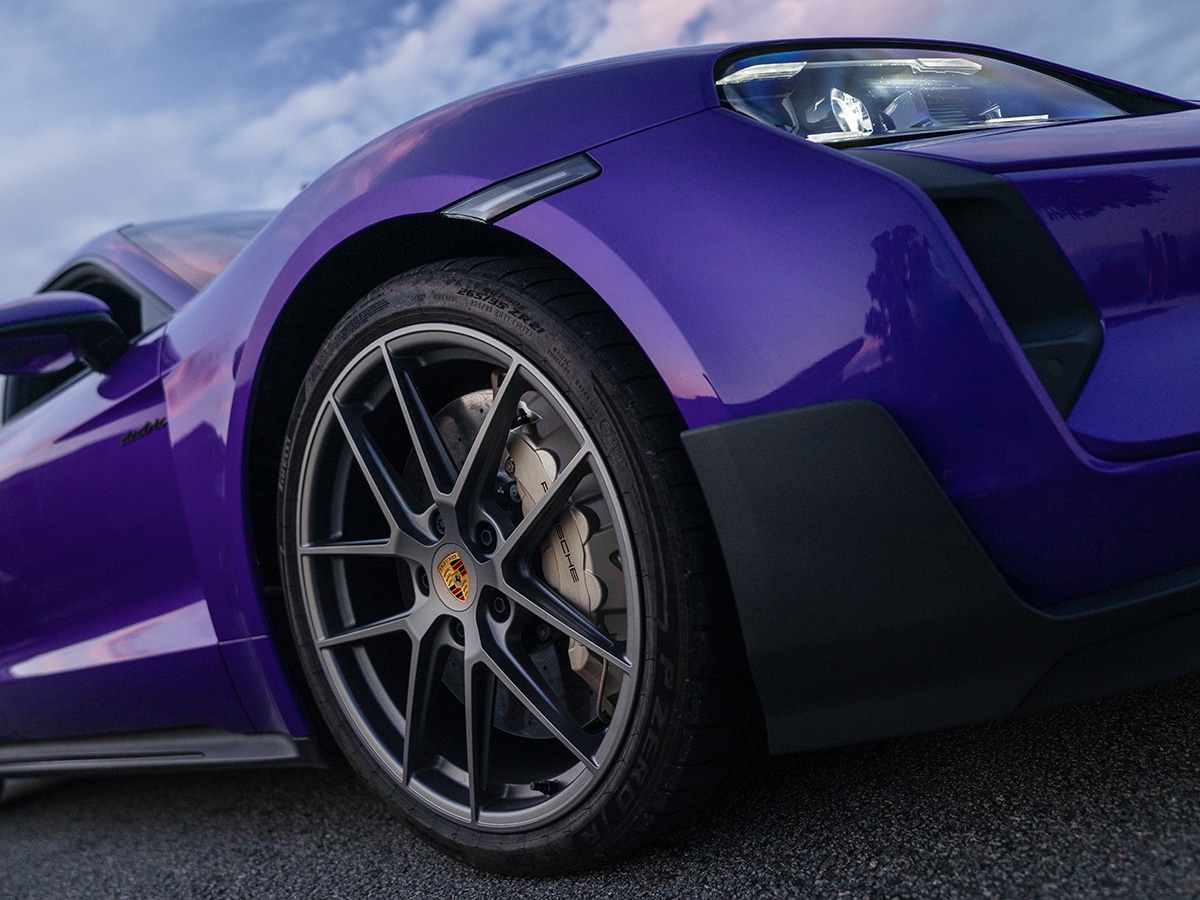
The braking system is equally specialized, featuring Porsche Ceramic Composite Brakes (PCCB) with calipers finished in Victory Gold. The brake disc chambers and housing have been optimized to save weight, further reducing unsprung mass and enhancing steering response.
Chronology of Development and Global Records
The development of the Taycan Turbo GT was punctuated by a series of high-profile track tests aimed at proving the endurance and speed of Porsche’s 800-volt architecture. In early 2024, development driver Lars Kern piloted a pre-production version of the Taycan Turbo GT with Weissach Package around the Nürburgring Nordschleife in 7:07.55.
This lap time was 26 seconds faster than the previous Taycan Turbo S and roughly 18 seconds faster than the Tesla Model S Plaid equipped with its optional Track Package. At the time of the run, it set a new record for four-door electric production cars. While the Xiaomi SU7 Ultra has since posted a faster time (7:04.957), the Porsche remains a benchmark for sustained performance, as its thermal management system allows for consistent lap times without the significant power derating often seen in high-performance EVs.
Interior Refinement and Technical Specifications
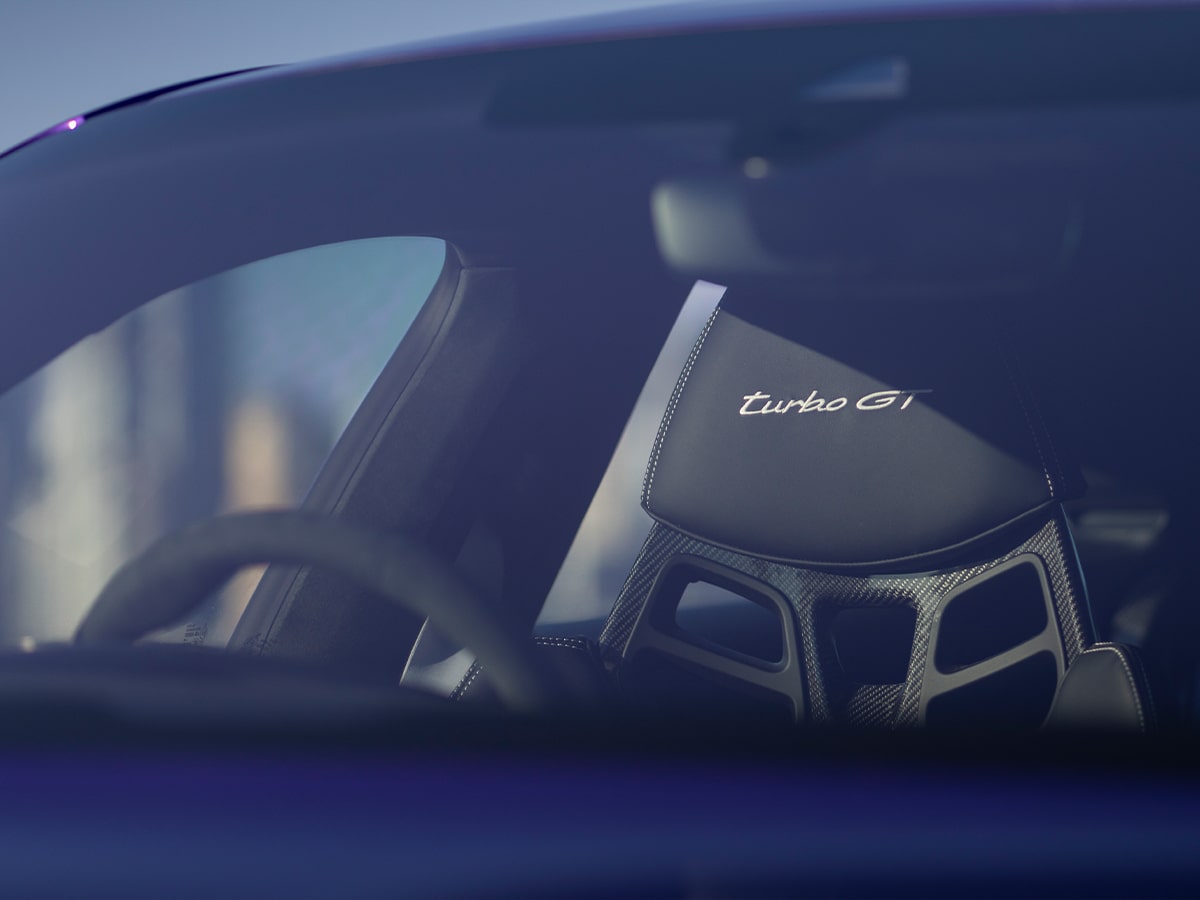
Despite the removal of the rear seats, the front cabin of the Taycan Turbo GT remains a high-end environment. It features lightweight "918" full-bucket seats constructed from carbon fiber-reinforced plastic (CFRP). The interior is upholstered in a combination of Black Race-Tex and smooth leather.
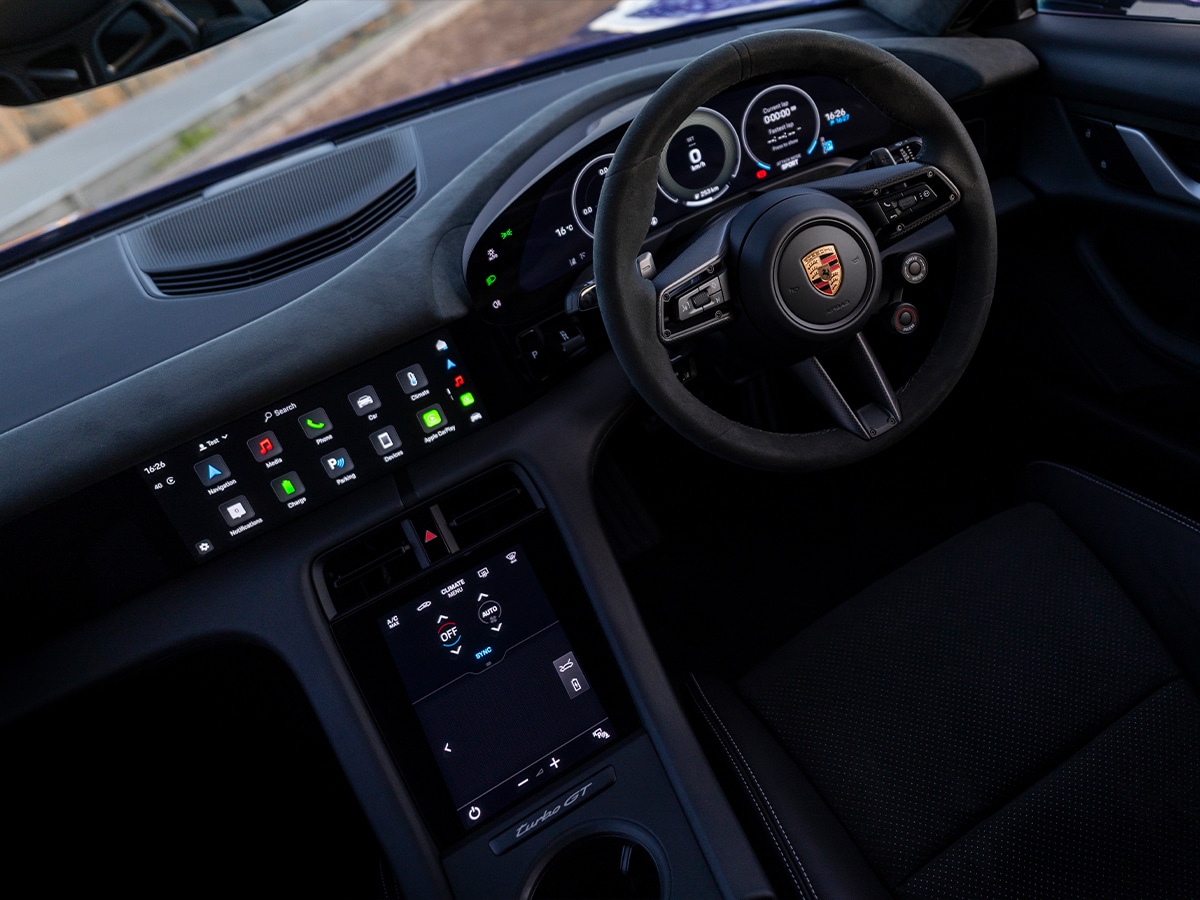
The technological suite includes:
- Porsche Communication Management (PCM): A 10.9-inch full HD touchscreen.
- Audio: A BOSE Surround Sound System with 14 speakers (710 Watts), which remains a no-cost option even in the weight-stripped Weissach version.
- Connectivity: Wireless Apple CarPlay, Android Auto, and an optimized charging tray.
The 800-volt battery system supports DC charging at up to 320 kW. Under optimal conditions, the battery can charge from 10% to 80% in approximately 18 minutes. The vehicle offers a combined range of up to 606 km (WLTP), demonstrating that even with its track focus, the Taycan remains a viable long-distance tourer when driven conservatively.
Market Implications and Competitive Landscape
The release of the Taycan Turbo GT with Weissach Package signals a shift in the high-performance market. Historically, track-ready vehicles with this level of performance were the exclusive domain of mid-engine internal combustion supercars costing upwards of $1 million. By offering hypercar-level acceleration and Nürburgring-proven handling for AUD $416,000, Porsche is challenging the value proposition of the traditional exotic car market.
Industry analysts suggest that the Taycan Turbo GT serves as a halo product for Porsche’s transition to a more electrified lineup. It proves that the "GT" badge—synonymous with the 911 GT3 and GT2 RS—can be successfully translated to an electric platform without losing the visceral connection to the road that enthusiasts demand.
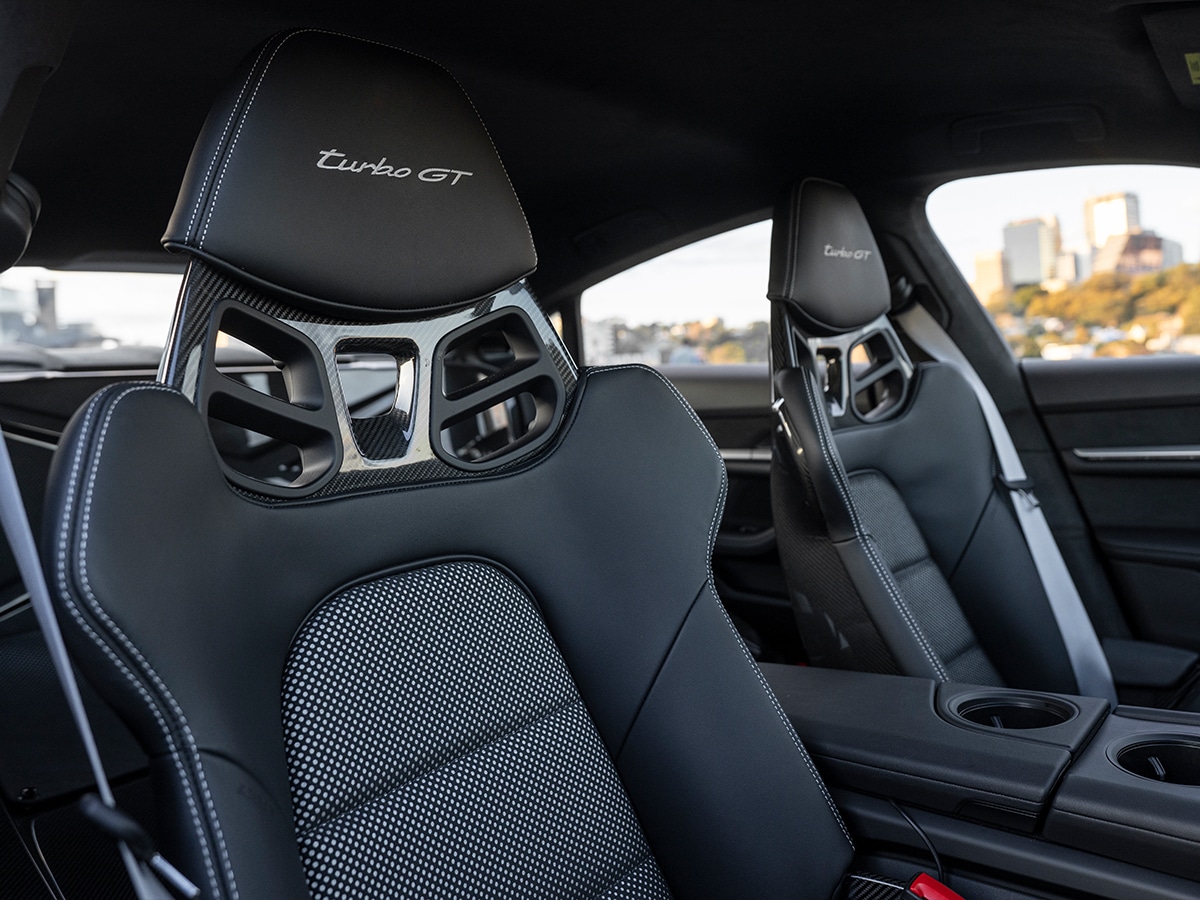
However, the Weissach Package’s lack of rear seats and its significant width (2,144 mm including mirrors) present practical challenges for daily urban use. For consumers seeking high performance with greater utility, the standard Taycan Turbo GT (without the Weissach Package) retains the rear seats and offers a slightly more compliant setup while still providing nearly identical acceleration figures.
Conclusion
The Porsche Taycan Turbo GT with Weissach Package is more than a flagship EV; it is a technical statement of intent. By leveraging advanced silicon carbide inverters, a revolutionary active suspension system, and aggressive weight-saving measures, Porsche has created a vehicle that bridges the gap between the digital future of motoring and the analog thrill of the racetrack. As the fastest production Porsche ever offered in many markets, it stands as a definitive answer to critics of electric performance, proving that the future of the sports car is not only silent but violently fast and technologically peerless.


 Jia Lissa
 Yuyun Lusiyani
 Joko Widodo
 Eva Lovia
 Pevita Pearce